Crocodile Leather Handbag
CN → US| HS Code | Tariff Rate | Origin | Destination | Doc |
|---|---|---|---|---|
| 4205006000 | 39.9% | CN | US | Official Doc |
| 4203300000 | 37.7% | CN | US | Official Doc |
| 4203403000 | 39.9% | CN | US | Official Doc |
| 4205008000 | 35.0% | CN | US | Official Doc |
| 4205006000 | 39.9% | CN | US | Official Doc |
Product Images
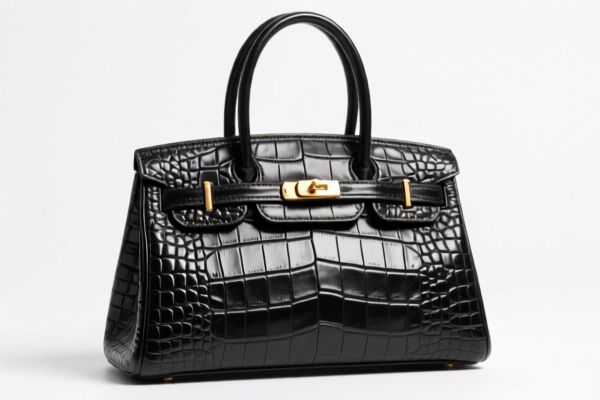
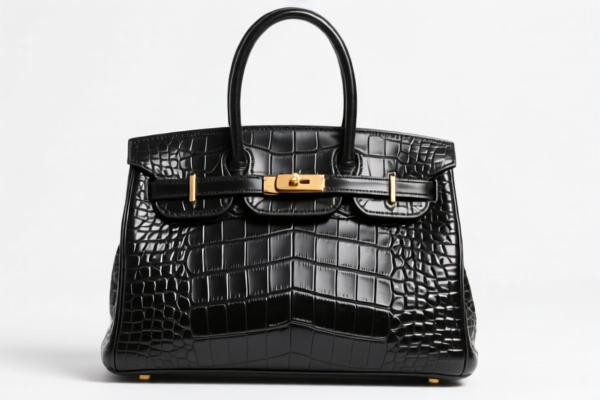
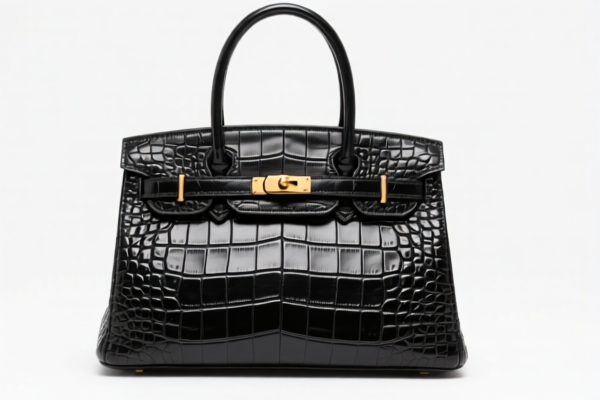
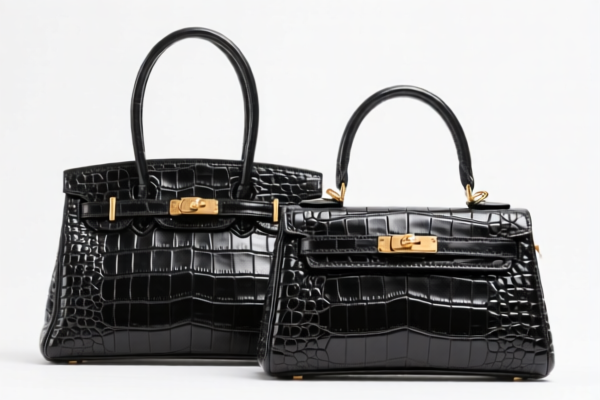
AI Analysis
👜 Crocodile Leather Handbag: The Ultimate Guide to HS Code Classification & US Customs Clearance
🌐 HS Code Reference & Clearance Guide | 2026 Latest Tariff Analysis | Professional-Level Strategy for Luxury Goods
📌 I. Product Definition: What Defines a "Crocodile Leather Handbag"?
In international trade, "Crocodile Leather Handbags" are classified based on two critical factors: 1. Material Source: Specifically from reptiles (Crocodylidae family), which triggers specific regulations under CITES and distinct tariff headings compared to standard bovine leather. 2. Form/Function: Handbags fall under "Articles of leather or composite leather" or "Accessories to articles of leather," depending on the specific subheading interpretation.
⚠️ Key Classification Conflict: - Heading 4203: Generally covers "Articles of leather or composition leather" (e.g., gloves, belts, garments). Some customs authorities may classify handbags here if viewed as "accessories." - Heading 4205: Covers "Other articles of leather or composite leather." This is often the broader, more accurate bucket for general leather goods like handbags that don't fit neatly into garments or accessories. - The "Reptile" Factor: While some HS codes explicitly mention "reptile skin" in Chapter 41, Chapter 42 (Articles of Leather) typically groups all leather together unless specified otherwise. However, the origin of the leather affects the Total Tax Rate due to US trade policies (Section 301, IEEPA).
📦 II. HS Code Classification Matrix (Based on Provided Data)
The following table details the potential HS Codes and their corresponding tax implications based on the provided data points. Note that the classification varies slightly depending on how customs interprets the "handbag" as either a general leather good (4205) or a specific accessory/item (4203/4203.40).
| HS Code | Classification Summary | Total Tax Rate | Tax Breakdown |
|---|---|---|---|
| 4205.00.60.00 | Other leather articles (Reptile leather explicitly noted in summary). Fits "Other leather articles" category. | 39.9% | Base: 4.9% + USITC Sec 301: 25.0% + IEEPA Sec 172: 10.0% |
| 4203.30.00.00 | Articles of leather (General interpretation). Fits "Other articles of leather or composition leather" under 4203. | 37.7% | Base: 2.7% + USITC Sec 301: 25.0% + IEEPA Sec 172: 10.0% |
| 4203.40.30.00 | Accessories to garments (Interpreted as handbag being an accessory). Fits "Other accessories of leather." | 39.9% | Base: 4.9% + USITC Sec 301: 25.0% + IEEPA Sec 172: 10.0% |
| 4205.00.80.00 | Other leather articles (Broadest category). "Other" subheading for leather goods not elsewhere specified. | 35.0% | Base: 0.0% + USITC Sec 301: 25.0% + IEEPA Sec 172: 10.0% |
🔍 Critical Observation: - The Base Duty varies significantly:
4205.00.80.00has a 0% base duty, while4205.00.60.00and4203.40.30.00have a 4.9% base duty. - The 附加税 (Additional Tariffs) remain constant across all codes: 35% total additional tariffs (25% Sec 301 + 10% IEEPA). - Total Tax Range: 35.0% – 39.9%.
💰 III. Detailed Tariff Structure & Legal Basis (2026 Context)
✅ Target Market: United States (US)
✅ Origin: China (CN)
✅ Regime: Section 301 (USITC) + IEEPA (Executive Orders)
🎯 1. The "Lowest Tax" Option: 4205.00.80.00
| Item | Detail |
|---|---|
| HS Code | 4205.00.80.00 |
| Description | Other articles of leather or composite leather, not elsewhere specified. |
| Base Duty | 0.0% |
| USITC Add-On (Sec 301) | +25.0% |
| IEEPA Add-On | +10.0% |
| Total Effective Rate | 35.0% |
| Legal Path | USITC:4205.00.80.00 → FOOTNOTE:301 → IEEPA:9903.01.24 |
📌 Why this is the best fit: - If customs accepts that a handbag is a general "leather article" and not a specific "accessory" or "garment-related item," this code offers the lowest base duty. - Summary Justification: "Material is crocodile leather (leather category), form is handbag (article), fits 'Other leather articles'."
🎯 2. The "Reptile-Specific" Option: 4205.00.60.00
| Item | Detail |
|---|---|
| HS Code | 4205.00.60.00 |
| Description | Other articles of leather, specifically noting reptile skin. |
| Base Duty | 4.9% |
| USITC Add-On (Sec 301) | +25.0% |
| IEEPA Add-On | +10.0% |
| Total Effective Rate | 39.9% |
| Legal Path | USITC:4205.00.60.00 → FOOTNOTE:301 → IEEPA:9903.01.25 |
📌 Risk: - This code explicitly mentions "reptile leather." If customs inspectors focus on the material rather than the function, they may default to this higher base duty code. - Summary Justification: "Material is crocodile leather (reptile), fits 'reptile leather' and 'other leather articles'."
🎯 3. The "Accessory/Garment" Options: 4203.30.00.00 & 4203.40.30.00
| HS Code | Base Duty | Total Tax | Key Interpretation |
|---|---|---|---|
4203.30.00.00 |
2.7% | 37.7% | General "Other articles of leather." |
4203.40.30.00 |
4.9% | 39.9% | "Other accessories" (Handbag viewed as accessory). |
📌 Strategy: -
4203.30.00.00is a middle-ground option (37.7%) if the handbag is considered a general leather good under Chapter 4203. -4203.40.30.00is riskier because handbags are rarely classified as "garment accessories" in the same way as gloves or hats, potentially leading to disputes.
🛠️ IV. Customs Clearance Practical Advice (Avoiding Pitfalls)
✅ 1. Documentation Checklist (Must-Haves)
| Document | Requirement | Purpose |
|---|---|---|
| Commercial Invoice | Must state: "Crocodile Leather Handbag, Synthetic or Genuine?" | Crucial: Distinguish between Exotic Leather (CITES) and Genuine/Imitation. |
| CITES Permit | If the crocodile is a wild-caught species (Appendix I/II). | Legal Requirement: Without this, the shipment will be seized. |
| Product Photos | Clear images of stitching, lining, and hardware. | Helps customs determine if it's a "handbag" vs. "leather good." |
| Material Certificate | Specifies "Crocodile Porosus/Crocodylus Acutus" etc. | Verifies the "Reptile" claim for accurate HS code selection. |
| Country of Origin | Must be clearly marked (e.g., "Made in Vietnam" vs. "Made in China"). | Affects Base Duty and IEEPA applicability. |
✅ 2. Strategic Declaration Tips
🔥 Golden Rule: "Declare by Function, Not Just Material."
| Strategy | Recommendation | Reason |
|---|---|---|
| Best HS Code | 4205.00.80.00 |
Lowest Base Duty (0%) + Same Add-Ons = Lowest Total Tax (35%). |
| Risk Management | Avoid 4205.00.60.00 unless required |
Higher base duty (4.9%) offers no advantage; only increases cost. |
| Description | Use "Leather Handbag, Exotic Skin" | Clear, professional, and avoids ambiguity. |
| Value Declaration | Declare actual transaction value | Base duty is ad valorem; under-declaring leads to penalties. |
✅ 3. Critical CITES Warning
⚠️ IMPORTANT: Crocodile leather is heavily regulated under CITES (Convention on International Trade in Endangered Species). - Exempt Items: Many luxury handbags are made from farmed crocodiles and may require CITES export permits from the country of origin and import permits from the US. - Penalty: Failure to provide CITES documentation can result in confiscation, fines, and blacklisting of the importer. - Action: Always verify the species and farm-raised status before shipment.
🌍 V. Global Market Comparison (2026)
| Market | Recommended HS Code | Est. Total Duty | Key Requirement |
|---|---|---|---|
| 🇺🇸 USA | 4205.00.80.00 |
35.0% | CITES Permit + Sec 301/IEEPA compliance |
| 🇨🇳 China | 4205.00.60.00 |
~10-15% | CITES Permit + Wildlife Import License |
| 🇪🇺 EU | 4202.32.00 |
0-4% + VAT | CITES Appendix II Documentation |
| 🇯🇵 Japan | 4202.32.00 |
4-5% | CITES Permit |
📌 Conclusion: - The USA is the most expensive market due to Section 301 and IEEPA tariffs. - EU and Japan have lower base duties but strict CITES enforcement. - China requires both CITES and Wildlife Import Licenses.
📌 VI. Common Mistakes & Pitfalls
❌ Mistake 1: Misclassifying as 4203.40.30.00 (Accessory)
👉 Result: Higher base duty (4.9%) and potential dispute if handbags aren't considered "accessories" in that context.
❌ Mistake 2: Ignoring CITES Requirements
👉 Result: Shipment Seized. No matter how accurate the HS Code is, missing CITES permits is a fatal error.
❌ Mistake 3: Declaring as "Leather Good" without specifying "Crocodile"
👉 Result: Customs may reclassify to 4205.00.60.00 (39.9%) if they discover the material is exotic, leading to back taxes.
❌ Mistake 4: Assuming "Imitation Crocodile" is exempt
👉 Result: If it's synthetic, it should be classified under 4202.92 (Plastics) or 6307 (Textiles), which may have different tax rates. Ensure "Crocodile Leather" is Genuine.
🎯 VII. Final Recommendation
🏆 Best Strategy for US Importers:
- HS Code:
4205.00.80.00- Total Tax: 35.0% (Lowest among options).
- Documentation:
- CITES Permit (if applicable).
- Clear Invoice: "Crocodile Leather Handbag, Genuine, Exotic Skin."
- Verification:
- Confirm the crocodile is farmed and not wild-caught.
- Check if the specific species is on CITES Appendix I (strictly prohibited) or Appendix II (permit required).
📣 Immediate Action:
📞 Contact a Customs Broker to file a Pre-Ruling for4205.00.80.00.
📄 Secure CITES Permits from the country of origin.
🚀 Minimize Tax Liability by choosing the 0% base duty code where applicable.
✨ Professional Clearance, Start with Accurate Classification!
💼 Every Percent Matters in Luxury Goods Trade!
Customer Reviews
About HS Code Classification
The Harmonized System (HS) is an internationally standardized nomenclature developed by the World Customs Organization (WCO) to classify traded products. Over 200 countries use the HS system as the basis for customs tariffs, trade statistics, and import/export regulations.
Each HS code follows a hierarchical structure:
- Chapter (2 digits) — Broad category of goods (e.g., Chapter 84: Machinery and Mechanical Appliances)
- Heading (4 digits) — More specific grouping within the chapter
- Subheading (6 digits) — Internationally standardized breakdown, used by all WCO member countries
- National subdivisions (8-10 digits) — Country-specific extensions for further classification, such as US HTSUS 10-digit codes
Correct HS code classification is essential for smooth customs clearance, accurate duty payment, and compliance with trade regulations. Misclassification can lead to customs delays, overpayment of duties, or penalties.
When importing from CN to US, the applicable tariff rates may include:
- Most-Favored-Nation (MFN) rate — The standard duty rate applied to WTO members
- General rate — Applied to countries without trade agreements
- Trade remedy duties — Additional tariffs such as Section 301 (anti-dumping), Section 232 (national security), or countervailing duties
The information provided on this page is for reference purposes only. For official classification, please consult with your local customs authority or a licensed customs broker.