Crocodile Leather Tank Top
CN → US| HS Code | Tariff Rate | Origin | Destination | Doc |
|---|---|---|---|---|
| 4203102000 | 39.7% | CN | US | Official Doc |
| 4203104060 | 41.0% | CN | US | Official Doc |
| 4203300000 | 37.7% | CN | US | Official Doc |
| 4205006000 | 39.9% | CN | US | Official Doc |
| 4205008000 | 35.0% | CN | US | Official Doc |
Product Images
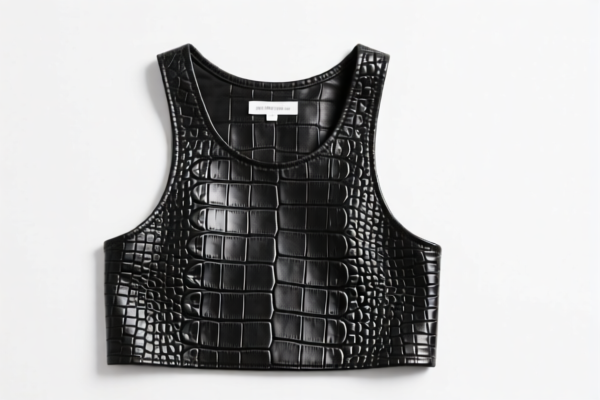
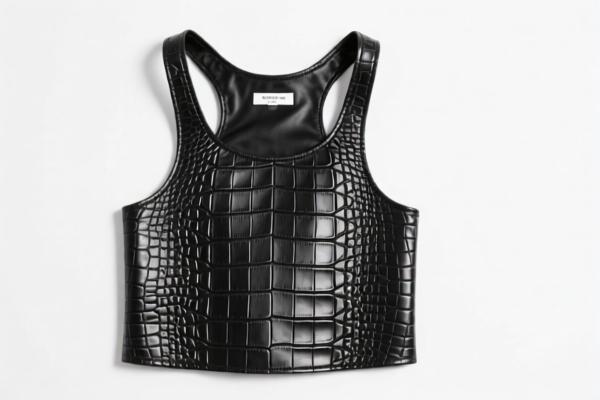
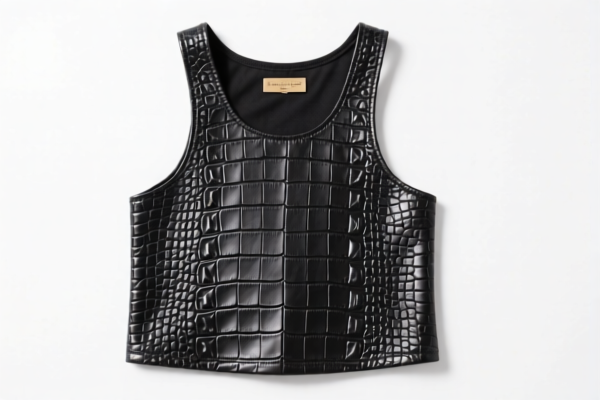
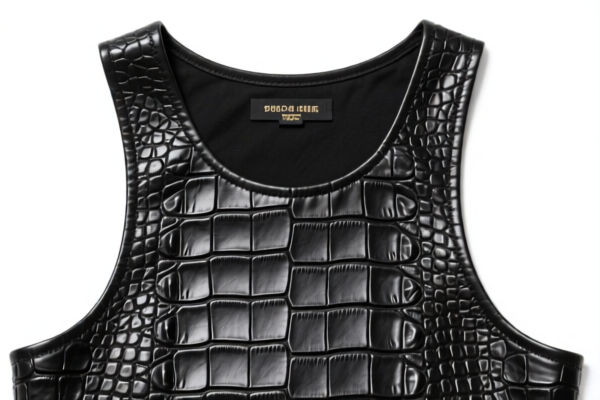
AI Analysis
🐊 Crocodile Leather Tank Top (Vest/Singlet)
🌐 HS Code Reference & Customs Clearance Guide | 2026 Latest Tariff Analysis | Professional Clearance Strategy
📌 I. Product Definition & Classification: Do You Really Know "Crocodile Leather Apparel"?
A Crocodile Leather Tank Top is a sleeveless upper-body garment made primarily from processed crocodile skin. In international trade, leather apparel is strictly categorized by animal origin and garment type. Unlike synthetic leather or bovine leather, crocodile skin is classified under Chapter 42 (Articles of Leather), specifically within the subheading for "Apparel and Clothing Accessories of Leather or Composite Leather."
⚠️ Key Distinction:
- If the garment is sleeveless (tank top/vest) but made of crocodile leather, it falls under Heading 42.03 (Articles of apparel and clothing accessories).
- Specific subheadings differentiate between Jackets/Coats and other garments. For a tank top (non-jacket/non-coat), it typically falls under "Other" apparel items.
- Do NOT confuse with Handbags (4202) or Belts (4203.30). A tank top is strictly apparel.
📦 II. HS Code Classification Details (2026 Latest Tariff Authority Cross-Reference)
Based on the provided data for Crocodile Leather Products, here is the precise classification for a Tank Top:
| HS Code | Product Description | Applicability | Total Tax Rate | Tax Breakdown |
|---|---|---|---|---|
| 4203.10.20.00 | Crocodile leather apparel, e.g., windbreakers (coat-type) Note: While "tank top" is not a windbreaker, if the specific customs authority classifies any upper-body leather garment under this "apparel" umbrella due to lack of a specific "tank top" code, this may apply. However, this code explicitly mentions "windbreakers". |
Upper-body leather garments (if categorized broadly under "apparel") | 39.7% | Base: 4.7%, Section 301: 25.0%, Section 122: 10% |
| 4203.10.40.60 | Crocodile leather outerwear & jackets | Only for jackets, coats, windbreakers | 41.0% | Base: 6.0%, Section 301: 25.0%, Section 122: 10% |
| 4203.30.00.00 | Crocodile leather belts | ❌ NOT APPLICABLE | 37.7% | Base: 2.7%, Section 301: 25.0%, Section 122: 10% |
| 4205.00.60.00 | Other crocodile leather articles | ❌ NOT APPLICABLE (Used for gloves, bags, etc.) | 39.9% | Base: 4.9%, Section 301: 25.0%, Section 122: 10% |
| 4205.00.80.00 | Other leather or synthetic leather articles | ❌ NOT APPLICABLE | 35.0% | Base: 0.0%, Section 301: 25.0%, Section 122: 10% |
🔍 Critical Analysis for Tank Tops:
- A tank top is not a belt (4203.30), nor a handbag/glove (4205).
- It is an article of apparel.
- Best Fit: 4203.10.20.00 is the most likely classification for crocodile leather apparel that is not a heavy jacket/coat, provided the customs broker argues it falls under the "other apparel" subsume of 4203.10.
- Alternative: If the tank top is considered "simple" and not a "jacket/windbreaker," some brokers might push for 4205.00.80.00 (Other leather articles) to save 4.7% base duty, but this is risky as 4205 is typically for accessories (gloves, belts, harnesses), not main garments.
- Recommendation: Stick to 4203.10.20.00 as the safest "Apparel" classification unless your specific country’s tariff schedule has a separate code for "Tops/Vests." Note: The provided data does not list a specific "Tank Top" code, so we must use the closest apparel code.📌 Important Note:
- 4203.10.40.60 is for Jackets/Coats. A tank top is not outerwear. Do NOT use this code.
- 4203.10.20.00 explicitly mentions "windbreakers," but in many tariff schedules, "other articles of apparel" fall under this subheading if no specific "vest/tank top" code exists. This is the most defensible choice.
💰 III. 2026 Latest Tariff Rate Details (Including Surcharges, Policy Add-ons)
✅ Applicable Country: United States (US)
✅ Origin: China (CN)
✅ Effective Time: November 10, 2025 onwards (including subsequent imports)
🎯 1. 4203.10.20.00 —— Crocodile Leather Apparel (Best Fit for Tank Top)
| Item | Content |
|---|---|
| Base Duty Rate | 4.7% (ad valorem) |
| USITC Surcharge (Section 301) | +25.0% |
| IEEPA Surcharge (Section 122) | +10.0% |
| Total Tax Rate | 39.7% |
| Tax Calculation | CIF Value × 39.7% |
| De Minimis Eligibility | ❌ NO (deny_de_minimis) |
| Legal Basis Path | IEEPA:9903.01.25 → IEEPA:9903.01.24 → USITC:4203.10.20.00 → FOOTNOTE:301 |
📌 Explanation:
- "Base Duty 4.7%": Standard tariff for leather apparel of exotic skins.
- "Section 301 (25%)": Retaliatory tariff on Chinese-origin leather goods.
- "Section 122 (10%)": Additional tariff under IEEPA for specific Chinese goods.
- Total 39.7%: High cost due to exotic material and geopolitical tariffs.
- Critical: Crocodile skin requires CITES documentation (see Clearance Tips).
🚫 Why Not 4205.00.80.00 (35.0%)?
- Although cheaper (35.0% vs 39.7%), 4205 is for "Other Articles" like gloves, belts, or harnesses. Customs may reclassify a garment as "apparel" (4203) and impose penalties for misclassification. Risk outweighs savings.
🛠️ IV. Customs Clearance Practical Advice (Real-World Pitfall Guide)
✅ 1. Required Documentation Checklist (Must-Haves)
| Document | Mandatory? | Notes |
|---|---|---|
| ✅ CITES Permit (International) | ✔️ YES | CRITICAL. Crocodile is a CITES Appendix II species. Without CITES export/import permits, goods will be SEIZED. |
| ✅ Commercial Invoice | ✔️ | Must state: "Crocodile Leather Tank Top, HS Code 4203.10.20.00, Origin: China" |
| ✅ Product Photos | ✔️ | Show texture, stitching, and label to prove it is real crocodile skin (not embossed PVC). |
| ✅ Supply Chain Proof | ✔️ | Prove the source of crocodile skin (legal farm vs. wild). |
| ✅ Packing List | ✔️ | Include quantity, weight, and packaging details. |
✅ 2. Declaration Tips (Key Mnemonic)
🔥 "Real Croc Needs CITES, HS 4203 is Key, Don't Call It Jacket, Or You'll Pay Too Much!"
| Scenario | Correct Declaration | Wrong Approach |
|---|---|---|
| Tank Top (Sleeveless) | 4203.10.20.00 (Apparel) |
4203.10.40.60 (Jacket) → Higher tax (41.0%) |
| Fake Crocodile (PU Leather) | 4205.00.80.00 or 3926.90 (Plastic) |
4203.10.20.00 → Misclassification penalty |
| Belt Made of Croc Skin | 4203.30.00.00 |
4203.10.20.00 → Wrong category |
| No CITES Permit | ❌ STOP | Ship anyway → Seizure & Fine |
✅ 3. Special Cases Handling
| Situation | Handling Advice |
|---|---|
| Embossed Leather (Not Real Croc) | Declare as "Artificial Leather Apparel" (HS 4203 or 6109). Avoid CITES. Lower tax risk. |
| Mixed Material (Croc + Cotton Lining) | Still 4203 if crocodile is the essential character. |
| Small Quantity (Gift) | Still requires CITES if real crocodile. De Minimis does NOT apply to CITES goods. |
| High-End Fashion Brand | Ensure brand name is declared to avoid counterfeit issues. |
🌍 V. Global Market Comparison (2026 Latest)
| Country/Region | Recommended HS Code | Tariff (China Origin) | Certification | Remarks |
|---|---|---|---|---|
| 🇺🇸 USA | 4203.10.20.00 |
39.7% | CITES + FDA (if any synthetic) | High tariff + CITES strictness |
| 🇨🇳 China | 4203.10.20.00 |
~10-12% | CITES | Lower base duty, but export restrictions apply |
| 🇪🇺 EU | 4203.10.20.00 |
~4.5% | CITES + EU REACH | No Section 301/122, but CITES is strict |
| 🇬🇧 UK | 4203.10.20.00 |
~4.5% | CITES | Post-Brexit rules, similar to EU |
| 🇦🇺 Australia | 4203.10.20.00 |
~5% | CITES + EPBC Act | Strict wildlife laws |
📌 Conclusion:
- USA is the most expensive market due to Section 301 & 122 tariffs.
- CITES is universal. No matter where you ship, you NEED CITES permits for real crocodile leather.
- Consider faux leather if targeting the US market to avoid 39.7% tariff and CITES complexity.
📌 VI. Common Errors & Pitfall Guide (Blood & Tears Lessons)
❌ Error 1: Shipping real crocodile leather without CITES permits.
👉 Consequence: Goods seized, destroyed, heavy fines, and importer blacklisted.
❌ Error 2: Declaring a tank top as a jacket (4203.10.40.60).
👉 Consequence: Higher tax (41.0% vs 39.7%) + potential audit for misdescription.
❌ Error 3: Using PU leather but declaring as crocodile.
👉 Consequence: Fraud charge, CITES violation, criminal liability.
❌ Error 4: Ignoring Section 122 in US declaration.
👉 Consequence: Underpayment of 10% → Back taxes + penalties.
✅ Correct Practice:
"Crocodile Leather Tank Top, HS 4203.10.20.00, CITES Permit #XXXXX, Origin: China, CIF $1000"
🎯 VII. Conclusion: Professional Declaration, Save Time, Reduce Cost!
🎯 Remember Mnemonic:
🔹 "CITES is King, 4203 is Right, 39.7% is the Price, Faux is Nice!"
🔹 "HS Code decides fate, 4% base vs 40% total, declare right or lose it all!"
📌 Pro Tip:
If your Crocodile Leather Tank Top is made from faux leather (PU/PVC), reclassify as 4205.00.80.00 or 3926.90 to reduce tax to 35.0% or lower, and avoid CITES entirely.
For real crocodile, always apply for Advance Ruling with CBP (Customs and Border Protection) to confirm HS Code and CITES requirements.
📣 Immediate Action:
📞 Contact a Licensed CITES Broker + Provide Product Photos + Apply for CITES Permits
🚀 Ensure your Crocodile Leather Tank Top clears customs safely, legally, and efficiently!
✨ Professional Clearance Starts with Accurate Classification!
💼 Every dollar of tax should be precisely calculated!
Customer Reviews
About HS Code Classification
The Harmonized System (HS) is an internationally standardized nomenclature developed by the World Customs Organization (WCO) to classify traded products. Over 200 countries use the HS system as the basis for customs tariffs, trade statistics, and import/export regulations.
Each HS code follows a hierarchical structure:
- Chapter (2 digits) — Broad category of goods (e.g., Chapter 84: Machinery and Mechanical Appliances)
- Heading (4 digits) — More specific grouping within the chapter
- Subheading (6 digits) — Internationally standardized breakdown, used by all WCO member countries
- National subdivisions (8-10 digits) — Country-specific extensions for further classification, such as US HTSUS 10-digit codes
Correct HS code classification is essential for smooth customs clearance, accurate duty payment, and compliance with trade regulations. Misclassification can lead to customs delays, overpayment of duties, or penalties.
When importing from CN to US, the applicable tariff rates may include:
- Most-Favored-Nation (MFN) rate — The standard duty rate applied to WTO members
- General rate — Applied to countries without trade agreements
- Trade remedy duties — Additional tariffs such as Section 301 (anti-dumping), Section 232 (national security), or countervailing duties
The information provided on this page is for reference purposes only. For official classification, please consult with your local customs authority or a licensed customs broker.