Crocodile Skin Makeup Bag
CN → US| HS Code | Tariff Rate | Origin | Destination | Doc |
|---|---|---|---|---|
| 4205006000 | 39.9% | CN | US | Official Doc |
| 4203403000 | 39.9% | CN | US | Official Doc |
| 4205008000 | 35.0% | CN | US | Official Doc |
| 4202329300 | 52.6% | CN | US | Official Doc |
| 4205006000 | 39.9% | CN | US | Official Doc |
Product Images
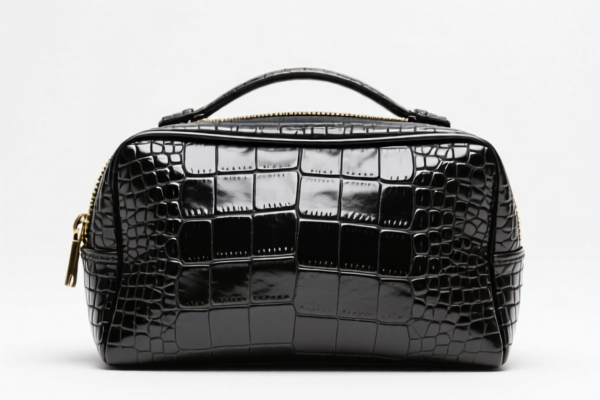
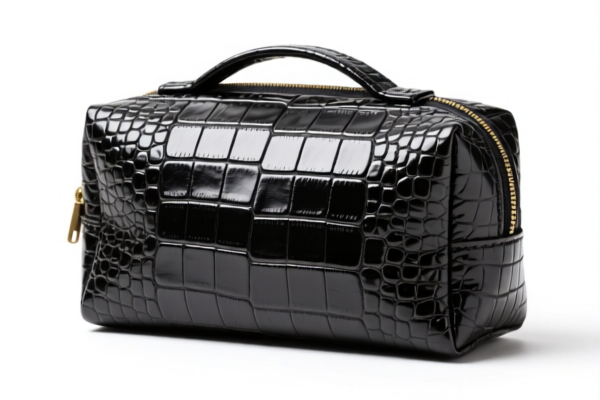
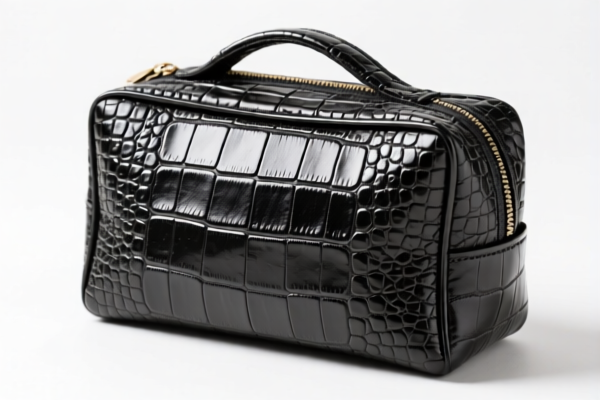
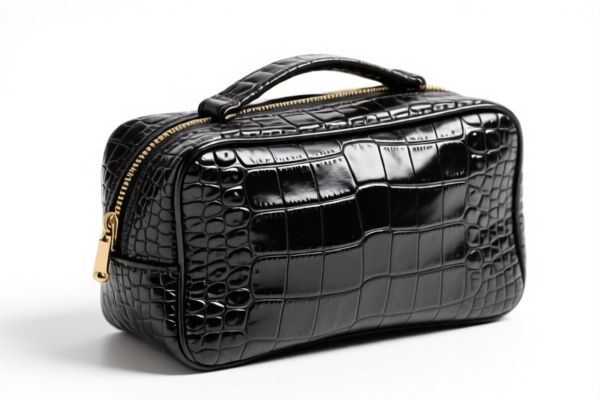
AI Analysis
🐊 Crocodile Skin Makeup Bag: HS Code Classification & Clearance Strategy (2026)
🌐 HS Code Reference & Clearance Guide | 2026 Latest Tariff Analysis | Professional Customs Strategy
📌 I. Product Definition & Classification: Do You Really Understand "Crocodile Skin"?
The "Crocodile Skin Makeup Bag" is a luxury accessory used for storing cosmetics. In international trade, its classification hinges strictly on material composition and functional form. Although colloquially called "crocodile skin," this material falls under specific legal categories in customs tariffs:
Reptile Skin (True Crocodile/Alligator/Python):
If the skin is genuine natural reptile leather, it falls under Chapter 42 (Articles of leather or synthetic leather), specifically Section III (Articles of leather or composition leather).
Synthetic/Imitation Crocodile Skin:
If the material is PU, PVC, or textile with a crocodile pattern, it may be classified under different subheadings based on whether it is treated as "other leather" or "textile/plastic sheeting."
⚠️ Key Distinction Point:
- If the material is genuine reptile skin → Classify under 4205.00.60.00 or 4203.40.30.00
- If the material is synthetic/reprocessed leather → Classify under 4205.00.80.00
- If the material is textile-based with plastic/polymer coating → Classify under 4202.32.93.00
📦 II. HS Code Classification Details (2026 Latest Tariff Authority Comparison)
| HS Code | Product Description | Applicable Scenario | Material Key Feature |
|---|---|---|---|
4205.00.60.00 |
Reptile skin articles (e.g., makeup bags) | Genuine crocodile/aligator leather makeup bags | ✅ Reptile Skin |
4203.40.30.00 |
Other made up leather articles (accessories) | Crocodile leather makeup bags categorized as fashion accessories | ✅ Reptile Skin |
4205.00.80.00 |
Other articles of leather or composition leather | Synthetic/PU "crocodile" pattern bags | ✅ Synthetic Leather |
4202.32.93.00 |
Handbags with outer surface of textile material | Fabric-based bags with crocodile print/coating | ✅ Textile + Plastic Sheet |
🔍 Key Reminder:
- Genuine Crocodile Skin must be declared accurately. Misdeclaring genuine reptile skin as synthetic can lead to severe penalties. - Synthetic "Crocodile" bags are often cheaper but still subject to high tariffs due to US-China trade policies. - Textile-based bags with polymer coatings are taxed at a higher base rate (17.6%) compared to leather categories.
💰 III. 2026 Latest Tariff Rate Breakdown (Including Add-on Taxes & Policy Surcharges)
✅ Applicable Country: United States (US)
✅ Origin: China (CN)
✅ Effective Date: November 10, 2025 (for subsequent imports)
🎯 1. 4205.00.60.00 —— Reptile Skin Articles (Makeup Bags)
| Item | Content |
|---|---|
| Base Tariff | 4.9% (ad valorem) |
| Section 301 Add-on | +25% (USITC Footnote 9903.42.00) |
| IEEPA Add-on | +10% (Against China/HK products, from Nov 10, 2025) |
| Total Rate | 39.9% |
| Tax Calculation | CIF Value × 39.9% |
| De Minimis Exemption | ❌ Not Eligible (deny_de_minimis) |
| Legal Basis Path | IEEPA:9903.01.25 → IEEPA:9903.01.24 → USITC:4205.00.60.00 → FOOTNOTE:9903.42.00 |
📌 Explanation:
- "Section 301 Add-on 25%" is from the US Trade Act Section 301; - "IEEPA 10%" is the new emergency economic power surcharge against Chinese goods; - Total 39.9%, which is very high. Must be anticipated in cost calculations!
🎯 2. 4203.40.30.00 —— Other Made Up Leather Articles (Accessories)
| Item | Content |
|---|---|
| Base Tariff | 4.9% |
| Section 301 Add-on | +25% |
| IEEPA Add-on | +10% |
| Total Rate | 39.9% |
| Tax Calculation | CIF × 39.9% |
| De Minimis Exemption | ❌ Not Eligible |
| Legal Basis Path | IEEPA:9903.01.25 → IEEPA:9903.01.24 → USITC:4203.40.30.00 → FOOTNOTE:9903.42.00 |
📌 Note:
- Same tax bracket as4205.00.60.00; - Whether classified as "Reptile Skin" or "Other Leather Accessories," the tariff burden is identical due to the nature of the material.
🎯 3. 4205.00.80.00 —— Other Articles of Leather or Composition Leather
| Item | Content |
|---|---|
| Base Tariff | 0.0% |
| Section 301 Add-on | +25% |
| IEEPA Add-on | +10% |
| Total Rate | 35.0% |
| Tax Calculation | CIF × 35.0% |
| De Minimis Exemption | ❌ Not Eligible |
| Legal Basis Path | IEEPA:9903.01.25 → IEEPA:9903.01.24 → USITC:4205.00.80.00 → FOOTNOTE:9903.42.00 |
📌 Note:
- Lower base rate (0%) compared to genuine reptile skin; - Suitable for synthetic/PU crocodile bags; - Total 35.0%, still high, but 4.9% cheaper than genuine reptile skin categories.
🎯 4. 4202.32.93.00 —— Handbags with Outer Surface of Textile Material
| Item | Content |
|---|---|
| Base Tariff | 17.6% |
| Section 301 Add-on | +25% |
| IEEPA Add-on | +10% |
| Total Rate | 52.6% |
| Tax Calculation | CIF × 52.6% |
| De Minimis Exemption | ❌ Not Eligible |
| Legal Basis Path | IEEPA:9903.01.25 → IEEPA:9903.01.24 → USITC:4202.32.93.00 → FOOTNOTE:9903.42.00 |
📌 Warning:
- Highest total tariff (52.6%); - Applies only if the bag is fundamentally a textile product with a polymer coating; - Even though it mimics crocodile skin, the underlying material (textile) triggers a higher base duty.
🛠️ IV. Clearance Practical Advice (Real-World Pitfall Guide)
✅ 1. Required Documentation Checklist (All Mandatory)
| Document | Must Provide | Explanation |
|---|---|---|
| ✅ Material Certification | ✔️ | Proof of whether skin is genuine reptile, synthetic PU, or textile. |
| ✅ Product Photos | ✔️ | Clear shots of texture, stitching, lining, and labels. |
| ✅ Commercial Invoice | ✔️ | Must specify "Makeup Bag" and material (e.g., "Reptile Leather" vs. "PU Leather"). |
| ✅ Packing List | ✔️ | Detail contents to avoid misclassification as "accessories" or "parts." |
| ✅ Supply Chain Proof | ✔️ | To verify origin (China) and apply correct trade policy surcharges. |
✅ 2. Declaration Tips (Key Mantra)
🔥 "Material Truth, Code Precision, Avoid Splitting, Save Money!"
| Scenario | Correct Declaration | Wrong Practice |
|---|---|---|
| Genuine Crocodile Skin | 4205.00.60.00 or 4203.40.30.00 |
Misdeclare as PU → Risk of fraud penalty |
| Synthetic PU Crocodile | 4205.00.80.00 |
Declare as Genuine Reptile → Higher tax + Audit |
| Textile Bag with Print | 4202.32.93.00 |
Declare as Leather → Misclassification risk |
| Bag + Accessories (e.g., mirror) | Declare as Makeup Bag | Split declaration → Each item taxed separately (higher total) |
✅ 3. Special Cases Handling
| Scenario | Handling Advice |
|---|---|
| CITES Compliance | If genuine crocodile/alligator/monkey, ensure CITES permits are provided. Without them, goods will be confiscated. |
| OEM Custom Bags | Provide design specs to prove material origin. Avoid vague terms like "luxury leather." |
| Mixed Material Bags | If >50% by weight/value is reptile skin, classify under 4205.00.60.00. |
| De Minimis Exemption (Section 321) | ❌ NOT AVAILABLE for these HS codes. All shipments subject to full duty + surcharges. |
🌍 V. Global Market Clearance Comparison (2026 Latest)
| Country/Region | Recommended HS Code | Tariff (China Origin) | Certification Requirement | Notes |
|---|---|---|---|---|
| 🇺🇸 USA | 4205.00.60.00 / 4203.40.30.00 |
39.9% (Reptile) 35.0% (Synthetic) 52.6% (Textile) |
None specific, but CITES if genuine reptile | Highest duty burden due to Section 301 + IEEPA. |
| 🇨🇳 China | 4205.00.60.00 |
8.0% - 10.0% (depending on exact subcode) | None | No additional trade war tariffs. |
| 🇪🇺 EU | 4202.32.00 / 4205.00.00 |
4.0% - 8.0% | CE (if electrical components) | No Section 301-style tariffs. |
| 🇬🇧 UK | 4202.32.00 |
4.0% - 8.0% | UKCA | Post-Brexit independent rates. |
| 🇯🇵 Japan | 4202.32.00 |
5.0% - 8.0% | None | Stable tariffs. |
📌 Conclusion:
- USA is the most expensive market for crocodile skin makeup bags due to 39.9%-52.6% total tariffs.
- China/EU/UK offer significantly lower tariffs (4%-10%), making them more profitable for export.
- Supply Chain Optimization: Consider routing through Vietnam or Mexico for final assembly to potentially qualify for USMCA or other preferential treatments (though CITES still applies).
📌 VI. Common Errors & Pitfall Guide (Lessons Learned)
❌ Error 1: Declaring genuine reptile skin as "PU Leather" to avoid CITES checks
👉 Consequence: Heavy fines, confiscation, and blacklisting by CBP and CITES authorities.
❌ Error 2: Not distinguishing between "Reptile Skin" and "Synthetic Leather" in HS Code selection
👉 Consequence: 4.9% base tariff difference → Overpayment of taxes by thousands of dollars.
❌ Error 3: Ignoring the IEEPA 10% surcharge in cost calculation
👉 Consequence: Profit margin erosion. The 10% is new (Nov 2025) and often overlooked in legacy pricing models.
❌ Error 4: Splitting a single makeup bag into "bag" and "mirror/compact" for separate申报
👉 Consequence: Higher combined tariff. A single item is taxed as one unit; splitting can trigger multiple duties.
✅ Correct Practice:
"Makeup Bag, Reptile Skin (CITES Permit Attached), Model XYZ, Lining: Polyester, Country of Origin: China"
🎯 VII. Conclusion: Professional Declaration, Time-Saving, Cost-Effective!
🎯 Remember the Mantra:
🔹 "Material Determines Code, Code Determines Cost"
🔹 "Reptile 39.9%, Synthetic 35%, Textile 52.6% - Choose Wisely!"
🔹 "CITES is Mandatory for Genuine Skin - No Permits, No Entry!"
📌 Tips:
- If your makeup bag is made in Vietnam, Mexico, or Thailand, you may qualify for lower US tariffs (USMCA or general rates).
- Apply for Advance Ruling (Ruling Letter) from US CBP before shipping to confirm HS Code and tariff liability.
- For genuine crocodile skins, ensure CITES permits are in place before shipment to avoid customs delays or seizure.
📣 Take Action Now:
📞 Contact a licensed customs broker + Provide material specs + Apply for CITES permits (if applicable)
🚀 Ensure your crocodile skin makeup bags clear customs smoothly, avoid penalties, and maximize profit!
✨ Professional Clearance Starts with Precise Classification!
💼 Every cent of your cost deserves precise calculation!
Customer Reviews
About HS Code Classification
The Harmonized System (HS) is an internationally standardized nomenclature developed by the World Customs Organization (WCO) to classify traded products. Over 200 countries use the HS system as the basis for customs tariffs, trade statistics, and import/export regulations.
Each HS code follows a hierarchical structure:
- Chapter (2 digits) — Broad category of goods (e.g., Chapter 84: Machinery and Mechanical Appliances)
- Heading (4 digits) — More specific grouping within the chapter
- Subheading (6 digits) — Internationally standardized breakdown, used by all WCO member countries
- National subdivisions (8-10 digits) — Country-specific extensions for further classification, such as US HTSUS 10-digit codes
Correct HS code classification is essential for smooth customs clearance, accurate duty payment, and compliance with trade regulations. Misclassification can lead to customs delays, overpayment of duties, or penalties.
When importing from CN to US, the applicable tariff rates may include:
- Most-Favored-Nation (MFN) rate — The standard duty rate applied to WTO members
- General rate — Applied to countries without trade agreements
- Trade remedy duties — Additional tariffs such as Section 301 (anti-dumping), Section 232 (national security), or countervailing duties
The information provided on this page is for reference purposes only. For official classification, please consult with your local customs authority or a licensed customs broker.