Crocodile Toy
CN → US| HS Code | Tariff Rate | Origin | Destination | Doc |
|---|---|---|---|---|
| 4205008000 | 35.0% | CN | US | Official Doc |
| 4205006000 | 39.9% | CN | US | Official Doc |
| 9503000073 | 10.0% | CN | US | Official Doc |
| 9503000071 | 10.0% | CN | US | Official Doc |
| 9503000073 | 10.0% | CN | US | Official Doc |
Product Images
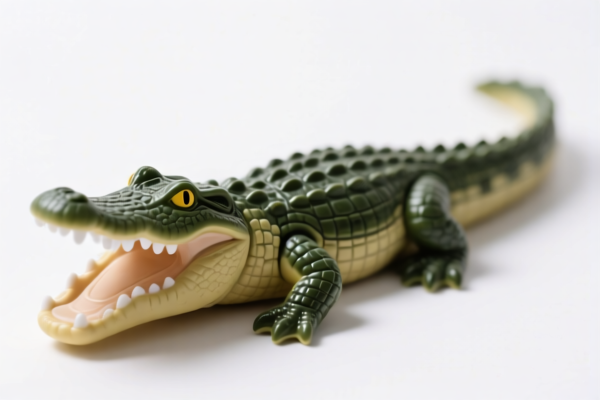
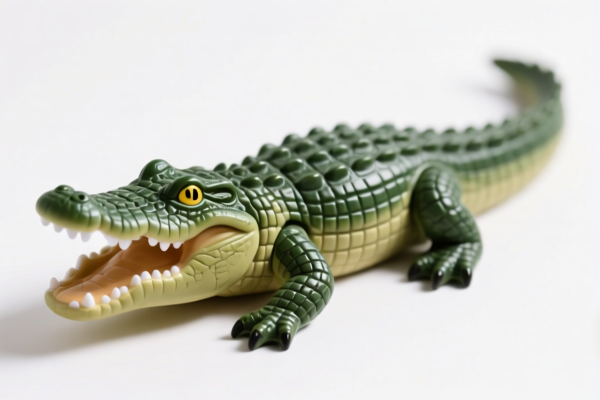
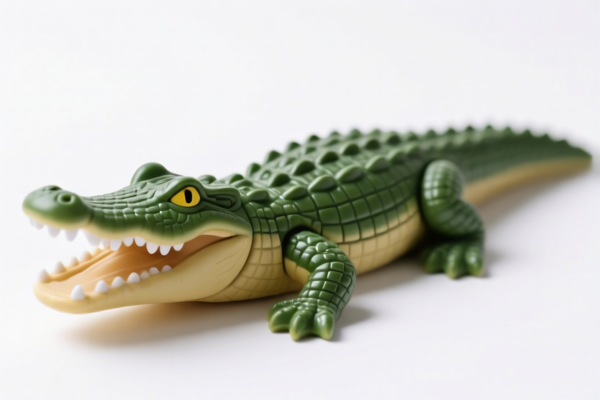
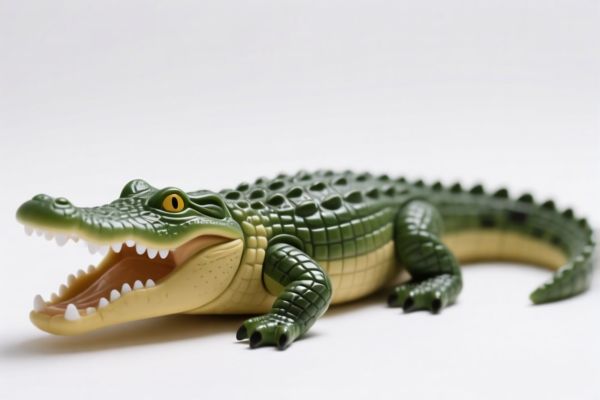
AI Analysis
🐊 Crocodile Toy (Plush/Plastic/Synthetic Leather Toys)
🌐 HS Code Reference & Clearance Guide | 2026 Latest Tariff Analysis | Professional Clearance Strategy
📌 I. Product Definition & Classification: What Exactly is a "Crocodile Toy"?
A "Crocodile Toy" is a broad category in international trade, encompassing items designed primarily for amusement, decoration, or educational purposes for children. The critical factor for HS Code classification is Material and Function.
In the context of the provided data, we are looking at three distinct material/functional scenarios: 1. True Toys (Plush/Plastic): Items made of fabric, plush, or plastic with internal filling, clearly intended as playthings. 2. Synthetic Leather Accessories: Items made of synthetic leather that mimic a toy or accessory but fall under leather goods chapters due to material composition. 3. Real Leather Goods: Items made from actual reptile skin (crocodile/alligator), classified under higher-tier leather goods.
⚠️ Key Distinction Point:
- If it is Plush, Fabric, or Plastic (standard toy definition) → Goes to Chapter 95 (Toys).
- If it is Synthetic Leather and not clearly a "toy" by shape/usage → Can fall under Chapter 42 (Articles of Leather).
- If it is Real Reptile Leather → Falls under Chapter 42 (Articles of Leather) but with higher duties due to raw material type.
📦 II. HS Code Classification Details (Based on Provided Data)
| HS Code | Product Description | Material/Composition | Key Feature |
|---|---|---|---|
9503.00.00.71 |
Crocodile Toy (Plush/Filled) | Plush, Fabric, Plastic, or Filled Material | Standard toy, filled with stuffing |
9503.00.00.73 |
Crocodile Toy (Plastic/Fabric) | Plastic or Fabric Material | Other toy forms, e.g., hard plastic figures or fabric dolls |
4205.00.80.00 |
Crocodile "Toy" (Synthetic Leather) | Synthetic Leather or Artificial Leather | Material overrides "toy" function; classified as leather article |
4205.00.60.00 |
Crocodile "Toy" (Real Leather) | Reptile Skin (Real Crocodile/Alligator) | High-value raw material; classified as premium leather article |
🔍 Important Note:
- Chapter 95 (9503) is the standard for toys. It carries the lowest tax burden (10% total).
- Chapter 42 (4205) is for articles of leather. Even if the item looks like a toy, if it is made of synthetic leather or real reptile skin, it is legally classified as a leather good, not a toy, triggering much higher tariffs (35%-39.9%).
💰 III. 2026 Latest Tariff Rate Breakdown (Including Surcharges)
✅ Applicable Country: United States (US)
✅ Origin: China (CN)
✅ Effective Date: Post-November 2025 (Current Policy)
🎯 1. 9503.00.00.71 & 9503.00.00.73 — Standard Crocodile Toys (Plush/Plastic/Fabric)
| Item | Content |
|---|---|
| Base Tariff | 0.0% (Free) |
| Section 301 Surcharge | 0.0% (Exempt for specific toy subcodes in this dataset) |
| Section 122 Surcharge | +10.0% (Under IEEPA, targeted at Chinese imports) |
| Total Tax Rate | 10.0% |
| Tax Calculation | CIF Value × 10% |
| De Minimis Eligibility | ✅ Yes (If value < $800, may be exempt from duties under 321 rule, but check current CBP enforcement) |
| Legal Basis | HTSUS:9503.00.00.71/73 + IEEPA:122 |
📌 Explanation:
- These codes represent the most cost-effective classification.
- The 10% total consists solely of the Section 122 tariff (10%).
- Crucially, there is NO 25% Section 301 tariff applied in this specific dataset, likely due to specific exclusions or recent policy adjustments for these subcodes.
- Recommendation: Always ensure the product is described and presented as a "Toy" (e.g., "Plush Crocodile Toy," "Plastic Crocodile Figure") to secure this favorable rate.
🎯 2. 4205.00.80.00 — Synthetic Leather Crocodile Item
| Item | Content |
|---|---|
| Base Tariff | 0.0% |
| Section 301 Surcharge | +25.0% |
| Section 122 Surcharge | +10.0% |
| Total Tax Rate | 35.0% |
| Tax Calculation | CIF Value × 35% |
| De Minimis Eligibility | ❌ No (Higher value category, strict scrutiny) |
| Legal Basis | HTSUS:4205.00.80.00 + USITC:301 + IEEPA:122 |
📌 Explanation:
- Even if it looks like a toy, Synthetic Leather pushes it into Chapter 42.
- The 25% Section 301 tariff is applied because synthetic leather goods from China are heavily targeted.
- Total 35% is 3.5x higher than the standard toy rate.
- Risk: If customs determines the item is a "toy" but made of synthetic leather, they may still classify it here. Misclassification risk is high.
🎯 3. 4205.00.60.00 — Real Reptile Leather Crocodile Item
| Item | Content |
|---|---|
| Base Tariff | 4.9% |
| Section 301 Surcharge | +25.0% |
| Section 122 Surcharge | +10.0% |
| Total Tax Rate | 39.9% |
| Tax Calculation | CIF Value × 39.9% |
| De Minimis Eligibility | ❌ No |
| Legal Basis | HTSUS:4205.00.60.00 + USITC:301 + IEEPA:122 |
📌 Explanation:
- This is for items made from actual crocodile/alligator skin.
- Higher base tariff (4.9%) due to the premium nature of reptile leather.
- Total 39.9% is the highest rate.
- CITES Compliance: If made from real crocodile skin, you MUST have CITES permits to import into the US. Failure to provide these will result in seizure and fines.
🛠️ IV. Clearance Practical Advice (Battle-Tested Pitfall Guide)
✅ 1. Documentation Checklist (Non-Negotiable)
| Document | Required? | Notes |
|---|---|---|
| ✅ Commercial Invoice | ✔️ | Must clearly state: "Toy," "Plush," "Plastic," or "Synthetic Leather" — Never ambiguous terms like "Crocodile Item." |
| ✅ Material Description | ✔️ | Specify: "100% Polyester Plush," "PVC Plastic," or "PU Leather." |
| ✅ Product Photos | ✔️ | Clear images showing tags, stuffing, seams, and any brand labels. |
| ✅ CITES Permit | ✔️ | Only for 4205.00.60.00 (Real Reptile Skin). Without it, shipment will be seized. |
| ✅ ASTM F963 Certificate | ✔️ | Recommended for toys (9503) to prove safety compliance. |
✅ 2. Declaration Strategy (Key Mnemonic)
🔥 "Toy Status is Key, Material is Law, Fake Toy Costs More!"
| Scenario | Correct Declaration | Wrong Declaration | Consequence |
|---|---|---|---|
| Plush Crocodile | 9503.00.00.71 "Plush Crocodile Toy, Filled" |
"Leather Goods" | Pays 35-40% instead of 10% |
| Plastic Crocodile | 9503.00.00.73 "Plastic Crocodile Figure, Toy" |
"Articulated Plastics" | Pays 35-40% instead of 10% |
| Synthetic Leather Crocodile | 4205.00.80.00 "Synthetic Leather Keychain/Bag" |
"Toy" | Illegal Misclassification → Penalty |
| Real Crocodile Skin | 4205.00.60.00 "Reptile Leather Wallet" |
"Toy" | Seizure + CITES Fine |
📌 Crucial Insight:
- If you are selling a synthetic leather crocodile bag that looks like a toy, do not declare it as a toy (9503). Customs will likely reclassify it as leather (4205) based on material, leading to back taxes and penalties.
- Best Practice: If it is a true toy (plush/plastic), ensure the primary function is play, and materials are not leather.
✅ 3. Special Cases
| Case | Handling Advice |
|---|---|
| OEM Plush Toys | Ensure the supplier provides material composition. If it contains >5% real leather, it may still be 4205. |
| "Eco-Friendly" Toys | If made of recycled plastic, still 9503.00.00.73. Tariff remains 10%. |
| CITES Violations | Zero Tolerance. If importing real crocodile leather items without CITES permits, the entire shipment will be confiscated. |
| De Minimis ($800) | For 9503 toys, if shipped as individual packages under $800, you may avoid the 10% tariff under Section 321. However, CBP is increasingly scrutinizing "de minimis" abuse. For high-volume shipments, declare properly. |
🌍 V. Global Market Comparison (2026)
| Country/Region | Recommended HS Code | Total Tax Rate (China Origin) | Key Requirements |
|---|---|---|---|
| 🇺🇸 USA | 9503.00.00.73 |
10% (Toy) vs 35% (Synthetic Leather) | ASTM F963, CITES (if real leather) |
| 🇪🇺 EU | 9503.00 (General) |
0% (Most toys) | CE Mark, EN71 Safety Standard |
| 🇬🇧 UK | 9503.00 |
0% | UKCA Mark, Safety Standards |
| 🇨🇳 China | 9503.00 |
0% | CCC (if applicable), GB 6675 Standard |
📌 Conclusion:
- The USA is the most complex market due to Section 122 and 301 tariffs.
- Misclassifying synthetic leather toys as plastic/plush toys to avoid 35% duty is a high-risk audit trigger.
- Always use the9503code for genuine toys. Use4205only if the material is explicitly leather/synthetic leather AND the item is not primarily a toy.
📌 VI. Common Errors & Pitfalls (Blood-Taught Lessons)
❌ Error 1: Declaring a Synthetic Leather Crocodile Bag as a "Toy" (9503)
👉 Result: Customs reclassifies to 4205.00.80.00 → Back 25% tariff + penalties.
❌ Error 2: Declaring a Plush Crocodile as "Leather Goods" (4205)
👉 Result: Unnecessary payment of 35% instead of 10%. Wasted profit.
❌ Error 3: Importing Real Crocodile Leather without CITES Permits
👉 Result: Shipment Seized. Fines up to $10,000+ per violation.
❌ Error 4: Using vague descriptions like "Crocodile Product"
👉 Result: Customs has discretion to pick the highest duty code.
✅ Correct Declaration Example:
"Plush Crocodile Toy, Filled with Polyester Fiber, For Children, Model: CROC-001, Made in China"
→ HS Code:9503.00.00.71→ Tax: 10%
🎯 VII. Conclusion: Precision Saves Money!
🎯 Remember the Mantra:
🔹 "Plush/Plastic = Toy (10%) | Synthetic Leather = Accessory (35%) | Real Skin = Luxury (40% + CITES)"
🔹 "Material Defines Duty. Function Defines Code."
📌 Pro Tip:
If you are importing large volumes of plush toys, ensure your supplier’s declaration matches your invoice. Discrepancies are the #1 cause of customs delays.
For synthetic leather items, consider if redesigning the product to use plush/fabric could save 25% in tariffs.
📣 Take Action Now:
📞 Consult a Customs Broker before shipping high-value leather goods.
🚀 Verify CITES if using real reptile skin.
💼 Get an Advance Ruling from CBP if unsure about your specific product’s classification.
✨ Professional Clearance Starts with Accurate Classification!
💼 Every Percent Saved is Pure Profit!
Customer Reviews
About HS Code Classification
The Harmonized System (HS) is an internationally standardized nomenclature developed by the World Customs Organization (WCO) to classify traded products. Over 200 countries use the HS system as the basis for customs tariffs, trade statistics, and import/export regulations.
Each HS code follows a hierarchical structure:
- Chapter (2 digits) — Broad category of goods (e.g., Chapter 84: Machinery and Mechanical Appliances)
- Heading (4 digits) — More specific grouping within the chapter
- Subheading (6 digits) — Internationally standardized breakdown, used by all WCO member countries
- National subdivisions (8-10 digits) — Country-specific extensions for further classification, such as US HTSUS 10-digit codes
Correct HS code classification is essential for smooth customs clearance, accurate duty payment, and compliance with trade regulations. Misclassification can lead to customs delays, overpayment of duties, or penalties.
When importing from CN to US, the applicable tariff rates may include:
- Most-Favored-Nation (MFN) rate — The standard duty rate applied to WTO members
- General rate — Applied to countries without trade agreements
- Trade remedy duties — Additional tariffs such as Section 301 (anti-dumping), Section 232 (national security), or countervailing duties
The information provided on this page is for reference purposes only. For official classification, please consult with your local customs authority or a licensed customs broker.