Cross country Skiing Gloves
CN → US| HS Code | Tariff Rate | Origin | Destination | Doc |
|---|---|---|---|---|
| 6116100800 | 20.3% | CN | US | Official Doc |
| 6116930800 | 20.3% | CN | US | Official Doc |
| 6216000800 | 18.3% | CN | US | Official Doc |
| 6216003500 | 12.8% | CN | US | Official Doc |
| 9506198080 | 20.3% | CN | US | Official Doc |
Product Images
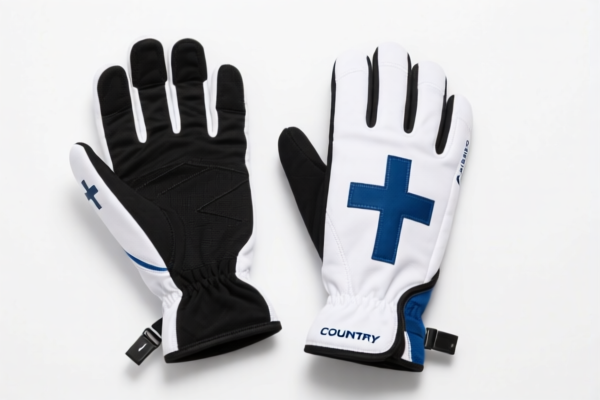
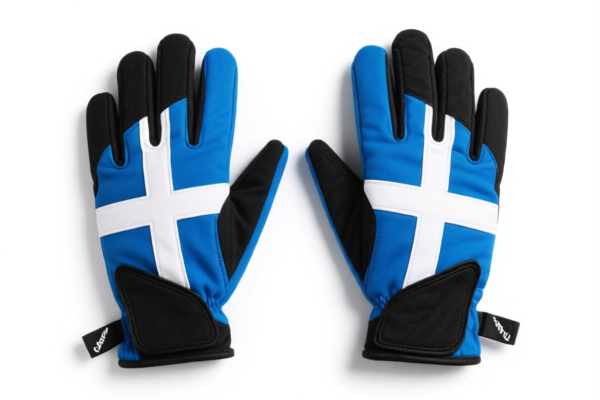
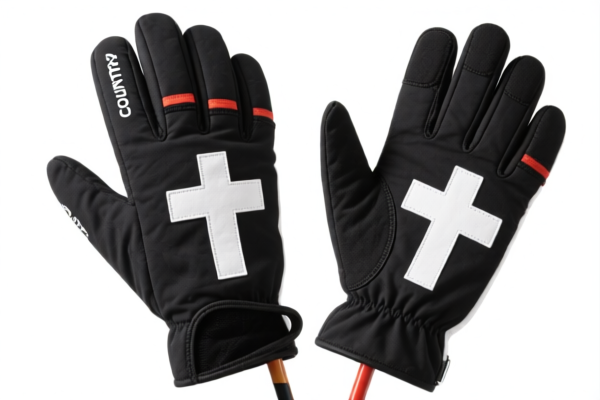
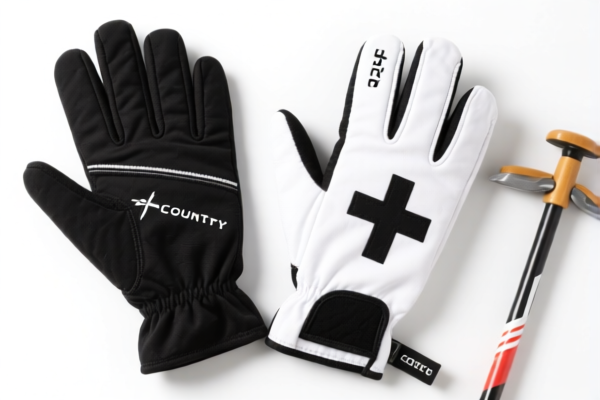
AI Analysis
🎿 Cross Country Skiing Gloves
🌐 HS Code Classification & Customs Clearance Guide | 2026 Latest Tariff Analysis | Strategic Clearance Strategy
📌 I. Product Definition & Classification: What Are "Cross Country Skiing Gloves"?
Cross country skiing gloves are specialized protective gear designed for winter sports, specifically for cross-country skiing. They must balance thermal insulation, moisture management, and dexterity for poling.
In international trade, their classification depends heavily on: 1. Material Composition: Are they made of textile (knitted/woven) or other materials? 2. Surface Treatment: Are they coated with plastic/rubber (for waterproofing/grip)? 3. Specific Use: They are explicitly for sports purposes.
⚠️ Key Classification Nuance:
- If the gloves are primarily textile-based with plastic/rubber coating for grip/waterproofing → They fall under Heading 6116 (Knitted/Crocheted) or 6216 (Woven/Other Textile).
- If they are considered part of the skiing equipment rather than apparel → They might fall under Heading 9506 (Sports Equipment), though this is less common for gloves unless explicitly marketed as specialized non-textile accessory.
📦 II. HS Code Classification Details (2026 Latest Tariff Concordance)
Based on the provided data, here are the potential HS Codes, their logic, and tax implications.
| HS Code | Product Description & Logic | Applicable Scenario | Material Assumption |
|---|---|---|---|
6116.10.08.00 |
Gloves, Knitted/Crocheted, Coated with Plastics/Rubber, for Skiing | Matches form (gloves) and use (skiing); implies plastic/rubber coating common in ski gear. | Implied: Plastic/Rubber Coated Textile |
6116.93.08.00 |
Other Gloves, Knitted/Crocheted, For Sports, Of Synthetic Fibers | Matches form (gloves) and use (skiing); assumes synthetic fibers due to "sports" category fallback. | Implied: Synthetic Fiber (No coating specified) |
6216.00.08.00 |
Gloves, Woven/Other Textile, Coated with Plastics/Rubber, For Skiing | Matches form and use; implies plastic/rubber coating inferred from common sense. | Implied: Plastic/Rubber Coated Textile |
6216.00.35.00 |
Gloves, Woven/Other Textile, For Skiing, Of Cotton | Matches form and use; assumes cotton material. | Implied: Cotton |
9506.19.80.80 |
Articles for Skiing (Other Skiing Equipment) | Matches use (skiing); gloves as part of skiing equipment/accessories. | Any (If not classified as apparel) |
🔍 Critical Note:
- Headings 6116 & 6216 treat gloves as textile products. The presence of plastic/rubber coating changes the sub-heading (e.g.,.10vs.93).
- Heading 9506 treats gloves as sports equipment. This is a competitive alternative but may be scrutinized if the gloves are primarily textile-based apparel.
- Material inference is critical: Customs may require proof of material (cotton vs. synthetic) to distinguish between.35and.08.
💰 III. 2026 Latest Tariff Rate Breakdown (Including Add-on Taxes & Policy Levies)
✅ Applicable Country: United States (US)
✅ Origin: China (CN)
✅ Effective Date: 2025-11-10 onwards (including subsequent imports)
🎯 1. 6116.10.08.00 & 6116.93.08.00 & 9506.19.80.80
(Same Tax Structure in Provided Data)
| Item | Content |
|---|---|
| Base Duty Rate | 2.8% (Ad Valorem) |
| Section 301 (Added Duty) | +7.5% (List 3 Tariff Rate Exclusion) |
| IEEPA (122 Clause) Duty | +10.0% (China-specific surcharge) |
| Total Effective Rate | 20.3% |
| Tax Calculation | CIF Value × 20.3% |
| De Minimis Exemption | ❌ Not Applicable (Deny de minimis for these codes under current trade policies) |
| Legal Basis Path | USITC:6116.10.08.00 → 301:Footnote_9903.88.01 → IEEPA:9903.01.24 |
📌 Explanation:
- The 2.8% base rate is standard for textile/apparel imports.
- The 7.5% is the Section 301 tariff applied to Chinese imports.
- The 10% is an additional surcharge under the International Emergency Economic Powers Act (IEEPA).
- Total: 20.3%. This is a significant cost that must be factored into landed cost calculations.
🎯 2. 6216.00.08.00
(Coated Gloves, Woven/Other Textile)
| Item | Content |
|---|---|
| Base Duty Rate | 0.8% (Ad Valorem) |
| Section 301 (Added Duty) | +7.5% |
| IEEPA (122 Clause) Duty | +10.0% |
| Total Effective Rate | 18.3% |
| Tax Calculation | CIF Value × 18.3% |
| De Minimis Exemption | ❌ Not Applicable |
| Legal Basis Path | USITC:6216.00.08.00 → 301:Footnote_9903.88.01 → IEEPA:9903.01.24 |
📌 Advantage:
- Lower base duty (0.8%) compared to knitted gloves (2.8%).
- Savings: 2.0% lower total duty rate compared to6116codes.
🎯 3. 6216.00.35.00
(Cotton Gloves, Woven/Other Textile)
| Item | Content |
|---|---|
| Base Duty Rate | 2.8% (Ad Valorem) |
| Section 301 (Added Duty) | 0.0% (Exempt from Section 301?) |
| IEEPA (122 Clause) Duty | +10.0% |
| Total Effective Rate | 12.8% |
| Tax Calculation | CIF Value × 12.8% |
| De Minimis Exemption | ❌ Not Applicable |
| Legal Basis Path | USITC:6216.00.35.00 → IEEPA:9903.01.24 |
📌 Best Option for Cost Savings:
- If the gloves are 100% Cotton and Woven/Non-Knitted, this code offers the lowest total duty at 12.8%.
- Crucial: Must prove material is Cotton to avoid reclassification to6216.00.08.00(18.3%) or6116(20.3%).
- Note: Section 301 appears to be 0% for this specific sub-code in the provided data, which is a major savings vs. other textile codes.
🛠️ IV. Customs Clearance Practical Advice (Battle-Tested Pitfall Avoidance)
✅ 1. Required Documentation Checklist (Non-Negotiable)
| Document | Mandatory? | Purpose |
|---|---|---|
| ✅ Product Specification Sheet | ✔️ | Must specify: Material % (Cotton/Synthetic), Knitted vs. Woven, Coating presence. |
| ✅ Material Composition Label | ✔️ | Clear indication of "100% Cotton" or "Polyester Blend" to justify HS Code choice. |
| ✅ Product Photos (Clear) | ✔️ | Show coating (if any), lining, and overall structure. |
| ✅ Commercial Invoice | ✔️ | Description must match HS Code logic (e.g., "Ski Gloves, Cotton, Woven"). |
| ✅ Packing List | ✔️ | Ensure no mixed materials in one shipment if trying to use 6216.00.35.00. |
| ✅ Origin Certificate | ✔️ | Confirm China origin to apply correct 301/IEEPA rates. |
✅ 2. Declaration Strategy (Key Mantras)
🔥 “Material is King, Coating is Queen, Use is Essential!”
| Scenario | Correct Declaration | Wrong Practice |
|---|---|---|
| Knitted + Plastic Coating | 6116.10.08.00 |
Declare as "Cotton Gloves" → 20.3% vs potential misclassification |
| Woven + Plastic Coating | 6216.00.08.00 |
Declare as "Ski Equipment" → 18.3% vs 20.3% |
| 100% Cotton, Woven, No Coating | 6216.00.35.00 |
Declare as "Synthetic Gloves" → 12.8% vs 18.3%+ |
| General Ski Accessory | 9506.19.80.80 |
Risky if clearly textile apparel → 20.3% |
📌 Critical Tip:
- If you claim6216.00.35.00(12.8%), customs will ask for material proof. If they find polyester, they will reclassify to6216.00.08.00(18.3%) or6116(20.3%), plus penalties.
- Do not declare "Ski Gloves" under9506if they are standard textile gloves; customs prefers textile headings (61/62) for apparel-like items.
✅ 3. Special Circumstances
| Situation | Handling Advice |
|---|---|
| Mixed Material Gloves (e.g., Cotton palm, Synthetic back) | Declare based on chief material or essential character. If cotton palm dominates, argue for 6216.00.35.00. |
| Gloves with Grip Particles | Clearly state "Plastic/Rubber Coated" to justify .10 or .08 sub-headings. |
| OEM/Custom Branding | Provide brand authorization and design specs to avoid "non-standard" scrutiny. |
🌍 V. Global Market Clearance Comparison (2026 Latest)
| Country/Region | Recommended HS Code | Total Duty (China Origin) | Certification Req. | Notes |
|---|---|---|---|---|
| 🇺🇸 USA | 6216.00.35.00 (if Cotton) |
12.8% | None (Textile) | Best rate if cotton proven. |
| 🇺🇸 USA | 6116.10.08.00 (Knitted/Coated) |
20.3% | None (Textile) | Standard for most ski gloves. |
| 🇨🇳 China | 6116.10.08.00 |
~5-7% (Import Duty) | None | Lower import duty for China. |
| 🇪🇺 EU | 6116.10.08.00 |
4-8% (CE/RoHS not needed) | CE (if PPE) | No Section 301 equivalent. |
| 🇯🇵 Japan | 6116.10.08.00 |
5-10% | None | Standard MFN rate. |
📌 Conclusion:
- The US market is the most expensive due to 301 and IEEPA tariffs.
- Optimization Strategy: If gloves are cotton-based and woven, use6216.00.35.00to save 7.5%–8.3% in duty compared to knitted/coated options.
- If gloves are knitted or coated,6216.00.08.00(18.3%) is better than6116(20.3%).
📌 VI. Common Mistakes & Pitfalls (Lessons Learned)
❌ Mistake 1: Declaring "Ski Gloves" under 9506.19.80.80 without justification.
👉 Consequence: Customs may reject and reclassify to textile heading (61/62), causing delays and potential back-duties.
❌ Mistake 2: Claiming 6216.00.35.00 (12.8%) for Polyester gloves.
👉 Consequence: Audit failure, reclassification to 6116.10.08.00 (20.3%), plus penalties and interest.
❌ Mistake 3: Ignoring "Coating" in description.
👉 Consequence: If gloves are coated but declared as uncoated, they may be misclassified. Correct code is 6116.10.08.00 or 6216.00.08.00.
✅ Correct Declaration Example:
"Cross Country Skiing Gloves, 100% Cotton, Woven Construction, No Plastic Coating, Unlined, Model XYZ" →
6216.00.35.00
🎯 VII. Conclusion: Smart Classification, Cost Savings!
🎯 Remember the Golden Rules:
🔹 “Cotton + Woven + No Coating = 12.8% (Best)”
🔹 “Woven + Coated = 18.3% (Good)”
🔹 “Knitted + Any = 20.3% (Standard)”
🔹 “Ski Equipment (9506) = Last Resort, Same 20.3%”
📌 Pro Tip:
- Always provide material composition.
- If possible, design gloves with 100% Cotton woven structure to access the 12.8% rate.
- Avoid knitted construction if you want to use
6216codes, as6116is for knitted/crocheted and has higher base duty.
📣 Immediate Action Required:
📞 Contact your freight forwarder with the Material Composition Report.
📄 Apply for HS Code Pre-Ruling from US CBP if importing large volumes.
🚀 Optimize your product design to fit6216.00.35.00for maximum tariff savings!
✨ Precision in Classification, Profit in Your Pocket!
💼 Every 1% of Duty Saved is Pure Profit!
Customer Reviews
About HS Code Classification
The Harmonized System (HS) is an internationally standardized nomenclature developed by the World Customs Organization (WCO) to classify traded products. Over 200 countries use the HS system as the basis for customs tariffs, trade statistics, and import/export regulations.
Each HS code follows a hierarchical structure:
- Chapter (2 digits) — Broad category of goods (e.g., Chapter 84: Machinery and Mechanical Appliances)
- Heading (4 digits) — More specific grouping within the chapter
- Subheading (6 digits) — Internationally standardized breakdown, used by all WCO member countries
- National subdivisions (8-10 digits) — Country-specific extensions for further classification, such as US HTSUS 10-digit codes
Correct HS code classification is essential for smooth customs clearance, accurate duty payment, and compliance with trade regulations. Misclassification can lead to customs delays, overpayment of duties, or penalties.
When importing from CN to US, the applicable tariff rates may include:
- Most-Favored-Nation (MFN) rate — The standard duty rate applied to WTO members
- General rate — Applied to countries without trade agreements
- Trade remedy duties — Additional tariffs such as Section 301 (anti-dumping), Section 232 (national security), or countervailing duties
The information provided on this page is for reference purposes only. For official classification, please consult with your local customs authority or a licensed customs broker.