Cross stitch Hoop Set
CN → US| HS Code | Tariff Rate | Origin | Destination | Doc |
|---|---|---|---|---|
| 6304993500 | 28.8% | CN | US | Official Doc |
| 6304996040 | 20.7% | CN | US | Official Doc |
| 4421999880 | 38.3% | CN | US | Official Doc |
| 7326908688 | 87.9% | CN | US | Official Doc |
| 3926909989 | 22.8% | CN | US | Official Doc |
Product Images
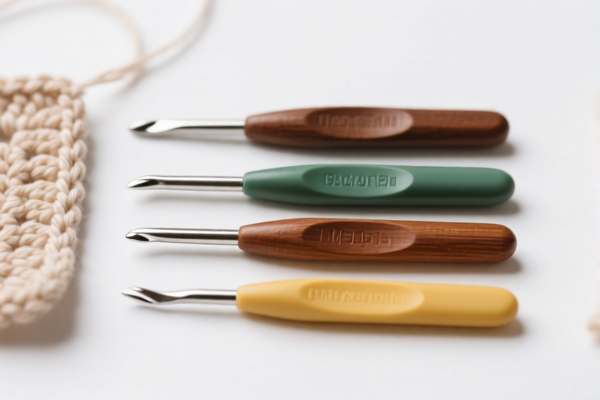
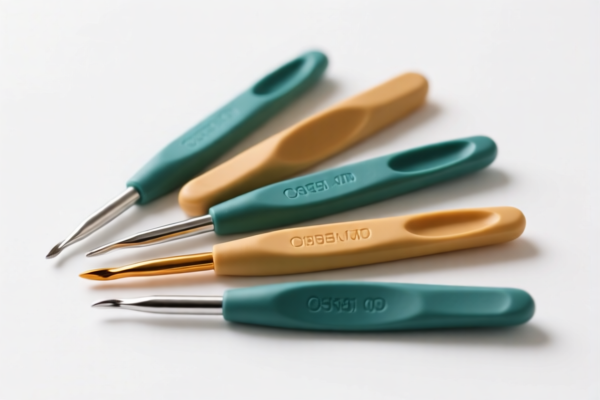
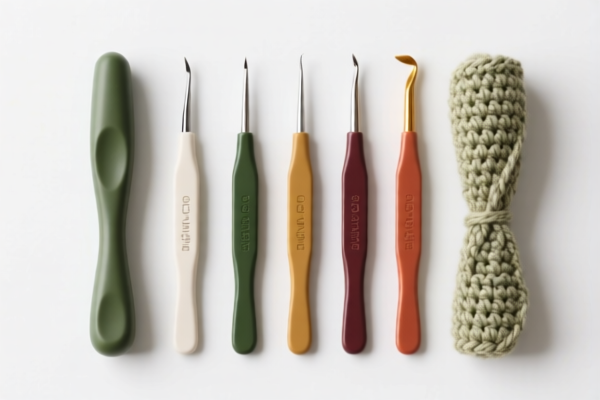
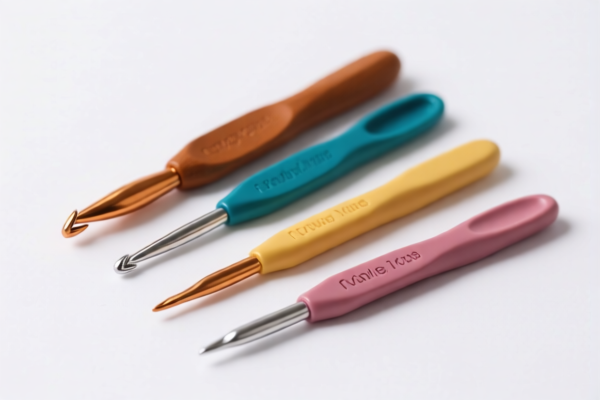
AI Analysis
🧵 Cross Stitch Hoop Set: HS Code Classification & 2026 Customs Clearance Guide
🌐 HS Code Reference & Clearance Guide | 2026 Latest Tariff Analysis | Professional Clearance Strategy
📌 I. Product Definition & Classification: Do You Really Understand "Cross Stitch Hoop Sets"?
A Cross Stitch Hoop Set is a home textile accessory used to hold fabric taut while embroidery or cross-stitching. In international trade, its classification depends heavily on material composition and functional purpose. Since these sets can be made of wood, plastic, metal, or treated as textile accessories, they fall under different HS Code categories, leading to significantly different tariff rates.
⚠️ Key Distinction Point:
- If classified as a textile accessory (part of home textiles) → Lower Base Duty (3.2%-11.3%)
- If classified as a wooden/plastic/metal good → Higher Base Duty + Potential 25% Section 301 Tariff
- Material is the deciding factor, not just the function!
📦 II. HS Code Classification Details (2026 Latest Tariff Authority)
Below are the four possible classifications for a "Cross Stitch Hoop Set" based on material and usage, derived from the provided data.
| HS Code | Product Description | Material | Tax Category | Total Tax Rate | Key Reasoning |
|---|---|---|---|---|---|
6304.99.60.40 |
Home Textile Accessory (Non-knitted) | Textile/Mixed | Home Textiles | 20.7% | Classified as a non-knitted home textile accessory. Best for sets where the hoop is considered part of the textile kit. |
6304.99.35.00 |
Textile/Sewing Auxiliary Supply | Wood/Plastic | Sewing Supplies | 28.8% | Classified as a sewing aid/frame. Includes wooden or plastic frames. |
3926.90.99.89 |
Other Plastic Articles | Plastic | Plastic Products | 22.8% | Specifically for hoops made primarily of plastic. Fits under "other plastic articles." |
4421.99.98.80 |
Other Wooden Articles | Wood | Wood Products | 38.3% | For wooden hoops. Classified under general wood articles, not specifically for textile use. |
7326.90.86.88 |
Other Articles of Iron/Steel | Metal | Metal Products | 87.9% | For metal hoops. Highest tax rate due to high additional tariffs on metal goods. |
🔍 Critical Warning:
- Do not assume "Cross Stitch" automatically means "Textile" (HS 6304).
- If the hoop is metal, you will face 87.9% tax.
- If the hoop is wood, you face 38.3%.
- Only if declared as a textile accessory or plastic sewing aid can you minimize the base duty.
💰 III. 2026 Latest Tariff Rate Breakdown (Including Additional Taxes)
✅ Applicable Country: United States (US)
✅ Origin: China (CN)
✅ Effective Date: Current rates apply (including Section 301 and IEEPA tariffs)
🎯 1. 6304.99.60.40 —— Home Textile Accessory (Best Case for Low Base Duty)
| Item | Detail |
|---|---|
| Base Duty | 3.2% |
| Additional Duty (Section 301) | +7.5% |
| IEEPA Surcharge (China) | +10% |
| Total Effective Tax Rate | 20.7% |
| Calculation | CIF Value × 20.7% |
| De Minimis Exemption | ❌ Not Eligible (Section 301 tariffs usually negate de minimis for these categories) |
📌 Explanation:
- This is the most favorable classification for cost purposes.
- It assumes the hoop is viewed as an integral part of the home textile kit rather than a standalone tool.
- Strategy: Ensure product description emphasizes "Home Textile Accessory" or "Embroidery Kit Accessory."
🎯 2. 6304.99.35.00 —— Sewing Auxiliary Supply
| Item | Detail |
|---|---|
| Base Duty | 11.3% |
| Additional Duty (Section 301) | +7.5% |
| IEEPA Surcharge (China) | +10% |
| Total Effective Tax Rate | 28.8% |
| Calculation | CIF Value × 28.8% |
📌 Explanation:
- Slightly higher base duty (11.3%) than textile accessories.
- Still benefits from the same 7.5% + 10% additional tariffs.
- Suitable if the hoop is marketed as a sewing tool rather than a textile piece.
🎯 3. 3926.90.99.89 —— Plastic Hoop (Plastic Article)
| Item | Detail |
|---|---|
| Base Duty | 5.3% |
| Additional Duty (Section 301) | +7.5% |
| IEEPA Surcharge (China) | +10% |
| Total Effective Tax Rate | 22.8% |
| Calculation | CIF Value × 22.8% |
📌 Explanation:
- Low base duty (5.3%), but total remains moderate due to additional taxes.
- Must declare as "Plastic Article" if the hoop is 100% plastic.
- Do not misdeclare plastic as "textile" to avoid customs penalties.
🎯 4. 4421.99.98.80 —— Wooden Hoop (Wood Article)
| Item | Detail |
|---|---|
| Base Duty | 3.3% |
| Additional Duty (Section 301) | +25.0% |
| IEEPA Surcharge (China) | +10% |
| Total Effective Tax Rate | 38.3% |
| Calculation | CIF Value × 38.3% |
📌 Explanation:
- High Additional Duty: Wood products from China are subject to 25% Section 301 tariff.
- Even with a low base duty (3.3%), the total is nearly double that of plastic/textile classifications.
🎯 5. 7326.90.86.88 —— Metal Hoop (Metal Article)
| Item | Detail |
|---|---|
| Base Duty | 2.9% |
| Additional Duty (Section 301) | +25.0% |
| IEEPA Surcharge (China) | +10% |
| Steel/Aluminum/Copper Surcharge | +50% (Specific to metal products in some contexts) |
| Total Effective Tax Rate | 87.9% |
| Calculation | CIF Value × 87.9% |
📌 Explanation:
- Extremely High Tax Rate: Metal embroidery hoops are heavily penalized.
- The 50% surcharge for metal products (if applicable) can push the effective rate even higher depending on specific customs interpretation.
- Avoid this classification if possible; consider if the product can be argued as a "textile accessory" instead.
🛠️ IV. Customs Clearance Practical Advice (Real-World Pitfall Guide)
✅ 1. Required Documentation Checklist
| Document | Required? | Purpose |
|---|---|---|
| ✅ Product Photos | ✔️ | Must clearly show material (Wood/Plastic/Metal) and structure. |
| ✅ Commercial Invoice | ✔️ | Must specify "Cross Stitch Hoop Set" and Material Composition. |
| ✅ Packing List | ✔️ | List all items in the set (hoops, fabric, thread). |
| ✅ Material Declaration | ✔️ | Explicitly state: "Hoop made of [Wood/Plastic/Metal]." |
| ✅ Product Description | ✔️ | Use keywords: "Home Textile Accessory," "Embroidery Frame," not just "Tool." |
✅ 2. Declaration Strategy (Key Tips)
🔥 “Declare Material, Not Just Function! Textile Route is Cheapest!”
| Scenario | Recommended HS Code | Why? |
|---|---|---|
| Plastic Hoop | 3926.90.99.89 |
Low base duty (5.3%). Clear plastic classification. |
| Wooden Hoop | 6304.99.35.00 (if arguable) or 4421.99.98.80 |
Try to classify as Sewing Auxiliary (28.8%) instead of Wood (38.3%). Requires strong justification. |
| Mixed Set (Textile + Hoop) | 6304.99.60.40 |
Best option if the hoop is integral to a textile kit. Total tax only 20.7%. |
| Metal Hoop | 7326.90.86.88 |
No easy escape. High tax. Consider if plastic/wood alternative is possible for market. |
⚠️ Warning:
- Do not declare a wooden hoop as "plastic" or "textile" to save taxes. Customs may inspect and impose fines + back taxes.
- If the set includes fabric/thread, argue for HS 6304 (Textile Accessory) to capture the lower 3.2%-11.3% base duty.
✅ 3. Special Cases & Mitigation
| Situation | Advice |
|---|---|
| OEM/Custom Sets | Provide design specs showing the hoop is a "component" of the textile kit, not a standalone tool. |
| Metal Hoops | If possible, switch to plastic or wood suppliers to reduce tax from 87.9% to <40%. |
| De Minimis (Section 321) | ❌ Not Applicable. Section 301 tariffs generally prevent de minimis exemption for these HS codes from China. |
🌍 V. Global Market Comparison (2026)
| Country/Region | Recommended HS Code | Est. Total Tax (China Origin) | Notes |
|---|---|---|---|
| 🇺🇸 USA | 6304.99.60.40 (Best) |
20.7% - 87.9% | Depends on material. Metal is very expensive. |
| 🇪🇺 EU | 6304.99 (Textile) |
~6.5% | Lower additional tariffs compared to US. |
| 🇨🇳 China (Import) | 6304.99 |
~10-13% | Lower base duties, no Section 301. |
📌 Conclusion:
- The US market is the most challenging due to Section 301 + IEEPA tariffs.
- Plastic and Textile-accessory classifications offer the best cost efficiency.
- Metal hoops are economically unviable for mass export to the US unless priced high.
📌 VI. Common Mistakes & Pitfalls (Lessons Learned)
❌ Mistake 1: Declaring a wooden hoop as plastic
👉 Consequence: Customs inspection reveals wood → Penalties + Back Taxes.
❌ Mistake 2: Declaring a metal hoop as textile accessory
👉 Consequence: Customs reclassifies to 7326.90.86.88 → 87.9% tax + fines.
❌ Mistake 3: Ignoring Section 301 for wood/metal
👉 Consequence: Unexpected 25% surcharge on top of base duty.
✅ Correct Approach:
“Be Honest About Material. Optimize Function. Choose Textile Route if Possible.”
Example Description:
"Cross Stitch Kit with Plastic Hoop, Including Embroidery Fabric and Thread. Home Textile Accessory."
→ Aim for HS 6304.99.60.40 (20.7%).
🎯 VII. Conclusion: Professional Declaration, Cost Savings!
🎯 Remember the Golden Rule:
🔹 “Material Dictates Duty. Textile Route is Cheapest. Metal is Most Expensive.”
🔹 “20.7% vs 87.9%: That’s a 67% Difference!”
🔹 “Declare Accurately to Avoid Customs Penalties!”
📌 Pro Tip:
If your product is a set (hoop + fabric + thread), strongly argue for HS 6304.99.60.40 (Home Textile Accessory) to benefit from the lowest base duty (3.2%).
Contact a professional customs broker for an Advance Ruling if the material is mixed or unclear.
📣 Immediate Action:
📞 Verify Material Composition
📄 Prepare Detailed Product Description
📊 Calculate Total Landed Cost Based on Correct HS Code
🚀 Clear Customs Smoothly, Maximize Profit!
✨ Professional Customs Clearance Starts with Accurate Classification!
💼 Every Percentage Point Matters in International Trade!
Customer Reviews
About HS Code Classification
The Harmonized System (HS) is an internationally standardized nomenclature developed by the World Customs Organization (WCO) to classify traded products. Over 200 countries use the HS system as the basis for customs tariffs, trade statistics, and import/export regulations.
Each HS code follows a hierarchical structure:
- Chapter (2 digits) — Broad category of goods (e.g., Chapter 84: Machinery and Mechanical Appliances)
- Heading (4 digits) — More specific grouping within the chapter
- Subheading (6 digits) — Internationally standardized breakdown, used by all WCO member countries
- National subdivisions (8-10 digits) — Country-specific extensions for further classification, such as US HTSUS 10-digit codes
Correct HS code classification is essential for smooth customs clearance, accurate duty payment, and compliance with trade regulations. Misclassification can lead to customs delays, overpayment of duties, or penalties.
When importing from CN to US, the applicable tariff rates may include:
- Most-Favored-Nation (MFN) rate — The standard duty rate applied to WTO members
- General rate — Applied to countries without trade agreements
- Trade remedy duties — Additional tariffs such as Section 301 (anti-dumping), Section 232 (national security), or countervailing duties
The information provided on this page is for reference purposes only. For official classification, please consult with your local customs authority or a licensed customs broker.