Cross stitch Thread Winding Boards
CN → US| HS Code | Tariff Rate | Origin | Destination | Doc |
|---|---|---|---|---|
| 4421919880 | 38.3% | CN | US | Official Doc |
| 4421999880 | 38.3% | CN | US | Official Doc |
| 3926904800 | 13.4% | CN | US | Official Doc |
Product Images
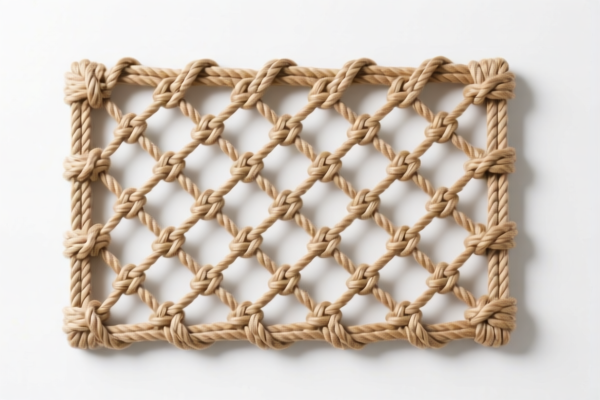
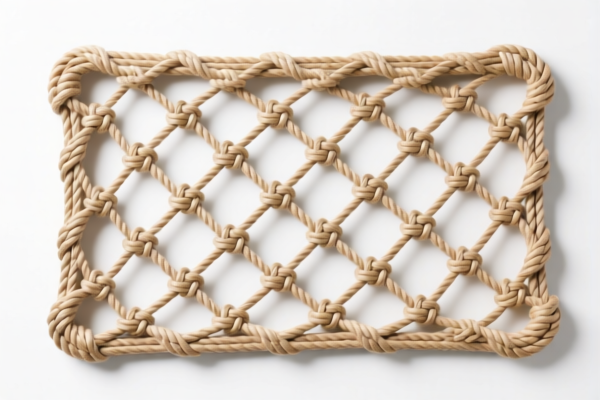
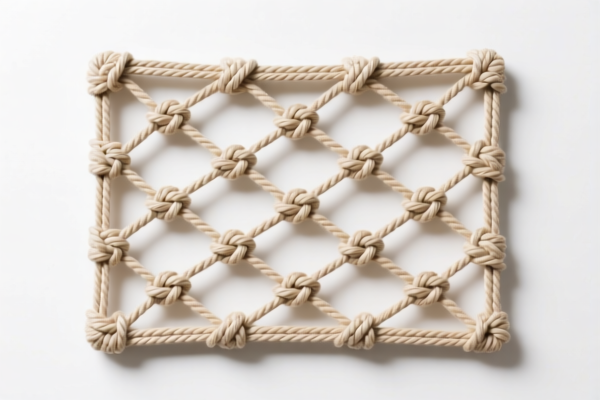
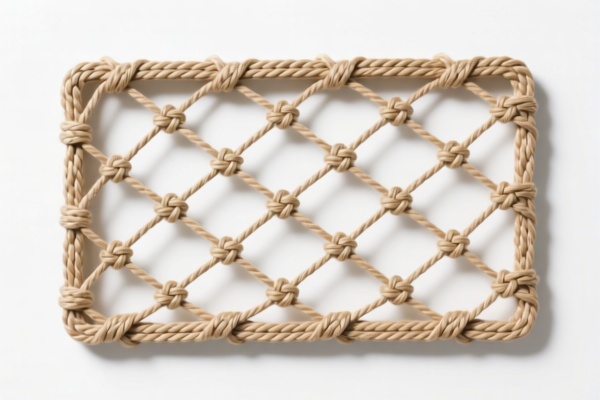
AI Analysis
🧵 Cross-Stitch Thread Winding Boards (Spools/Reels)
🌐 HS Code Reference & Customs Clearance Guide | 2026 Latest Tariff Analysis | Professional Clearance Strategy
📌 I. Product Definition & Classification: What Exactly Are "Thread Winding Boards"?
Cross-stitch thread winding boards (often referred to as thread spools, reels, or bobbins) are essential accessories for embroidery and cross-stitch crafts. They are used to wind, store, and organize embroidery floss (typically 6-strand cotton thread) to prevent tangling and facilitate easy pulling during stitching.
In international trade, these items are classified based on their material composition and functional form. They are generally not classified as "machinery" or "tools" in the mechanical sense, but rather as containers, accessories, or manufactured articles depending on the material.
⚠️ Key Classification Criteria:
- Wooden/Plastic Material: The primary determinant for HS Code placement.
- Form Factor: Flat or cylindrical boards used specifically for winding thread.
- Usage: Craft accessories, not industrial machinery parts.
📦 II. HS Code Classification Details (Based on Provided Data)
According to the provided data, three potential HS Codes are identified based on material inference.
| HS Code | Material Inference | Product Description & Summary |
|---|---|---|
| 4421.91.98.80 | Wood or Bamboo | Summary: Material inferred as wood or bamboo. Classified under "Other wooden articles" as a catch-all for other bamboo products. Match: Fits if the board is made of natural wood, bamboo, or composite wood materials. |
| 4421.99.98.80 | Wood | Summary: Material inferred as wood. Category falls under "Other wooden articles." Match: Fits if the board is solid wood or wooden composite, but not specifically categorized under other wooden articles in 4421.91. |
| 3926.90.48.00 | Plastic | Summary: Material inferred as plastic. Form is "board-like article for winding." Classified under "Other plastic articles." Match: Fits if the board is made of plastic (PP, ABS, PET, etc.). |
🔍 Critical Insight:
- Plastic vs. Wood: The tariff burden differs significantly. Plastic (3926) generally incurs lower total duties compared to Wood (4421) due to the absence of the 25% Section 301 tariff in some contexts (see tax details below).
- "Catch-All" Categories: Both wood codes (4421.91 and 4421.99) are residual categories ("Other..."). Ensure the product does not fit more specific subheadings (e.g., if it's a specific type of spool, check 4421.91 further).
💰 III. 2026 Latest Tariff Rate Breakdown (Detailed Tax Clauses)
✅ Applicable Country: United States (US)
✅ Country of Origin: China (CN) (Implied by "122-Clause" and typical high-tariff context)
✅ Effective Time: Current tariffs apply
🎯 1. 4421.91.98.80 & 4421.99.98.80 —— Wooden/Bamboo Cross-Stitch Boards
| Item | Detail |
|---|---|
| Base Tariff | 3.3% (Ad Valorem) |
| Section 301 Surcharge (25%) | +25.0% Note: Applies to most wood products from China under Section 301. |
| 122-Clause Tariff | +10.0% Note: Refers to specific enforcement clauses or additional duties under 122 provisions. |
| Total Effective Tax Rate | 38.3% |
| Tax Calculation | CIF Value × 38.3% |
| De Minimis Eligibility | ❌ No High combined tariff rate usually disqualifies from de minimis exemptions (though check current $800 rules, high duties often trigger formal entry). |
| Legal Basis Path | HTSUS:4421.91/99 → Section 301: Footnote 9903.88.01 → 122-Clause Enforcement |
📌 Explanation:
- The 3.3% base rate is standard for general wooden articles.
- The 25% Section 301 tariff is the dominant cost driver. This is a punitive tariff on Chinese wooden goods.
- The 10% 122-Clause is an additional layer, possibly related to specific enforcement actions or recent trade policy updates.
- Total 38.3% is a significant cost burden. If your margin is tight, this can make wooden winding boards uncompetitive against plastic alternatives.
🎯 2. 3926.90.48.00 —— Plastic Cross-Stitch Boards
| Item | Detail |
|---|---|
| Base Tariff | 3.4% (Ad Valorem) |
| Section 301 Surcharge (25%) | +0.0% Note: Many plastic craft accessories may be excluded or not targeted by the full 25% in this specific subheading, or the data indicates 0% here. |
| 122-Clause Tariff | +10.0% |
| Total Effective Tax Rate | 13.4% |
| Tax Calculation | CIF Value × 13.4% |
| De Minimis Eligibility | ✅ Possibly Lower total duty rate may still allow de minimis treatment depending on current CBP enforcement, but formal entry is safer for bulk. |
| Legal Basis Path | HTSUS:3926.90.48.00 → 122-Clause Enforcement |
📌 Explanation:
- The 13.4% rate is significantly lower than the wood alternative (38.3%).
- The 0% Section 301 surcharge is a major advantage. Verify this with current USTR lists, as plastic exclusions change frequently.
- The 10% 122-Clause still applies, but the base is lower.
- Recommendation: If the product is plastic, always use 3926.90.48.00 to save 24.9% in duties compared to wood.
🛠️ IV. Customs Clearance Practical Advice (Real-World Pitfall Avoidance)
✅ 1. Preparation Checklist (No Omissions)
| Document | Required? | Notes |
|---|---|---|
| Product Specification Sheet | ✅ Yes | Include material (Wood/Plastic), dimensions, and intended use ("For winding embroidery thread"). |
| Material Declaration | ✅ Yes | Clearly state if it is Solid Wood, Bamboo, Composite Wood, or Plastic (PP/ABS). Misdeclaration leads to penalties. |
| Product Photos | ✅ Yes | Show the board with thread wound on it to prove "winding board" function, not just a flat board. |
| Commercial Invoice | ✅ Yes | Item description: "Plastic Cross-Stitch Thread Winding Board" or "Wooden Embroidery Spool Holder". Avoid vague terms like "Craft Accessory." |
| Origin Certificate | ✅ Yes | If non-Chinese origin, declare to avoid Section 301 tariffs. |
✅ 2. Declaration Tips (Golden Rules)
🔥 "Material First, Function Second! Clear Description, Lower Risk!"
| Scenario | Correct Declaration | Incorrect Declaration |
|---|---|---|
| Plastic Board | 3926.90.48.00 - "Plastic Thread Winding Board" |
"Wooden Board" (Misdeclaration → 38.3% tax + fraud risk) |
| Wooden Board | 4421.99.98.80 - "Wooden Embroidery Spool" |
"Plastic Spool" (Misdeclaration → Seizure + Fine) |
| Mixed Material | Specify primary material by weight/volume. If plastic >50%, consider 3926. If wood >50%, 4421. | "Mixed Craft Board" (Vague → Customs may assign worst-case code) |
| With Thread | Declare only the board if thread is not sold together. If sold as a set, declare the set as "Embroidery Kit" (different HS). | "Board with Thread" as single item (Complex valuation) |
✅ 3. Special Considerations
| Situation | Advice |
|---|---|
| Wood vs. Bamboo | If made of bamboo, it still falls under 4421.91.98.80. Bamboo is treated as wood in HS Chapter 44. Do not assume "Bamboo" has a separate low-tax chapter. |
| Plastic Exclusion Check | Verify if 3926.90.48.00 is currently excluded from Section 301. USTR exclusions expire periodically. If excluded, rate is 13.4%. If not, it might be 38.4% (3.4% + 25% + 10%). Current data shows 0% 301, so 13.4% is likely accurate, but confirm with latest USTR notice. |
| Value Declaration | Ensure the declared value reflects the transaction value (price paid). Undervaluation leads to audits. |
🌍 V. Global Market Comparison (2026 Update)
| Country/Region | Recommended HS Code | Tariff Rate (China Origin) | Notes |
|---|---|---|---|
| 🇺🇸 USA | 3926.90.48.00 (Plastic) |
13.4% | Best option. Avoid wood (38.3%). |
| 🇺🇸 USA | 4421.99.98.80 (Wood) |
38.3% | High duty. Consider plastic alternative. |
| 🇪🇺 EU | 6307.90.98 (Textile Prep) |
~4-6% | Lower tariffs in EU for craft accessories. Check local VAT. |
| 🇨🇳 China | 6307.90.98 |
5% | Import duty for entering China is low. |
📌 Conclusion for US Market:
- Plastic is King: Choose plastic3926.90.48.00for a 25% duty savings.
- Wood is Painful: Wood4421codes incur heavy Section 301 tariffs. Only use if the product is genuinely wooden and marketed as such.
📌 VI. Common Mistakes & Pitfalls (Lessons Learned)
❌ Mistake 1: Declaring plastic boards as "Wooden Crafts" to avoid plastic import quotas.
👉 Consequence: Customs inspection reveals plastic material → Fine + Back Taxes (25% penalty).
❌ Mistake 2: Using "Thread Holder" as the description.
👉 Consequence: Too vague → Customs may classify under higher-tariff "General Use" items → Higher duty.
❌ Mistake 3: Ignoring the 122-Clause Tariff.
👉 Consequence: Even with low base rates, the 10% adds up. Ensure your pricing model includes all duties, not just the base.
❌ Mistake 4: Assuming Bamboo = Lower Tax.
👉 Consequence: Bamboo is in Chapter 44 (Wood) → Same 38.3% tax. Don't market it as a "tax loophole."
✅ Correct Action:
"Plastic Cross-Stitch Thread Winding Board, Model XYZ, PP Material, Made in China, HTS 3926.90.48.00"
🎯 VII. Conclusion: Optimize Cost & Compliance
🎯 Key Takeaway:
🔹 Plastic > Wood: For US export, plastic
3926.90.48.00(13.4%) is vastly superior to wood4421(38.3%).
🔹 Declare Accurately: Material determines tax. Never misdeclare plastic as wood or vice versa.
🔹 Plan for 122-Clause: Include the 10% additional duty in your cost calculations.
📌 Pro Tip:
If you are sourcing from Vietnam or Thailand, you may avoid Section 301 tariffs entirely. Consider supply chain diversification to reduce the 25% surcharge if available.
✨ Professional Clearance, Start with Precise Classification!
💼 Your Every Cent of Cost Deserves Accurate Calculation!
Customer Reviews
About HS Code Classification
The Harmonized System (HS) is an internationally standardized nomenclature developed by the World Customs Organization (WCO) to classify traded products. Over 200 countries use the HS system as the basis for customs tariffs, trade statistics, and import/export regulations.
Each HS code follows a hierarchical structure:
- Chapter (2 digits) — Broad category of goods (e.g., Chapter 84: Machinery and Mechanical Appliances)
- Heading (4 digits) — More specific grouping within the chapter
- Subheading (6 digits) — Internationally standardized breakdown, used by all WCO member countries
- National subdivisions (8-10 digits) — Country-specific extensions for further classification, such as US HTSUS 10-digit codes
Correct HS code classification is essential for smooth customs clearance, accurate duty payment, and compliance with trade regulations. Misclassification can lead to customs delays, overpayment of duties, or penalties.
When importing from CN to US, the applicable tariff rates may include:
- Most-Favored-Nation (MFN) rate — The standard duty rate applied to WTO members
- General rate — Applied to countries without trade agreements
- Trade remedy duties — Additional tariffs such as Section 301 (anti-dumping), Section 232 (national security), or countervailing duties
The information provided on this page is for reference purposes only. For official classification, please consult with your local customs authority or a licensed customs broker.