Crosslinked Polymer Ion Exchange Resins
CN → US| HS Code | Tariff Rate | Origin | Destination | Doc |
|---|---|---|---|---|
| 3914002000 | 35.0% | CN | US | Official Doc |
| 3914006000 | 38.9% | CN | US | Official Doc |
| 3907995050 | 41.5% | CN | US | Official Doc |
| 3824992900 | 41.5% | CN | US | Official Doc |
| 3907290000 | 41.5% | CN | US | Official Doc |
Product Images
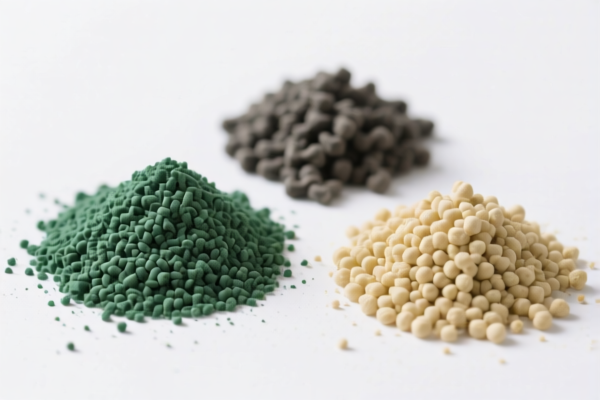
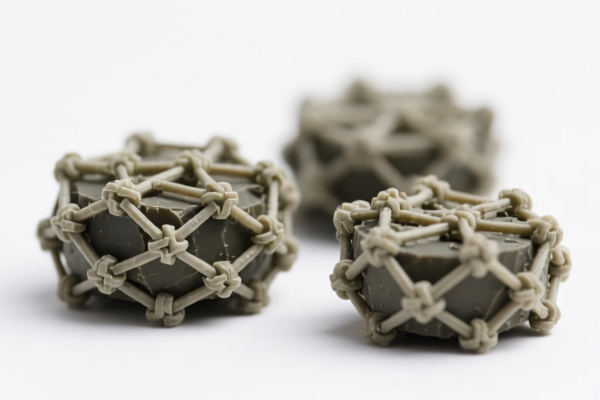

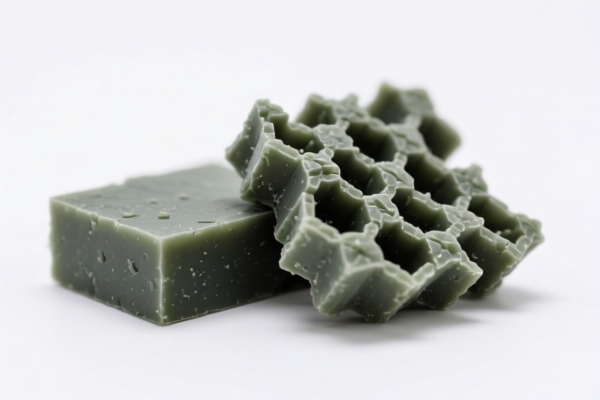
AI Analysis
🧪 Crosslinked Polymer Ion Exchange Resins
🌐 HS Code Reference & Customs Clearance Guide | 2026 Latest Tariff Analysis | Professional Clearance Strategy
📌 I. Product Definition & Classification: Do You Really Understand "Ion Exchange Resins"?
Crosslinked Polymer Ion Exchange Resins are synthetic, insoluble, cross-linked polymer beads used to exchange specific ions within a solution. They are critical components in water purification, hydrometallurgy, food processing, and pharmaceuticals.
In international trade, these resins are classified based on their chemical composition (polymer matrix) and physical form (primary shape vs. finished article). The confusion often arises because they are "polymers" but also "chemical products."
⚠️ Key Distinction:
- If the resin is classified as a specific polymer type (e.g., Phenolic, Polyester, Ether), it falls under Chapter 39 (Plastics).
- If the resin is considered a preparation or mixture not fitting specific polymer definitions, it may fall under Chapter 38 (Miscellaneous Chemical Products).
- Crucial Note for US Imports: The specific polymer subtype dictates the Base Tariff, which significantly impacts the total tax burden when combined with Section 301 and IEEPA surcharges.
📦 II. HS Code Classification Details (2026 Latest Tariff Authority对照)
Based on the provided data, here are the specific HS Codes for Crosslinked Polymer Ion Exchange Resins, ranked by logical chemical categorization:
| HS Code | Product Description (Summary) | Category Logic | Base Tariff |
|---|---|---|---|
| 3914.00.20.00 | Polymer Ion Exchange Resins, conforming to polymer material & ion exchanger use | Phenolic/General Polymers (Specific Heading for Resins) | 0.0% |
| 3914.00.60.00 | Polymer Ion Exchange Resins, matching polymer material & primary forms | Other Polymers (Primary Shape/Unworked) | 3.9% |
| 3907.99.50.50 | Polymer-based Ion Exchange Resin, within Polyester & related polymers | Unsaturated Polyesters (Specific Sub-heading) | 6.5% |
| 3824.99.29.00 | Polymer-based Ion Exchange Resin, as other chemical products/preparations | Misc. Chemical Preparations (Fallback Category) | 6.5% |
| 3907.29.00.00 | Polymer-based Ion Exchange Resin, under Other Polyethers | Polyethers (Specific Polymer Class) | 6.5% |
🔍 Key Insight:
- 3914 is the specific heading for "Ion Exchange Columns and Gas Cleaners; Ion Exchange Resins." This is the most accurate chemical classification if the product is purely the resin bead.
- Codes under 3907 (Polyesters/Polyethers) apply if the resin is specifically identified by its polymer backbone in commercial documents.
- 3824 is often used if the resin is a complex mixture or preparation that doesn't fit the strict "primary shape" definition of Chapter 39.
💰 III. 2026 Latest Tariff Rate Breakdown (Including Surcharges & Policy Add-ons)
✅ Applicable Country: USA (US)
✅ Origin: China (CN)
✅ Effective Date: 2025/2026 Current Standards
🎯 1. HS Code 3914.00.20.00 —— Ion Exchange Resins (Phenolic/General)
| Item | Details |
|---|---|
| Base Tariff | 0.0% (Free under HTSUS for specific ion exchange resins) |
| Section 301 Surcharge | +25.0% (USITC Footnote 9903.88.01 / 301 Tariff List) |
| IEEPA Surcharge | +10.0% (International Emergency Economic Powers Act - China Specific) |
| Total Tax Rate | 35.0% |
| Tax Calculation | CIF Value × 35% |
| De Minimis Exemption | ❌ Not Eligible (deny_de_minimis) |
| Legal Basis Path | HTSUS:3914.00.20.00 → USITC:301_List → IEEPA:China_Tariff |
📌 Explanation:
- Although the base tariff is 0%, the Section 301 25% surcharge and IEEPA 10% surcharge are applied.
- This is the lowest total tax rate among the options provided.
- Recommendation: If your resin is a standard phenolic or generic ion exchange resin, fight for this code.
🎯 2. HS Code 3914.00.60.00 —— Ion Exchange Resins (Other/Primary Shape)
| Item | Details |
|---|---|
| Base Tariff | 3.9% |
| Section 301 Surcharge | +25.0% |
| IEEPA Surcharge | +10.0% |
| Total Tax Rate | 38.9% |
| Tax Calculation | CIF Value × 38.9% |
| De Minimis Exemption | ❌ Not Eligible |
| Legal Basis Path | HTSUS:3914.00.60.00 → USITC:301_List → IEEPA:China_Tariff |
📌 Note:
- The base tariff is slightly higher (3.9%) than the specific resin code (0%).
- This code is often used for "primary forms" of resins that aren't explicitly listed as "Ion Exchange Resins" in the specific subheading 3914.20.
- Total tax is 3.9% higher than code3914.00.20.00.
🎯 3. Codes 3907.99.50.50, 3824.99.29.00, 3907.29.00.00 —— Higher Base Tariff Categories
| Item | Details |
|---|---|
| Base Tariff | 6.5% |
| Section 301 Surcharge | +25.0% |
| IEEPA Surcharge | +10.0% |
| Total Tax Rate | 41.5% |
| Tax Calculation | CIF Value × 41.5% |
| De Minimis Exemption | ❌ Not Eligible |
📌 Applicable Scenarios:
- 3907.99.50.50: Resins specifically identified as Polyesters.
- 3907.29.00.00: Resins specifically identified as Polyethers.
- 3824.99.29.00: Resins classified as Miscellaneous Chemical Preparations (e.g., complex mixtures, pre-packed for retail that don't fit polymer chapters strictly).
- Warning: These codes result in the highest total tax rate (41.5%). Avoid if possible by proving the product is a standard Ion Exchange Resin under Chapter 39.
🛠️ IV. Customs Clearance Practical Advice (Battle-Tested Guide)
✅ 1. Documentation Checklist (Non-Negotiable)
| Document | Mandatory? | Description |
|---|---|---|
| ✅ Product Technical Data Sheet (TDS) | ✔️ | Must specify: Polymer Type (e.g., Phenolic, Polystyrene), Cross-linking Agent, Functional Group (Cation/Anion), Capacity. |
| ✅ MSDS / SDS | ✔️ | Safety Data Sheet, especially for chemical handling. |
| ✅ Commercial Invoice | ✔️ | Must clearly state "Ion Exchange Resin" and NOT just "Plastic Beads" or "Chemical Powder." |
| ✅ Certificate of Origin | ✔️ | Essential for proving CN origin to apply correct 301/IEEPA rates. |
| ✅ Packing List | ✔️ | Detail net weight and packaging type. |
| ✅ Proof of Use (Optional) | ✔️ | If challenged, provide info on end-use (e.g., water treatment plant) to support classification under 3914. |
✅ 2. Declaration Strategy (Key Mnemonic)
🔥 "Resin Specific, 0% Base; Primary Shape, 3.9%; Polyester/Polyether, 6.5%; Mixed Prep, 6.5%!"
| Scenario | Correct HS Code | Total Tax | Why? |
|---|---|---|---|
| Standard Cation/Anion Resin Beads | 3914.00.20.00 |
35.0% | Specific HTS for Ion Exchange Resins has 0% base. |
| Bulk Resin Pellets/Primary Form | 3914.00.60.00 |
38.9% | "Other" resins or primary shapes attract 3.9% base. |
| Polyester-Based Resin | 3907.99.50.50 |
41.5% | Classified under Polyesters, not general resins. |
| Polyether-Based Resin | 3907.29.00.00 |
41.5% | Classified under Polyethers. |
| Chemical Mixture/Preparation | 3824.99.29.00 |
41.5% | Fallback category if polymer classification fails. |
✅ 3. Special Handling & Risk Mitigation
| Situation | Actionable Advice |
|---|---|
| Customs Audits | Provide chemical structure diagrams and specifications proving it is an ion exchanger. If it's just "plastic beads," it might be classified differently. |
| Misclassification Risk | Do NOT declare as "Plastic Parts" or "Filters." It must be "Ion Exchange Resin." Misclassification can lead to penalties + higher duties. |
| OEM/Custom Resins | If the resin is custom-formulated, ensure the polymer type is clearly defined in the invoice. Ambiguity leads to classification under the highest base rate (6.5%). |
| De Minimis (Section 321) | ❌ Not Available. Ion exchange resins are subject to Section 301 and IEEPA, so de minimis exemptions do not apply. Full duty must be paid. |
🌍 V. Global Market Comparison (2026 Update)
| Country/Region | Recommended HS Code | Total Tariff (CN Origin) | Notes |
|---|---|---|---|
| 🇺🇸 USA | 3914.00.20.00 |
35.0% | Lowest possible. Aggressive 301/IEEPA apply. |
| 🇨🇳 China | 3914.00.00.00 |
0%~5% | Generally low or zero duty for raw resins. |
| 🇪🇺 EU | 3914.00.00 |
0% | No Section 301 equivalent. Standard EU duty. |
| 🇬🇧 UK | 3914.00.00 |
0%~5% | Post-Brexit tariffs vary but generally low. |
📌 Conclusion:
- The USA is the most challenging market due to the 35%+ total tariff.
- Cost Optimization: Use HS Code3914.00.20.00to minimize the 0% base tariff advantage. Avoid codes under Chapter 3907 or 3824 unless chemically unavoidable.
📌 VI. Common Mistakes & Pitfalls (Lessons Learned)
❌ Mistake 1: Declaring as "Plastic Beads" or "Resin Pellets"
👉 Consequence: May be classified under 3907 (Polyesters/Polyethers) or 3926 (Other Plastic Articles), leading to higher base tariffs (6.5%) and potential misclassification penalties.
❌ Mistake 2: Ignoring the IEEPA 10% Surcharge
👉 Consequence: Budget shortfalls. Many importers only account for 25% (301) and forget the 10% IEEPA, resulting in unexpected costs.
❌ Mistake 3: Claiming De Minimis for Small Shipments
👉 Consequence: Seizure or Return. Ion exchange resins are explicitly excluded from Section 321 de minimis benefits for Chinese origin goods.
❌ Mistake 4: Vague Product Description
👉 Consequence: Customs cannot determine the polymer type, defaulting to the highest available rate (41.5%).
✅ Correct Practice:
"Cation Exchange Resin, Polystyrene-Divinylbenzene Copolymer, Cross-linked, Bead Form, 8-12 Mesh, Sodium Form"
🎯 VII. Conclusion: Precision in Classification Saves Money!
🎯 Remember the Golden Rule:
🔹 "Ion Exchange Resin = 3914.00.20.00 (35% Total)"
🔹 "Polymer Resin = 3907/3824 (41.5% Total)"
🔹 "Every 6.5% difference is pure profit lost!"
📌 Pro Tip:
If your resin is Phenolic or General Purpose, insist on
3914.00.20.00. It saves 6.5% in total tax compared to Polyester/Polyether classifications.
Always apply for an Advance Ruling if the product is unique.
📣 Immediate Action Required:
📞 Consult a Customs Broker + Provide TDS/Specs + Verify HS Code 3914.00.20.00 Eligibility
🚀 Optimize Your Supply Chain and Protect Your Margins against high US tariffs!
✨ Professional Clearance Starts with Accurate Classification!
💼 Every Cent Counts in Cross-Border Trade!
Customer Reviews
About HS Code Classification
The Harmonized System (HS) is an internationally standardized nomenclature developed by the World Customs Organization (WCO) to classify traded products. Over 200 countries use the HS system as the basis for customs tariffs, trade statistics, and import/export regulations.
Each HS code follows a hierarchical structure:
- Chapter (2 digits) — Broad category of goods (e.g., Chapter 84: Machinery and Mechanical Appliances)
- Heading (4 digits) — More specific grouping within the chapter
- Subheading (6 digits) — Internationally standardized breakdown, used by all WCO member countries
- National subdivisions (8-10 digits) — Country-specific extensions for further classification, such as US HTSUS 10-digit codes
Correct HS code classification is essential for smooth customs clearance, accurate duty payment, and compliance with trade regulations. Misclassification can lead to customs delays, overpayment of duties, or penalties.
When importing from CN to US, the applicable tariff rates may include:
- Most-Favored-Nation (MFN) rate — The standard duty rate applied to WTO members
- General rate — Applied to countries without trade agreements
- Trade remedy duties — Additional tariffs such as Section 301 (anti-dumping), Section 232 (national security), or countervailing duties
The information provided on this page is for reference purposes only. For official classification, please consult with your local customs authority or a licensed customs broker.