Crowbar Tool Set
CN → US| HS Code | Tariff Rate | Origin | Destination | Doc |
|---|---|---|---|---|
| 8201300080 | 35.0% | CN | US | Official Doc |
| 7326908688 | 87.9% | CN | US | Official Doc |
| 7326190080 | 87.9% | CN | US | Official Doc |
| 8201906000 | 35.0% | CN | US | Official Doc |
| 8205593010 | 35.0% | CN | US | Official Doc |
| 8205400000 | 41.2% | CN | US | Official Doc |
Product Images
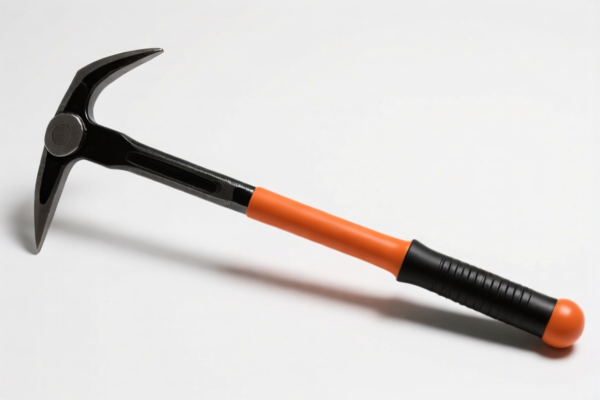
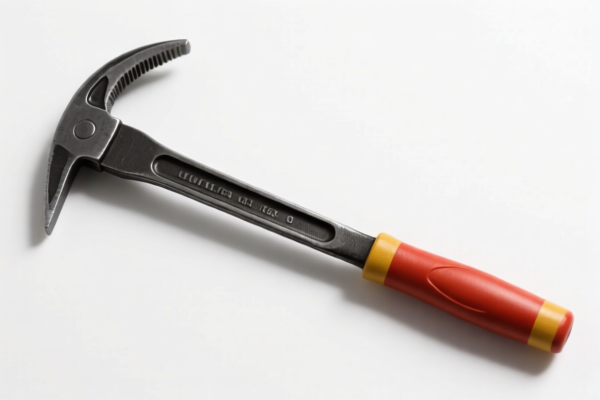
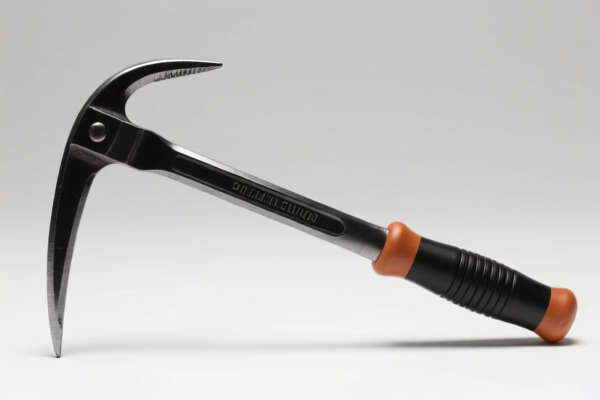
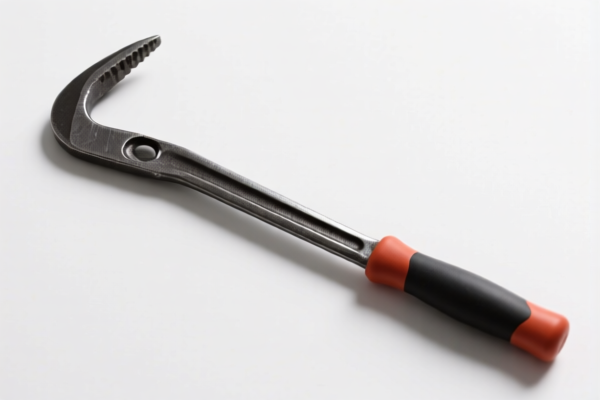
AI Analysis
🛠️ Crowbar Tool Set (Hand Tools)
🌐 HS Code Reference & Customs Clearance Guide | 2026 Latest Tariff Analysis | Professional Clearance Strategy
📌 I. Product Definition & Classification: Do You Really Understand "Crowbars"?
A Crowbar, also known as a pry bar, is a lever consisting of a metal bar with a single curved end and pointed sides, used to pry open things. In international trade, its classification depends heavily on material and specific utility. It generally falls into two main categories:
1. Iron or Steel Articles (Base Material Focus): - If classified primarily by its material composition (iron/steel) and generic form, it falls under Chapter 73. - Subcategories include forged/stamped items or other manufactured articles.
2. Hand Tools (Utility Focus): - If classified primarily by its function as a manual tool, it falls under Chapter 82 (Tools, Implements, Cutlery). - This includes tools for digging, breaking, or agricultural/forestry use.
⚠️ Key Distinction Point:
- High Tax Risk: Classification under Chapter 73 (Iron/Steel) often attracts the 50% Steel/Aluminum/Copper surcharge, leading to a total tax rate of 87.9%.
- Lower Tax Opportunity: Classification under Chapter 82 (Hand Tools) is often exempt from the steel surcharge, resulting in a total tax rate of 35.0% (or 41.2% for sets).
- The "Set" Factor: A "Crowbar Tool Set" may be classified differently than a single crowbar, potentially attracting a base tariff.
📦 II. HS Code Classification Details (2026 Latest Tariff Authority Reference)
| HS Code | Product Description | Applicability Scenario | Material/Type | Tax Rate |
|---|---|---|---|---|
8201.30.00.80 |
Crowbars; other digging or breaking picks | Digging or breaking tools (Utility Focus) | Metal | 35.0% |
7326.90.86.88 |
Other articles of iron or steel | General iron/steel articles (Material Focus) | Iron/Steel | 87.9% |
7326.19.00.80 |
Other articles of iron or steel, forged or stamped | Forged/stamped steel products (Material Focus) | Steel | 87.9% |
8201.90.60.00 |
Other tools for digging, chopping, leveling... | Agricultural, gardening, or forestry hand tools | Metal | 35.0% |
8205.59.30.10 |
Other hand tools (not elsewhere specified) | General hand tools, exact match for crowbar utility | Metal | 35.0% |
8205.40.00.00 |
Sets of hand tools | Crowbar Tool Sets, unspecified hand tools | Mixed | 41.2% |
🔍 Critical Reminder:
- Avoid Chapter 73 if possible: Codes like7326.90.86.88and7326.19.00.80incur a 50% additional tariff for steel products, pushing the total tax to 87.9%. This is extremely costly. - Prefer Chapter 82: Codes like8201.30.00.80,8201.90.60.00, and8205.59.30.10are classified as "Hand Tools" and are exempt from the 50% steel surcharge, keeping the total tax at 35.0%. - Sets are different: A "Tool Set" (8205.40.00.00) has a base tariff of 6.2%, leading to a total of 41.2%, which is slightly higher than a single crowbar but still far below the Chapter 73 rate.
💰 III. 2026 Latest Tariff Rate Breakdown (Including Surtaxes & Policy Add-ons)
✅ Applicable Country: United States (US)
✅ Origin: China (CN)
✅ Effective Time: 2025/2026 (Includes subsequent imports)
🎯 1. 8201.30.00.80 / 8201.90.60.00 / 8205.59.30.10 —— Crowbars & Hand Tools (Utility Focus)
| Item | Content |
|---|---|
| Base Tariff | 0% (ad valorem) |
| Section 301 Surtax (USITC) | +25% |
| IEEPA Surtax (122 Clause) | +10% |
| Total Tax Rate | 35.0% |
| Calculation | CIF Value × 35% |
| De Minimis Exemption? | ❌ No (deny_de_minimis) |
| Legal Basis Path | USITC:8201.30.00.80 → FOOTNOTE:301 → IEEPA:122 |
📌 Explanation:
- These codes are classified as Hand Tools, not generic steel articles. Therefore, they are exempt from the 50% Steel/Aluminum/Copper surcharge. - The total tax is the sum of the 25% Section 301 tariff and the 10% IEEPA tariff. - Savings: Compared to Chapter 73 codes, you save 52.9% on taxes (87.9% - 35.0% = 52.9% difference).
🎯 2. 8205.40.00.00 —— Crowbar Tool Set (Set Classification)
| Item | Content |
|---|---|
| Base Tariff | 6.2% |
| Section 301 Surtax (USITC) | +25% |
| IEEPA Surtax (122 Clause) | +10% |
| Total Tax Rate | 41.2% |
| Calculation | CIF Value × 41.2% |
| De Minimis Exemption? | ❌ No |
| Legal Basis Path | USITC:8205.40.00.00 → FOOTNOTE:301 → IEEPA:122 |
📌 Note:
- A "Tool Set" is treated as a distinct entity. Even though it’s a hand tool, the base tariff is higher (6.2% vs 0%). - However, it is still exempt from the 50% steel surcharge. - Total tax is 41.2%, which is still significantly lower than the 87.9% rate for steel articles.
🎯 3. 7326.90.86.88 / 7326.19.00.80 —— Iron/Steel Articles (Material Focus - High Risk)
| Item | Content |
|---|---|
| Base Tariff | 2.9% |
| Section 301 Surtax (USITC) | +25% |
| IEEPA Surtax (122 Clause) | +10% |
| Steel/Al/Cu Surcharge | +50% |
| Total Tax Rate | 87.9% |
| Calculation | CIF Value × 87.9% |
| De Minimis Exemption? | ❌ No |
| Legal Basis Path | USITC:7326.19.00.80 → FOOTNOTE:STEEL_SURCHARGE → IEEPA:122 |
📌 Warning:
- These codes classify the crowbar primarily as a steel product, not a tool. - The 50% steel surcharge is applied on top of other tariffs. - Avoid this classification unless necessary. It can destroy profit margins.
🛠️ IV. Customs Clearance Practical Advice (Battle-Tested Pitfall Guide)
✅ 1. Preparation Checklist (Mandatory)
| Document | Required | Description |
|---|---|---|
| ✅ Product Specifications | ✔️ | Material (Steel/Iron), Length, Weight, Type (Straight/Curved) |
| ✅ Product Photos | ✔️ | Clear images of the tool, highlighting "Hand Tool" features |
| ✅ Commercial Invoice | ✔️ | Clearly state "Crowbar" or "Hand Tool," NOT just "Steel Bar" |
| ✅ Usage Declaration | ✔️ | Specify: "For digging, breaking, prying manually" |
| ✅ Packing List | ✔️ | If it's a set, list contents clearly to justify 8205.40.00.00 |
✅ 2. Declaration Tips (Key Mantra)
🔥 "Classify as Tool, Not Steel! Name it 'Crowbar', Not 'Steel Bar'!"
| Scenario | Correct Declaration | Wrong Practice |
|---|---|---|
| Single Crowbar | 8201.30.00.80 (Crowbar) |
Misdeclare as 7326.90.86.88 → 87.9% Tax |
| Crowbar Tool Set | 8205.40.00.00 (Tool Set) |
Misdeclare as individual steel items → 87.9% Tax |
| Agricultural Crowbar | 8201.90.60.00 |
Misdeclare as general steel → 87.9% Tax |
| Generic Steel Bar | 7326.90.86.88 |
N/A (This is correct for non-tools) |
✅ 3. Special Cases
| Situation | Handling Advice |
|---|---|
| OEM Custom Crowbars | Provide design specs to prove it’s a finished tool, not a raw material. |
| Crowbar + Handle Assembly | If the handle is non-metal (e.g., wood/plastic), emphasize the "Tool" aspect. |
| Industrial vs. Consumer | Both can use Chapter 82 if they are hand-operated tools. Avoid Chapter 73 for manual tools. |
| Set Packing | If multiple crowbars are in one box, use 8205.40.00.00 (Tool Set) instead of per-unit classification to simplify customs. |
🌍 V. Global Market Customs Comparison (2026 Latest)
| Country/Region | Recommended HS Code | Tariff | Certification | Note |
|---|---|---|---|---|
| 🇺🇸 USA | 8201.30.00.80 |
35.0% | No specific | Avoid Chapter 73 (87.9%) |
| 🇨🇳 China | 8201.30.00.80 |
~10-15% | N/A | Lower base rate, no surcharges |
| 🇪🇺 EU | 8205.59.00 |
0-6% | CE (if applicable) | No US-style surcharges |
| 🇦🇺 Australia | 8205.59.00 |
5% | RCM | Competitive rate |
| 🇯🇵 Japan | 8205.59.00 |
0% | PSE (if electrical) | Very favorable |
📌 Conclusion:
- USA is the critical market where classification matters most due to Section 301 and Steel Surtaxes.
- China, EU, AU, JP do not have the aggressive steel surcharges seen in the US.
- Strategy for US Imports: Always argue for Chapter 82 (Hand Tools) to avoid the 50% steel surcharge.
📌 VI. Common Errors & Pitfalls (Lessons Learned)
❌ Mistake 1: Declaring "Crowbar" as "Steel Article" (7326.90.86.88)
👉 Result: Tax jumps from 35% to 87.9%. Profit Margin Destroyed!
❌ Mistake 2: Using generic names like "Metal Bar" or "Lever"
👉 Result: Customs may reclassify as steel product → Back taxes + Penalties.
❌ Mistake 3: Not specifying "Hand Tool" in the description
👉 Result: Customs ambiguity → Delayed clearance + Additional scrutiny.
✅ Correct Approach:
"Crowbar, Hand Tool, Steel, 18-inch, Used for Pry/Digging, Model XYZ"
🎯 VII. Conclusion: Professional Classification Saves Money!
🎯 Remember the Mantra:
🔹 "Tool > Steel! Chapter 82 Saves You 50%!"
🔹 "Crowbar is a Tool, Not Just Iron! Classify Smart, Pay Less!"
📌 Pro Tip:
- If you are importing a Crowbar Tool Set, use 8205.40.00.00 (41.2%) instead of declaring each crowbar separately.
- If you are importing single crowbars, use 8201.30.00.80 (35.0%) to minimize costs.
- Always consult a customs broker to confirm the latest 2026 rulings, as classifications can be subjective.
📣 Immediate Action:
📞 Contact your customs broker + Provide Product Photos + Request HS Code Pre-ruling
🚀 Ensure your invoice reads "Hand Tool/Crowbar," NOT "Steel Bar"
💰 Save 52.9% on taxes by choosing the correct HS Code!
✨ Professional Clearance Starts with Accurate Classification!
💼 Every dollar of tax saved is pure profit!
Customer Reviews
About HS Code Classification
The Harmonized System (HS) is an internationally standardized nomenclature developed by the World Customs Organization (WCO) to classify traded products. Over 200 countries use the HS system as the basis for customs tariffs, trade statistics, and import/export regulations.
Each HS code follows a hierarchical structure:
- Chapter (2 digits) — Broad category of goods (e.g., Chapter 84: Machinery and Mechanical Appliances)
- Heading (4 digits) — More specific grouping within the chapter
- Subheading (6 digits) — Internationally standardized breakdown, used by all WCO member countries
- National subdivisions (8-10 digits) — Country-specific extensions for further classification, such as US HTSUS 10-digit codes
Correct HS code classification is essential for smooth customs clearance, accurate duty payment, and compliance with trade regulations. Misclassification can lead to customs delays, overpayment of duties, or penalties.
When importing from CN to US, the applicable tariff rates may include:
- Most-Favored-Nation (MFN) rate — The standard duty rate applied to WTO members
- General rate — Applied to countries without trade agreements
- Trade remedy duties — Additional tariffs such as Section 301 (anti-dumping), Section 232 (national security), or countervailing duties
The information provided on this page is for reference purposes only. For official classification, please consult with your local customs authority or a licensed customs broker.