Crown Hairband
CN → US| HS Code | Tariff Rate | Origin | Destination | Doc |
|---|---|---|---|---|
| 6217101010 | 19.8% | CN | US | Official Doc |
| 6117808500 | 32.1% | CN | US | Official Doc |
| 6117802000 | 18.7% | CN | US | Official Doc |
| 9615196000 | 21.0% | CN | US | Official Doc |
| 9615114000 | 15.3% | CN | US | Official Doc |
| 6217108500 | 24.6% | CN | US | Official Doc |
Product Images
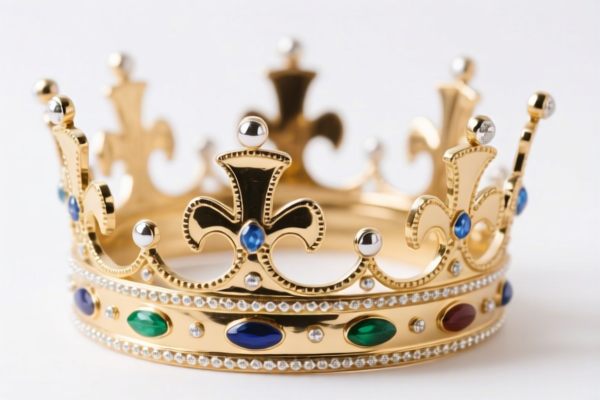
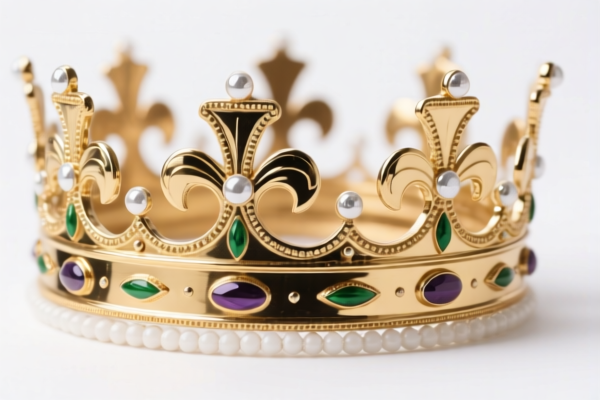
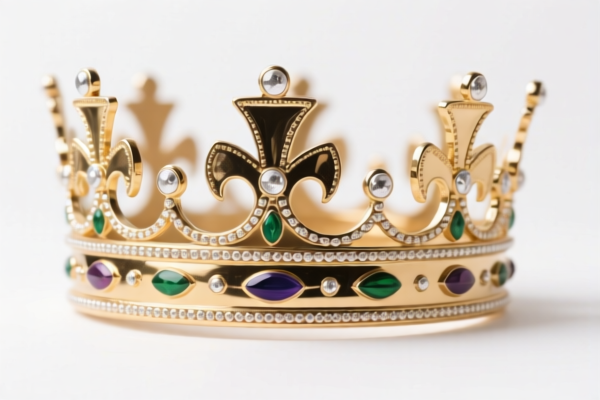

AI Analysis
👑 Crown Hairband (Hairbands & Headbands)
🌐 HS Code Reference & Customs Clearance Guide | 2026 Latest Tariff Analysis | Professional Clearance Strategy
📌 1. Product Definition & Classification: Do You Really Understand "Hairbands"?
Crown Hairbands are essential accessories in the fashion and beauty industry. In international trade, they are classified based on material (knitted vs. non-knitted) and function (apparel accessory vs. hair ornament). Misclassification often leads to significant tariff discrepancies, especially under Section 301 and Section 122 tariffs for US-origin imports.
Key Distinctions:
- Non-Knitted Apparel Accessories: Made of woven fabrics, silk, or other materials, categorized as "Other Made-Up Clothing Accessories" → Chapter 62.
- Knitted Hairbands: Made of knitted or crocheted fabrics, categorized as "Other Made-Up Clothing Accessories (Knitted)" → Chapter 61.
- Hair Ornaments: Made of plastic, rubber, or non-textile materials, categorized as "Hairdresser’s Articles" → Chapter 96.
⚠️ Critical Classification Point:
- If the hairband is knitted/crocheted (e.g., elastic headbands, fabric headbands with knitting structure) → Chapter 61.
- If the hairband is woven, silk, or non-knitted fabric → Chapter 62.
- If the hairband is plastic, hard rubber, or primarily decorative (non-wearable) → Chapter 96.
📦 2. HS Code Classification Details (2026 Latest Tariff Authority Comparison)
| HS Code | Product Description | Applicable Scenario | Material | Base Tariff | Section 301 (7.5%) | Sec. 122 (10%) | Total Tax Rate |
|---|---|---|---|---|---|---|---|
6217.10.10.10 |
Other made-up clothing accessories; Hairband form, possibly silk | Woven fabric hairbands, silk scarves used as hairbands | Silk/Woven Fabric | 2.3% | 7.5% | 10% | 19.8% |
6117.80.85.00 |
Other made-up clothing accessories; Headband category, knitted or crocheted | Knitted elastic headbands, crochet headbands | Knitted/Crocheted | 14.6% | 7.5% | 10% | 32.1% |
6117.80.20.00 |
Other made-up clothing accessories; Textile/Knitted hair accessory | General knitted fabric hair accessories | Textile/Knitted | 1.2% | 7.5% | 10% | 18.7% |
9615.19.60.00 |
Hairdresser’s articles; Hair ornament, textile or plastic | Decorative hair clips, plastic-banded hairbands | Textile/Plastic | 11.0% | 0.0% | 10% | 21.0% |
9615.11.40.00 |
Hairdresser’s articles; Hair ornament, plastic or hard rubber | Plastic comb-hairbands, hard rubber headbands | Plastic/Hard Rubber | 5.3% | 0.0% | 10% | 15.3% |
6217.10.85.00 |
Other made-up clothing accessories; Completely matched classification | Non-knitted general apparel accessories | Woven/Non-Knitted | 14.6% | 0.0% | 10% | 24.6% |
🔍 Key Reminder:
- Knitted vs. Non-Knitted: The primary distinction between6117and6217is the manufacturing process. If it is knitted, it belongs in Chapter 61; if woven or non-knitted, it belongs in Chapter 62.
- Accessory vs. Ornament: If the item is primarily functional (keeping hair in place) and made of fabric, it is an "apparel accessory" (Ch. 61/62). If it is primarily decorative (e.g., plastic clips, bows) and considered a "hairdresser’s article," it falls under Chapter 96.
- Section 122 Tariff: Applies to all these codes (10%).
- Section 301 Tariff: Applies to Chapter 61/62 items (7.5%), but NOT to Chapter 96 items (0% for Sec 301, but still 10% for Sec 122).
💰 3. 2026 Latest Tariff Rate Details (Including Surcharges & Policy Add-ons)
✅ Applicable Country: USA (US)
✅ Origin: China (CN)
✅ Effective Date: 2025/2026 (Current Tariff Structure)
🎯 1. 6217.10.10.10 —— Other Made-Up Clothing Accessories (Silk/Woven)
| Item | Content |
|---|---|
| Base Tariff | 2.3% |
| USITC Surcharge (Sec 301) | +7.5% |
| IEEPA Surcharge (Sec 122) | +10% |
| Total Tariff Rate | 19.8% |
| Tax Calculation | CIF Value × 19.8% |
| De Minimis Eligibility | ❌ No (Not eligible for de minimis exemption) |
| Legal Basis Path | IEEPA:9903.01.25 → IEEPA:9903.01.24 → USITC:6217.10.10.10 → FOOTNOTE:9903.88.01 |
📌 Explanation:
- This code is often used for silk or high-end woven hairbands.
- The 7.5% Sec 301 tariff applies because it is a textile/apparel accessory.
- Total 19.8% is moderate compared to knitted alternatives.
🎯 2. 6117.80.85.00 —— Other Made-Up Clothing Accessories (Knitted/Crocheted Headbands)
| Item | Content |
|---|---|
| Base Tariff | 14.6% |
| USITC Surcharge (Sec 301) | +7.5% |
| IEEPA Surcharge (Sec 122) | +10% |
| Total Tariff Rate | 32.1% |
| Tax Calculation | CIF Value × 32.1% |
| De Minimis Eligibility | ❌ No |
| Legal Basis Path | IEEPA:9901.25 → IEEPA:9903.01.24 → USITC:6117.80.85.00 → FOOTNOTE:9903.88.01 |
📌 Warning:
- This is the highest tariff code among hairbands.
- Knitted hairbands have a high base tariff (14.6%) plus the 7.5% Sec 301 tariff.
- Avoid this classification if possible for cost-saving, unless the product is distinctly knitted.
🎯 3. 6117.80.20.00 —— Other Made-Up Clothing Accessories (Knitted/Textile)
| Item | Content |
|---|---|
| Base Tariff | 1.2% |
| USITC Surcharge (Sec 301) | +7.5% |
| IEEPA Surcharge (Sec 122) | +10% |
| Total Tariff Rate | 18.7% |
| Tax Calculation | CIF Value × 18.7% |
| De Minimis Eligibility | ❌ No |
| Legal Basis Path | IEEPA:9903.01.25 → IEEPA:9903.01.24 → USITC:6117.80.20.00 → FOOTNOTE:9903.88.01 |
📌 Optimization Tip:
- If the hairband is knitted, this code has a very low base tariff (1.2%) compared to6117.80.85.00.
- Total 18.7% is the lowest among Chapter 61 codes.
- Ensure the product is clearly defined as a "textile/knitted accessory" and not a general "headband" category.
🎯 4. 9615.19.60.00 —— Hairdresser’s Articles (Textile/Plastic Hair Ornament)
| Item | Content |
|---|---|
| Base Tariff | 11.0% |
| USITC Surcharge (Sec 301) | 0.0% |
| IEEPA Surcharge (Sec 122) | +10% |
| Total Tariff Rate | 21.0% |
| Tax Calculation | CIF Value × 21.0% |
| De Minimis Eligibility | ❌ No |
| Legal Basis Path | IEEPA:9903.01.24 → USITC:9615.19.60.00 |
📌 Strategic Advantage:
- No Sec 301 Tariff (0%)! This is a key benefit.
- Although the base tariff is higher (11.0%), the absence of the 7.5% Sec 301 tariff makes it competitive.
- Suitable for plastic-banded hair accessories or decorative textile clips.
🎯 5. 9615.11.40.00 —— Hairdresser’s Articles (Plastic/Hard Rubber)
| Item | Content |
|---|---|
| Base Tariff | 5.3% |
| USITC Surcharge (Sec 301) | 0.0% |
| IEEPA Surcharge (Sec 122) | +10% |
| Total Tariff Rate | 15.3% |
| Tax Calculation | CIF Value × 15.3% |
| De Minimis Eligibility | ❌ No |
| Legal Basis Path | IEEPA:9901.25 → IEEPA:9903.01.24 → USITC:9615.11.40.00 |
📌 Cost-Effective Option:
- Lowest Total Tariff (15.3%).
- Ideal for plastic hairbands, combs, or hard rubber headbands.
- No Sec 301 Tariff applies, saving 7.5% compared to textile codes.
- Ensure the product is strictly plastic/hard rubber and not fabric-covered.
🎯 6. 6217.10.85.00 —— Other Made-Up Clothing Accessories (Non-Knitted)
| Item | Content |
|---|---|
| Base Tariff | 14.6% |
| USITC Surcharge (Sec 301) | 0.0% |
| IEEPA Surcharge (Sec 122) | +10% |
| Total Tariff Rate | 24.6% |
| Tax Calculation | CIF Value × 24.6% |
| De Minimis Eligibility | ❌ No |
| Legal Basis Path | IEEPA:9903.01.24 → USITC:6217.10.85.00 |
📌 Note:
- Base tariff is high (14.6%), and no Sec 301 tariff applies.
- Total 24.6% is higher than silk/woven codes (6217.10.10.10).
- Use only if the product is a general non-knitted accessory and cannot fit other specific codes.
🛠️ 4. Customs Clearance Practical Advice (Battle-Tested Pitfall Guide)
✅ 1. Required Documentation Checklist (All Must Be Provided)
| Document | Must Provide | Description |
|---|---|---|
| ✅ Product Specification Sheet | ✔️ | Include material composition (e.g., "100% Polyester Knitted"), dimensions, type |
| ✅ Product Photos (Clear Label) | ✔️ | Show texture, material close-up, and any plastic/rubber components |
| ✅ Commercial Invoice | ✔️ | Clearly state "Hairband/Hair Accessory" and HS Code |
| ✅ Packing List | ✔️ | Describe contents accurately (e.g., "12 pcs Knitted Hairbands") |
| ✅ Material Test Report | ✔️ | Confirm fabric type (Knitted vs. Woven) and plastic composition if applicable |
✅ 2. Declaration Tips (Key Mnemonic)
🔥 “Material Defines Code, Knitted vs. Woven is Key, Plastic Saves Tax, Sec 301 Avoidance Wins!”
| Scenario | Correct Declaration | Error to Avoid |
|---|---|---|
| Knitted Fabric Hairband | 6117.80.20.00 (18.7%) |
Misclassify as 6217 → 19.8% |
| Plastic Hairband/Comb | 9615.11.40.00 (15.3%) |
Misclassify as fabric → 24.6%+ |
| Silk/Woven Hairband | 6217.10.10.10 (19.8%) |
Misclassify as knitted → 32.1% |
| Decorative Plastic Clip | 9615.19.60.00 (21.0%) |
Misclassify as accessory → 24.6% |
✅ 3. Special Case Handling
| Scenario | Handling Advice |
|---|---|
| Fabric-Covered Plastic Band | If the core is plastic and the fabric is thin, consider 9615.11.40.00 (Plastic) to avoid Sec 301. Provide material breakdown. |
| Knitted vs. Woven Ambiguity | Provide a weave analysis or manufacturer’s certification. Knitted = Chapter 61; Woven = Chapter 62. |
| Mixed Material (Fabric + Plastic Clip) | If the plastic clip is integral, classify as Plastic Hair Ornament (9615) to avoid Sec 301. |
| OEM Custom Hairbands | Provide client order + design sketch to prove function and material. |
🌍 5. Global Market Comparison (2026 Latest)
| Country/Region | Recommended HS Code | Tariff (China Origin) | Certification | Note |
|---|---|---|---|---|
| 🇺🇸 USA | 9615.11.40.00 |
15.3% (No Sec 301) | None | Lowest Tariff Option |
| 🇺🇸 USA | 6117.80.20.00 |
18.7% (Sec 301 Applies) | None | Best for Knitted Fabric |
| 🇨🇳 China | 6217.10.10.10 |
~5-10% (Import Tariff) | None | No Sec 301/122 |
| 🇪🇺 EU | 6217.10.10.10 |
4% (Textile) | CE (if applicable) | No Sec 301 |
| 🇬🇧 UK | 9615.11.40.00 |
4% | UKCA | No Sec 301 |
📌 Conclusion:
- USA is the only market with high additional tariffs (Sec 301 & 122).
- Plastic-based hairbands (9615) are the most tax-efficient due to 0% Sec 301.
- Knitted fabric hairbands (6117) are the most expensive due to high base tariff + Sec 301.
📌 6. Common Errors & Pitfall Guide (Lessons Learned)
❌ Error 1: Declaring a plastic hairband as "Knitted Fabric Hairband"
👉 Consequence: Tariff jumps from 15.3% to 32.1% → Overpay $1,680 on $10k shipment!
❌ Error 2: Declaring a knitted hairband as "Plastic Hair Ornament"
👉 Consequence: Customs may reject declaration, delay clearance, or impose penalties for misclassification.
❌ Error 3: Ignoring Sec 122 Tariff (10%)
👉 Consequence: All these codes have a 10% Sec 122 tariff. Total cost must include this.
✅ Correct Practice:
“Plastic Hairband, Elastic, 100% PVC, Model XYZ, No Textile Components”
🎯 7. Conclusion: Professional Declaration, Save Time, Reduce Costs!
🎯 Remember the Mnemonic:
🔹 “Plastic Saves Tax, Knitted is Expensive, Sec 301 is the Key, Material is Everything!”
🔹 “HS Code Determines Tariff, 15.3% vs 32.1%, Declare Right, Profit Soars!”
📌 Pro Tip:
If your hairbands are originally from Vietnam, Mexico, or Thailand, you may qualify for IEEPA Exemptions or lower tariffs.
Recommend applying for an Advance Ruling to confirm the HS Code and avoid customs disputes.
📣 Immediate Action:
📞 Contact a Professional Customs Broker + Provide Product Photos + Apply for HS Code Advance Ruling
🚀 Let your Hairbands, Clear Customs Smoothly, Maximize Profits, and Expand Globally!
✨ Professional Clearance Starts with Accurate Classification!
💼 Every Penny Saved is Profit Earned!
Customer Reviews
About HS Code Classification
The Harmonized System (HS) is an internationally standardized nomenclature developed by the World Customs Organization (WCO) to classify traded products. Over 200 countries use the HS system as the basis for customs tariffs, trade statistics, and import/export regulations.
Each HS code follows a hierarchical structure:
- Chapter (2 digits) — Broad category of goods (e.g., Chapter 84: Machinery and Mechanical Appliances)
- Heading (4 digits) — More specific grouping within the chapter
- Subheading (6 digits) — Internationally standardized breakdown, used by all WCO member countries
- National subdivisions (8-10 digits) — Country-specific extensions for further classification, such as US HTSUS 10-digit codes
Correct HS code classification is essential for smooth customs clearance, accurate duty payment, and compliance with trade regulations. Misclassification can lead to customs delays, overpayment of duties, or penalties.
When importing from CN to US, the applicable tariff rates may include:
- Most-Favored-Nation (MFN) rate — The standard duty rate applied to WTO members
- General rate — Applied to countries without trade agreements
- Trade remedy duties — Additional tariffs such as Section 301 (anti-dumping), Section 232 (national security), or countervailing duties
The information provided on this page is for reference purposes only. For official classification, please consult with your local customs authority or a licensed customs broker.