Crude Coconut Oil Fatty Acid
CN → USProduct Images
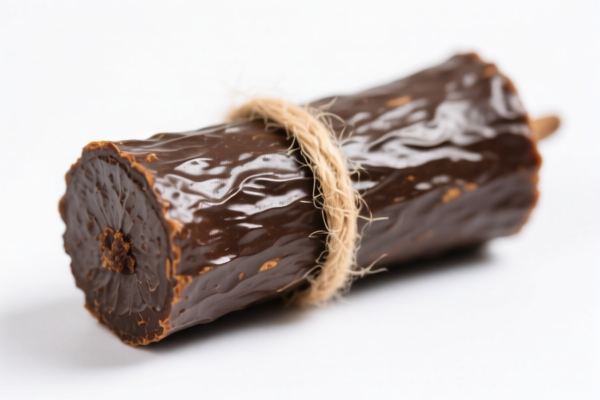
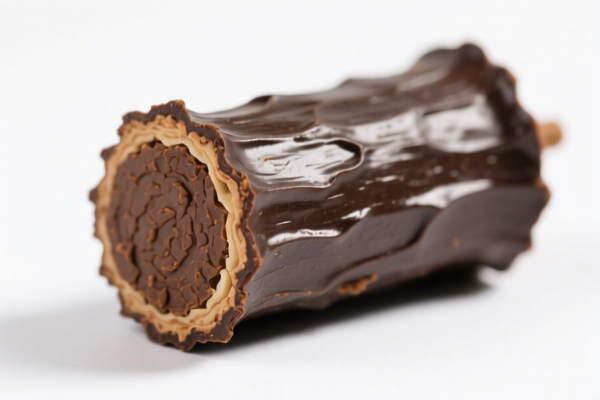
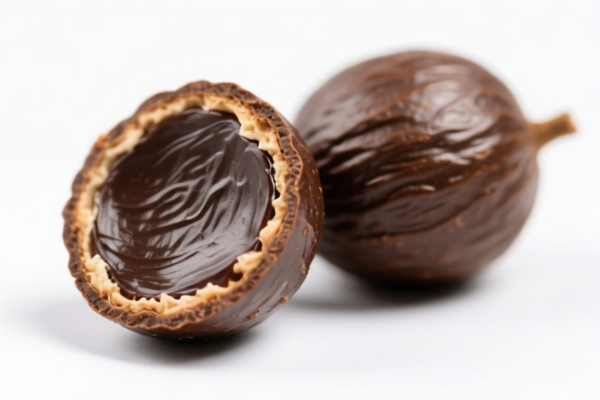
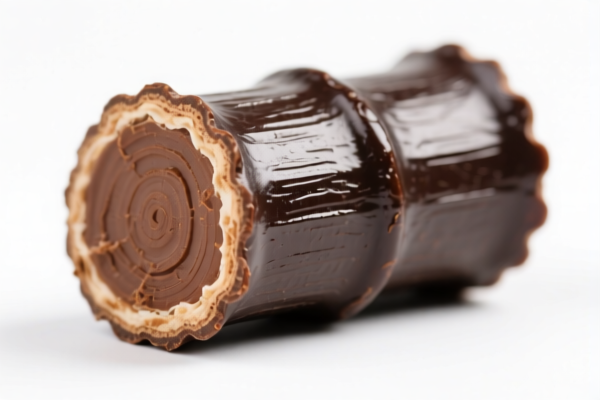
AI Analysis
🥥 Crude Coconut Oil Fatty Acid (COFA)
🌐 HS Code Reference & Customs Clearance Guide | 2026 Latest Tariff Analysis | Professional-Level Entry Strategy
📌 I. Product Definition & Classification: Do You Really Understand "Fatty Acids"?
Crude Coconut Oil Fatty Acid (COFA) is a key intermediate raw material derived from the saponification or hydrolysis of crude coconut oil. It is a mixture of saturated and unsaturated fatty acids, primarily consisting of: * Lauric Acid (C12:0): The dominant component (40-50%), widely used in soaps, detergents, and cosmetics. * Myristic, Palmitic, Stearic, and Oleic Acids: Secondary components.
In international trade, the classification depends strictly on purity, processing stage, and physical state:
- Crude/Fatty Acid Mixtures: If the product is a direct hydrolysis product, not further refined, and retains some glycerol or moisture, it is classified as a Fat or Oil Acid.
- Refined/Isolated Fatty Acids: If the product is chemically separated into specific isolated acids (e.g., pure Lauric Acid >90%), it may fall under Chemical Organic Products.
⚠️ Key Distinction Point:
- If the product is a mixed fatty acid (common for "Crude COFA"), it falls under Chapter 15.
- If the product is pure, isolated Lauric Acid with high purity (>90%) and specified identity, it may be classified under Chapter 29 (Organic Chemicals).
- Most "Crude COFA" shipments are classified under Chapter 15 unless specified otherwise by the supplier's Certificate of Analysis (CoA).
📦 II. HS Code Classification Details (2026 Latest Tariff Authority对照)
| HS Code | Product Description | Application Scenario | Purity/State |
|---|---|---|---|
1505.00.10.00 |
Wool Grease and Fatty Acids from Wool Grease | Not applicable (Wool specific) | N/A |
1505.00.90.00 |
Other Fatty Acids and Acid Oils; Animal or Vegetable Fats and Oils, Fractionated | Most Common for Crude COFA | Mixed, Crude, Non-Separated |
2915.24.00.00 |
Lauric Acid, Pure | High-purity chemical raw material | Isolated, >90% Purity |
2915.90.50.00 |
Other Saturated Mono-Carboxylic Acids | Other specific fatty acids | Isolated |
1513.11.00.00 |
Coconut Oil (Crude or Refined, Not Chemically Modified) | NOT COFA | Whole Oil, Not Acidified |
1518.00.90.00 |
Animal/Vegetable Fats, Oils, Their Fractions, Boiled, Dehydrated, Sulphurated, etc. | Refined/Castor Oil types | Processed differently |
🔍 Critical Reminder:
- "Crude Coconut Oil Fatty Acid" typically refers to the hydrolysis product of coconut oil. It is NOT "Coconut Oil" (which is under 1513).
- If your product is a mixture of fatty acids with no specific isolation, use1505.00.90.00.
- If you provide a Certificate of Analysis proving pure Lauric Acid, you can argue for2915.24.00.00, but this requires strong technical documentation. Customs officers often default to 1505 for "fatty acid oils" unless purity is proven.
💰 III. 2026 Latest Tariff Rate Detail (Including Surcharges, Policy Add-ons)
✅ Applicable Country: United States (US)
✅ Origin: China (CN)
✅ Effective Date: Post-November 10, 2025 (Including subsequent imports)
🎯 1. 1505.00.90.00 —— Other Fatty Acids (Most Common for Crude COFA)
| Item | Content |
|---|---|
| Base Tariff Rate | 0% (ad valorem) |
| USITC Surcharge | +25% (From USITC Footnote 9903.88.01) |
| IEEPA Surcharge | +10% (For China/HK products, from Nov 10, 2025) |
| Total Rate | 45% |
| Tax Calculation | CIF Value × 45% |
| De Minimis Eligible? | ❌ NO (deny_de_minimis) |
| Legal Path | IEEPA:9903.01.25 → IEEPA:9903.01.24 → USITC:1505.00.90.00 → FOOTNOTE:9903.88.01 |
📌 Explanation:
- "USITC 25%" is from the Section 301 tariffs.
- "IEEPA 10%" is the additional China-specific tariff.
- Total 45% is a HIGH TARIFF. You must plan for this cost.
🎯 2. 2915.24.00.00 —— Lauric Acid, Pure (If Pure)
| Item | Content |
|---|---|
| Base Tariff Rate | 0% |
| USITC Surcharge | +25% (Most chemicals under Chapter 29 are also subject to Section 301) |
| IEEPA Surcharge | +10% |
| Total Rate | 45% |
| Tax Calculation | CIF Value × 45% |
| De Minimis Eligible? | ❌ NO |
| Legal Path | IEEPA:9901.25 → IEEPA:9903.01.24 → USITC:2915.24.00.00 → FOOTNOTE:9903.88.01 |
📌 Note:
- Even if classified as a chemical, the surcharges remain the same.
- The benefit of Chapter 29 is only if the base tariff is lower than 1505 (which is 0% for both), so tariff-wise, it makes no difference in the US market under current sanctions. However, Chapter 29 may be easier for downstream chemical users to handle VAT/deductibles in other countries.
🛠️ IV. Customs Clearance Practical Advice (Battle-Worn Pitfall Guide)
✅ 1. Required Document Checklist (Non-Negotiable)
| Document | Mandatory? | Description |
|---|---|---|
| ✅ Product Specification Sheet | ✔️ | Must list % composition of Lauric, Myristic, Palmitic acids. |
| ✅ Certificate of Analysis (CoA) | ✔️ | Crucial to prove if it's "Crude Mixture" (1505) or "Pure Lauric" (2915). |
| ✅ Safety Data Sheet (SDS) | ✔️ | Classify as non-hazardous or hazardous? (Usually non-hazardous if pure). |
| ✅ Commercial Invoice | ✔️ | Clearly state "Crude Coconut Oil Fatty Acid" NOT "Coconut Oil". |
| ✅ Packing List | ✔️ | Net/Gross weight. Ensure units are in lbs/kg. |
| ✅ Letter of Guarantee | ✔️ | If claiming USMCA/Mexico origin (rare for China origin), provide proof. |
✅ 2. Declaration Tips (Key Mantra)
🔥 "Don't call it Oil, Call it Acid, Provide CoA, Avoid the Trap!"
| Scenario | Correct Declaration | Wrong Action |
|---|---|---|
| Crude Fatty Acid Mix | 1505.00.90.00 - "Fatty Acids from Coconut Oil" |
Misdeclare as 1513.11 (Coconut Oil) → Seizure + Fine |
| Pure Lauric Acid | 2915.24.00.00 - "Lauric Acid, Pure >90%" |
Misdeclare as 1505 → Over-declare volume, potential audit |
| Partially Refined | 1505.00.90.00 |
Declare as 2915 without proof → Rejection |
✅ 3. Special Situation Handling
| Situation | Handling Advice |
|---|---|
| Biodiesel Feedstock | If used for biodiesel, ensure it's not mixed with methyl esters (FAME) which have different codes. |
| Cosmetic Grade | Still 1505 or 2915. Provide FDA/ECG compliance if for cosmetics. |
| Dirty Contamination | If the fatty acid is contaminated with glycerol (>2%), it may still be 1505. |
🌍 V. Global Market Customs Comparison (2026 Latest)
| Country/Region | Recommended HS Code | Tariff | Certification | Notes |
|---|---|---|---|---|
| 🇺🇸 US | 1505.00.90.00 |
45% (China) | No specific cert | High tariff, no de minimis |
| 🇨🇳 China | 1505.00.90.00 |
0-5% | No specific cert | Import duty often 0% for fatty acids |
| 🇪🇺 EU | 1505.00.90.00 |
0% | REACH Registration | Must register under REACH if >1 ton/year |
| 🇮🇳 India | 1505.00.90.00 |
7.5-15% | BIS/Standard Mark | High anti-dumping duties possible on Chinese chemicals |
| 🇦🇪 UAE | 1505.00.90.00 |
5% | No specific cert | Low barrier, but check SDS requirements |
📌 Conclusion:
- US Market: High cost due to 45% total tariff. Must budget accordingly.
- EU Market: REACH compliance is the biggest hurdle, not tariff.
- India: Watch out for anti-dumping duties on Chinese organic chemicals.
📌 VI. Common Errors & Pitfall Guide (Blood Lessons)
❌ Error 1: Declaring as "Coconut Oil" (1513.11)
👉 Consequence: Customs will reject because it's not an oil/fat but an acid. High penalty risk, shipment held.
❌ Error 2: Not providing CoA for "Pure Lauric Acid" claim
👉 Consequence: Customs defaults to 1505. If you declared 2915 without proof, you may face duties mismatch issues.
❌ Error 3: Ignoring SDS
👉 Consequence: If the acid is impure or wet, it might be classified as hazardous. Without proper SDS, EPA/PHMSA will block entry.
❌ Error 4: Using "Fatty Acid" generic term without origin purity
👉 Consequence: Audit trigger. Customs may demand sample testing for valuation and classification.
✅ Correct Action:
"Crude Coconut Oil Fatty Acid, Hydrolyzed Product, Lauric Acid ~45%, Origin China, Non-Hazardous, SDS Available"
🎯 VII. Conclusion: Professional Declaration, Save Time, Reduce Cost!
🎯 Remember the Mantra:
🔹 "It's Acid, Not Oil! 45% Tariff in US!"
🔹 "CoA is King! Prove Purity to Choose Code!"
🔹 "SDS Ready! Avoid Hazardous Label!"
📌 Pro Tip:
If your product is 100% Pure Lauric Acid and you are selling to a chemical manufacturer, consider declaring under 2915.24.00.00 for cleaner chemical supply chain documentation, even though the tariff is the same in the US. It avoids confusion in downstream industries.
📣 Immediate Action:
📞 Contact your freight forwarder + Provide CoA + Apply for CBP Pre-Ruling if volume is huge.
🚀 Let your fatty acids, clear customs smoothly, maximize profit!
✨ Professional Customs Clearance Starts with Accurate Classification!
💼 Every cent of your cost deserves precise calculation!
Customer Reviews
About HS Code Classification
The Harmonized System (HS) is an internationally standardized nomenclature developed by the World Customs Organization (WCO) to classify traded products. Over 200 countries use the HS system as the basis for customs tariffs, trade statistics, and import/export regulations.
Each HS code follows a hierarchical structure:
- Chapter (2 digits) — Broad category of goods (e.g., Chapter 84: Machinery and Mechanical Appliances)
- Heading (4 digits) — More specific grouping within the chapter
- Subheading (6 digits) — Internationally standardized breakdown, used by all WCO member countries
- National subdivisions (8-10 digits) — Country-specific extensions for further classification, such as US HTSUS 10-digit codes
Correct HS code classification is essential for smooth customs clearance, accurate duty payment, and compliance with trade regulations. Misclassification can lead to customs delays, overpayment of duties, or penalties.
When importing from CN to US, the applicable tariff rates may include:
- Most-Favored-Nation (MFN) rate — The standard duty rate applied to WTO members
- General rate — Applied to countries without trade agreements
- Trade remedy duties — Additional tariffs such as Section 301 (anti-dumping), Section 232 (national security), or countervailing duties
The information provided on this page is for reference purposes only. For official classification, please consult with your local customs authority or a licensed customs broker.