Crushed Barley
CN → US| HS Code | Tariff Rate | Origin | Destination | Doc |
|---|---|---|---|---|
| 1103199000 | 44.0% | CN | US | Official Doc |
| 1003904030 | 0.0% | CN | US | Official Doc |
| 1103191200 | 0.0% | CN | US | Official Doc |
| 1003902000 | 0.0% | CN | US | Official Doc |
| 2302400110 | 35.0% | CN | US | Official Doc |
Product Images


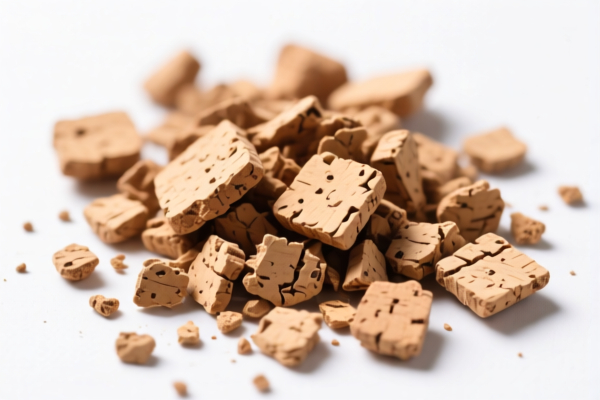

AI Analysis
🌾 Crushed Barley (碎大麦) – HS Code Classification & US Customs Clearance Guide
🌐 HS Code Reference & Customs Clearance Guide | 2026 Latest Tariff Analysis | Strategic Entry for Grain Products
📌 I. Product Definition & Classification: What Exactly is "Crushed Barley"?
Crushed Barley is a processed grain product where whole barley kernels have been mechanically broken, cut, or flaked. In international trade, the classification depends heavily on the form (crushed vs. whole) and the intended use (food/feed vs. industrial/by-product). It is crucial to distinguish between:
- Primary Processing (Food/Feed Grade): Barley that has been crushed but retains its essential character as a grain. These fall under Chapter 10 (Cereals) or Chapter 11 (Preparations of Cereals).
- By-Product/Residual (Feed/Industrial Grade): Barley husks, bran, or coarse碎屑 resulting from milling, often classified as Chapter 23 (Foodstuffs of the kind used in animal feeding).
⚠️ Key Distinction Point:
- If the barley is crushed for human consumption or general animal feed but is still recognizable as barley → HS 1003 or 1103.
- If the material is primarily husks, bran, or milling residuals → HS 2302.
📦 II. HS Code Classification Details (2026 Latest Tariff Authority Comparison)
Based on the provided data, here are the specific HS codes for Crushed Barley, ranging from primary cereal status to by-product status.
| HS Code | Product Description | Applicable Scenario | Form/Characteristic |
|---|---|---|---|
1003.90.20.00 |
Crushed Barley, Primary Product Form | General feed/processing; raw barley crush | ✅ Crushed state, primary cereal |
1003.90.40.30 |
Crushed Barley, Other Barley Category | Other forms of crushed barley not elsewhere specified | ✅ Crushed state, miscellaneous |
1103.19.90.00 |
Crushed Barley, Granular Form | Barley crushed into granules/particles (processed cereal) | ✅ Granules, Chapter 11 (Preparations) |
1103.19.12.00 |
Crushed Barley, Granule Form | Barley crushed into specific granule sizes | ✅ Granules, Chapter 11 (Preparations) |
2302.40.01.10 |
Crushed Barley, Residual/By-Product | Bran, husks, or milling residuals from barley | ✅ Residual, Chapter 23 (Animal Feed) |
🔍 Focus Reminder:
- HS 1003 & 1103 apply to the grain itself (crushed).
- HS 2302 applies if the material is considered a milling by-product (e.g., mostly husks).
- Do not mix up: "Crushed" (physical state) vs. "Flaked" (processed). Most crushed barley for brewing or feed falls under 1003/1103.
💰 III. 2026 Latest Tariff Rate Breakdown (Including Supplementary Taxes & Policy Add-ons)
✅ Applicable Country: United States (US)
✅ Country of Origin: China (CN)
✅ Effective Date: Post-November 2025 (Including subsequent imports)
🎯 1. 1003.90.20.00 —— Crushed Barley (Primary Product Form)
| Item | Content |
|---|---|
| Base Tariff | 0.1¢/kg (Specific Duty) |
| USITC Supplementary Tax | +25% (Section 301 Duties) |
| IEEPA Supplementary Tax | +10% (China-specific, effective Nov 10, 2025) |
| Total Tariff Rate | 35% + 0.1¢/kg |
| Tax Calculation | (CIF Value × 35%) + (Weight in kg × $0.001) |
| De Minimis Eligibility | ❌ No (deny_de_minimis) |
| Legal Pathway | IEEPA:9903.01.25 → IEEPA:9903.01.24 → USITC:1003.90.20.00 → FOOTNOTE:9903.88.01 |
📌 Explanation:
- This code treats crushed barley as a primary cereal.
- The base tariff is extremely low ($0.001/kg), but the ad valorem burden is heavy (35%) due to USITC and IEEPA add-ons.
- Warning: Do not confuse with "whole barley" (HS 1003.90.10), which may have different specific duties.
🎯 2. 1003.90.40.30 —— Crushed Barley (Other Category)
| Item | Content |
|---|---|
| Base Tariff | 0.15¢/kg (Specific Duty) |
| USITC Supplementary Tax | +25% (Section 301 Duties) |
| IEEPA Supplementary Tax | +10% (China-specific, effective Nov 10, 2025) |
| Total Tariff Rate | 35% + 0.15¢/kg |
| Tax Calculation | (CIF Value × 35%) + (Weight in kg × $0.0015) |
| De Minimis Eligibility | ❌ No (deny_de_minimis) |
| Legal Pathway | IEEPA:9903.01.25 → IEEPA:9903.01.24 → USITC:1003.90.40.30 → FOOTNOTE:9903.88.01 |
📌 Note:
- Similar to the above, but with a slightly higher specific duty ($0.0015 vs $0.001).
- Used for crushed barley that doesn’t fit the "primary form" description strictly.
🎯 3. 1103.19.12.00 & 1103.19.90.00 —— Crushed Barley (Granular/Prepared Form)
| Item | Content |
|---|---|
| Base Tariff | 0.8¢/kg (for .12.00) or 9.0% (for .90.00) |
| USITC Supplementary Tax | +25% (Section 301 Duties) |
| IEEPA Supplementary Tax | +10% (China-specific, effective Nov 10, 2025) |
| Total Tariff Rate | 35.0% + 0.8¢/kg (.12.00) 44.0% (.90.00) |
| Tax Calculation | CIF × Rate + (kg × $0.008) OR CIF × 44% |
| De Minimis Eligibility | ❌ No (deny_de_minimis) |
| Legal Pathway | IEEPA:9903.01.25 → IEEPA:9903.01.24 → USITC:1103.19.12.00/.90.00 |
📌 Critical Difference:
-1103.19.90.00: If classified as a "prepared cereal" (e.g., rolled or heavily processed granules), the base tariff is 9.0%, leading to a total of 44%.
-1103.19.12.00: Specific duty of $0.008/kg + 35% ad valorem.
- Strategy: If your product is simple crushed barley, try to classify under HS 1003 (lower base specific duty) rather than HS 1103, unless it is clearly a "prepared food product."
🎯 4. 2302.40.01.10 —— Crushed Barley (Residual/By-Product)
| Item | Content |
|---|---|
| Base Tariff | 0.0% (Ad Valorem) |
| USITC Supplementary Tax | +25% (Section 301 Duties) |
| IEEPA Supplementary Tax | +10% (China-specific, effective Nov 10, 2025) |
| Total Tariff Rate | 35.0% |
| Tax Calculation | CIF Value × 35% |
| De Minimis Eligibility | ❌ No (deny_de_minimis) |
| Legal Pathway | IEEPA:9903.01.25 → IEEPA:9903.01.24 → USITC:2302.40.01.10 → FOOTNOTE:9903.88.01 |
📌 Analysis:
- This code is for barley bran, husks, or milling waste.
- While the base tariff is 0%, the total rate is still 35%.
- Risk: If you ship actual crushed barley kernels (for food/feed) but declare them as "bran/residuals" to save costs, you face severe penalties for misclassification. Ensure the product is genuinely a by-product.
🛠️ IV. Customs Clearance Practical Advice (Battle-Tested Pitfall Guide)
✅ 1. Documentation Checklist (Missing Items = Delays)
| Document | Mandatory | Explanation |
|---|---|---|
| ✅ Product Specification Sheet | ✔️ | Must detail: "Crushed Barley," particle size, moisture content, use (food/feed). |
| ✅ Processing Description | ✔️ | Explain: "Crushed using mechanical rollers, not milled into flour." |
| ✅ Commercial Invoice | ✔️ | Clearly state: "Crushed Barley for [Brewing/Feed/Human Consumption]." Avoid vague terms like "Grain Product." |
| ✅ Certificate of Origin (CO) | ✔️ | Essential for determining origin and potential exemptions (none for China in this case). |
| ✅ Packing List | ✔️ | Net/Gross weight is critical for the specific duty calculation (¢/kg). |
| ✅ Feed/Food Safety Certificates | ✔️ | If for human consumption or livestock, FDA registration or veterinary certs may be required. |
✅ 2. Declaration Tips (Key Mantras)
🔥 "Form Determines Code, Weight Matters, Use Must Match!"
| Scenario | Correct Declaration | Mistake to Avoid |
|---|---|---|
| Simple Crushed Barley (Feed/Food) | 1003.90.20.00 or 1003.90.40.30 |
Declaring as "Flaked Barley" or "Barley Flour" → Higher HS 1103 rates. |
| Granular/Processed Barley | 1103.19.12.00 or 1103.19.90.00 |
Declaring as "Crushed" if it’s actually rolled/stepped. |
| Bran/Husks/Milling Waste | 2302.40.01.10 |
Declaring "Crushed Barley" if it’s mostly husks → Misclassification risk. |
| De Minimis (Section 321) | ❌ Never Use | All these codes are deny_de_minimis. Do not split shipments to avoid duty. |
📌 Crucial Note on Specific Duties:
- Codes like1003.90.20.00and1103.19.12.00have specific duties (¢/kg).
- Accurate Weight Declaration is Vital. An error in weight directly changes the tax amount, regardless of the CIF value.
✅ 3. Special Cases Handling
| Case | Handling Advice |
|---|---|
| Mixed Shipment (Crushed + Whole) | Declare separately. Whole barley may have different HS codes/tariffs. Mixing can lead to full cargo inspection. |
| Organic Certified Barley | Provide Organic Certificate. Does not change HS code, but may affect marketability and buyer requirements. |
| Brewing Grade vs. Feed Grade | Specify clearly. "Brewing Grade" may require additional FDA compliance for food additives. |
| Origin: Non-China (e.g., Canada) | If origin is Canada, IEEPA 10% may not apply. Check USMCA/CUSMA rules. Tariffs could be significantly lower. |
🌍 V. Global Market Clearance Comparison (2026 Latest)
| Country/Region | Recommended HS Code | Tariff (China Origin) | Certification Requirements | Remarks |
|---|---|---|---|---|
| 🇺🇸 USA | 1003.90.20.00 / 1103.19.90.00 |
35% - 44% + Specific Duty | FDA Registration, GMP | High Barrier: IEEPA 10% + USITC 25% = 35%+ |
| 🇨🇳 China | 1003.90 / 1103.19 |
0% - 9% (Import Duty) | CIQ, Phytosanitary | Lower import duties, but strict quarantine. |
| 🇪🇺 EU | 1003.90 / 1103.19 |
0% - 8% | No IEEPA/USITC equivalent | No US-style supplementary tariffs. Lower total cost. |
| 🇬🇧 UK | 1003.90 / 1103.19 |
0% - 8% | UKCA, Food Standards | Post-Brexit, independent tariff regime. |
| 🇦🇺 Australia | 1003.90 |
5% - 10% | Biosecurity Clearance (BA) | Strict biosecurity laws for grain imports. |
📌 Conclusion:
- USA is the most expensive market due to the 35-44% combined tariff (USITC + IEEPA).
- EU and UK are significantly cheaper for Chinese barley imports (no 301/IEEPA add-ons).
- Strategy: If US tariffs are prohibitive, consider transshipment (carefully, to avoid rules of origin violations) or sourcing from non-China origins.
📌 VI. Common Errors & Pitfall Guide (Lessons Learned)
❌ Error 1: Declaring "Crushed Barley" as "Barley Flour" (HS 1103.11)
👉 Consequence: Wrong classification, potential duty evasion charges. Crushed barley is distinct from flour.
❌ Error 2: Ignoring the Specific Duty (¢/kg) in 1003.90.20.00
👉 Consequence: Underpayment of taxes. The $0.001/kg adds up significantly for large bulk shipments.
❌ Error 3: Attempting to use Section 321 (De Minimis) for Bulk Shipments
👉 Consequence: Seizure. All listed HS codes for Crushed Barley are deny_de_minimis. Even small packages are subject to full duty.
❌ Error 4: Mixing "Crushed" and "Flaked" in one shipment without clear labeling
👉 Consequence: Customs may classify the entire lot under the highest-risk or most complex code, leading to delays and inspections.
✅ Correct Action:
"Crushed Barley, Unmalted, for Animal Feed, HS 1003.90.20.00, Origin: China, Weight: 10,000 kg"
🎯 VII. Conclusion: Precise Classification Saves Money
🎯 Remember the Mantra:
🔹 "Crushed is 1003, Prepared is 1103, Residual is 2302!"
🔹 "35% Base + Specific Duty = High Cost, Declare Weight Accurately!"
🔹 "No De Minimis for Barley, Don’t Try to Sneak It Through!"
📌 Pro Tip:
If you are importing large volumes to the US, consider:
1. Advance Ruling: Apply for a binding ruling from US CBP to confirm the correct HS code and tariff calculation.
2. Supply Chain Review: If tariffs are too high, evaluate sourcing from Canada, Australia, or EU where tariffs are lower.
3. Product Form Adjustment: If possible, check if "Flaked Barley" or "Barley Malt" (HS 1109) has different duty implications (though malt is heavily taxed too, so check carefully).
📣 Immediate Action:
📞 Contact your customs broker with Product Specs + Weight + Intended Use.
🚀 Ensure accurate HS code selection to avoid 35-44%+ tariffs and compliance risks!
✨ Professional Clearance, Starting with Precise Classification!
💼 Every Grain Counts – Don’t Let Tariffs Crush Your Profits!
Customer Reviews
About HS Code Classification
The Harmonized System (HS) is an internationally standardized nomenclature developed by the World Customs Organization (WCO) to classify traded products. Over 200 countries use the HS system as the basis for customs tariffs, trade statistics, and import/export regulations.
Each HS code follows a hierarchical structure:
- Chapter (2 digits) — Broad category of goods (e.g., Chapter 84: Machinery and Mechanical Appliances)
- Heading (4 digits) — More specific grouping within the chapter
- Subheading (6 digits) — Internationally standardized breakdown, used by all WCO member countries
- National subdivisions (8-10 digits) — Country-specific extensions for further classification, such as US HTSUS 10-digit codes
Correct HS code classification is essential for smooth customs clearance, accurate duty payment, and compliance with trade regulations. Misclassification can lead to customs delays, overpayment of duties, or penalties.
When importing from CN to US, the applicable tariff rates may include:
- Most-Favored-Nation (MFN) rate — The standard duty rate applied to WTO members
- General rate — Applied to countries without trade agreements
- Trade remedy duties — Additional tariffs such as Section 301 (anti-dumping), Section 232 (national security), or countervailing duties
The information provided on this page is for reference purposes only. For official classification, please consult with your local customs authority or a licensed customs broker.