Crushed Peanut Kernels
CN → US| HS Code | Tariff Rate | Origin | Destination | Doc |
|---|---|---|---|---|
| 1202425040 | 0.0% | CN | US | Official Doc |
| 1202429040 | 141.8% | CN | US | Official Doc |
Product Images
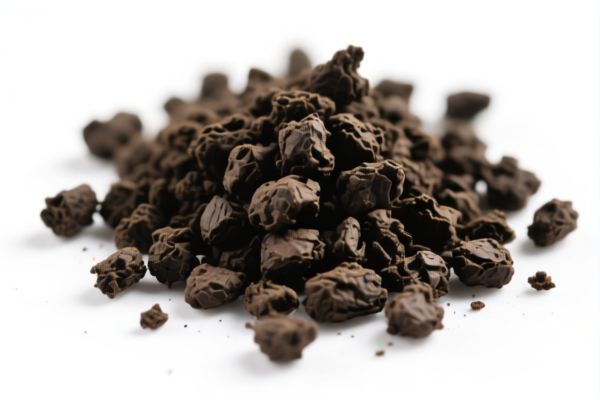
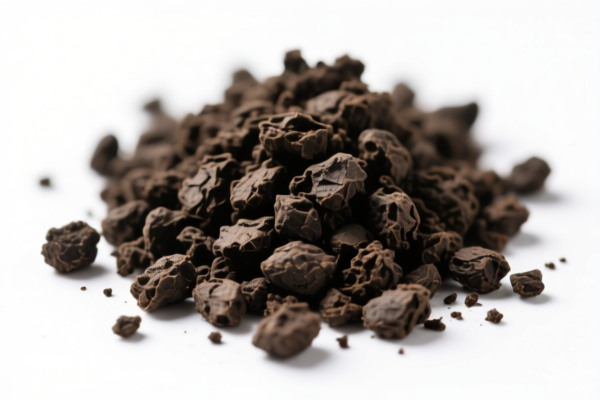
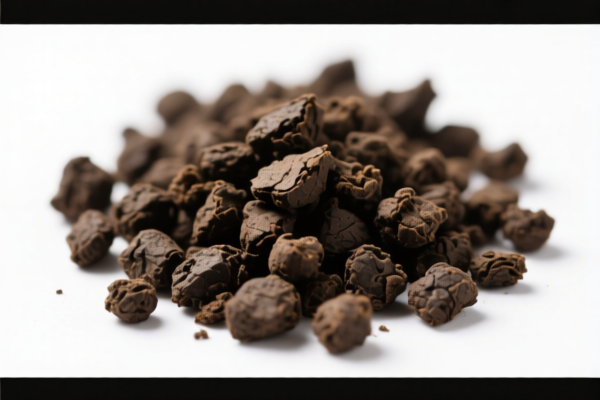
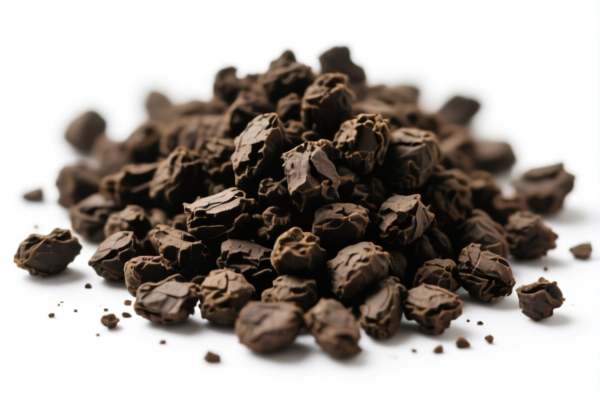
AI Analysis
🥜 Crushed Peanut Kernels (Ground-Nuts, Shelled)
🌐 HS Code Reference & Customs Clearance Guide | 2026 Latest Tariff Schedule | Professional Entry Strategy
📌 1. Product Definition & Classification: Do You Understand "Crushed Peanuts"?
Peanuts (ground-nuts) are a critical agricultural commodity in global trade. In international customs, they are strictly categorized by their processing state and shell status.
"Crushed Peanut Kernels" refers to peanuts that have been: 1. Not roasted or otherwise cooked (raw/unprocessed); 2. Shelled (outer shells removed); 3. Broken/Crushed (into smaller pieces, not whole).
⚠️ Key Classification Point:
- If the peanuts are shelled and broken/crushed, they fall under 1202.42.
- If they are unshelled, they would fall under a different subheading (not covered in the provided data).
- If they are roasted/cooked, they are excluded from this heading entirely (falls under Chapter 20 or 21).
📦 2. HS Code Classification Details (2026 Latest Tariff Authority)
Based on the provided data, there are two possible HS Codes for "Crushed Peanut Kernels" (shelled, broken), depending on specific tariff note provisions.
| HS Code | Product Description | Key Condition |
|---|---|---|
1202.42.50.40 |
Peanuts, not roasted/cooked, shelled, broken: Other (Specifically described in General Note 15) |
Eligible for General Note 15 provisions |
1202.42.90.40 |
Peanuts, not roasted/cooked, shelled, broken: Other (General "Other" category) |
Standard "Other" classification |
🔍 Critical Distinction:
- The difference lies in General Note 15 of the tariff schedule.
- If your product meets the specific criteria outlined in General Note 15, it is classified under1202.42.50.40.
- If it does not meet those specific criteria, it defaults to the general "Other" category:1202.42.90.40.
💰 3. 2026 Latest Tariff Rate Breakdown (Detailed Tax Clauses)
✅ Applicable Country: United States (US)
✅ Origin: Typically China (CN) or other major producers
✅ Status: As per provided dataset
🎯 1. HS Code 1202.42.50.40 — Shelled, Broken, Subject to General Note 15
| Item | Detail |
|---|---|
| Description | Peanuts, not roasted/cooked, shelled, broken; described in General Note 15 |
| Basic Tariff | 6.6¢/kg (Specific duty per kilogram) |
| Additional Tariff | 7.5% (Ad valorem) |
| Total Tax Structure | 6.6¢/kg + 7.5% |
| Tax Calculation | (Weight in kg × $0.066) + (CIF Value × 0.075) |
| Note | This code has a specific component (per kg) plus an ad valorem component. |
📌 Explanation:
- This classification attracts a mixed duty: a fixed fee per kilogram plus a percentage of the value.
- General Note 15 likely refers to specific volume-based quotas or preferential treatments that trigger this specific subheading.
🎯 2. HS Code 1202.42.90.40 — Shelled, Broken, General "Other"
| Item | Detail |
|---|---|
| Description | Peanuts, not roasted/cooked, shelled, broken; Other Other |
| Basic Tariff | 0.0% |
| Additional Tariff | 0.0% |
| Total Tax Structure | 0.0% |
| Tax Calculation | No duty |
| Note | This is a duty-free classification for this specific subheading. |
📌 Explanation:
- This classification is completely free of tariffs under the current provided data.
- This is significantly more favorable than1202.42.50.40.
- Strategic Implication: If your product qualifies for1202.42.90.40, it offers a major cost advantage.
🛠️ 4. Customs Clearance Practical Advice (Avoid Pitfalls)
✅ 1. Documentation Checklist (Non-Negotiable)
| Document | Required? | Purpose |
|---|---|---|
| Commercial Invoice | ✅ | Must explicitly state: "Raw, Shelled, Crushed Peanut Kernels" |
| Packing List | ✅ | Detail gross/net weight (critical for 6.6¢/kg calculation) |
| Certificate of Origin | ✅ | To verify country of origin and potential FTA benefits |
| Phytosanitary Certificate | ✅ | Mandatory for agricultural products |
| Product Specification Sheet | ✅ | Must confirm "NOT ROASTED" and "UNCOOKED" |
| General Note 15 Eligibility Proof | ✅ | If claiming 1202.42.50.40, provide documents proving compliance with Note 15 |
✅ 2. Declaration Strategy (Key Tips)
🔥 “Raw vs. Roasted: One Word Changes Everything!”
| Scenario | Correct HS Code | Tax Outcome |
|---|---|---|
| Raw, Shelled, Crushed | 1202.42.50.40 or 1202.42.90.40 |
6.6¢/kg+7.5% OR 0% |
| Roasted, Shelled, Crushed | NOT COVERED HERE | Likely Chapter 20/21 (Different rates) |
| Unshelled, Whole | NOT COVERED HERE | Different subheading under 1202.41 |
| Blended with Other Nuts | Complex Classification | Risk of misdeclaration; consult specialist |
📌 Critical Advice:
- Do NOT describe as "Peanuts" alone. Use "Shelled, Crushed, Raw Peanut Kernels".
- If you claim1202.42.90.40(0% tax), be prepared to prove it does not fall under General Note 15 conditions if customs challenges it.
- If you claim1202.42.50.40, ensure your shipment aligns with General Note 15 criteria to avoid penalties for incorrect classification.
✅ 3. Special Cases & Warnings
| Situation | Recommendation |
|---|---|
| Mixed Shipment | If a single shipment contains both roasted and raw peanuts, split the declaration. Do not mix. |
| High Moisture Content | Ensure peanuts meet phytosanitary standards; raw peanuts can be subject to stricter inspection. |
| Labeling | Clearly mark packages as "RAW - NOT ROASTED" to prevent misclassification as cooked products. |
| Weight Accuracy | For 1202.42.50.40, the 6.6¢/kg is a fixed cost. Accurate weight declaration is crucial. |
🌍 5. Global Market Comparison (2026)
| Market | Recommended HS Code | Tax Rate | Notes |
|---|---|---|---|
| 🇺🇸 USA | 1202.42.90.40 |
0.0% | Best option if eligible |
| 🇺🇸 USA | 1202.42.50.40 |
6.6¢/kg + 7.5% | Apply if Note 15 conditions met |
| 🇪🇺 EU | 1202.42 |
Varies by country | Check local EU TARIC codes |
| 🇨🇳 China | 1202.42 |
~10-20% | Import duties apply |
📌 Conclusion:
- The US market offers a clear choice between 0% tax (1202.42.90.40) and mixed tax (1202.42.50.40).
- Priority: Attempt to classify under1202.42.90.40for maximum savings, unless General Note 15 provisions are mandatory for your specific supply chain.
📌 6. Common Errors & Pitfalls (Lessons Learned)
❌ Error 1: Declaring as "Roasted Peanuts" when they are Raw
👉 Result: Misclassification → Potential fines, delays, and incorrect tax assessment.
❌ Error 2: Ignoring General Note 15
👉 Result: If you are eligible for 1202.42.50.40 but declare 1202.42.90.40, you may face audit risk if customs determines you should have used the Note 15 pathway.
❌ Error 3: Inaccurate Weight Declaration
👉 Result: For 1202.42.50.40, an under-declared weight leads to underpayment of the 6.6¢/kg component → Penalties and interest.
❌ Error 4: Mixing Shelled and Unshelled
👉 Result: Different HS codes apply. Mixing leads to rejection or reclassification.
✅ Correct Approach:
"Raw, Shelled, Crushed Peanut Kernels, Net Weight: 10,000 kg, Origin: USA/China, Phytosanitary Certified, Not Roasted."
🎯 7. Conclusion: Optimize Your Entry, Maximize Profit!
🎯 Remember the Strategy:
🔹 "Raw is Key: Shelled & Broken = 1202.42"
🔹 "Check Note 15: If it fits, you pay 6.6¢/kg+7.5%; If not, you pay 0%!"
🔹 "Always Prove 'Not Roasted': Avoid Chapter 20/21 entirely."
📌 Pro Tip:
- Consult a Customs Broker to determine if your specific product qualifies for General Note 15.
- If you can classify under
1202.42.90.40(0% tax), ensure your documentation clearly excludes any conditions that would trigger General Note 15 to maintain this duty-free status.- Accurate weight measurement is non-negotiable for the 6.6¢/kg clause.
📣 Act Now:
📞 Contact your customs broker today.
📄 Provide samples and specifications.
🚀 Choose the right HS Code to save on taxes and clear customs smoothly!
✨ Precision in Classification, Profit in Trade!
💼 Every cent saved in duty is a cent added to your bottom line!
Customer Reviews
About HS Code Classification
The Harmonized System (HS) is an internationally standardized nomenclature developed by the World Customs Organization (WCO) to classify traded products. Over 200 countries use the HS system as the basis for customs tariffs, trade statistics, and import/export regulations.
Each HS code follows a hierarchical structure:
- Chapter (2 digits) — Broad category of goods (e.g., Chapter 84: Machinery and Mechanical Appliances)
- Heading (4 digits) — More specific grouping within the chapter
- Subheading (6 digits) — Internationally standardized breakdown, used by all WCO member countries
- National subdivisions (8-10 digits) — Country-specific extensions for further classification, such as US HTSUS 10-digit codes
Correct HS code classification is essential for smooth customs clearance, accurate duty payment, and compliance with trade regulations. Misclassification can lead to customs delays, overpayment of duties, or penalties.
When importing from CN to US, the applicable tariff rates may include:
- Most-Favored-Nation (MFN) rate — The standard duty rate applied to WTO members
- General rate — Applied to countries without trade agreements
- Trade remedy duties — Additional tariffs such as Section 301 (anti-dumping), Section 232 (national security), or countervailing duties
The information provided on this page is for reference purposes only. For official classification, please consult with your local customs authority or a licensed customs broker.