Crusher
CN → US| HS Code | Tariff Rate | Origin | Destination | Doc |
|---|---|---|---|---|
| 8479820080 | 35.0% | CN | US | Official Doc |
| 8479820040 | 35.0% | CN | US | Official Doc |
| 8435100000 | 17.5% | CN | US | Official Doc |
| 8435900000 | 17.5% | CN | US | Official Doc |
| 8474200050 | 35.0% | CN | US | Official Doc |
| 8474200010 | 35.0% | CN | US | Official Doc |
Product Images
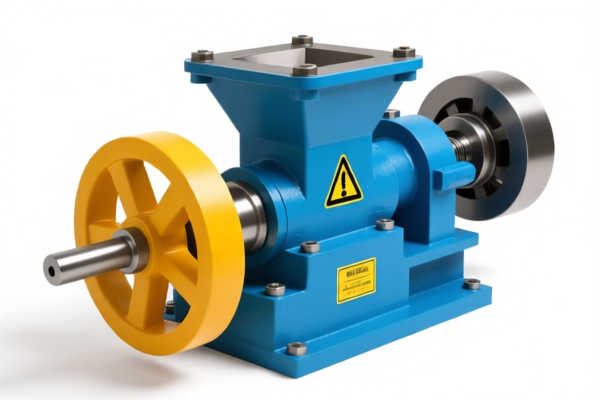
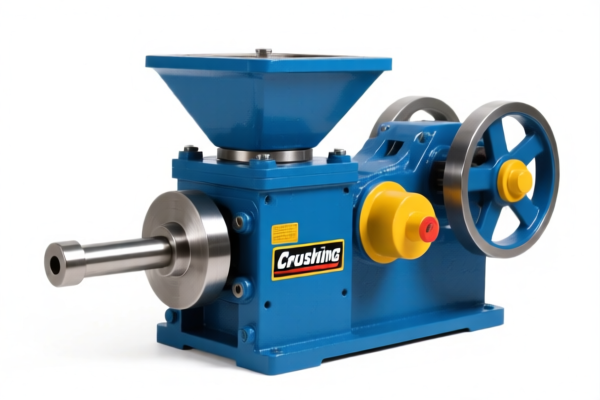
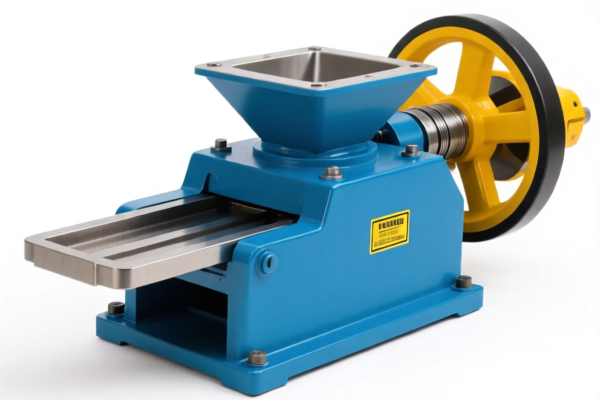
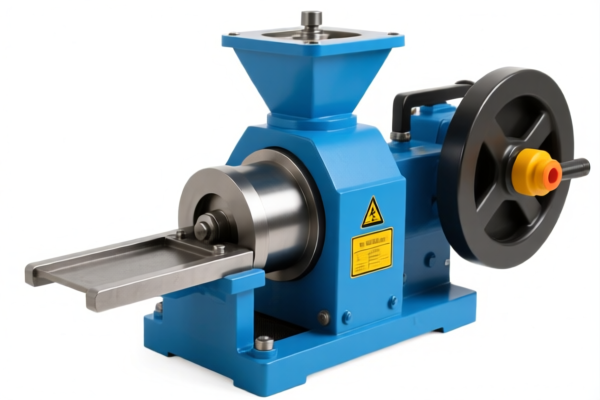
AI Analysis
🏗️ Crushers (Mining & Mineral Processing Machinery)
🌐 HS Code Reference & Customs Clearance Guide | 2026 Latest Tariff Analysis | Professional Clearance Strategy 📌 I. Product Definition & Classification: What is a "Crusher"?
In international trade, "Crusher" is a broad term covering machinery used to reduce the size of solid materials like earth, stone, ores, or mineral substances. However, customs classification depends heavily on specific application and mobility.
The <DATA> provided categorizes crushers into two primary domains:
1. General Mineral Processing: Machinery for sorting, screening, separating, washing, crushing, grinding earth, stone, ores, etc. (Chapter 8474).
2. Beverage/Food Processing: Presses and crushers specifically used for wine, cider, or fruit juices (Chapter 8435).
⚠️ Key Distinction Point: - If the machine is for industrial/mining use (stone, ore, cement, sand) → It falls under HS 8474.20. - If the machine is for food/beverage use (grapes, apples, olives) → It falls under HS 8435.10.
📦 II. HS Code Classification Details (Based on Provided Data)
The following table maps the specific types of crushers to their HS Codes and tax rates as per the <DATA> source.
| HS Code | Product Description | Application Scenario | Tax Rate (Total) | Breakdown |
|---|---|---|---|---|
8474.20.00.50 |
Stationary Crushing or Grinding Machines | Industrial plants, mining sites, cement factories, large-scale stone processing. | 25.0% | Base: 0.0% + Additional: 25.0% |
8474.20.00.10 |
Portable Crushing or Grinding Machines | Mobile rock crushing units, construction site debris processing, temporary mining operations. | 25.0% | Base: 0.0% + Additional: 25.0% |
8435.10.00.00 |
Machinery for Wine/Cider/Fruit Juice Production | Grape presses, apple crushers, olive mills for beverage manufacturing. | 7.5% | Base: 0.0% + Additional: 7.5% |
8435.90.00.00 |
Parts for Beverage Crushers | Spare parts (rotors, screens, casings) specifically for the machinery in 8435.10.00.00. |
7.5% | Base: 0.0% + Additional: 7.5% |
8479.82.00.80 |
Other Mixing/Kneading/Crushing Machines (General) | Industrial mixers that include crushing functions, but not primarily defined as "mineral crushers" in Ch 8474. | 25.0% | Base: 0.0% + Additional: 25.0% |
8479.82.00.40 |
Mixing/Kneading/Stirring Machines (General) | Industrial mixers/kneaders. Note: Often confused with crushers, but distinct in function. | 25.0% | Base: 0.0% + Additional: 25.0% |
🔍 Critical Warning: - Do NOT mix industrial mineral crushers (
8474) with beverage crushers (8435). - Stationary vs. Portable: For mineral crushers, the distinction between...50(Stationary) and...10(Portable) is crucial. Mobile units on tracks/wheels are usually "Portable"; fixed concrete-installed units are "Stationary".
💰 III. 2026 Tariff Rate Detailed Explanation
Based on the <DATA>, all listed items share a common tax structure: 0% Base Tariff + 25% (or 7.5%) Additional Tariff.
🎯 1. Industrial & Mineral Crushers (8474.20.00.50 & 8474.20.00.10)
| Item | Detail |
|---|---|
| Base Tariff | 0.0% |
| Additional Tariff | 25.0% |
| Total Effective Rate | 25.0% |
| Applicable Machinery | Stationary crushers (fixed plants), Portable crushers (mobile units), Grinding mills for stone/ore. |
| Legal Basis | Generalized System of Preferences (GSP) or Free Trade Agreement (FTA) may exempt the Base (0%), but the Additional tariff remains. |
📌 Explanation: - The "Additional Tariff" typically refers to Section 301 tariffs (if importing from China to the US) or other trade remedy measures specified in the data context. - Cost Impact: A $100,000 stationary crusher incurs $25,000 in duties.
🎯 2. Beverage/Food Crushers (8435.10.00.00 & 8435.90.00.00)
| Item | Detail |
|---|---|
| Base Tariff | 0.0% |
| Additional Tariff | 7.5% |
| Total Effective Rate | 7.5% |
| Applicable Machinery | Grape crushers, wine presses, fruit juice extraction equipment. |
| Parts Classification | Spare parts for the above machinery are also classified under 8435.90.00.00 with the same 7.5% rate. |
📌 Explanation: - These rates are significantly lower than industrial crushers. - Crucial: Parts must be clearly identifiable as for beverage machinery, not mineral processing.
🎯 3. General Industrial Mixers/Crushers (8479.82.00.80 & 8479.82.00.40)
| Item | Detail |
|---|---|
| Base Tariff | 0.0% |
| Additional Tariff | 25.0% |
| Total Effective Rate | 25.0% |
| Applicable Machinery | Industrial kneaders, homogenizers, stirring machines that may crush but are primarily for mixing. |
📌 Explanation: - If your machine is a "Mixing Machine" that also crushes, it may fall here. Ensure your technical description emphasizes "Mixing/Kneading" over "Crushing Stone/Ore" to avoid being misclassified under
8474if applicable, though the tax rate is the same (25%).
🛠️ IV. Customs Clearance Practical Advice
✅ 1. Documentation Checklist
| Document | Requirement | Notes |
|---|---|---|
| Commercial Invoice | Must specify "Crusher" and Type (Stationary/Portable/Bev.) | Ambiguous descriptions like "Stone Machine" lead to delays. |
| Technical Datasheet | Include: Motor power, capacity (tons/hour), dimensions, weight. | Proves if it's "Portable" (modular, <8474.20.00.10) or "Stationary" (fixed, <8474.20.00.50). |
| Photos | Clear images of the entire machine and nameplate. | Show wheels/tracks for "Portable" classification. |
| Parts List | For 8435.90 or 8474 parts. |
Must clearly state "Spare Parts for [Specific Model] Crusher". |
✅ 2. Classification Strategy (How to Avoid Misclassification)
| Scenario | Correct HS Code | Risk of Error |
|---|---|---|
| Mobile Rock Crusher on a trailer | 8474.20.00.10 |
❌ Don't classify as 8474.20.00.50 (Stationary). |
| Fixed Jaw Crusher in a quarry plant | 8474.20.00.50 |
❌ Don't classify as 8474.20.00.10 (Portable). |
| Grape Crusher in a winery | 8435.10.00.00 |
❌ Don't classify as 8474.20 (Mineral). Tax differs (7.5% vs 25%). |
| Spare Screens for a Jaw Crusher | 8474.90 (Not in data, but related) |
⚠️ Check if specific parts code is needed. The data only lists 8474.20 for the main machine. Note: The provided data does not list specific parts codes for 8474, only the main machine. Ensure parts are declared correctly under relevant parts chapters or as components. |
🔥 Pro Tip: - For Portability: If the crusher can be moved without dismantling major structural components (e.g., mounted on wheels/tracks), declare as Portable (
...10). - For Beverage Use: Always include proof of end-use (e.g., contract with a winery) to justify8435classification, which saves 17.5% in duties compared to mineral crushers.
🌍 V. Global Market Comparison (Based on Data Context)
| Market | HS Code Range | Total Tax Rate | Key Notes |
|---|---|---|---|
| United States | 8474.20, 8435.10 |
25% (Industrial) 7.5% (Beverage) |
High additional tariffs on industrial machinery (Section 301 likely). |
| European Union | Varies by country | Check local duty | Data provided is likely US-centric (0% base + add. tariff structure typical of US 301 tariffs). |
| China | 8474.20, 8435.10 |
Lower Base Tariff | If importing into China, rates differ. The data suggests importing from a high-tariff origin. |
📌 Conclusion: - The 25% Additional Tariff on industrial crushers (
8474) is a significant cost driver. - Beverage crushers (8435) enjoy a preferential rate of 7.5%. - Portability does not change the tax rate (both are 25%), but it changes the HS Code digit (.10vs.50).
📌 VI. Common Errors & Pitfalls
❌ Error 1: Classifying a Portable Crusher as Stationary.
👉 Consequence: Incorrect HS Code (8474.20.00.50 instead of .10). While tax is same, it leads to inspection delays and data mismatch with shipping documents.
❌ Error 2: Classifying a Fruit Crusher as a Mineral Crusher. 👉 Consequence: Paying 25% tax instead of 7.5%. Overpayment of 17.5% on CIF value.
❌ Error 3: Declaring Parts as Machinery.
👉 Consequence: If you ship only screens or jaw plates for a 8474 crusher, they should not be declared as 8474.20.00.50. (Note: The provided data does not list specific parts codes for 8474, so consult customs broker for correct parts classification, likely 8474.90).
🎯 VII. Conclusion: Professional Declaration for Cost Savings
🎯 Remember the Formula:
🔹 Industrial Crusher =
8474.20+ 25% Tax 🔹 Beverage Crusher =8435.10+ 7.5% Tax 🔹 Portable =...00.10| Stationary =...00.50
📌 Action Plan:
1. Identify End-Use: Is it for stone/mining or food/beverage?
2. Check Mobility: Is it fixed or mobile?
3. Select Code: Match with 8474.20.00.10/50 or 8435.10.00.00.
4. Document: Provide clear photos and specs to support "Portable" or "Beverage" status.
📣 Final Advice: If your crusher is for food/beverage, leverage the 7.5% rate. If it is for mining/stone, budget for 25%. Never guess the HS Code—misclassification can lead to penalties and seizure.
✨ Accurate Classification = Lower Duties = Higher Profit! 💼 Consult a licensed customs broker for advance ruling if uncertain.
Customer Reviews
About HS Code Classification
The Harmonized System (HS) is an internationally standardized nomenclature developed by the World Customs Organization (WCO) to classify traded products. Over 200 countries use the HS system as the basis for customs tariffs, trade statistics, and import/export regulations.
Each HS code follows a hierarchical structure:
- Chapter (2 digits) — Broad category of goods (e.g., Chapter 84: Machinery and Mechanical Appliances)
- Heading (4 digits) — More specific grouping within the chapter
- Subheading (6 digits) — Internationally standardized breakdown, used by all WCO member countries
- National subdivisions (8-10 digits) — Country-specific extensions for further classification, such as US HTSUS 10-digit codes
Correct HS code classification is essential for smooth customs clearance, accurate duty payment, and compliance with trade regulations. Misclassification can lead to customs delays, overpayment of duties, or penalties.
When importing from CN to US, the applicable tariff rates may include:
- Most-Favored-Nation (MFN) rate — The standard duty rate applied to WTO members
- General rate — Applied to countries without trade agreements
- Trade remedy duties — Additional tariffs such as Section 301 (anti-dumping), Section 232 (national security), or countervailing duties
The information provided on this page is for reference purposes only. For official classification, please consult with your local customs authority or a licensed customs broker.