Crusted bovine belly leather
CN → US| HS Code | Tariff Rate | Origin | Destination | Doc |
|---|---|---|---|---|
| 4107112000 | 37.4% | CN | US | Official Doc |
| 4107192000 | 37.4% | CN | US | Official Doc |
| 4104415000 | 13.3% | CN | US | Official Doc |
| 4104495000 | 13.3% | CN | US | Official Doc |
| 4203290800 | 49.0% | CN | US | Official Doc |
Product Images
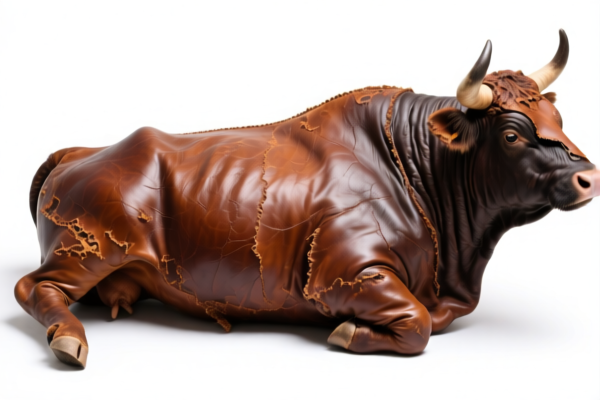
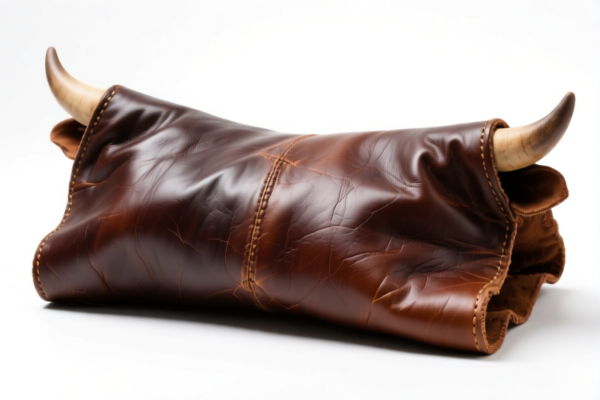
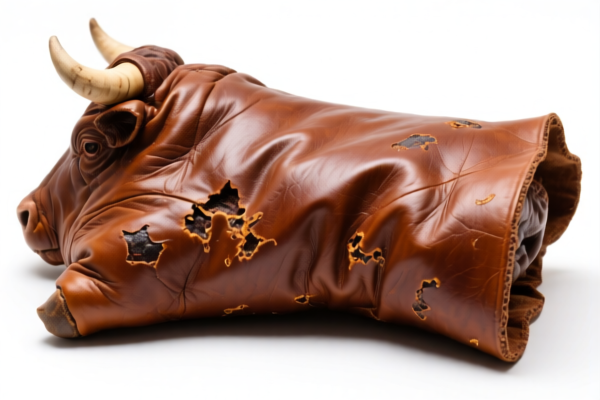
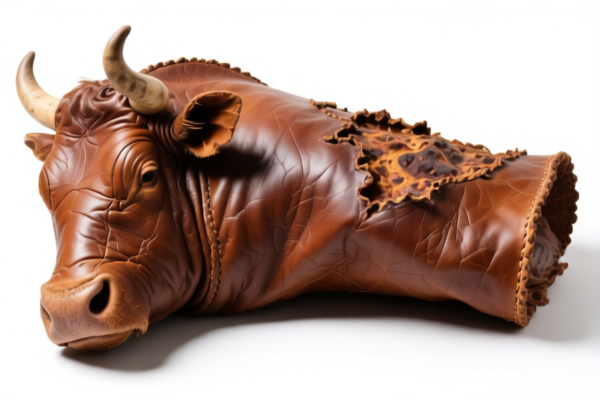
AI Analysis
🐂 Crusted Bovine Belly Leather: The Hidden Cost of Semi-Finished Hides
🌐 HS Code Reference & Customs Clearance Guide | 2026 Tax Breakdown | Professional Strategy for Semi-Finished Leather
📌 Part 1: Product Definition & Classification – What Exactly is "Crusted" Leather?
Crusted Bovine Belly Leather is a semi-finished bovine leather product. It has undergone tanning (usually vegetable or chrome tanning) but has not yet undergone the final finishing stages such as dyeing, pigment coating, buffing, or heavy embossing.
In international trade, "crusting" refers to the process where leather is treated to adjust its pH, color (lightly), and hand-feel, but remains in a state ready for further processing by the tanner or manufacturer. It is not a finished consumer good, nor is it raw hide.
⚠️ Key Distinction – The "Crusted" Trap:
- If the leather is raw or merely dried/salted → It falls under raw hide chapters (Chapter 41 heading 4101/4102).
- If the leather is fully finished (dyed, polished, coated) → It often falls under finished leather categories or even leather articles depending on value-add.
- "Crusted" Leather sits in a grey area but is legally classified as Tanned or Semi-Tanned Leather (Chapter 41, Heading 4104/4107) because it has passed the critical tanning threshold but lacks final cosmetic finishing.
📦 Part 2: HS Code Classification Matrix (2026 Customs Tariff)
Based on the provided data, here are the exact HS Codes for Crusted Bovine Belly Leather and their corresponding tax liabilities.
| HS Code | Product Description & Scope | Total Tax Rate | Tax Breakdown (US Import from China) |
|---|---|---|---|
| 4107.11.20.00 | Crusted Cowhide (Flat, Single Split) | 37.4% | Base: 2.4% + Section 301: 25.0% + Section 122: 10.0% |
| 4107.19.20.00 | Crusted Bovine Leather (Other Forms/Splits) | 37.4% | Base: 2.4% + Section 301: 25.0% + Section 122: 10.0% |
| 4104.41.50.00 | Tanned/Chrome-Tanned Bovine Leather (Flat) | 13.3% | Base: 3.3% + Section 301: 0.0% + Section 122: 10.0% |
| 4104.49.50.00 | Tanned/Chrome-Tanned Bovine Leather (Other) | 13.3% | Base: 3.3% + Section 301: 0.0% + Section 122: 10.0% |
| 4203.29.08.00 | Leather Articles (Belt Bags, Small Goods) | 49.0% | Base: 14.0% + Section 301: 25.0% + Section 122: 10.0% |
🔍 Critical Analysis:
- Why two groups?
- 4107 Codes: Typically apply to vegetable-tanned or fully crusted hides that are ready for re-dyeing/finishing. They attract the full Section 301 tariff (25%).
- 4104 Codes: Typically apply to chrome-tanned (split or full grain) leathers. Crucially, these are exempt from Section 301 (25%), resulting in a significantly lower total tax.
- Belly Leather Specifics: Bovine belly leather is often thinner and more flexible. If it is chrome-tuned, it likely falls under 4104. If it is vegetable-tanned or heavily crusted (ready for final finish), it falls under 4107.
💰 Part 3: 2026 Tariff Rate Deep Dive
✅ Applicable Country: United States (US)
✅ Origin: China (CN)
✅ Effective Date: 2025/2026 Tariff Schedule
🎯 1. Group A: High Tax Bracket (37.4%) – HS Codes 4107.11.20.00 & 4107.19.20.00
| Item | Detail |
|---|---|
| Base MFN Rate | 2.4% |
| Section 301 Tariff | +25.0% (High Impact) |
| Section 122 Tariff | +10.0% |
| Total Effective Rate | 37.4% |
| Tax Calculation | CIF Value × 37.4% |
| De Minimis Exemption | ❌ Not Eligible (Deny de minimis) |
📌 Explanation:
- These codes cover crusted leather that is considered a "further prepared" material.
- The 25% Section 301 tariff is the biggest cost driver. This applies to most leather goods and semi-finished leathers from China unless specifically excluded.
- Section 122 adds an additional 10% for specific industrial materials.
- Total Cost Impact: For every $10,000 worth of crusted belly leather, you pay $3,740 in duties.
🎯 2. Group B: Low Tax Bracket (13.3%) – HS Codes 4104.41.50.00 & 4104.49.50.00
| Item | Detail |
|---|---|
| Base MFN Rate | 3.3% |
| Section 301 Tariff | 0.0% (Exempt) |
| Section 122 Tariff | +10.0% |
| Total Effective Rate | 13.3% |
| Tax Calculation | CIF Value × 13.3% |
| De Minimis Exemption | ❌ Not Eligible (Deny de minimis) |
📌 Explanation:
- These codes typically apply to chrome-tanned leather.
- Key Advantage: Chrome-tanned leathers are often exempt from Section 301 (unlike vegetable-tanned or crusted finishes), saving you 25% in duties.
- This is the optimal classification if your crusted belly leather is chrome-tanned and not yet dyed/finished.
🎯 3. Group C: Finished Goods Tax (49.0%) – HS Code 4203.29.08.00
| Item | Detail |
|---|---|
| Base MFN Rate | 14.0% |
| Section 301 Tariff | +25.0% |
| Section 122 Tariff | +10.0% |
| Total Effective Rate | 49.0% |
| Tax Calculation | CIF Value × 49.0% |
📌 Warning:
- If you import finished products made from this leather (e.g., belts, small leather goods, bags) instead of the raw crusted hide, the tax jumps to 49.0%.
- Never classify semi-finished leather as finished articles to avoid misclassification penalties.
🛠️ Part 4: Customs Clearance Practical Advice
✅ 1. Documentation Checklist (Must-Haves)
| Document | Requirement | Purpose |
|---|---|---|
| Commercial Invoice | Must state "Crusted Bovine Belly Leather" | Clear product description |
| Tanning Process Statement | Explicitly state: Chrome-Tanned vs. Vegetable-Tanned | Determines HS Code (4104 vs. 4107) |
| Production Flow Chart | Show steps: Tanning → Crusting → (No Dye/Finish) | Prove it is NOT finished leather |
| Sample Photos | Show un-dyed, un-pigmented surface | Evidence of "semi-finished" status |
| Fiber Analysis Report | Optional but recommended | Confirms bovine origin and tanning type |
✅ 2. Declaration Strategy (Pro Tips)
🔥 “Chrome is Low, Crust is High, Finish is Sky-High!”
| Scenario | Correct HS Code | Tax Rate | Why? |
|---|---|---|---|
| Chrome-Tanned, Crusted | 4104.41.50.00 or 4104.49.50.00 |
13.3% | Exempt from Section 301 |
| Veg-Tanned, Crusted | 4107.11.20.00 or 4107.19.20.00 |
37.4% | Subject to Section 301 |
| Finished Belly Leather | 4203.29.08.00 |
49.0% | Considered a manufactured article |
📌 Crucial Note:
- If your leather is chrome-tanned but crusted, fight for 4104.
- If it is vegetable-tanned or pigmented-crusted, it will likely fall under 4107.
- Do NOT declare it as "Raw Hide" (Chapter 4101) if it has been tanned – this is fraud.
✅ 3. Special Cases
| Situation | Recommendation |
|---|---|
| Mixed Shipments | Separate chrome-tanned (13.3%) and veg-tanned (37.4%) in different bills of lading if possible. |
| Small Samples | Not eligible for de minimis due to leather restrictions. |
| Re-Export | If you crusted leather then finish it in the US, you may qualify for FTZ (Foreign Trade Zone) benefits to defer duties. |
🌍 Part 5: Global Market Comparison (2026)
| Country | Recommended HS Code | Est. Tax Rate | Notes |
|---|---|---|---|
| 🇺🇸 USA | 4104.41.50.00 (Chrome) |
13.3% | Best option if chrome-tanned. 4107 = 37.4% |
| 🇨🇳 China | 4104.41.50.00 |
3.3% | Low import duty for raw material processing |
| 🇪🇺 EU | 4104 41 |
4.0% | No Section 301 equivalent, but VAT applies |
| 🇬🇧 UK | 4104 41 |
4.0% | Post-Brexit tariff aligned with EU |
📌 Conclusion:
- The US market is the most expensive due to Section 301 and Section 122 tariffs.
- Chrome-tanned leather (4104) is significantly cheaper to import into the US than vegetable-tanned/crusted leather (4107).
📌 Part 6: Common Mistakes & Pitfalls
❌ Mistake 1: Declaring Crusted Leather as "Finished Leather"
👉 Consequence: 49.0% Tax instead of 37.4% or 13.3%.
❌ Mistake 2: Declaring Crusted Leather as "Raw Hide"
👉 Consequence: Customs Fraud. Raw hides are not tanned. Crusted leather is tanned. Seizure & Penalty.
❌ Mistake 3: Ignoring the Tanning Method
👉 Consequence: Misclassification between 4104 (13.3%) and 4107 (37.4%). Always provide a Tanning Certificate.
✅ Correct Practice:
"Bovine Belly Leather, Chrome-Tanned, Crusted, Un-Dyed, Un-Finished, Flat Split, Grade A"
🎯 Part 7: Conclusion – Strategic Sourcing Advice
🎯 Key Takeaway:
🔹 "Chrome saves 25%!" If you can source chrome-tanned crusted belly leather, use 4104.41.50.00 for a 13.3% tax.
🔹 "Veg-Tanned Costs More!" Vegetable-tanned or heavily crusted leather falls under 4107 with a 37.4% tax.
🔹 "Don't Finish Before Import!" Keep it semi-finished. Finished goods (4203) are taxed at 49.0%.
📌 Pro Tip:
If your supplier is flexible, ask them to chrome-tan the belly leather but skip the final dye/pigment stage. This allows you to import under 4104 (13.3%) instead of 4107 (37.4%), saving 24.1% in duties.
📣 Immediate Action:
📞 Confirm Tanning Method with Supplier (Chrome vs. Veg)
📄 Request Tanning Certificate & Production Flow
🚀 File CBP Advance Ruling if unsure about classification
✨ Smart Customs, Smart Profits!
💼 Every percentage point of tax saved is pure profit.
Customer Reviews
About HS Code Classification
The Harmonized System (HS) is an internationally standardized nomenclature developed by the World Customs Organization (WCO) to classify traded products. Over 200 countries use the HS system as the basis for customs tariffs, trade statistics, and import/export regulations.
Each HS code follows a hierarchical structure:
- Chapter (2 digits) — Broad category of goods (e.g., Chapter 84: Machinery and Mechanical Appliances)
- Heading (4 digits) — More specific grouping within the chapter
- Subheading (6 digits) — Internationally standardized breakdown, used by all WCO member countries
- National subdivisions (8-10 digits) — Country-specific extensions for further classification, such as US HTSUS 10-digit codes
Correct HS code classification is essential for smooth customs clearance, accurate duty payment, and compliance with trade regulations. Misclassification can lead to customs delays, overpayment of duties, or penalties.
When importing from CN to US, the applicable tariff rates may include:
- Most-Favored-Nation (MFN) rate — The standard duty rate applied to WTO members
- General rate — Applied to countries without trade agreements
- Trade remedy duties — Additional tariffs such as Section 301 (anti-dumping), Section 232 (national security), or countervailing duties
The information provided on this page is for reference purposes only. For official classification, please consult with your local customs authority or a licensed customs broker.