Crystal Cutting Material
CN → US| HS Code | Tariff Rate | Origin | Destination | Doc |
|---|---|---|---|---|
| 8202390010 | 35.0% | CN | US | Official Doc |
| 8202406030 | 35.0% | CN | US | Official Doc |
Product Images
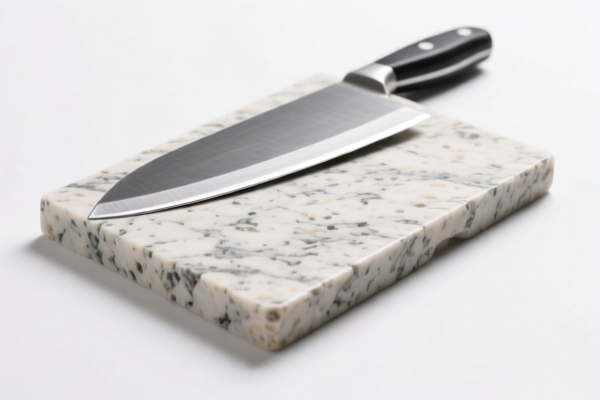
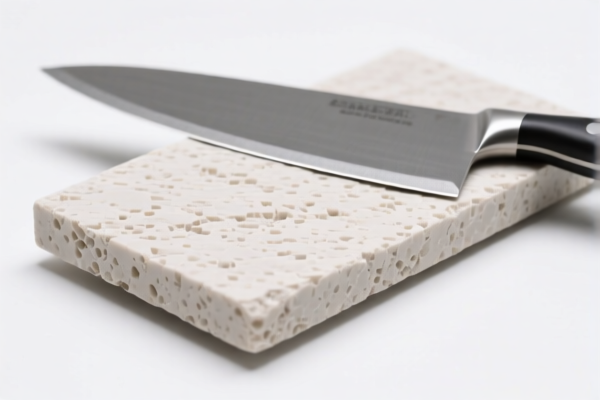
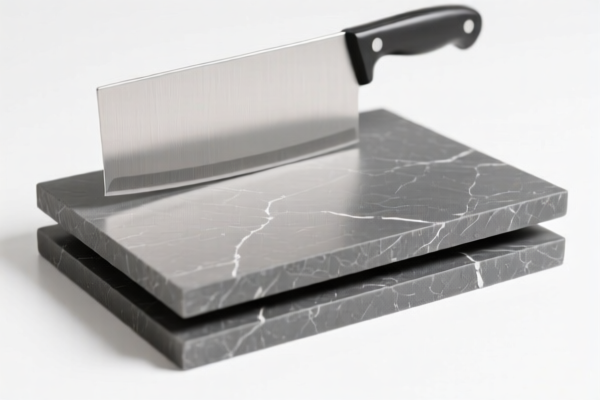
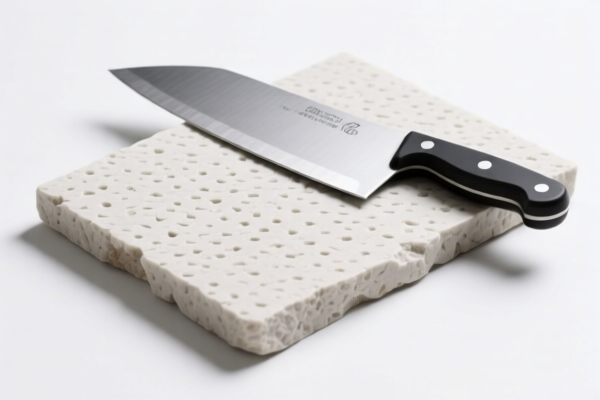
AI Analysis
🔪 Crystal Cutting Material (Saws & Saw Blades)
🌐 HS Code Reference & Customs Clearance Guide | 2026 Latest Tariff Full Analysis | Professional Clearance Strategy
📌 I. Product Definition & Classification: Do You Really Understand "Crystal Cutting Material"?
Crystal Cutting Material, in the context of international trade and customs classification, primarily refers to Handsaws, metal parts thereof, and specifically saw blades used for cutting hard materials like glass, crystal, ceramics, stone, or composites. These are not general-purpose wood saws but specialized industrial or hand tools equipped with specific tooth geometry or abrasive/diamond working parts to handle brittle, hard substrates.
In the Harmonized System (HS), these goods are classified under Heading 82.02: "Handsaws, and metal parts thereof; blades for saws of all kinds (including slitting, slotting or toothless saw blades), and base metal parts thereof."
⚠️ Key Distinction Points:
- Circular Saw Blades: Rotating discs with teeth or diamond segments. Used for precise cross-cutting or profiling.
- Chain Saw Blades: Continuous lengths of linked blades. Typically used in heavy-duty industrial slitting or slotting machines, not handheld chainsaws for wood.
- Material Composition: The core is base metal (steel), but the cutting edge may involve diamond working parts (for diamond blades) or specific carbide teeth. The HS code distinguishes between circular blades and chain blades.
📦 II. HS Code Classification Details (2026 Latest Tariff Authoritative Comparison)
Based on the provided data, here are the specific HS codes and their descriptions:
| HS Code | Product Description | Application Scenario | Key Feature |
|---|---|---|---|
8202.39.00.10 |
Circular Saw Blades (including slitting or slotting saw blades) and parts thereof: Other, including parts with diamond working parts | Precision cutting of glass, crystal, ceramics, stone, or composite materials using circular saws | ✅ Diamond segments or specialized teeth for hard materials |
8202.40.60.30 |
Chain Saw Blades, and parts thereof: Other In continuous lengths | Industrial slitting, slotting, or continuous cutting operations for hard materials | ✅ Continuous chain design for long-duration cutting |
🔍 Focus Reminder:
- Circular vs. Chain: The primary distinction is the geometry. Circular blades (8202.39) are for rotating saws; Chain blades (8202.40) are for continuous loop machines.
- Diamond Parts: If the circular blade has diamond working parts, it falls under8202.39.00.10. This is critical for crystal cutting as diamond is the standard abrasive for hard, brittle materials.
- Base Metal Parts: The code includes not just the blade itself but also base metal parts (e.g., hubs, flanges) specifically designed for these blades.
💰 III. 2026 Latest Tariff Rate Details (Including Additional Taxes)
✅ Applicable Country: United States (US)
✅ Country of Origin: China (CN)
✅ Effective Time: As per current trade restrictions (Section 301)
🎯 1. 8202.39.00.10 —— Circular Saw Blades (Including Diamond Working Parts)
| Item | Content |
|---|---|
| Basic Tariff | 0.0% (Ad Valorem) |
| Additional Tariff (Section 301) | +25.0% |
| Total Tariff | 25.0% |
| Tax Calculation | CIF Value × 25% |
| De Minimis Exemption | ❌ Not Applicable (For Section 301 goods from China, de minimis is generally excluded for high-risk categories) |
| Legal Basis Path | USITC:8202.39.00.10 → Section 301: Footnote 9903.88.01 |
📌 Explanation:
- The basic tariff is 0%, which might seem attractive.
- However, the 25% Section 301 additional tariff applies due to the origin being China.
- Total Cost Impact: A $10,000 shipment of diamond circular saw blades will incur $2,500 in duties.
- Note: This is a high-cost item for importers. Profit margins must account for this 25% levy.
🎯 2. 8202.40.60.30 —— Chain Saw Blades (Continuous Lengths)
| Item | Content |
|---|---|
| Basic Tariff | 0.0% (Ad Valorem) |
| Additional Tariff (Section 301) | +25.0% |
| Total Tariff | 25.0% |
| Tax Calculation | CIF Value × 25% |
| De Minimis Exemption | ❌ Not Applicable |
| Legal Basis Path | USITC:8202.40.60.30 → Section 301: Footnote 9903.88.01 |
📌 Note:
- Same tax structure as circular blades.
- Chain saw blades for crystal/stone cutting are less common than circular blades but still subject to the same trade remedies.
- Ensure the description clearly states "for industrial slitting/slotting" to avoid misclassification as handheld wood-chaining tools.
🛠️ IV. Customs Clearance Practical Advice (Real-World Pitfall Avoidance)
✅ 1. Required Documentation Checklist (No Exceptions)
| Document | Must Provide | Description |
|---|---|---|
| ✅ Product Specification Sheet | ✔️ | Detail the blade type (circular/chain), diameter, thickness, number of teeth, and diamond segment details if applicable. |
| ✅ Material Composition Proof | ✔️ | Confirm base metal (e.g., high-speed steel) and diamond quality/rating. |
| ✅ Product Photos (Labeled) | ✔️ | Show the blade, marking plate (with model, origin), and cutting edge structure. |
| ✅ Commercial Invoice | ✔️ | Must explicitly state "Saw Blades for Crystal/Glass Cutting" to justify HS code. |
| ✅ Packing List | ✔️ | List net/gross weight, dimensions, and number of pieces. |
| ✅ Country of Origin Certificate | ✔️ | If not China, check for FTAA benefits (though unlikely for saw blades). For China, no benefit applies. |
✅ 2. Declaration Tips (Key Mnemonic)
🔥 "Circular vs. Chain, Diamond Details, No Hiding Place!"
| Scenario | Correct Declaration | Wrong Practice |
|---|---|---|
| Diamond Circular Blade | 8202.39.00.10 + "Diamond Working Parts" |
Misclassify as general steel blades (8202.39.90) → Higher scrutiny |
| Chain Blade for Slitting | 8202.40.60.30 + "Continuous Lengths" |
Misclassify as "hand saws" → Incorrect HS, potential penalty |
| Mixed Shipment | Declare each type separately | Combine different blade types under one code → Audit risk |
| Accessories (Hubs) | Declare with blade if integral | Separate declaration for parts → Higher total duty due to lack of synergy |
✅ 3. Special Case Handling
| Situation | Handling Advice |
|---|---|
| OEM Custom Blades | Provide customer design specs and invoices to prove origin and specification. |
| Diamond vs. Carbide | Clearly distinguish. Diamond blades go to 8202.39.00.10. Carbide-tipped might be different, but data specifies "diamond working parts" for this code. |
| Used Blades | Not covered in this data. Usually requires additional sanitation/environmental declarations. |
| Parts Only | If shipping only bases/flanges without blades, still classify under same heading if "base metal parts thereof". |
🌍 V. Global Market Comparison for Crystal Cutting Tools (2026)
| Country/Region | Recommended HS Code | Tariff (China Origin) | Certification | Notes |
|---|---|---|---|---|
| 🇺🇸 USA | 8202.39.00.10 |
25% | None | High tariff impact |
| 🇨🇳 China | 8202.39.00.10 |
0-8% (Import) | CCC (if applicable) | Domestic production low on this specific code |
| 🇪🇺 EU | 8202.39 |
~2.5-4.5% | CE Marking | Lower tariffs, no Section 301 |
| 🇦🇺 Australia | 8202.39 |
5% | RCM | Moderate tariff |
| 🇯🇵 Japan | 8202.39 |
0-3% | PSE | Low tariff |
📌 Conclusion:
- USA is the most expensive market for these imports due to the 25% Section 301 tariff.
- EU, Japan, and Australia are more cost-effective for importing Chinese-made crystal cutting blades.
- Consider supply chain diversification if US market is the primary target.
📌 VI. Common Errors & Pitfall Guide (Lessons Learned)
❌ Error 1: Classifying diamond blades as "General Steel Saw Blades"
👉 Consequence: Wrong HS code, potential penalties for misdeclaration.
👉 Fix: Always specify "with diamond working parts" if applicable.
❌ Error 2: Omitting "Continuous Lengths" for Chain Blades
👉 Consequence: Misclassification under general chain saws.
👉 Fix: Clearly state "Industrial Slitting Chain" in description.
❌ Error 3: Assuming De Minimis Exemption
👉 Consequence: Section 301 goods from China are not eligible for de minimis ($800) exemption in many cases.
👉 Fix: Prepare full duty payment plans.
❌ Error 4: Vague Product Names
👉 Consequence: Customs delays for clarification.
👉 Fix: Use precise names: "Diamond Circular Saw Blade for Crystal Cutting, 10-inch, 80mm Bore."
✅ Correct Practice:
"Circular Saw Blade, Diamond-Tipped, 300mm Diameter, 10mm Thickness, for Cutting Glass/Crystal, Model XYZ, Made in China."
🎯 VII. Conclusion: Precision Matters, Cost Control is Key!
🎯 Remember the Mnemonic:
🔹 "Circular vs. Chain, Diamond is Key!"
🔹 "25% Tariff Hits Hard, Plan Your Margin!"
🔹 "Accurate Description, Smooth Clearance!"
📌 Pro Tip:
If your saw blades are sourced from Vietnam, Thailand, or Malaysia, you may avoid the 25% Section 301 tariff.
Recommend applying for an Advance Ruling with US CBP to confirm HS code classification before shipment.
📣 Immediate Action:
📞 Contact a Professional Customs Broker
📄 Provide Detailed Specs + Photos
🚀 Ensure Compliance, Avoid Delays, Maximize Profit!
✨ Professional Clearance Starts with Precise Classification!
💼 Your Every Cent Counts in Global Trade!
Customer Reviews
About HS Code Classification
The Harmonized System (HS) is an internationally standardized nomenclature developed by the World Customs Organization (WCO) to classify traded products. Over 200 countries use the HS system as the basis for customs tariffs, trade statistics, and import/export regulations.
Each HS code follows a hierarchical structure:
- Chapter (2 digits) — Broad category of goods (e.g., Chapter 84: Machinery and Mechanical Appliances)
- Heading (4 digits) — More specific grouping within the chapter
- Subheading (6 digits) — Internationally standardized breakdown, used by all WCO member countries
- National subdivisions (8-10 digits) — Country-specific extensions for further classification, such as US HTSUS 10-digit codes
Correct HS code classification is essential for smooth customs clearance, accurate duty payment, and compliance with trade regulations. Misclassification can lead to customs delays, overpayment of duties, or penalties.
When importing from CN to US, the applicable tariff rates may include:
- Most-Favored-Nation (MFN) rate — The standard duty rate applied to WTO members
- General rate — Applied to countries without trade agreements
- Trade remedy duties — Additional tariffs such as Section 301 (anti-dumping), Section 232 (national security), or countervailing duties
The information provided on this page is for reference purposes only. For official classification, please consult with your local customs authority or a licensed customs broker.