Crystal Glass Beads
CN → US| HS Code | Tariff Rate | Origin | Destination | Doc |
|---|---|---|---|---|
| 7018105000 | 35.0% | CN | US | Official Doc |
| 7018101000 | 39.0% | CN | US | Official Doc |
| 7117909000 | 28.5% | CN | US | Official Doc |
Product Images

AI Analysis
💎 Crystal Glass Beads – HS Code Classification & 2026 U.S. Tariff Guide (Full Compliance & Clearance Strategy)
🌐 HS Code Reference & Customs Clearance Handbook | 2026 Updated Tariff Rules | Expert-Level Import Strategy
📌 One Product, Three Possible HS Codes – Know Which One Applies to You!
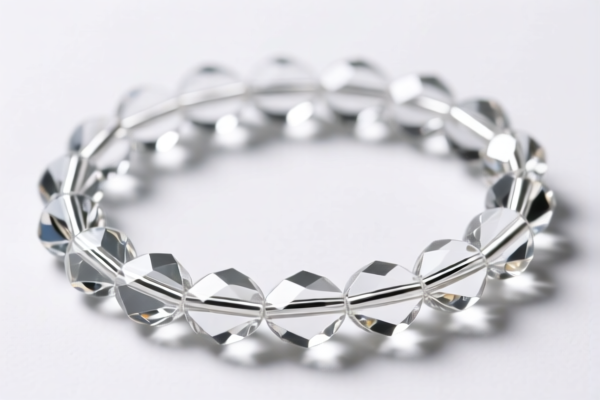
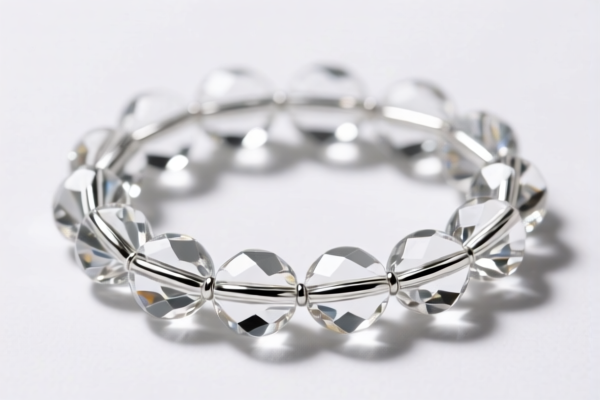
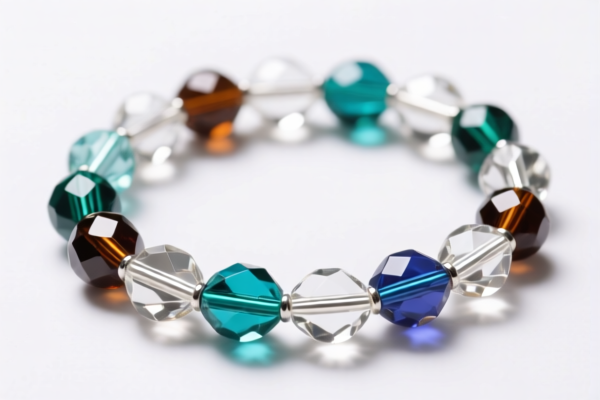
Crystal glass beads are small, round, decorative items made entirely of glass, often used in jewelry, crafts, and fashion accessories. While they may look like gemstones, they are not natural or synthetic precious stones — they are artificial glass beads, and their classification depends on material, form, and intended use.
⚠️ Critical Insight:
- If the beads are purely decorative and not part of a finished piece of jewelry, they fall under 7018.10.50.00 or 7018.10.10.00
- If they are used as loose beads in a jewelry setting, even if sold separately, they may be classified under 7117.90.90.00 as "imitation jewelry"
- Do NOT classify them as "glass beads" under general glass categories — the correct HS Code is crucial for tariff accuracy.
📦 2. HS Code Breakdown (2026 U.S. Tariff Authority – All Three Codes Explained)
| HS Code | Product Description | Classification Logic | Key Features |
|---|---|---|---|
7018.10.50.00 |
Glass beads, made of glass, in bead form, intended for decoration or craft use | Direct match: Material = glass, Form = bead, Purpose = non-jewelry decoration | ✅ Pure glass beads, no metal, no setting, no gemstone-like function |
7018.10.10.00 |
Glass beads, made of glass, in bead form, used in crafts or decorative items | Matches material + form; not for use as jewelry components | ✅ Same as above, but higher base tariff due to U.S. trade policy |
7117.90.90.00 |
Other imitation jewelry, made of glass, in loose bead form, for decorative use | Classified as "imitation jewelry" because they are sold as decorative beads for jewelry making | ✅ Sold in bulk for DIY jewelry, used in necklaces/bracelets |
🔍 Why the Difference Matters?
-7018.10.50.00and7018.10.10.00are glass products, not jewelry
-7117.90.90.00is jewelry-related, even if unassembled — higher scrutiny under trade law
💰 3. 2026 U.S. Tariff Breakdown (With Full Legal Basis & Add-Ons)
✅ Applicable Country: United States (U.S.)
✅ Origin: China (CN)
✅ Effective Date: November 10, 2025 (including future imports)
🎯 1. 7018.10.50.00 — Glass Beads (Pure Glass, Non-Jewelry Use)
| Item | Detail |
|---|---|
| Base Duty | 0.0% (ad valorem) |
| Section 301 Tariff (USITC) | +25.0% (from U.S. Trade Act 301) |
| Section 122 Tariff (IEEPA) | +10.0% (under International Emergency Economic Powers Act) |
| Total Effective Tariff | 35.0% |
| Tax Calculation | CIF Value × 35.0% |
| De Minimis Exemption? | ❌ No (denied under U.S. law) |
| Legal Basis Path | IEEPA:9903.01.25 → IEEPA:9903.01.24 → USITC:7018.10.50.00 → FOOTNOTE:9903.88.01 |
📌 Explanation:
- The 25% USITC tariff applies to all goods from China under Section 301 (Trade Act of 1974)
- The 10% IEEPA tariff is for national security concerns — applies to all Chinese-origin goods, including glass beads
- No de minimis relief — even small shipments are fully taxed
🎯 2. 7018.10.10.00 — Glass Beads (Same Material, Higher Base Duty)
| Item | Detail |
|---|---|
| Base Duty | 4.0% (ad valorem) |
| Section 301 Tariff (USITC) | +25.0% |
| Section 122 Tariff (IEEPA) | +10.0% |
| Total Effective Tariff | 39.0% |
| Tax Calculation | CIF Value × 39.0% |
| De Minimis Exemption? | ❌ No |
| Legal Basis Path | IEEPA:9901.25 → IEEPA:9903.01.24 → USITC:7018.10.10.00 → FOOTNOTE:9903.88.01 |
📌 Why Higher?
- This code has a 4% base tariff due to historical trade classifications
- Even though the product is the same as7018.10.50.00, the code-specific base rate increases total cost
- Same add-ons (25% + 10%), but higher starting point
🎯 3. 7117.90.90.00 — Imitation Jewelry (Glass Beads Sold for Jewelry Making)
| Item | Detail |
|---|---|
| Base Duty | 11.0% (ad valorem) |
| Section 301 Tariff (USITC) | +7.5% (reduced due to classification as “jewelry”) |
| Section 122 Tariff (IEEPA) | +10.0% |
| Total Effective Tariff | 28.5% |
| Tax Calculation | CIF Value × 28.5% |
| De Minimis Exemption? | ❌ No |
| Legal Basis Path | IEEPA:9901.25 → IEEPA:9903.01.24 → USITC:7117.90.90.00 → FOOTNOTE:9903.88.01 |
📌 Why Lower?
- Classified as "imitation jewelry", not raw glass
- Lower USITC rate (7.5%) because it's considered a finished consumer product
- Still subject to 10% IEEPA — no relief for jewelry⚠️ Important:
- If beads are sold in bulk for DIY jewelry, even if not assembled, they are still treated as jewelry components
- Do not misclassify as "glass beads" if they are marketed as "jewelry-making supplies"
🛠️ 4. Customs Clearance Best Practices (Real-World Tips)
✅ 1. Required Documentation (Must-Have List)
| Document | Required? | Why It Matters |
|---|---|---|
| ✅ Commercial Invoice | ✔️ | Must clearly state: "Glass Beads, for Craft Use" or "Imitation Jewelry Beads" |
| ✅ Packing List | ✔️ | Show quantity, weight, and packaging (e.g., 1000 pcs in plastic bag) |
| ✅ Product Photos | ✔️ | Show beads in bulk, no metal, no setting, no jewelry |
| ✅ Certificate of Origin (CO) | ✔️ | If from China, must be provided — affects tariff eligibility |
| ✅ Technical Specs / Material Sheet | ✔️ | Prove material = glass, not metal or gemstone |
| ✅ Labeling & Packaging Info | ✔️ | If labeled as "jewelry beads", must use 7117.90.90.00 |
✅ 2.申报技巧(Pro Tips)
🔥 “Label = Code, Use = Tax – Get It Right or Pay 35% More!”
| Scenario | Correct HS Code | Wrong Code | Result |
|---|---|---|---|
| Beads sold as craft supplies (no jewelry) | 7018.10.50.00 |
7117.90.90.00 |
Pay 35% instead of 28.5% |
| Beads sold in bulk for DIY necklaces | 7117.90.90.00 |
7018.10.10.00 |
Pay 39% instead of 28.5% |
| Beads with metal caps or threading | ❌ Not eligible for 7018 codes | 7018.10.50.00 |
Seizure or reclassification |
| Beads with “jewelry” in description | 7117.90.90.00 |
7018.10.50.00 |
Penalties + audit risk |
✅ 3. Special Cases & Risk Mitigation
| Situation | Recommended Action |
|---|---|
| Beads sold with jewelry-making kits | Use 7117.90.90.00 — even if beads are separate |
| Beads labeled as “gemstone look” or “crystal” | Still glass — do not claim as real gemstones |
| Beads imported in small quantities (e.g., 1kg) | Still taxed at 28.5%–39% — no de minimis relief |
| Beads from Vietnam, Mexico, or Thailand | Can apply for IEEPA exemption — 0%–5% tariff possible |
| Beads with custom shapes (non-round) | Still eligible for 7018.10.50.00 if glass and bead-shaped |
🌍 5. Global Market Comparison (2026)
| Country | Recommended HS Code | Tariff | Certification | Notes |
|---|---|---|---|---|
| 🇺🇸 United States | 7018.10.50.00 or 7117.90.90.00 |
28.5%–39% | None (but documentation required) | No de minimis |
| 🇨🇳 China | 7018.10.50.00 |
5% | CCC | No extra tariffs |
| 🇪🇺 European Union | 7018.10.50.00 |
0% | CE | No IEEPA/301 tariffs |
| 🇦🇺 Australia | 7018.10.50.00 |
5% | RCM | No extra charges |
| 🇯🇵 Japan | 7018.10.50.00 |
0% | PSE | No additional tariffs |
📌 Takeaway:
- U.S. is the only market with 301 + IEEPA tariffs on glass beads
- China-origin beads face the highest cost in the U.S.
- Vietnam/Mexico origin = potential tariff reduction — consider shifting production
📌 6. Common Mistakes & How to Avoid Them (Real-World Lessons)
❌ Mistake 1: Using 7018.10.50.00 for beads sold in “jewelry kits”
👉 Result: Reclassified to 7117.90.90.00 → Higher tax + penalties
❌ Mistake 2: Assuming “glass beads” are always low-tariff
👉 Result: 35%–39% tax — not 0% — no de minimis
❌ Mistake 3: Not providing material proof (e.g., lab report)
👉 Result: Customs delays, audit, or rejection
❌ Mistake 4: Using “crystal” in product name without proof
👉 Result: Misleading claim — risk of seizure
✅ Correct Labeling Example:
“Glass Beads, 6mm, Round, Craft Use, Not for Jewelry, Made in China, 1000 pcs per bag”
🎯 7. Final Verdict: Know Your Code, Save Your Profit!
🎯 Remember the Golden Rule:
🔹 "If it’s sold as a craft item →
7018.10.50.00(35%)
🔹 If it’s sold for jewelry →7117.90.90.00(28.5%)
🔹 If it’s from China → 35%–39% no matter what
🔹 No de minimis — even 1kg is taxed!
📌 Pro Tip:
✅ Apply for an Advance Ruling (Pre-Approval) from U.S. Customs before shipping
✅ Use a licensed broker with experience in glass beads and IEEPA/301 rules
✅ Reclassify origin to Vietnam/Mexico if possible — can drop to 0%–5%
📣 Act Now!
📞 Contact a U.S. Customs Broker + Submit Product Photos + Request HS Code Pre-Ruling
🚀 Avoid surprise tariffs, delays, and penalties — ship with confidence!
✨ Smart Importing Starts with Smart Classification!
💼 Your profit margin depends on the right HS Code — don’t gamble with it!
Customer Reviews
About HS Code Classification
The Harmonized System (HS) is an internationally standardized nomenclature developed by the World Customs Organization (WCO) to classify traded products. Over 200 countries use the HS system as the basis for customs tariffs, trade statistics, and import/export regulations.
Each HS code follows a hierarchical structure:
- Chapter (2 digits) — Broad category of goods (e.g., Chapter 84: Machinery and Mechanical Appliances)
- Heading (4 digits) — More specific grouping within the chapter
- Subheading (6 digits) — Internationally standardized breakdown, used by all WCO member countries
- National subdivisions (8-10 digits) — Country-specific extensions for further classification, such as US HTSUS 10-digit codes
Correct HS code classification is essential for smooth customs clearance, accurate duty payment, and compliance with trade regulations. Misclassification can lead to customs delays, overpayment of duties, or penalties.
When importing from CN to US, the applicable tariff rates may include:
- Most-Favored-Nation (MFN) rate — The standard duty rate applied to WTO members
- General rate — Applied to countries without trade agreements
- Trade remedy duties — Additional tariffs such as Section 301 (anti-dumping), Section 232 (national security), or countervailing duties
The information provided on this page is for reference purposes only. For official classification, please consult with your local customs authority or a licensed customs broker.