Crystal Tree
CN → US| HS Code | Tariff Rate | Origin | Destination | Doc |
|---|---|---|---|---|
| 7013998010 | 21.3% | CN | US | Official Doc |
| 7013999090 | 24.7% | CN | US | Official Doc |
Product Images
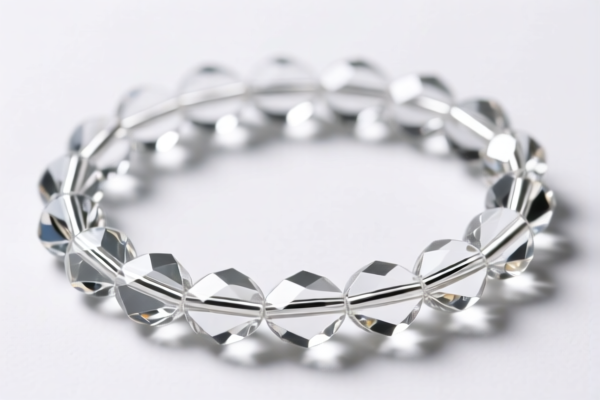
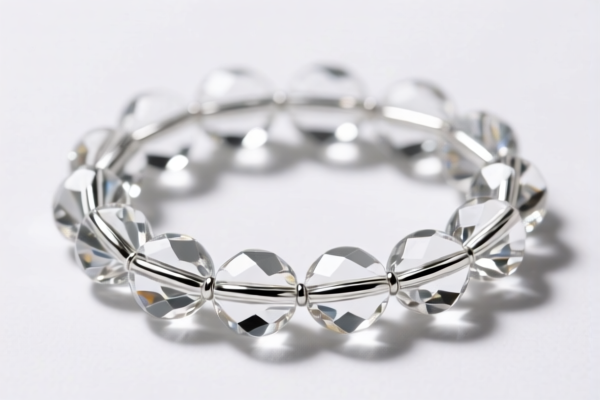
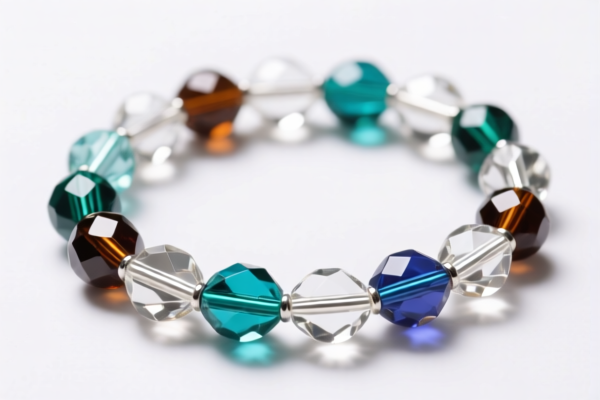

AI Analysis
🎄 Crystal Tree (Decorative Glassware)
🌐 HS Code Reference & Customs Clearance Guide | 2026 Latest Tariff Analysis | Professional Clearance Strategy
📌 I. Product Definition & Classification: Do You Know "Crystal Trees"?
In the international trade of glassware, "Crystal Trees" (often used as holiday decorations, centerpieces, or indoor ornaments) fall strictly under Chapter 70. They are not classified as artificial plants (Chapter 39 or 67) but as glassware of a kind used for indoor decoration.
Key Distinction: * Material: Made of glass (crystalline or non-lead crystal). * Purpose: Indoor decoration, table, or office use. * Exclusion: Not of heading 7010 (glass containers) or 7018 (glass beads/spangles).
⚠️ Critical Classification Point: The HS Code depends entirely on the Unit Value (Price per Piece) and the Lead Content: - High-Value Lead Crystal: Valued over $3 but not over $5/each → 7013.99.80.10 - Standard/Non-Lead Crystal: Valued over $5/each → 7013.99.90.90
📦 II. HS Code Classification Details (2026 Latest Tariff Authority Comparison)
Based on the provided data, here are the two applicable HS Codes for Crystal Trees.
| HS Code | Product Description | Valuation Criteria | Material Type |
|---|---|---|---|
7013.99.80.10 |
Glassware for decoration, other, valued over $3 but not over $5 each | Unit Price: $3.01 – $5.00 | Crystalline or Non-lead Crystal |
7013.99.90.90 |
Glassware for decoration, other, valued over $5 each | Unit Price: > $5.00 | Other (Non-Crystal or Standard Glass) |
🔍 Important Reminder: - If your crystal tree is valued at $6.00, it falls under
7013.99.90.90. - If your crystal tree is valued at $4.50, it falls under7013.99.80.10. - Do not combine items with different values in the same line item to avoid customs valuation disputes.
💰 III. 2026 Latest Tariff Rate Details (Including Additional Duties)
✅ Applicable Country: USA (US) ✅ Origin: China (CN) (Note: Rates reflect standard US import duties for Chinese origin based on provided data) ✅ Effective Date: 2025/2026 Period
🎯 1. 7013.99.80.10 —— High-Value Crystalline Glassware
| Item | Content |
|---|---|
| Base Tariff | 11.3% |
| Additional Tariff (Section 301) | 0.0% |
| Total Tariff Rate | 11.3% |
| Tax Calculation | CIF Value × 11.3% |
| De Minimis Eligibility | ❌ Not Applicable (De Minimis applies to low-value shipments < $800, but for formal entry, this is the rate) |
| Legal Basis | USITC Section 7013.99.80.10 |
📌 Explanation: - This code applies to higher-value crystalline glass trees. - Notably, the Additional Tariff is 0.0% for this specific subheading in the provided data, making it more favorable than the other category despite being a "crystal" product. - This is a low-risk, lower-tariff classification if your unit value is between $3 and $5.
🎯 2. 7013.99.90.90 —— Standard Glassware (Valued > $5)
| Item | Content |
|---|---|
| Base Tariff | 7.2% |
| Additional Tariff (Section 301) | 7.5% |
| Total Tariff Rate | 14.7% |
| Tax Calculation | CIF Value × 14.7% |
| De Minimis Eligibility | ❌ Not Applicable |
| Legal Basis | USITC Section 7013.99.90.90 |
📌 Explanation: - This code applies to standard glass trees valued over $5 each. - Although the base tariff (7.2%) is lower than
7013.99.80.10, the Additional Tariff of 7.5% pushes the total to 14.7%. - Cost Comparison: A $10 tree under this code pays ~$1.47 in tax, while a $4 tree under7013.99.80.10pays ~$0.45.
🛠️ IV. Customs Clearance Practical Advice (Pitfall Avoidance Guide)
✅ 1. Documentation Checklist (Essential)
| Document | Required | Notes |
|---|---|---|
| ✅ Commercial Invoice | ✔️ | Must clearly state "Crystal Tree - Glassware for Indoor Decoration" |
| ✅ Unit Price Declaration | ✔️ | Critical: Must show price per piece (not per set or box) to determine correct HS Code |
| ✅ Product Description | ✔️ | Specify material: "Lead-free crystal glass" or "Soda-lime glass" |
| ✅ Photos | ✔️ | Show the item alone and in packaging to prove it is a single decorative piece |
| ✅ Packing List | ✔️ | List quantity and total value |
📌 Pro Tip: - If selling a "Set" of trees, ensure the invoice lists the individual unit price of each tree. If the set price exceeds $5 but individual pieces are <$5, argue for the lower HS code (
7013.99.80.10) if legally defensible, but be prepared to justify.
✅ 2. Declaration Strategy (Key Rules)
| Scenario | Correct Declaration | Wrong Practice |
|---|---|---|
| Tree valued at $4.00 | 7013.99.80.10 (11.3%) |
Misdeclare as 7013.99.90.90 (14.7%) → Overpay Tax |
| Tree valued at $6.00 | 7013.99.90.90 (14.7%) |
Misdeclare as 7013.99.80.10 → Underpayment Penalty |
| Set of 3 trees ($10 total) | Break down to $3.33/each → 7013.99.80.10 |
Declare as single item @ $10 → 7013.99.90.90 → Higher Tax |
🔥 Golden Rule: "Price per Piece Defines the Code. Check the Bracket: $3–$5 = 11.3%, >$5 = 14.7%."
✅ 3. Special Considerations
| Situation | Handling Advice |
|---|---|
| Lead vs. Lead-Free | The provided data for 7013.99.80.10 includes "Crystalline or non-lead crystal." Ensure marketing matches customs description to avoid classification challenges. |
| Packaging | Ensure packaging does not add significant value. The transaction value must be the price of the goods, not including freight/insurance if you want to declare CIF accurately for duty basis. |
| Holiday Season | Customs may be busy in Q4. Submit entry 2–3 weeks in advance. |
🌍 V. Global Market Clearance Comparison (2026 Latest)
| Country/Region | Recommended HS Code | Tariff Rate | Certification | Notes |
|---|---|---|---|---|
| 🇺🇸 USA | 7013.99.80.10 or 7013.99.90.90 |
11.3% – 14.7% | None Specific | Check Unit Price carefully! |
| 🇨🇳 China | 7013.99.90.90 | ~10–13% | CCC (if applicable) | Domestic sales vs. import |
| 🇪🇺 EU | 7013.99.90 | 6.5% | CE (if applicable) | No Section 301 equivalent |
| 🇬🇧 UK | 7013.99.90 | 6.5% | UKCA | Post-Brexit tariffs apply |
| 🇦🇺 Australia | 7013.99.90 | 5.0% | ARA | Lower base tariff |
📌 Conclusion: - The USA has the highest complexity due to the price-bracket classification and potential Section 301 implications (though 0% in this specific high-value crystal code). - Value Management: If you can design a lighter/smaller tree to keep the unit price under $5.00, you save 3.4% in total tax (11.3% vs 14.7%).
📌 VI. Common Errors & Pitfall Guide (Lessons from Experience)
❌ Error 1: Declaring a $6.00 tree as $4.00 to save tax 👉 Consequence: Customs audit, back taxes + penalties (30–100% of duty evaded).
❌ Error 2: Grouping multiple items into one HS Code with an average value 👉 Consequence: Incorrect classification. Each line item must reflect its true unit value.
❌ Error 3: Using vague terms like "Glass Ornament" 👉 Consequence: Customs may reject or reclassify to a higher duty code. Use "Glassware for Indoor Decoration."
✅ Correct Practice:
"Decorative Glass Crystal Tree, Lead-Free, Single Unit Value $4.50, HS Code 7013.99.80.10, for Indoor Table Decoration."
🎯 VII. Conclusion: Professional Clearance, Cost Optimization!
🎯 Remember the Key Takeaway:
🔹 "Price Per Piece is King: - $3.01 – $5.00 → 7013.99.80.10 → 11.3% Total Tax - > $5.00 → 7013.99.90.90 → 14.7% Total Tax"
🔹 "Save 3.4% Tax by optimizing product design or pricing strategy to stay below the $5 threshold!"
📌 Pro Tip:
- If you are importing large volumes, consider Advance Ruling from US Customs (CBP) to confirm the classification of your specific crystal trees.
- Ensure your commercial invoice explicitly states the unit price to avoid disputes during valuation.
📣 Immediate Action:
📞 Contact your customs broker with your unit price and product specs. 🚀 Optimize your pricing to hit the 11.3% bracket if possible! ✨ Precise classification saves money. Clear the border with confidence!
✨ Professional Clearance Starts with Accurate Classification! 💼 Every dollar of duty saved is profit earned!
Customer Reviews
About HS Code Classification
The Harmonized System (HS) is an internationally standardized nomenclature developed by the World Customs Organization (WCO) to classify traded products. Over 200 countries use the HS system as the basis for customs tariffs, trade statistics, and import/export regulations.
Each HS code follows a hierarchical structure:
- Chapter (2 digits) — Broad category of goods (e.g., Chapter 84: Machinery and Mechanical Appliances)
- Heading (4 digits) — More specific grouping within the chapter
- Subheading (6 digits) — Internationally standardized breakdown, used by all WCO member countries
- National subdivisions (8-10 digits) — Country-specific extensions for further classification, such as US HTSUS 10-digit codes
Correct HS code classification is essential for smooth customs clearance, accurate duty payment, and compliance with trade regulations. Misclassification can lead to customs delays, overpayment of duties, or penalties.
When importing from CN to US, the applicable tariff rates may include:
- Most-Favored-Nation (MFN) rate — The standard duty rate applied to WTO members
- General rate — Applied to countries without trade agreements
- Trade remedy duties — Additional tariffs such as Section 301 (anti-dumping), Section 232 (national security), or countervailing duties
The information provided on this page is for reference purposes only. For official classification, please consult with your local customs authority or a licensed customs broker.