Cubic Centimeter Measuring Unit
CN → US| HS Code | Tariff Rate | Origin | Destination | Doc |
|---|---|---|---|---|
| 9031808085 | 35.0% | CN | US | Official Doc |
| 9017208080 | 39.6% | CN | US | Official Doc |
| 9031499000 | 35.0% | CN | US | Official Doc |
| 9017800000 | 40.3% | CN | US | Official Doc |
| 9017208080 | 39.6% | CN | US | Official Doc |
Product Images
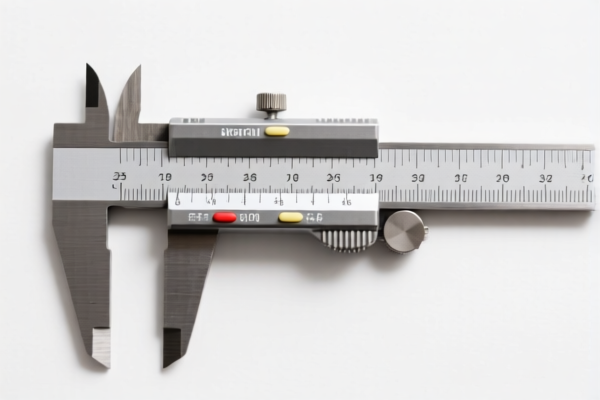
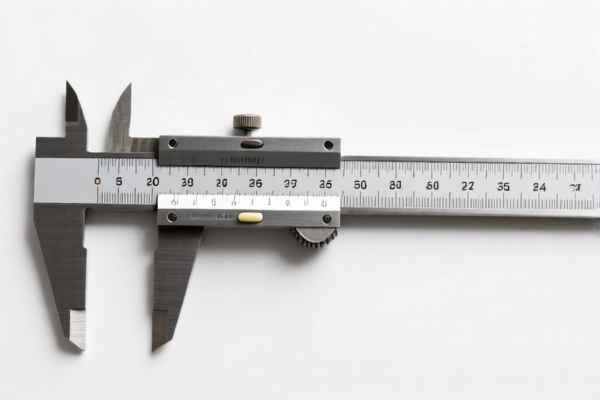
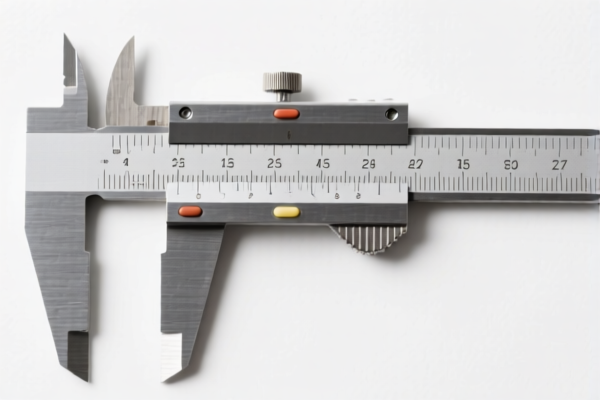
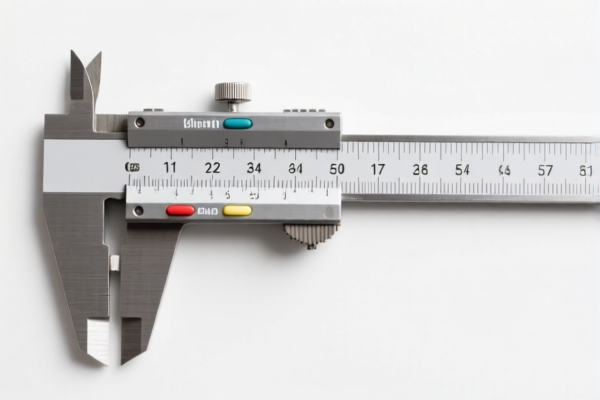
AI Analysis
📐 Cubic Centimeter Measuring Unit (Volume Measurement Instruments)
🌐 HS Code Reference & Customs Clearance Guide | 2026 Latest Tariff Analysis | Professional Clearance Strategy
📌 I. Product Definition & Classification: What is a "Cubic Centimeter Measuring Unit"?
The term "Cubic Centimeter Measuring Unit" is not a single physical product but a functional description of instruments used to measure volume (1 cm³ = 1 mL). In international trade, these are classified based on their operating principle and application field.
Common examples include: * Graduated cylinders, pipettes, burettes (for liquid volume); * 3D scanners or laser measuring devices (for spatial volume calculation); * Laboratory volumetric glassware (for precise chemical measurement); * Industrial flow meters (for measuring liquid/gas volume in pipes).
⚠️ Critical Classification Distinction:
- If it is a manual, non-optical, or mechanical device → Often falls under 9017 (Mathematical/Civil Engineering Instruments) or 9031 (Other Measuring/Checking Instruments).
- If it uses optical/laser technology → Falls under 9031 (Optical/Instrumental).
- The tax rate varies significantly based on whether it is considered a "scientific instrument" (0% base) or a "general measuring tool" (higher base).
📦 II. HS Code Classification Details (2026 Latest Tariff Cross-Reference)
Based on the provided data, here are the four specific HS Codes applicable to "Cubic Centimeter Measuring Units," categorized by their technical nature:
| HS Code | Product Description & Scope | Application Scenario | Technical Basis |
|---|---|---|---|
9031.80.80.85 |
Volume Measurement Unit: General Measuring/Inspection Instrument | Industrial quality control, general lab volume checking, non-optical volumeters | Fits "Measuring or Checking Instruments" not elsewhere specified |
9017.20.80.80 |
Volume Measurement Unit: Mathematical Calculation Instrument | Lab equipment relying on mathematical calibration, geometric volume tools, precision volumetric glassware | Classified under "Mathematical Calculating Instruments" (Chapter 9017) |
9031.49.90.00 |
Volume Measurement Unit: Optical Instrument Application | Laser 3D scanners, optical flow meters, digital volumeters using light/refraction | Falls under "Optical Instruments" (Chapter 9013/9031 overlap, specifically optical measuring) |
9017.80.00.00 |
Volume Measurement Unit: General Measuring Instrument | Professional surveying tools, architectural volume calculators, general civil engineering volume tools | Fits "Other Measuring Instruments" (Chapter 9017) |
9017.20.80.80 |
Volume Measurement Unit: Research & Academic Use | R&D lab equipment, scientific mathematical volume testers, calibration standards for research | Same code as above, but context emphasizes Research/Application in Math/Science |
🔍 Key Reminder:
-9017Codes generally imply mechanical, mathematical, or civil engineering tools.
-9031Codes imply instrumental, optical, or electronic measuring devices.
- Misclassification Risk: Declaring an optical laser volumeter as a simple "mathematical instrument" (9017) may lead to customs rejection or re-classification penalties.
💰 III. 2026 Latest Tariff Rate Breakdown (Including Surtaxes & Policy Levies)
✅ Applicable Country: United States (US)
✅ Origin: China (CN)
✅ Effective Time: Current US Import Regulations (含 Section 301 & IEEPA Levies)
🎯 1. 9031.80.80.85 & 9031.49.90.00 — Instrumental & Optical Volume Measurers
These two codes share the same tax structure in the provided data, likely because both fall under the "Other Instruments" category in Chapter 9031.
| Item | Content |
|---|---|
| Base Tariff | 0.0% (ad valorem) |
| Section 301 Surcharge | +25.0% (China-specific) |
| Section 122 / IEEPA Levy | +10.0% (Specific到中国 origin products) |
| Total Effective Rate | 35.0% |
| Tax Calculation | CIF Value × 35% |
| De Minimis Exemption? | ❌ No (Do not expect small package exemption) |
| Legal Basis Path | USITC:9031 → Section 301: Footnote 1 → IEEPA:9903.01.24/25 |
📌 Explanation:
- Despite a 0% base rate, the 35% total tariff is driven entirely by political surcharges.
- This is typical for high-tech or general instrument imports from China.
-9031.49.90.00(Optical) and9031.80.80.85(General) are taxed identically in this dataset.
🎯 2. 9017.20.80.80 & 9017.80.00.00 — Mathematical & General Measuring Instruments
These codes have a non-zero base rate, resulting in a higher total tax burden.
A. 9017.20.80.80 (Mathematical/Research Instrument)
| Item | Content |
|---|---|
| Base Tariff | 4.6% |
| Section 301 Surcharge | +25.0% |
| Section 122 / IEEPA Levy | +10.0% |
| Total Effective Rate | 39.6% |
| Tax Calculation | CIF Value × 39.6% |
| De Minimis Exemption? | ❌ No |
| Legal Basis Path | USITC:9017 → Section 301 → IEEPA |
B. 9017.80.00.00 (General Measuring Instrument)
| Item | Content |
|---|---|
| Base Tariff | 5.3% |
| Section 301 Surcharge | +25.0% |
| Section 122 / IEEPA Levy | +10.0% |
| Total Effective Rate | 40.3% |
| Tax Calculation | CIF Value × 40.3% |
| De Minimis Exemption? | ❌ No |
| Legal Basis Path | USITC:9017 → Section 301 → IEEPA |
📌 Comparison:
-9017.80.00.00is the most expensive at 40.3% due to the higher base rate (5.3%).
-9017.20.80.80is slightly cheaper at 39.6% (Base 4.6%).
- Both are ~5% more expensive than the9031codes because their base tariffs are not 0%.
🛠️ IV. Customs Clearance Practical Advice (Pitfall Avoidance Guide)
✅ 1. Required Documentation Checklist
| Document | Mandatory? | Purpose |
|---|---|---|
| ✅ Product Specification Sheet | ✔️ | Must clearly state measuring principle (Optical vs. Mechanical vs. Mathematical). |
| ✅ Technical Diagram/Schematics | ✔️ | Critical for distinguishing between 9017 (mechanical/math) and 9031 (optical/electronic). |
| ✅ Product Photos (Labeled) | ✔️ | Show display, probes, or measurement method. |
| ✅ Declaration of Origin | ✔️ | Confirm Chinese origin to trigger correct surcharges. |
| ✅ Commercial Invoice | ✔️ | Describe as "Volume Measurement Instrument" + Specific Model. |
| ✅ Usage Declaration | ✔️ | Is it for Research (9017.20) or General Industry (9031.80)? |
✅ 2. Declaration Tips (Key Mantra)
🔥 “Identify Principle, Don’t Guess Code: Optical = 9031, Math = 9017.”
| Scenario | Correct HS Code | Reason |
|---|---|---|
| Laser 3D Scanner for volume | 9031.49.90.00 |
Uses optical principle for measurement. |
| Digital Caliper/Gauge for volume calculation | 9017.20.80.80 |
Electronic/mathematical tool. |
| Graduated Cylinder (Lab Glassware) | 9017.20.80.80 |
Calibrated for mathematical/volumetric precision. |
| Industrial Flow Meter | 9031.80.80.85 |
General checking/inspection instrument. |
| Surveyor’s Volume Tool | 9017.80.00.00 |
General civil/measuring instrument. |
✅ 3. Special Cases & Mitigation
| Situation | Handling Advice |
|---|---|
| OEM Custom Instrument | Provide customer specs proving if it’s optical or mechanical. Misclassification leads to delays. |
| Kit with Software | If software calculates volume from 3D scan → Still 9031.49.90.00 (instrument). |
| Low-Value Samples | No De Minimis: Even small items face 35–40% tax. Budget accordingly. |
| Research Lab Equipment | Use 9017.20.80.80 to highlight "Research" use, but tax is still high due to base rate. |
🌍 V. Global Market Comparison (2026 Update)
| Market | Preferred HS Code | Total Tax (China Origin) | Key Certification | Note |
|---|---|---|---|---|
| 🇺🇸 USA | 9031.80.80.85 |
35.0% | FCC (if electronic) | High surtaxes dominate cost. |
| 🇨🇳 China | 9017.20.80.80 |
0% (Import) | CCC (if electronic) | No import tariffs for many instruments. |
| 🇪🇺 EU | 9017.80.00.00 |
0–4.5% | CE Marking | Preferential rates often apply. |
| 🇯🇵 Japan | 9017.20.80.80 |
0–3% | PSE (if electronic) | Stable, low tax environment. |
📌 Conclusion:
- The US market is the most expensive for Chinese-made volume measurement instruments due to 301 + IEEPA surcharges.
- Optical instruments (9031.49) and General Instruments (9031.80) are cheaper than Mathematical/Research Instruments (9017) in the US because their base tariff is 0%.
📌 VI. Common Errors & Pitfalls (Lessons Learned)
❌ Error 1: Classifying a laser volumeter as 9017.20.80.80
👉 Consequence: Customs may re-classify to 9031.49.90.00 (35%) or penalize for wrong code.
👉 Correction: Check if it uses light/optics → Use 9031.
❌ Error 2: Assuming low base rate = Low Total Tax
👉 Consequence: 9017 has 0–5% base, but total tax is 39–40% due to surcharges.
👉 Correction: Always calculate Base + 25% + 10%.
❌ Error 3: Omitting Measuring Principle in Description
👉 Consequence: Customs cannot determine if it’s 9017 or 9031.
👉 Correction: Explicitly state "Optical," "Mechanical," or "Mathematical" in description.
✅ Correct Declaration Example:
"Optical Laser 3D Volumeter, Model XYZ, Measures Volume in Cubic Centimeters, Used for Industrial Inspection, FCC Certified"
→ HS Code:9031.49.90.00→ Tax: 35.0%
🎯 VII. Conclusion: Precision in Classification Saves Money!
🎯 Remember the Mantra:
🔹 "Optical = 9031 (35%), Math = 9017 (39–40%)"
🔹 "Base Rate + 35% Surcharges = Final Cost"
🔹 "Declare Principle, Not Just Product Name!"
📌 Pro Tip:
If your product is used for R&D, try to qualify for 9017.20.80.80 if it’s less expensive, but verify if optical methods push it to 9031. Always request a Pre-Ruling from US Customs for high-value shipments.
📣 Immediate Action:
📞 Contact a licensed customs broker + Provide Technical Specs + Declare Measuring Principle Clearly
🚀 Ensure smooth clearance, avoid penalties, and optimize your landed cost!
✨ Professional Clearance Starts with Accurate Classification!
💼 Every Percent of Tax Matters!
Customer Reviews
About HS Code Classification
The Harmonized System (HS) is an internationally standardized nomenclature developed by the World Customs Organization (WCO) to classify traded products. Over 200 countries use the HS system as the basis for customs tariffs, trade statistics, and import/export regulations.
Each HS code follows a hierarchical structure:
- Chapter (2 digits) — Broad category of goods (e.g., Chapter 84: Machinery and Mechanical Appliances)
- Heading (4 digits) — More specific grouping within the chapter
- Subheading (6 digits) — Internationally standardized breakdown, used by all WCO member countries
- National subdivisions (8-10 digits) — Country-specific extensions for further classification, such as US HTSUS 10-digit codes
Correct HS code classification is essential for smooth customs clearance, accurate duty payment, and compliance with trade regulations. Misclassification can lead to customs delays, overpayment of duties, or penalties.
When importing from CN to US, the applicable tariff rates may include:
- Most-Favored-Nation (MFN) rate — The standard duty rate applied to WTO members
- General rate — Applied to countries without trade agreements
- Trade remedy duties — Additional tariffs such as Section 301 (anti-dumping), Section 232 (national security), or countervailing duties
The information provided on this page is for reference purposes only. For official classification, please consult with your local customs authority or a licensed customs broker.