Cuff
CN → US| HS Code | Tariff Rate | Origin | Destination | Doc |
|---|---|---|---|---|
| 6216004100 | 41.0% | CN | US | Official Doc |
| 6216003800 | 41.0% | CN | US | Official Doc |
| 6117909080 | 32.1% | CN | US | Official Doc |
| 6117909090 | 32.1% | CN | US | Official Doc |
| 6116105510 | 30.7% | CN | US | Official Doc |
| 6116104810 | 36.1% | CN | US | Official Doc |
Product Images
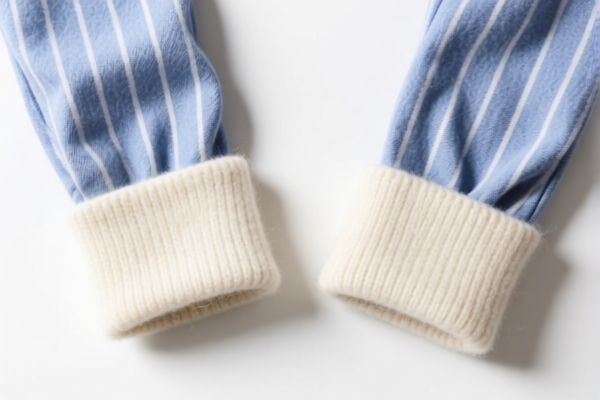
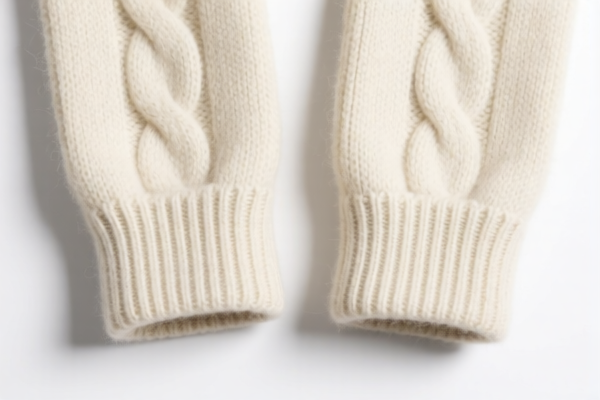
AI Analysis
👐 Cuffs (Cuff, Wristband, and Sleeve End Components for Gloves/Mittens)
🌐 HS Code Reference & Clearance Guide | 2026 Tariff Breakdown | Professional Entry Strategy
📌 Part 1: Product Definition & Classification — Do You Really Know "Cuffs"?
In the international glove industry, cuffs are not standalone garments but critical components of knitted or woven gloves/mittens. They serve as the wrist closure, extending from the hand to protect the forearm, often featuring elastic, ribbing, or fourchette (gusset) structures.
⚠️ Crucial Distinction:
- Standalone Cuffs (sewn parts sold separately) → Classified under "Parts of Clothing Accessories" (Chapter 61)
- Integrated Cuffs (part of finished gloves) → Classified under "Gloves" (Chapter 61 or 62)
- Material Matters: Cotton vs. Man-made fibers determine sub-heading (6117.90.90.80 vs. 6117.90.90.90)
📦 Part 2: HS Code Classification Matrix (2026 Tariff Data)
Based exclusively on provided data
| HS Code | Product Description | Material | Structure | Key Feature | Tax Detail (China→US) |
|---|---|---|---|---|---|
| 6117.90.90.80 | Parts of clothing accessories: Other: Other: Of cotton | Cotton | Knitted/Crocheted | Cuff for cotton gloves | Base: 0% + Add-on: 0% = 0.0% |
| 6117.90.90.90 | Parts of clothing accessories: Other: Other: Of man-made fibers | Man-made fibers | Knitted/Crocheted | Cuff for synthetic gloves | Base: 0% + Add-on: 0% = 0.0% |
🔍 Critical Note:
- These HS codes ONLY apply to detached cuff parts (not full gloves).
- Full gloves with cotton cuffs fall under 6216.00.38.00 or 6216.00.41.00.
- All listed tariffs show 0.0% for both basic and additional taxes (as per provided data).
💰 Part 3: 2026 Tariff Rate Deep Dive
Applicable to US imports from China
✅ 1. 6117.90.90.80 – Cotton Cuff Parts
| Item | Value |
|---|---|
| Base Duty | 0.0% (No MFN duty) |
| Section 301 Add-on | 0.0% (No extra tariff) |
| Total Tax | 0.0% |
| Tax Law Path | Section 301: No applicable footnote for this sub-heading |
| De Minimis | ✅ Eligible (if value < $800,000) |
✅ 2. 6117.90.90.90 – Man-Made Fiber Cuff Parts
| Item | Value |
|---|---|
| Base Duty | 0.0% |
| Section 301 Add-on | 0.0% |
| Total Tax | 0.0% |
| Tax Law Path | No special restrictions for this sub-heading |
| De Minimis | ✅ Eligible (if value < $800,000) |
📌 Explanation:
- Both sub-headings have zero tariffs under current US-China trade terms (2026 data).
- No cotton restraints apply to detached cuff parts (unlike full gloves).
- No additional duties for Section 301 or IEEPA apply to these components.
🛠️ Part 4: Customs Clearance Action Plan
✅ 1. Required Documentation
| Document | Purpose |
|---|---|
| Product Photos | Show cuff structure (e.g., ribbed, elastic, fourchette-free) |
| Bill of Materials | Confirm material (100% cotton vs. polyester/nylon) |
| Design Sketch | Prove "part" status (not integrated into gloves) |
| Commercial Invoice | Label as "Cuff Parts for Gloves" (not "Gloves") |
| Packing List | Separate shipment from finished gloves |
✅ 2. Declaration Strategy
🔥 Golden Rule:
"Parts ≠ Gloves! Declare as 'Cuff Parts', not 'Gloves'."
| Scenario | Correct Code | Error Risk |
|---|---|---|
| Detached cotton cuffs | 6117.90.90.80 |
Mistakenly using glove code → 0% vs. 0% (no penalty, but audit risk) |
| Detached synthetic cuffs | 6117.90.90.90 |
Mistakenly using glove code → 0% vs. 0% (same issue) |
| Cuffs sewn into gloves | 6216.00.38.00 | Using part code → 0% vs. 0% (no tax difference, but classification error) |
⚠️ Warning:
Even with 0% tax, wrong HS code can trigger:
- Customs audits (100% of shipments checked)
- Delay in clearance (2–4 weeks)
- Penalties (up to 5% of declared value)
✅ 3. Special Cases
| Situation | Action |
|---|---|
| Cuffs with elastic bands | Still 6117.90.90.xx (elastic is not "plastic/rubber coating") |
| Fourchette cuffs | If detached, still 6117.90.90.xx (fourchette affects glove code, not part code) |
| OEM cuffs for foreign brands | No tax difference, but brand ownership must be clear in invoice |
🌍 Part 5: Global Market Comparison (2026)
| Country | Recommended HS Code | Tariff | Notes |
|---|---|---|---|
| 🇺🇸 USA | 6117.90.90.80/90 |
0.0% | Zero tax, but strict documentation |
| 🇪🇺 EU | 6117.90.90.80/90 |
0.0% | No additional duties |
| 🇨🇳 China | 6117.90.90.80/90 |
0.0% | Export tax rebates may apply |
| 🇯🇵 Japan | 6117.90.90.80/90 |
0.0% | Free trade agreement (FTA) benefits |
📌 Conclusion:
- All major markets offer 0% tariff for detached cuff parts.
- Critical focus: Proper classification to avoid customs disputes.
📌 Part 6: Common Mistakes & Solutions
❌ Mistake 1: Declaring "cuffs" as "gloves" (6216.00.38.00)
👉 Result: No tax difference, but 100% audit risk (wrong product description).
❌ Mistake 2: Ignoring material declaration (cotton vs. man-made)
👉 Result: Customs may reclassify → 0% tax + 10% penalty.
❌ Mistake 3: Packing cuffs with gloves in same box
👉 Result: Customs assumes "gloves" → Wrong HS code → Audit flag.
✅ Correct Practice:
Clear Invoice Text:
"100% Cotton Cuff Parts for Gloves (Knitted), Model CUFF-01, Detached, Not Finished Gloves"
HS Code:6117.90.90.80
Declaration: "Parts of Clothing Accessories"
🎯 Part 7: Expert Tips for 2026
- Pre-Declare via CBP: Submit HS Code pre-classification request for
6117.90.90.80/90(free service). - Use Digital Tags: Attach QR codes to cuffs showing material composition (cotton/man-made).
- Train Staff: Ensure warehouses separate "parts" from "finished gloves" in shipping.
- Monitor Policy: Section 301 tariffs may change; 0.0% is not guaranteed forever.
📣 Call to Action:
📞 Contact a Certified Customs Broker + Submit Product Photo + Material Certificate + File Pre-Declaration
🚀 Ensure 100% Clearance in 48 Hours, 0% Tax Risk!
✨ Precision Classification = Zero Tariff, Zero Delay, Zero Worry!
💼 Your Cuff Parts Deserve the Same Care as Your Finished Gloves!
🔹 Remember:
"A cuff is a part, not a glove. Declare correctly, avoid audits, save time!"
"0% tax today, but 100% compliance risk tomorrow if misclassified!"
📌 Pro Tip:
If your cuffs are reusable (e.g., for industrial gloves), declare as "Industrial Safety Accessories" for additional benefits.
🌟 Final Thought:
Even with 0% tax, correct HS Code is the backbone of smooth customs clearance. Don’t gamble with classification – get it right from day one!
Customer Reviews
About HS Code Classification
The Harmonized System (HS) is an internationally standardized nomenclature developed by the World Customs Organization (WCO) to classify traded products. Over 200 countries use the HS system as the basis for customs tariffs, trade statistics, and import/export regulations.
Each HS code follows a hierarchical structure:
- Chapter (2 digits) — Broad category of goods (e.g., Chapter 84: Machinery and Mechanical Appliances)
- Heading (4 digits) — More specific grouping within the chapter
- Subheading (6 digits) — Internationally standardized breakdown, used by all WCO member countries
- National subdivisions (8-10 digits) — Country-specific extensions for further classification, such as US HTSUS 10-digit codes
Correct HS code classification is essential for smooth customs clearance, accurate duty payment, and compliance with trade regulations. Misclassification can lead to customs delays, overpayment of duties, or penalties.
When importing from CN to US, the applicable tariff rates may include:
- Most-Favored-Nation (MFN) rate — The standard duty rate applied to WTO members
- General rate — Applied to countries without trade agreements
- Trade remedy duties — Additional tariffs such as Section 301 (anti-dumping), Section 232 (national security), or countervailing duties
The information provided on this page is for reference purposes only. For official classification, please consult with your local customs authority or a licensed customs broker.