Cup shaped Hair Tie
CN → US| HS Code | Tariff Rate | Origin | Destination | Doc |
|---|---|---|---|---|
| 6217108500 | 24.6% | CN | US | Official Doc |
| 6217109550 | 32.1% | CN | US | Official Doc |
| 6117808500 | 32.1% | CN | US | Official Doc |
| 6117803010 | 12.3% | CN | US | Official Doc |
| 7117199000 | 28.5% | CN | US | Official Doc |
| 7117909000 | 28.5% | CN | US | Official Doc |
Product Images
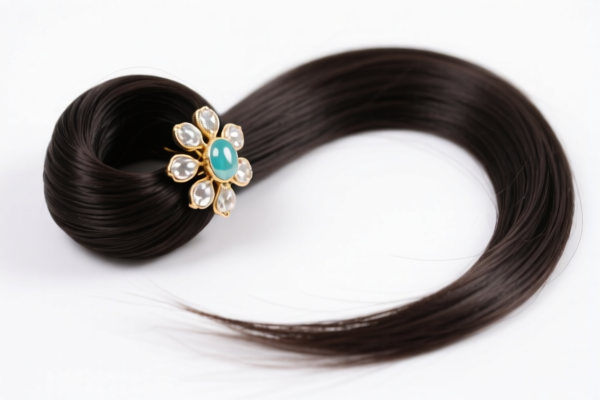
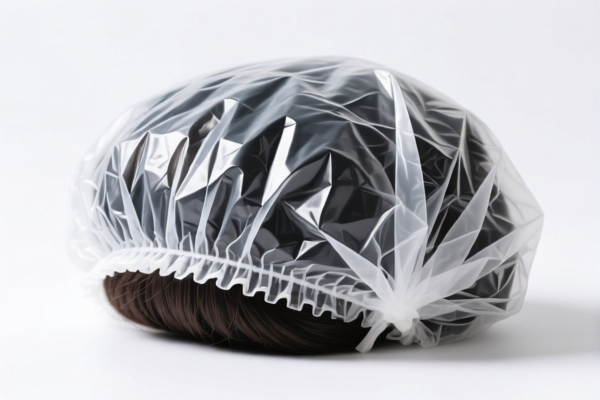
AI Analysis
🎀 Cup-Shaped Hair Tie (Elastic Hair Band / Ponytail Holder)
🌐 HS Code Classification & Duty Guide | 2024–2026 Tariff Breakdown | Strategic Customs Clearance
A Cup-Shaped Hair Tie (also known as a spiral hair tie, elastic coil, or "telephone cord" style) is a flexible, often coiled hair accessory designed to hold ponytails without creasing or damaging hair. It is not made of silk, and typically constructed from synthetic elastic materials (e.g., nylon, polyester, rubber).
⚠️ Critical Classification Point:
- If knitted or crocheted → Goes under 6117.80... (Knitted accessories)
- If woven, sewn, or molded (non-knitted) → Goes under 6217.10... (Woven/Other accessories)
- Material matters: Silk content (>70%) triggers a different subheading under 6117.80.30.10.
📦 HS Code Classification Table (Official U.S. HTSUS 2024–2026)
| HS Code | Product Description | Material/Construction | Tax Rate (China → US) | Notes |
|---|---|---|---|---|
| 6117.80.85.00 | Other made up clothing accessories, knitted or crocheted: Headbands, ponytail holders | Knitted/Crocheted synthetic (e.g., elastic nylon) | 22.1% (14.6% base + 7.5% Section 301) | ✅ Most common for "cup-shaped" coil ties |
| 6217.10.85.00 | Other made up clothing accessories: Headbands, ponytail holders | Non-knitted (sewn/woven/molded) | 14.6% (14.6% base + 0% Section 301) | ✅ For non-knitted elastic bands |
| 6217.10.95.50 | Other made up clothing accessories: Other (859) | Non-knitted, other hair accessories | 0.0% | ✅ For rare variants (e.g., leather, metal) |
| 6117.80.30.10 | Knitted accessories: 70%+ silk | Silk-dominant knitted hair ties | 0.0% | ✅ Only if ≥70% silk by weight |
| 7117.19.90.00 | Imitation jewelry: Base metal, plated or not | Metal-based "cup" hair ties | 0.0% | ✅ If primarily decorative metal |
| 7117.90.90.00 | Imitation jewelry: Valued >20¢/dozen, other | Decorative high-value hair jewelry | 18.5% (11.0% base + 7.5% Section 301) | ✅ Only if valued >20¢/piece and not standard elastic |
🔍 Key Insight:
Most "cup-shaped hair ties" sold in mass markets (like Amazon, Target) are knitted elastic bands → 6117.80.85.00 (22.1% duty).
If made of non-knitted elastic → 6217.10.85.00 (14.6% duty).
Silk content changes everything: Only silk-heavy ties get 0% duty.
💰 Duty Breakdown & Legal Basis (2024–2026)
🎯 1. 6117.80.85.00 – Knitted Hair Ties (Most Common)
| Item | Value |
|---|---|
| Base Tariff | 14.6% |
| Section 301 Add-on | +7.5% (China-origin products) |
| Total Duty | 22.1% |
| Calculation | CIF Value × 22.1% |
| De Minimis Exemption? | ❌ No (Section 301 applies to all Chinese imports) |
| Legal Path | HTS:6117.80.85.00 → Note:6117.80 → USITC:9903.88.01 → IEEPA:9903.01.24 |
📌 Why 22.1%?
- Base rate (14.6%) is from standard U.S. tariff schedules.
- 7.5% add-on is from Section 301 (China-specific punitive tariff, effective 2018, extended through 2026).
- No exemption for low-value items under $800 (de minimis) because Section 301 overrides this.
🎯 2. 6217.10.85.00 – Non-Knitted Hair Ties
| Item | Value |
|---|---|
| Base Tariff | 14.6% |
| Section 301 Add-on | +0.0% (Exempt from Section 301) |
| Total Duty | 14.6% |
| Calculation | CIF Value × 14.6% |
| De Minimis Exemption? | ❌ No (Section 301 does not apply, but standard tariff still applies) |
📌 Why 14.6%?
- Non-knitted accessories do not qualify for Section 301 exemption.
- Still subject to base tariff, but no extra penalty.
🎯 3. 6117.80.30.10 – Silk-Dominant Knitted Ties
| Item | Value |
|---|---|
| Base Tariff | 0.0% |
| Section 301 Add-on | 0.0% |
| Total Duty | 0.0% |
| Condition | Must contain ≥70% silk by weight |
📌 Note: Very rare. Most "cup-shaped" ties are synthetic.
🎯 4. 7117.19.90.00 – Metal-Based Decorative Ties
| Item | Value |
|---|---|
| Base Tariff | 0.0% |
| Section 301 Add-on | 0.0% |
| Total Duty | 0.0% |
📌 Condition: Must be base metal (not precious metal-plated) and not valued >20¢/dozen.
🎯 5. 7117.90.90.00 – High-Value Decorative Jewelry
| Item | Value |
|---|---|
| Base Tariff | 11.0% |
| Section 301 Add-on | +7.5% |
| Total Duty | 18.5% |
| Condition | Valued >20 cents per dozen (e.g., designer brands) |
🛠️ Customs Clearance Strategy (Actionable Tips)
✅ 1. Document Checklist (Mandatory)
| Document | Required? | Purpose |
|---|---|---|
| Product Specification Sheet | ✔️ | Confirm material (knitted vs. non-knitted), silk content, weight |
| Photographs (Clear, Multi-Angle) | ✔️ | Show "cup shape", coil design, brand label |
| Composition Label | ✔️ | List fiber % (e.g., "80% Nylon, 20% Elastane") |
| Commercial Invoice | ✔️ | Must state "Cup-Shaped Hair Tie", not generic "hair accessory" |
| Packing List | ✔️ | Separate counts by HS Code if mixed |
| Test Report (Optional) | ✔️ | For silk content (if claiming 0% duty) |
✅ 2. Declaration Best Practices
🔥 Rule of Thumb:
"Knitted = 22.1%, Non-Knitted = 14.6%, Silk = 0%"
| Scenario | Correct HS Code | Declaration Example | Risk if Wrong |
|---|---|---|---|
| Standard elastic coil (knitted) | 6117.80.85.00 | "Knitted elastic hair tie, 80% nylon, 20% elastane" | Under-declaring → 7.5% penalty + audit |
| Non-knitted spiral band | 6217.10.85.00 | "Non-knitted spiral hair tie, molded plastic" | Over-declaring → Lost time |
| Silk hair tie (≥70%) | 6117.80.30.10 | "Knitted hair tie, 75% silk, 25% elastic" | Claiming 0% without proof → Seizure |
| Metal decorative tie | 7117.19.90.00 | "Base metal hair clip, no plating" | Misclassifying as jewelry → 18.5% duty |
✅ 3. Avoid These Pitfalls
- ❌ Don't call it "jewelry" unless it's high-value decorative metal.
- ❌ Don't claim "silk" without lab proof (≥70% by weight).
- ❌ Don't mix knitted and non-knitted in one shipment without clear HS codes.
- ❌ Don't use "hair accessory" alone – be specific: "knitted ponytail holder".
🌍 Global Comparison (2024–2026)
| Country | Recommended HS Code | Duty (China) | Notes |
|---|---|---|---|
| 🇺🇸 USA | 6117.80.85.00 | 22.1% | Highest duty due to Section 301 |
| 🇨🇳 China | 6117.80.85.00 | 0% | No export duty for Chinese products |
| 🇪🇺 EU | 6117.80.85.00 | 0% (if FTA) | CE, REACH compliance needed |
| 🇬🇧 UK | 6117.80.85.00 | 0% (post-Brexit) | UKCA marking required |
| 🇯🇵 Japan | 6117.80.85.00 | 0% | No Section 301 equivalent |
📌 Conclusion: USA has the highest duty (22.1%) for knitted hair ties. Consider Vietnam or Thailand manufacturing to avoid Section 301.
📌 Final Takeaway
✅ For standard cup-shaped hair ties:
- Knitted → HS Code 6117.80.85.00 → 22.1% duty
- Non-knitted → HS Code 6217.10.85.00 → 14.6% duty
✅ For silk or metal variants:
- Silk → 6117.80.30.10 → 0% duty (if ≥70% silk)
- Metal → 7117.19.90.00 → 0% duty (if base metal)
✅ Avoid:
- Misdeclaring as "jewelry" unless high-value.
- Claiming silk without proof.
- Mixing materials in one shipment.
🚀 Pro Tip:
Pre-clearance with CBP (Customs and Border Protection) via Advance Ruling can save weeks of delays.
Test your product at a lab for silk content if aiming for 0% duty.
📌 Quick Reference:
"Knitted = 22.1%, Non-Knitted = 14.6%, Silk = 0%, Metal = 0% (base) or 18.5% (high-value)"
"Always declare 'Cup-Shaped Hair Tie' + Material + Construction"
✨ Ready to ship?
📞 Contact a licensed customs broker + submit product photos + apply for pre-classification
🚀 Minimize duty, maximize profit, avoid delays!
🔥 Your Hair Ties Deserve the Best Clearance! 🔥
Customer Reviews
About HS Code Classification
The Harmonized System (HS) is an internationally standardized nomenclature developed by the World Customs Organization (WCO) to classify traded products. Over 200 countries use the HS system as the basis for customs tariffs, trade statistics, and import/export regulations.
Each HS code follows a hierarchical structure:
- Chapter (2 digits) — Broad category of goods (e.g., Chapter 84: Machinery and Mechanical Appliances)
- Heading (4 digits) — More specific grouping within the chapter
- Subheading (6 digits) — Internationally standardized breakdown, used by all WCO member countries
- National subdivisions (8-10 digits) — Country-specific extensions for further classification, such as US HTSUS 10-digit codes
Correct HS code classification is essential for smooth customs clearance, accurate duty payment, and compliance with trade regulations. Misclassification can lead to customs delays, overpayment of duties, or penalties.
When importing from CN to US, the applicable tariff rates may include:
- Most-Favored-Nation (MFN) rate — The standard duty rate applied to WTO members
- General rate — Applied to countries without trade agreements
- Trade remedy duties — Additional tariffs such as Section 301 (anti-dumping), Section 232 (national security), or countervailing duties
The information provided on this page is for reference purposes only. For official classification, please consult with your local customs authority or a licensed customs broker.