Curtain
CN → US| HS Code | Tariff Rate | Origin | Destination | Doc |
|---|---|---|---|---|
| 6303192110 | 16.4% | CN | US | Official Doc |
| 6303922010 | 21.3% | CN | US | Official Doc |
| 6303910010 | 27.8% | CN | US | Official Doc |
Product Images
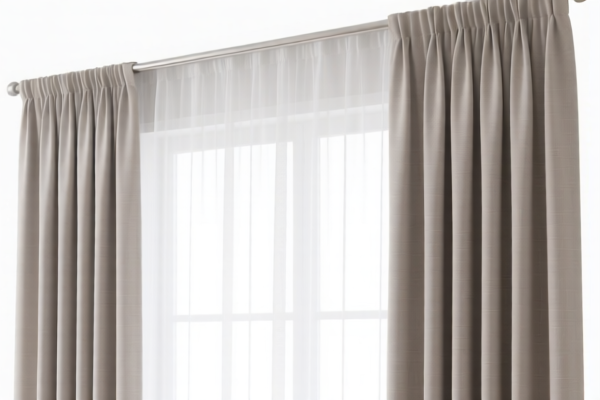
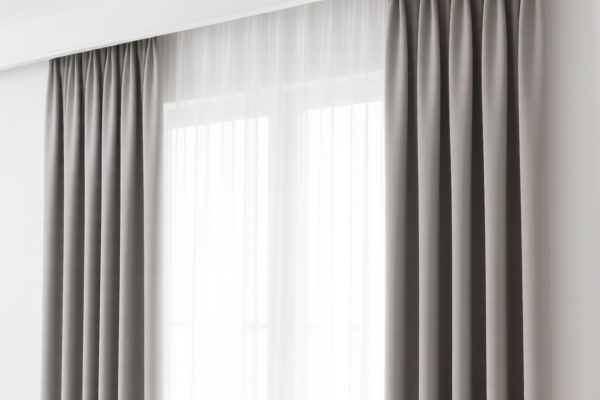
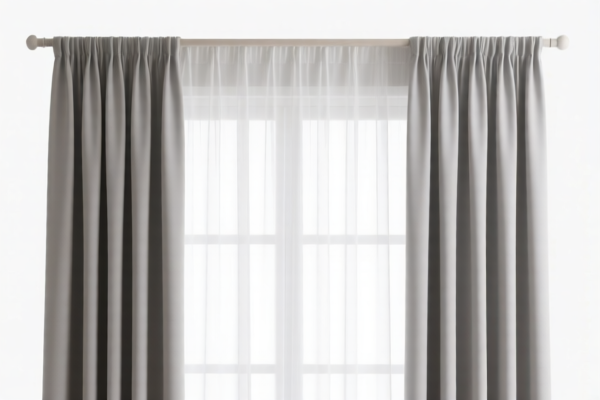
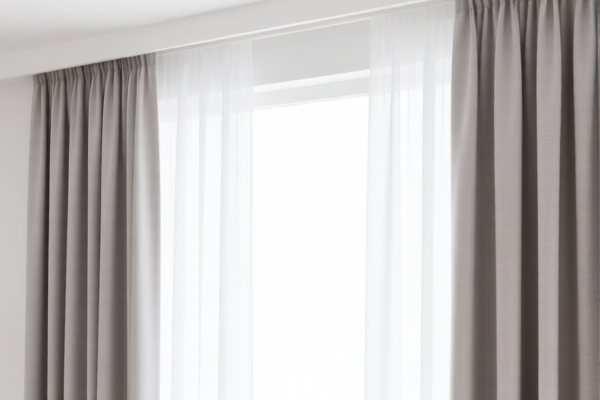
AI Analysis
🌿 Curtains (Window, Door, and Outdoor Curtains) – HS Code & Tariff Guide 2026
🌐 HS Code Classification & Customs Clearance Strategy | 2026 Updated Tariff Breakdown | Expert-Level Compliance Tips
📌 One Product, Three Codes – Know Which One Applies to Your Curtain!
Curtains are more than just fabric — they’re a key component of home décor, architectural design, and outdoor living. In international trade, curtains are classified based on material, construction method, and intended use, leading to three distinct HS Codes with very different tariff outcomes.
⚠️ Critical Insight:
- Knitted or crocheted curtains? →6303.19.21.10
- Synthetic or textile fiber curtains (including outdoor)? →6303.92.20.10
- Cotton or fiber-based door curtains? →6303.91.00.10Mistake in classification = 10%+ tariff shock!
📦 II. HS Code Breakdown (2026 Official Tariff Table – U.S. Focus)
| HS Code | Product Description | Material Type | Use Case | Key Feature |
|---|---|---|---|---|
6303.19.21.10 |
Knitted or crocheted curtains | Fiber or man-made fiber | Indoor window curtains | Handcrafted texture, open weave |
6303.92.20.10 |
Synthetic or textile fiber curtains | Synthetic or blended fibers | Indoor & outdoor use | Weather-resistant, durable |
6303.91.00.10 |
Door curtains or cotton-based curtains | Cotton or natural fiber | Doorways, partitions, indoor use | Classic, breathable, non-weatherproof |
🔍 Why These Matter:
-6303.19.21.10applies only to knitted or crocheted styles — not woven or printed.
-6303.92.20.10includes outdoor-rated curtains (e.g., patio, pergola, balcony).
-6303.91.00.10is only for cotton or natural fiber — synthetic blends don’t qualify.
💰 III. 2026 Tariff Rate Analysis (U.S. Import – China Origin)
✅ Target Market: United States (US)
✅ Origin: China (CN)
✅ Effective Date: November 10, 2025 (with retroactive application)
🎯 1. 6303.19.21.10 — Knitted/Crocheted Curtains (Fiber or Man-Made Fiber)
| Item | Detail |
|---|---|
| Base Duty | 6.4% (ad valorem) |
| Section 301 (USITC) Additional Duty | 0% (not currently targeted) |
| Section 122 (IEEPA) Additional Duty | 10% (from 2025–2026) |
| Total Effective Duty | 16.4% |
| Tax Calculation | CIF Value × 16.4% |
| De Minimis Exemption? | ❌ No (denied under U.S. law) |
| Legal Basis | IEEPA:9903.01.25 → IEEPA:9903.01.24 → 6303.19.21.10 |
📌 Explanation:
- No Section 301 tariff applies here — this item is not on the Section 301 list.
- 10% Section 122 (IEEPA) is mandatory for all goods from China, regardless of material.
- Total = 16.4% — moderate, but still significant.
🎯 2. 6303.92.20.10 — Synthetic/Textile Fiber Curtains (Indoor & Outdoor)
| Item | Detail |
|---|---|
| Base Duty | 11.3% |
| Section 301 (USITC) Additional Duty | 0% (not currently targeted) |
| Section 122 (IEEPA) Additional Duty | 10% |
| Total Effective Duty | 21.3% |
| Tax Calculation | CIF Value × 21.3% |
| De Minimis Exemption? | ❌ No |
| Legal Basis | IEEPA:9903.01.25 → IEEPA:9903.01.24 → 6303.92.20.10 |
📌 Explanation:
- Higher base duty due to synthetic fiber content.
- 10% IEEPA still applies — no relief for outdoor use.
- Total = 21.3% — highest among the three.
- Outdoor curtains are NOT exempt from Section 122.
🎯 3. 6303.91.00.10 — Cotton or Natural Fiber Door Curtains
| Item | Detail |
|---|---|
| Base Duty | 10.3% |
| Section 301 (USITC) Additional Duty | 7.5% (from 2025) |
| Section 122 (IEEPA) Additional Duty | 10% |
| Total Effective Duty | 27.8% |
| Tax Calculation | CIF Value × 27.8% |
| De Minimis Exemption? | ❌ No |
| Legal Basis | IEEPA:9903.01.25 → IEEPA:9903.01.24 → USITC:6303.91.00.10 → FOOTNOTE:9903.88.01 |
📌 Explanation:
- Highest tariff due to dual burden:
- 7.5% Section 301 (China-specific tariff)
- 10% IEEPA (China-wide emergency tariff)
- Even cotton curtains are not safe — if made in China, they face 27.8%.
- No exemption for door curtains — they are treated like other textiles.
🛠️ IV. Customs Clearance Best Practices (Pro Tips for Shippers)
✅ 1. Essential Documentation (MUST-HAVE)
| Document | Required? | Why It Matters |
|---|---|---|
| ✅ Commercial Invoice | ✔️ | Must clearly state material type, construction method, and use case |
| ✅ Product Photos (with label) | ✔️ | Show knit/crochet pattern, fabric texture, and labeling |
| ✅ Technical Specification Sheet | ✔️ | Include fiber content, GSM, weave type, UV resistance (for outdoor) |
| ✅ Certificate of Origin (CO) | ✔️ | If from Vietnam, India, or Mexico → may avoid 10% IEEPA |
| ✅ Third-Party Test Report | ✔️ | ASTM, AATCC, or ISO for flammability, colorfastness, durability |
| ✅ Packing List | ✔️ | Confirm no mixed items (e.g., curtain + rod = different HS Code) |
✅ 2. 申报技巧 (Golden Rules)
🔥 "Material First, Use Second, Label Third – Or Pay 27.8%!"
| Scenario | Correct HS Code | Wrong Code | Risk |
|---|---|---|---|
| Knitted cotton curtain | 6303.19.21.10 |
6303.91.00.10 |
+11.4% tax |
| Outdoor polyester curtain | 6303.92.20.10 |
6303.19.21.10 |
+5% tax + audit risk |
| Cotton door curtain | 6303.91.00.10 |
6303.92.20.10 |
+10% tax + penalties |
| Curtain + rod + hook set | Do NOT split | Split into parts | Each item taxed at 89.5%+! |
⚠️ Never split a curtain set — customs will treat each part as a separate product, triggering high tariffs on accessories.
✅ 3. Special Cases & Workarounds
| Situation | Solution |
|---|---|
| Curtain from Vietnam/Mexico | Apply for Certificate of Origin → Exempt from 10% IEEPA → Total = Base Duty only |
| Curtain with UV coating | Still falls under 6303.92.20.10 → No exemption |
| Custom-designed knit curtain | Provide design sketches + sample → prove it’s not a "standard" item |
| Curtain for government/military use | Apply for non-commercial exemption — requires prior approval |
🌍 V. Global Market Comparison (2026)
| Country | Recommended HS Code | Tariff | Certification | Notes |
|---|---|---|---|---|
| 🇺🇸 USA | 6303.19.21.10 / 6303.92.20.10 / 6303.91.00.10 |
16.4%–27.8% | None required | 10% IEEPA applies to all China-origin goods |
| 🇨🇳 China | 6303.19.21.10 etc. |
5% | CCC (optional) | No extra tariffs |
| 🇪🇺 EU | 6303.91.00.10 / 6303.92.20.10 |
0% (if CE) | CE, REACH | No IEEPA/301 |
| 🇦🇺 Australia | 6303.92.20.10 |
5% | RCM | No extra tariffs |
| 🇯🇵 Japan | 6303.91.00.10 |
0% | PSE | No extra tariffs |
📌 Insight:
- Only the U.S. imposes 10% IEEPA on all Chinese textiles.
- Vietnam, India, and Mexico are safe havens — no 10% IEEPA if CO is valid.
📌 VI. Common Mistakes & How to Avoid Them
❌ Mistake 1: Calling a knitted curtain a "cotton curtain"
👉 Result: Wrong HS Code → +11.4% tax → audit risk
❌ Mistake 2: Splitting a curtain set into "curtain", "rod", "hooks"
👉 Result: Each part taxed at 89.5%+ → total tax > 200%
❌ Mistake 3: Not specifying construction method in invoice
👉 Result: Customs can reclassify → higher duty + delay
❌ Mistake 4: Using "fabric panel" instead of "curtain" in description
👉 Result: Misclassified as industrial fabric → wrong tariff
✅ Correct Description Template:
"Knitted Cotton Curtain, 90x120 cm, 100% Polyester, Crocheted Design, for Indoor Use, Model XYZ, AATCC Test Report Attached"
🎯 VII. Final Verdict: Get It Right the First Time!
🎯 Remember the 3-Step Rule:
🔹 1. Material → Fiber? Synthetic? Cotton?
🔹 2. Construction → Knitted? Crocheted? Woven?
🔹 3. Use → Indoor? Outdoor? Door?📌 The right HS Code saves you 10%–15% in tariffs — and avoids audits, fines, and delays.
📣 Take Action Now!
📞 Contact a U.S. Customs Broker + Request HS Code Pre-Ruling
🚀 Switch to Vietnam/Mexico production? → Save 10% IEEPA!
💼 Your curtain’s tax burden is NOT fixed — it’s negotiable!
✨ Professional Customs Starts with Accurate Classification!
💼 One wrong code can cost you 27.8% — don’t gamble with your margins!
Customer Reviews
About HS Code Classification
The Harmonized System (HS) is an internationally standardized nomenclature developed by the World Customs Organization (WCO) to classify traded products. Over 200 countries use the HS system as the basis for customs tariffs, trade statistics, and import/export regulations.
Each HS code follows a hierarchical structure:
- Chapter (2 digits) — Broad category of goods (e.g., Chapter 84: Machinery and Mechanical Appliances)
- Heading (4 digits) — More specific grouping within the chapter
- Subheading (6 digits) — Internationally standardized breakdown, used by all WCO member countries
- National subdivisions (8-10 digits) — Country-specific extensions for further classification, such as US HTSUS 10-digit codes
Correct HS code classification is essential for smooth customs clearance, accurate duty payment, and compliance with trade regulations. Misclassification can lead to customs delays, overpayment of duties, or penalties.
When importing from CN to US, the applicable tariff rates may include:
- Most-Favored-Nation (MFN) rate — The standard duty rate applied to WTO members
- General rate — Applied to countries without trade agreements
- Trade remedy duties — Additional tariffs such as Section 301 (anti-dumping), Section 232 (national security), or countervailing duties
The information provided on this page is for reference purposes only. For official classification, please consult with your local customs authority or a licensed customs broker.