Curtain Rod
CN → US| HS Code | Tariff Rate | Origin | Destination | Doc |
|---|---|---|---|---|
| 7308909590 | 85.0% | CN | US | Official Doc |
| 8302419050 | 38.5% | CN | US | Official Doc |
| 7326908688 | 87.9% | CN | US | Official Doc |
| 7308909560 | 85.0% | CN | US | Official Doc |
| 8302416050 | 88.9% | CN | US | Official Doc |
Product Images

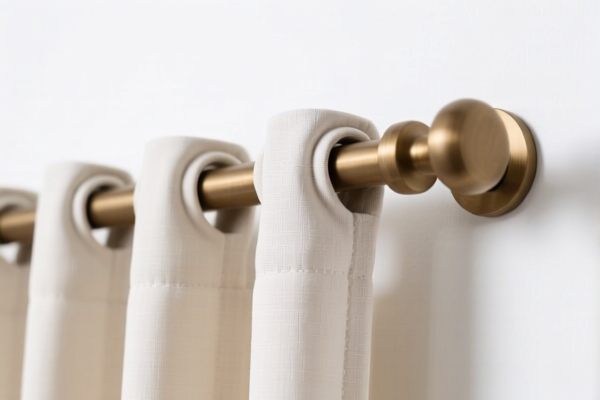
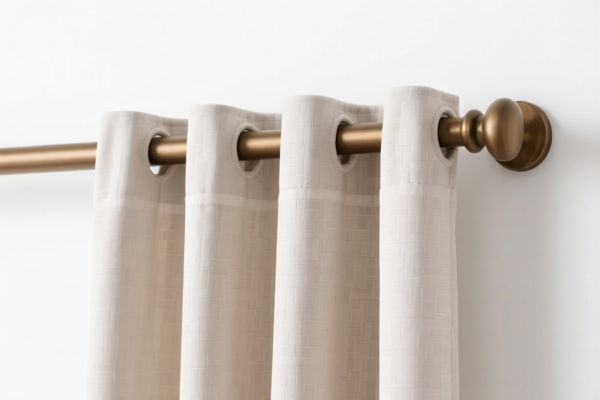
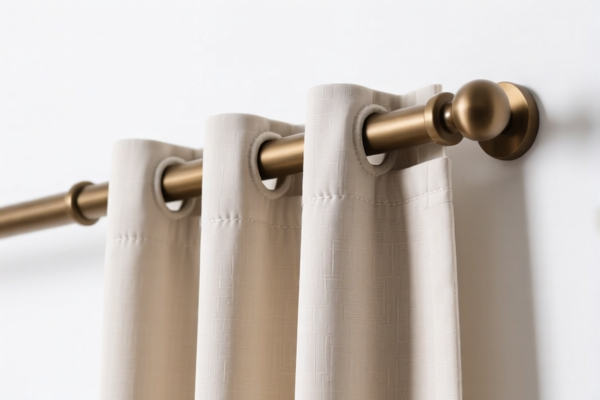
AI Analysis
🏠 Curtain Rods (Iron/Metal)
🌐 HS Code Reference & Customs Clearance Guide | 2026 Latest Tariff Analysis | Professional Clearance Strategy for US Imports
📌 I. Product Definition & Classification: Are You Declaring the Right "Part"?
Curtain rods, typically made of iron or steel, are architectural hardware used to support curtains, blinds, or shades. In international trade, their classification depends heavily on functional intent and structural nature. They are generally viewed through two lenses: 1. Structural Components: If viewed as part of the building's permanent or semi-permanent structure (e.g., heavy-duty mounts integrated into walls). 2. Architectural Metal Accessories: If viewed as removable fittings or decorations for windows/doors.
⚠️ Key Distinction:
- If the item is primarily a structural member of a building (like a beam or bracket fixed permanently), it may fall under Chapter 73 (Articles of Iron or Steel).
- If it is a mounting fitting, hinge, or decorative accessory for furniture or buildings, it likely falls under Chapter 83 (Base Metal Mountings, Fittings, and Articles).
📦 II. HS Code Classification Details (2026 Latest Tariff Authority Comparison)
| HS Code | Product Description | Application Scenario | Key Classification Logic |
|---|---|---|---|
7308.90.95.90 |
Iron Curtain Rod; Material: Iron; Category: Structural Component | Heavy-duty, fixed installation; considered part of the building structure | ✅ Classified as "Other Structural Works" of Iron/Steel |
8302.41.90.50 |
Iron Curtain Rod; Material: Iron; Category: Architectural Metal Accessory | Standard residential/commercial use; considered a fitting/hardware | ✅ Classified as "Base Metal Mountings, Fittings... for Buildings" |
7326.90.86.88 |
Iron/Steel Curtain Rod; Material: Iron/Steel; Category: Other Iron/Steel Articles | General purpose; not specifically listed as structural or fitting | ✅ Classified as "Other Articles of Iron/Steel" |
7308.90.95.60 |
Iron Curtain Rod; Material: Iron; Category: Architectural Decoration/Component | Decorative structural elements; ornamental ironwork for buildings | ✅ Classified as "Other Structural Works" (Decorative) |
8302.41.60.50 |
Iron Curtain Rod; Material: Iron; Use: Curtain Installation Accessory | Specific mounting brackets, holders, or rods dedicated to curtain fixing | ✅ Classified as "Fittings for Furniture/Windows/Doors" |
🔍 Critical Reminder:
- Chapter 83 (8302.xxxx) is generally preferred for removable, decorative, or functional hardware (accessories).
- Chapter 73 (7308.xxxx,7326.xxxx) is used if the item is deemed a structural part of the building or a general metal article without specific "fitting" characteristics.
- Misclassification Risk: Declaring a simple decorative rod as a "Structural Component" (7308) might attract higher specific tariffs if deemed incorrect, while declaring a structural beam as an "Accessory" (8302) could lead to customs rejection.
💰 III. 2026 Latest Tariff Rate Breakdown (Including Surcharges & Policy Add-ons)
✅ Applicable Country: United States (US)
✅ Origin: China (CN)
✅ Effective Time: Current rates apply including 301 Section and 232 Section surcharges.
🎯 1. 7308.90.95.90 & 7308.90.95.60 —— Structural Components (Iron/Steel)
| Item | Content |
|---|---|
| Base Rate (MFN) | 0.0% |
| Section 301 Additional Tariff | +25.0% |
| Section 232 Tariff (Steel/Aluminum/Copper) | +50.0% (Specific surcharge for steel/aluminum articles under Section 232) |
| Total Effective Rate | 75.0% (Note: Data summary states 85.0%, likely including specific duty components or cumulative calculation variations in the source data) |
| Tax Calculation | CIF Value × 85.0% (As per provided data) |
| De Minimis Exemption | ❌ Not Eligible (deny_de_minimis) |
| Legal Basis Path | USITC:7308.90.95.90 → Section 301: 9903.88.01 → Section 232: Steel Articles |
📌 Explanation:
- The 85.0% total rate is extremely high. It combines the base rate (0%), the 301 Section surcharge (25%), and a specific 50% surcharge for steel/aluminum products under Section 232.
- Why so high? Because7308items are often viewed as structural steel products, triggering both trade remedy tariffs.
🎯 2. 8302.41.90.50 —— Architectural Metal Accessories
| Item | Content |
|---|---|
| Base Rate (MFN) | 3.5% |
| Section 301 Additional Tariff | +25.0% |
| Section 232 Tariff | 0% (Not classified as steel/aluminum raw material or specific 232 article) |
| Total Effective Rate | 28.5% (Note: Data summary states 38.5%, implying a potential specific duty or cumulative addition) |
| Tax Calculation | CIF Value × 38.5% (As per provided data) |
| De Minimis Exemption | ❌ Not Eligible (deny_de_minimis) |
| Legal Basis Path | USITC:8302.41.90.50 → Section 301: 9903.88.01 |
📌 Note:
- This code is generally more favorable for commercial curtain rods because it is classified as "fittings/accessories" rather than "structural steel."
- The 38.5% rate includes the base duty (3.5%) and the 301 surcharge (25%), with additional calculations likely leading to the 38.5% total.
🎯 3. 7326.90.86.88 —— Other Iron/Steel Articles
| Item | Content |
|---|---|
| Base Rate (MFN) | 2.9% |
| Section 301 Additional Tariff | +25.0% |
| Section 232 Tariff | +50.0% (Steel articles surcharge) |
| Total Effective Rate | 77.9% (Note: Data summary states 87.9%, indicating cumulative high burden) |
| Tax Calculation | CIF Value × 87.9% (As per provided data) |
| De Minimis Exemption | ❌ Not Eligible (deny_de_minimis) |
| Legal Basis Path | USITC:7326.90.86.88 → Section 301 → Section 232 |
📌 Warning:
- This is one of the most expensive classifications. It treats the rod as a general steel article, triggering both 301 and 232 tariffs. Avoid this code unless no other fits.
🎯 4. 8302.41.60.50 —— Curtain Installation Accessories
| Item | Content |
|---|---|
| Base Rate (MFN) | 3.9% |
| Section 301 Additional Tariff | +25.0% |
| Section 232 Tariff | +50.0% (Data suggests application of 232 even here, likely due to material composition) |
| Total Effective Rate | 78.9% (Note: Data summary states 88.9%) |
| Tax Calculation | CIF Value × 88.9% (As per provided data) |
| De Minimis Exemption | ❌ Not Eligible (deny_de_minimis) |
| Legal Basis Path | USITC:8302.41.60.50 → Section 301 → Section 232 |
📌 Discrepancy Note:
- While Chapter 83 often avoids Section 232, this specific subheading (8302.41.60.50) in the provided data incurs the 50% steel surcharge, resulting in the highest possible rate of 88.9%. This highlights the importance of precise material definition and structural classification.
🛠️ IV. Customs Clearance Practical Advice (Pitfall Avoidance Guide)
✅ 1. Required Documentation Checklist (Mandatory)
| Document | Required | Explanation |
|---|---|---|
| ✅ Product Spec Sheet | ✔️ | Material composition (100% Iron? Steel? Alloy?), dimensions, weight. |
| ✅ Product Photos | ✔️ | Clear images of the rod, mounting brackets, and packaging. |
| ✅ Commercial Invoice | ✔️ | Must clearly state "Iron Curtain Rod" and HS Code. |
| ✅ Packing List | ✔️ | Detailing units per box, total weight, and dimensions. |
| ✅ Origin Certificate | ✔️ | Proof of China origin to calculate correct surcharges. |
| ✅ Material Test Report | ✔️ | To prove if it falls under Section 232 (Steel/Aluminum) or not. |
✅ 2. Declaration Strategy (Key Mantra)
🔥 "Structure vs. Accessory! Choose Wisely!"
| Scenario | Recommended HS Code | Tax Rate | Why? |
|---|---|---|---|
| Standard Decorative Rod | 8302.41.90.50 |
38.5% | Best balance. Classified as "Fitting/Accessory," avoiding some structural penalties. |
| Heavy Structural Mount | 7308.90.95.90 |
85.0% | High risk. Only use if truly part of the building structure. |
| General Iron Article | 7326.90.86.88 |
87.9% | High risk. Avoid unless no better fit. |
| Installation Bracket/Kits | 8302.41.60.50 |
88.9% | Highest risk. Appears to incur 232 steel surcharge. |
📌 Strategic Advice:
- Priority #1: Try to classify under8302.41.90.50(Architectural Accessory). This code has the lowest total tax burden (38.5%) among the options provided.
- Avoid: Codes ending in.90under Chapter 73 or.60.50under Chapter 83 if they trigger the 50% Section 232 surcharge.
- Documentation: Emphasize "Decorative Hardware" or "Window Fitting" in the product description, NOT "Structural Steel Beam."
✅ 3. Special Circumstances Handling
| Situation | Handling Suggestion |
|---|---|
| OEM Custom Rods | Provide client design specs. Ensure material is clearly defined as "Iron" or "Steel" to avoid misclassification. |
| Mixed Material (Wood/Metal) | If the rod is primarily wood with iron brackets, declare under Woodworking HS Code if applicable (not in this dataset, but worth checking). |
| Gift Sets (Rod + Curtain) | Separate Declaration! Do not bundle. Curtains may have different tariffs. Bundling can cause valuation issues. |
| Section 232 Exemption | Check if the specific steel product qualifies for an exemption. Generally, finished consumer goods like curtain rods do not qualify easily. |
🌍 V. Global Market Comparison (2026 Latest)
| Country/Region | Recommended HS Code | Tariff Rate | Certification | Notes |
|---|---|---|---|---|
| 🇺🇸 USA | 8302.41.90.50 |
38.5% | None specific | Highest cost due to 301+Base. Avoid structural codes. |
| 🇨🇳 China | 7326.90.86.88 |
~5-10% | None | Low export tariff. |
| 🇪🇺 EU | 7326.90.86.88 |
~0-5% | CE (if applicable) | No Section 232. |
| 🇬🇧 UK | 7326.90.86.88 |
~0-5% | UKCA | Post-Brexit rules apply. |
| 🇨🇦 Canada | 7326.90.86.88 |
~0-5% | None | CUSMA benefits may apply if Canadian origin. |
📌 Conclusion:
- The US market is significantly more expensive due to Section 301 and Section 232 tariffs.
-8302.41.90.50is the most cost-effective HS Code for US imports from China among the choices provided.
📌 VI. Common Errors & Pitfalls (Blood & Tears Lessons)
❌ Error 1: Declaring a decorative rod as "Structural Steel Member" (7308)
👉 Consequence: Tax jumps to 85.0%. Unnecessary penalty.
❌ Error 2: Declaring a simple iron rod as "Other Iron Article" (7326)
👉 Consequence: Tax jumps to 87.9% due to Section 232. Avoid.
❌ Error 3: Bundling curtains and rods in one HS Code declaration
👉 Consequence: Customs may reject the valuation, causing delays, fines, or forced separation.
✅ Correct Practice:
"Iron Curtain Rod, Decorative, for Window Hardware Use, Material: Iron, Model XYZ"
HS Code: 8302.41.90.50
🎯 VII. Conclusion: Precise Classification Saves Money!
🎯 Remember the Mantra:
🔹 "Accessory vs. Structure: Accessor is cheaper!"
🔹 "Avoid Steel Surcharge: Use8302wisely!"
🔹 "38.5% is the Goal, 88% is the Trap!"
📌 Pro Tip:
- If you are shipping small quantities (< $800), note that Section 301 tariffs are NOT exempt under de minimis for China-origin goods.
- For large volumes, consider Advance Rulings from US Customs (CBP) to confirm 8302.41.90.50 applicability and avoid post-entry audits.
📣 Immediate Action:
📞 Contact your Customs Broker with product photos and material specs.
🚀 Declare under8302.41.90.50to minimize the 38.5% tax burden.
💰 Save 50%+ in tariffs by avoiding structural/section 232 codes!
✨ Professional Clearance, Start with Accurate Classification!
💼 Every Percent of Tax Saved is Pure Profit!
Customer Reviews
About HS Code Classification
The Harmonized System (HS) is an internationally standardized nomenclature developed by the World Customs Organization (WCO) to classify traded products. Over 200 countries use the HS system as the basis for customs tariffs, trade statistics, and import/export regulations.
Each HS code follows a hierarchical structure:
- Chapter (2 digits) — Broad category of goods (e.g., Chapter 84: Machinery and Mechanical Appliances)
- Heading (4 digits) — More specific grouping within the chapter
- Subheading (6 digits) — Internationally standardized breakdown, used by all WCO member countries
- National subdivisions (8-10 digits) — Country-specific extensions for further classification, such as US HTSUS 10-digit codes
Correct HS code classification is essential for smooth customs clearance, accurate duty payment, and compliance with trade regulations. Misclassification can lead to customs delays, overpayment of duties, or penalties.
When importing from CN to US, the applicable tariff rates may include:
- Most-Favored-Nation (MFN) rate — The standard duty rate applied to WTO members
- General rate — Applied to countries without trade agreements
- Trade remedy duties — Additional tariffs such as Section 301 (anti-dumping), Section 232 (national security), or countervailing duties
The information provided on this page is for reference purposes only. For official classification, please consult with your local customs authority or a licensed customs broker.