Curtain Rod Corner Connector
CN → US| HS Code | Tariff Rate | Origin | Destination | Doc |
|---|---|---|---|---|
| 8302416050 | 88.9% | CN | US | Official Doc |
| 8302419050 | 38.5% | CN | US | Official Doc |
| 3926305000 | 22.8% | CN | US | Official Doc |
| 3926909989 | 22.8% | CN | US | Official Doc |
| 7326908688 | 87.9% | CN | US | Official Doc |
| 7326908630 | 87.9% | CN | US | Official Doc |
Product Images
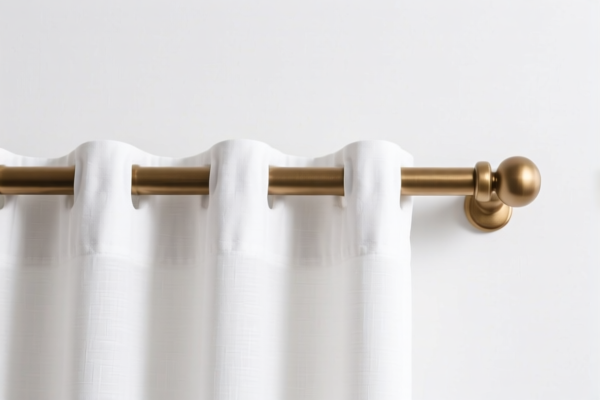
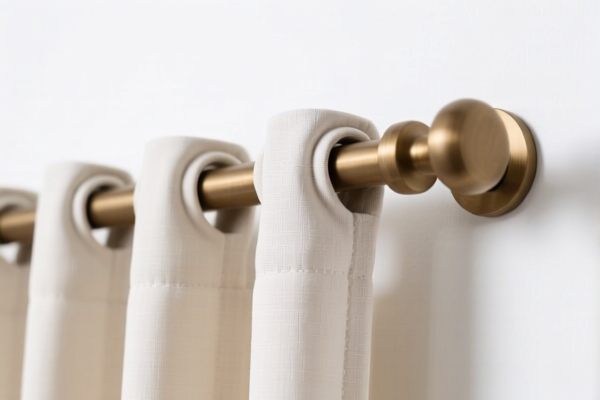
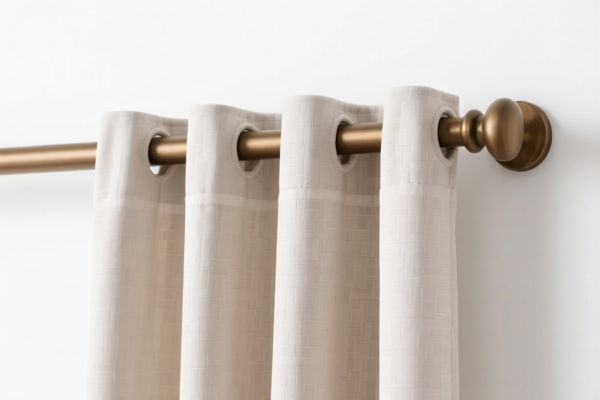
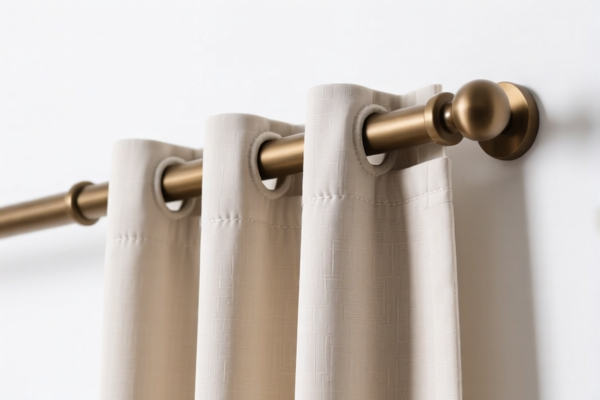
AI Analysis
🏠 Curtain Rod Corner Connector (Base Metal Fittings for Windows/Blinds)
🌐 HS Code Reference & Customs Clearance Guide | 2026 Latest Tariff Analysis | Professional Clearance Strategy
📌 1. Product Definition and Classification: What Exactly is a "Corner Connector"?
A Curtain Rod Corner Connector is a specific hardware component used in interior design and window treatment installations. It is designed to join two sections of curtain rods at a 90-degree angle, allowing rods to navigate corners in rooms without gaps or misalignments.
In international trade, these items fall under Base Metal Mountings and Fittings. The classification depends heavily on: 1. Material: Usually iron, steel, aluminum, or zinc alloy. 2. Intended Use: Specifically "Suitable for Buildings" (windows, blinds, draperies). 3. Specific Function: Whether it is a generic connector or a specialized "bracket/support."
⚠️ Key Distinction:
- If it is a simple connector for rods/blinds → It is classified under Heading 8302 (Base Metal Mountings).
- If it is made of plastic → It falls under Heading 3926 (Articles of Plastic).
- If it is a generic steel article not specifically for fittings → It might fall under Heading 7326 (Other Articles of Iron or Steel).
📦 2. HS Code Classification Details (Based on Provided Data)
According to the provided <DATA>, there are multiple potential HS codes depending on the exact material and specific design. Below is the breakdown for the most likely scenarios for Curtain Rod Corner Connectors.
🅰️ Scenario 1: Base Metal Connector (Iron/Steel/Aluminum/Zinc)
Most Common Scenario for standard metal hardware.
| HS Code | Product Description | Application | Tax Rate (Total) | Tax Breakdown |
|---|---|---|---|---|
| 8302.41.60.50 | Other mountings, fittings and similar articles... For curtains, draperies and window shades (Of iron or steel, aluminum, or zinc) | Metal corner brackets, connectors for blinds/curtains | 50.0% | Base: 0.0% Additional: 50.0% (Steel/Al/Cu tariff) |
| 8302.41.90.50 | Other mountings, fittings... For curtains, draperies and window shades (Other) | Other base metal fittings for curtains not specified in 8302.41.60 | 0.0% | Base: 0.0% Additional: 0.0% |
🔍 Critical Analysis:
- 8302.41.60.50 carries a 50% total tariff. This applies if the item is explicitly identified as suitable for buildings (windows/blinds) and made of iron, steel, aluminum, or zinc. The "50%" comes from the "Steel, Aluminum, Copper Products Additional Tariff: 50%".
- 8302.41.90.50 carries a 0% total tariff. This is a "catch-all" for other base metal mountings. Strategy: If the customs broker can argue that the specific connector design does not fit the specific sub-heading of 8302.41.60.50, this 0% rate is highly preferable. However, since it is explicitly for curtains/shades, 8302.41.60.50 is the more accurate technical classification, triggering the 50% tax.
🅱️ Scenario 2: Plastic Connector
If the corner connector is made entirely of plastic (e.g., PVC, ABS).
| HS Code | Product Description | Application | Tax Rate (Total) | Tax Breakdown |
|---|---|---|---|---|
| 3926.30.50.00 | Other articles of plastics... Fittings for furniture, coachwork or the like: Other | Plastic brackets, clips, or connectors | 0.0% | Base: 0.0% Additional: 0.0% |
📌 Explanation:
- Plastic fittings for furniture or similar use (including window treatments which are often grouped with interior fixtures) are classified here.
- Total Tax: 0.0%. This is the best-case scenario for material substitution. If you can source or manufacture plastic versions, tariffs are eliminated.
©️ Scenario 3: Generic Steel Article (Less Likely for Specific Fittings)
If the item is considered a generic steel part not specifically described as a "mounting/fitting for buildings."
| HS Code | Product Description | Application | Tax Rate (Total) | Tax Breakdown |
|---|---|---|---|---|
| 7326.90.86.88 | Other articles of iron or steel: Other: Other: Other | Generic steel parts, not specifically for fittings | 77.9% | Base: 2.9% Add'l: 25.0% Steel/Al/Cu: 50% |
| 7326.90.86.30 | Other articles of iron or steel: ... Hangers and similar supports for tubes and pipes | If classified as a "hanger/support" for pipes | 77.9% | Base: 2.9% Add'l: 25.0% Steel/Al/Cu: 50% |
⚠️ Warning:
- These codes carry a 77.9% total tariff. This is the worst-case scenario.
- Why avoid? Because the product is specifically designed for curtains/blinds (fittings), it should not be classified as a generic "other article" (7326) or "hanger for pipes" (7326.90.86.30). Using 7326 is a classification error that invites audits and high penalties. However, if customs disputes the "fitting" nature, they may push for this higher rate.
(D) Scenario 4: Generic Plastic Article
If not classified as a "fitting" but as a general plastic good.
| HS Code | Product Description | Application | Tax Rate (Total) | Tax Breakdown |
|---|---|---|---|---|
| 3926.90.99.89 | Other articles of plastics... Other Other | Generic plastic parts, not furniture fittings | 12.8% | Base: 5.3% Additional: 7.5% |
📌 Explanation:
- If the "fitting" argument fails, the item falls into general plastic articles.
- Total Tax: 12.8%. This is worse than 0% (for furniture fittings) but much better than 50% or 77.9% for metals.
💰 3. 2026 Latest Tariff Rate Detailed Explanation
✅ Applicable Country: United States (US)
✅ Origin: China (CN)
✅ Effective Time: Current (Including subsequent imports)
🎯 Primary Classification: 8302.41.60.50 (Base Metal, For Curtains)
This is the most technically accurate HS Code for metal curtain rod corner connectors.
| Item | Content |
|---|---|
| Base Tariff | 0.0% |
| Section 301 Additional Tariff | 25.0% |
| Steel/Al/Cu Additional Tariff | 50.0% |
| Total Tariff | 50.0% (Note: Base is 0%, so the 50% is the total liability) |
| Calculation | CIF Value × 50% |
| De Minimis Eligibility | ❌ No (High tariffs usually exclude de minimis) |
| Legal Path | HTSUS:8302.41.60.50 → Steel/Al/Cu Footnote |
📌 Explanation:
- The 50% rate is driven by the "Steel, Aluminum, Copper Products Additional Tariff: 50%".
- Even though the base rate is 0%, the additional tariff makes it expensive.
- Risk: High. Customs may scrutinize if the item is truly a "fitting for buildings."
🎯 Alternative Classification: 8302.41.90.50 (Other Base Metal Mountings)
If you can argue the connector is not a "standard" fitting for blinds/shades but a unique architectural support.
| Item | Content |
|---|---|
| Base Tariff | 0.0% |
| Additional Tariffs | 0.0% |
| Total Tariff | 0.0% |
| Calculation | CIF Value × 0% |
| De Minimis Eligibility | ✅ Yes (Likely) |
| Legal Path | HTSUS:8302.41.90.50 |
📌 Explanation:
- 0% Tariff. This is the ideal outcome for metal goods.
- Strategy: Consult with a customs broker to see if your specific connector design qualifies as "Other" rather than "For curtains, draperies..." under 8302.41.60.50.
🎯 Plastic Alternative: 3926.30.50.00
| Item | Content |
|---|---|
| Base Tariff | 0.0% |
| Additional Tariffs | 0.0% |
| Total Tariff | 0.0% |
| Calculation | CIF Value × 0% |
| De Minimis Eligibility | ✅ Yes |
| Legal Path | HTSUS:3926.30.50.00 |
📌 Explanation:
- If made of plastic, this is the correct code for "Fittings for furniture... or the like."
- 0% Tariff. This is the safest and cheapest route if plastic is an option.
🛠️ 4. Customs Clearance Practical Advice (Real-World Pitfall Avoidance)
✅ 1. Preparation Checklist (Mandatory)
| Document | Must Provide | Description |
|---|---|---|
| ✅ Product Specifications | ✔️ | Material (Metal/Plastic), Dimensions, Weight, Color |
| ✅ Product Photos | ✔️ | Clear shots of the connector, showing how it attaches to rods |
| ✅ Material Certificate | ✔️ | Proof of material (e.g., "Zinc Alloy," "ABS Plastic") |
| ✅ Commercial Invoice | ✔️ | Description: "Plastic Curtain Rod Corner Connector" or "Metal Window Fitting" |
| ✅ Packing List | ✔️ | Quantity, Gross Weight, Net Weight |
| ✅ Design Drawings (if metal) | ✔️ | To prove it is a "fitting" and not a generic "article of steel" (avoiding 7326) |
✅ 2. Declaration Tips (Key Mantra)
🔥 "Material Determines Code, Use Determines Rate!"
| Scenario | Correct Declaration | Wrong Declaration | Result |
|---|---|---|---|
| Plastic Connector | "Plastic Curtain Rod Connector, Fitting for Furniture/Windows" | "Steel Part" | Avoids 50% Steel Tariff |
| Metal Connector | "Base Metal Mounting for Window Blinds" | "Other Steel Article" | Avoids 77.9% (7326) |
| Metal Connector | "Base Metal Mounting for Window Blinds" | (Ambiguous) | Risk of 50% (8302.41.60.50) |
| Metal Connector | "Other Base Metal Mounting" | (With justification) | Potential 0% (8302.41.90.50) |
✅ 3. Special Situation Handling
| Situation | Handling Advice |
|---|---|
| Mixed Materials (e.g., Metal bracket + Plastic clip) | Declare based on essential character. If metal is essential, use 8302 codes. If plastic is essential, use 3926 codes. |
| OEM Custom Design | Provide design files. If unique, argue for 8302.41.90.50 (0%) as it doesn't fit the standard "curtain" sub-heading. |
| Importing from Non-China Origin | If made in Vietnam/Mexico, IEEPA exemptions may apply. Tariffs could drop to 0-10%. Check Certificate of Origin carefully. |
| Small Sample Shipments | If under $800, check if De Minimis ($800) applies. Plastic (0%) and Metal (0% if 8302.41.90.50) are safe. Metal (50% or 77.9%) may still face scrutiny even if de minimis exempt. |
🌍 5. Global Market Comparison (2026)
| Country/Region | Recommended HS Code | Tariff (CN Origin) | Certification | Notes |
|---|---|---|---|---|
| 🇺🇸 USA | 8302.41.60.50 (Metal) / 3926.30.50.00 (Plastic) |
50% (Metal) / 0% (Plastic) | None specific | Steel tariff is high. Plastic is optimal. |
| 🇨🇳 China | 8302.41.60.50 |
5.0% - 10% | CCC (if applicable) | Lower than US. |
| 🇪🇺 EU | 8302.41.60.50 |
0% - 2.7% | CE (if electrical, not applicable) | Low tariffs. No additional steel tax. |
| 🇬🇧 UK | 8302.41.60.50 |
0% - 4.0% | UKCA | Post-Brexit rules apply. |
📌 Conclusion:
- USA is the most challenging market due to the 50% Steel/Aluminum Additional Tariff.
- Plastic alternatives save 50%+ in tariffs compared to metal in the US.
- EU/China are favorable with low/no additional taxes.
📌 6. Common Mistakes & Pitfalls (Lessons Learned)
❌ Mistake 1: Classifying metal curtain connectors as 7326.90.86.88 ("Other Articles of Steel")
👉 Consequence: 77.9% Tariff + Audit Risk.
✅ Correction: Use 8302.41.60.50 ("Mountings for Buildings") which is more accurate and caps at 50%.
❌ Mistake 2: Declaring metal connectors as "Plastic" to avoid taxes
👉 Consequence: Fraud Penalty + Seizure.
✅ Correction: Accurate material declaration is mandatory. Use plastic only if genuinely plastic.
❌ Mistake 3: Ignoring the "For Curtains/Blinds" description
👉 Consequence: Customs may reclassify from 8302.41.90.50 (0%) to 8302.41.60.50 (50%).
✅ Correction: Always specify "For Window Blinds/Curtains" in the description if using 8302.41.60.50 to be transparent.
✅ Correct Declaration Example:
"Plastic Corner Connector for Curtain Rods, Fitting for Window Blinds, Model CR-2024, HS Code 3926.30.50.00"
🎯 7. Conclusion: Professional Clearance, Save Cost, Boost Profit!
🎯 Remember the Mantra:
🔹 "Plastic is Zero, Metal is Fifty, Steel is Seventy-Seven!"
🔹 "HS Code Dictates Fate, Tariff Difference is Life!"
📌 Tips:
- If you are shipping to the USA, strongly consider plastic components or non-steel materials (e.g., wood, acrylic) if possible to avoid the 50% Steel/Aluminum Tax.
- If metal is required, attempt to classify under 8302.41.90.50 (0%) with strong justification that it is not a standard curtain fitting but a general architectural support.
- Apply for Advance Ruling if importing large volumes.
📣 Immediate Action:
📞 Contact a Professional Broker + Provide Product Images + Decide on Material Strategy
🚀 Let your Curtain Rod Connectors Pass Customs Smoothly, Maximize Profit!
✨ Professional Clearance Starts with Accurate Classification!
💼 Every Cent Saved is Pure Profit!
Customer Reviews
About HS Code Classification
The Harmonized System (HS) is an internationally standardized nomenclature developed by the World Customs Organization (WCO) to classify traded products. Over 200 countries use the HS system as the basis for customs tariffs, trade statistics, and import/export regulations.
Each HS code follows a hierarchical structure:
- Chapter (2 digits) — Broad category of goods (e.g., Chapter 84: Machinery and Mechanical Appliances)
- Heading (4 digits) — More specific grouping within the chapter
- Subheading (6 digits) — Internationally standardized breakdown, used by all WCO member countries
- National subdivisions (8-10 digits) — Country-specific extensions for further classification, such as US HTSUS 10-digit codes
Correct HS code classification is essential for smooth customs clearance, accurate duty payment, and compliance with trade regulations. Misclassification can lead to customs delays, overpayment of duties, or penalties.
When importing from CN to US, the applicable tariff rates may include:
- Most-Favored-Nation (MFN) rate — The standard duty rate applied to WTO members
- General rate — Applied to countries without trade agreements
- Trade remedy duties — Additional tariffs such as Section 301 (anti-dumping), Section 232 (national security), or countervailing duties
The information provided on this page is for reference purposes only. For official classification, please consult with your local customs authority or a licensed customs broker.