Curtain Rod Fixing Clip
CN → US| HS Code | Tariff Rate | Origin | Destination | Doc |
|---|---|---|---|---|
| 7326908688 | 87.9% | CN | US | Official Doc |
| 7326908630 | 87.9% | CN | US | Official Doc |
| 8302419050 | 38.5% | CN | US | Official Doc |
| 8302416050 | 88.9% | CN | US | Official Doc |
| 7419805050 | 85.0% | CN | US | Official Doc |
Product Images
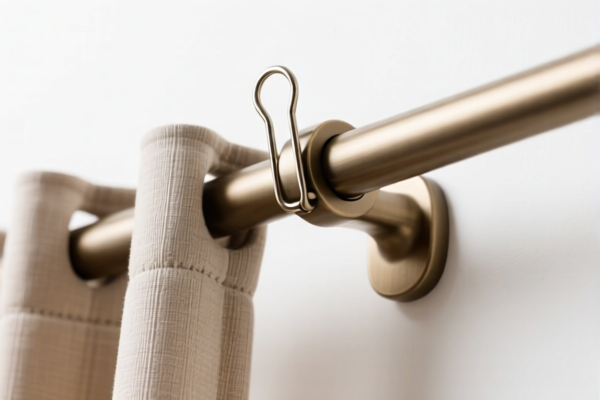
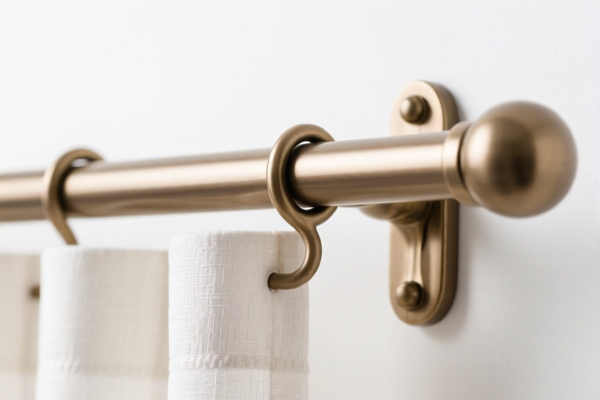
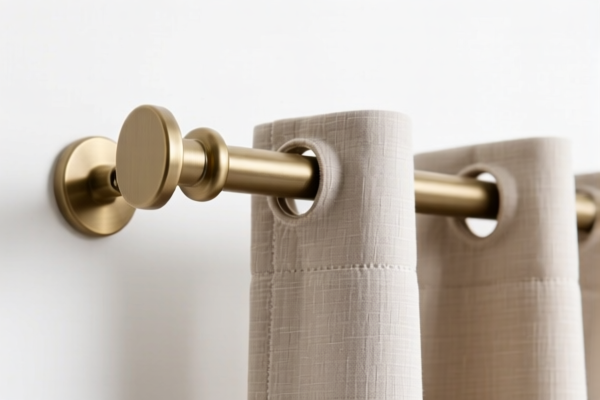
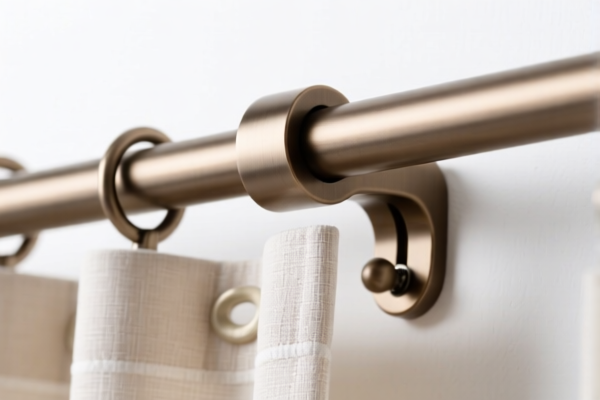
AI Analysis
🪟 Curtain Rod Fixing Clip (Curtain Hardware Accessories)
🌐 HS Code Reference & Customs Clearance Guide | 2026 Latest Tariff Analysis | Professional Clearance Strategy
📌 I. Product Definition & Classification: What Exactly Is a "Fixing Clip"?
Curtain Rod Fixing Clips (also known as Holdbacks, Brackets, or Mounting Hardware) are essential accessories used in window treatments to secure curtain rods to walls or ceilings. In international trade, they are generally classified based on their material composition (Iron/Steel vs. Base Metal/Copper/Brass) and their functional role (Bracket/Support vs. Accessory/Fitting).
Key Classification Logic: * Iron/Steel Brackets: If made of iron or steel, they often fall under Chapter 73 (Articles of Iron or Steel), specifically as general articles or brackets. * Base Metal Fittings: If made of other base metals (like copper, brass, or aluminum alloys not primarily steel) or designated as "mounting hardware" for curtains, they may fall under Chapter 83 (Base Metal Mountings, Fittings, and Accessories).
⚠️ Critical Distinction:
- If the product is primarily a structural support made of Iron/Steel → Look at 7326.
- If the product is considered a fixture/fitting for curtains (often base metal) → Look at 8302.
- Note on "122 Clause" (Section 301/IEEPA): Most metal hardware imported from China into the US faces significant additional tariffs.
📦 II. HS Code Classification Details (2026 Latest Tariff Authority Cross-Reference)
Based on the provided data, here are the four most likely HS Codes for Curtain Rod Fixing Clips, categorized by material and function.
| HS Code | Product Description | Material/Function Logic | Classification Rationale |
|---|---|---|---|
7326.90.86.88 |
Other articles of iron or steel | Iron/Steel | Classified as "other" steel articles. The summary indicates these are typically iron/steel accessories, fitting the "other articles of base metal" category under Chapter 73. |
7326.90.86.30 |
Other articles of iron or steel (Support Structure) | Iron/Steel | Similar to above, but emphasized as a "support" item. Logic aligns with pipe hangers or bracket-like supports made of iron/steel. |
8302.41.90.50 |
Base metal mountings, fittings, etc. (Curtain Accessory) | Base Metal (Non-Steel/General) | Classified under "mountings" for curtains. Matches the function of a "curtain accessory" made of base metal (common for decorative clips). |
8302.41.60.50 |
Base metal mountings, fittings (Curtain Fitting) | Base Metal | Specifically for "curtain mounting fittings." Matches the use case as an installation attachment. |
🔍 Key Insight:
- Chapter 73 (7326...) applies if the item is predominantly Iron or Steel.
- Chapter 83 (8302...) applies if it is considered a Base Metal Fitting/Accessory (often includes brass, aluminum, or mixed metals not strictly defined as "steel articles").
- Tariff Impact: The US imposes significant "122 Clause" (Section 301) tariffs on Chinese-manufactured metal goods, often adding 50% or more on top of base duties.
💰 III. 2026 Latest Tariff Rate Breakdown (Including Surtaxes & Policy Add-ons)
✅ Applicable Country: USA (US)
✅ Origin: China (CN)
✅ Effective Date: Post-2025 Policies (Section 301 / IEEPA)
🎯 1. 7326.90.86.88 & 7326.90.86.30 (Iron/Steel Articles)
| Item | Detail |
|---|---|
| Base Duty Rate | 2.9% (Ad Valorem) |
| Section 301 Surcharge | +25.0% |
| "122 Clause" Surcharge | +10.0% (Specific to Steel/Aluminum/Copper products under certain trade actions) |
| Additional Steel/Alum Surcharge | +50.0% (High-value surcharge for steel/aluminum/copper articles under specific provisions) |
| Total Effective Rate | 87.9% |
| Tax Calculation | CIF Value × 87.9% |
| De Minimis Exemption | ❌ NOT Eligible (High tariff rate exceeds thresholds for duty-free entry) |
| Legal Basis Path | HTSUS:7326.90.86 → Section 301: 30%+ → IEEPA/122: 10%+50% |
📌 Explanation:
- The 2.9% is the standard Most Favored Nation (MFN) duty for other iron/steel articles.
- The 25% is the standard Section 301 tariff on many Chinese goods.
- The 10% and 50% are specific "122 Clause" add-ons for steel/aluminum/copper products, reflecting strict trade restrictions on these base materials.
- Total 87.9% is extremely high. This makes importing steel curtain rods/clips from China very costly.
🎯 2. 8302.41.90.50 (Base Metal Curtain Accessory)
| Item | Detail |
|---|---|
| Base Duty Rate | 3.5% (Ad Valorem) |
| Section 301 Surcharge | +25.0% |
| "122 Clause" Surcharge | +10.0% |
| Additional Steel/Alum Surcharge | ❌ Not Applied (Not classified strictly under the high-rate steel/alum clause if categorized as general base metal fitting) |
| Total Effective Rate | 38.5% |
| Tax Calculation | CIF Value × 38.5% |
| De Minimis Exemption | ❌ Not Eligible |
| Legal Basis Path | HTSUS:8302.41.90 → Section 301: 25% → IEEPA: 10% |
📌 Explanation:
- If classified under Chapter 83 (Base Metal Mountings), the 50% steel-specific surcharge may not apply, resulting in a lower total rate of 38.5% compared to 87.9%.
- However, it still bears the 25% Section 301 and 10% IEEPA surcharges.
🎯 3. 8302.41.60.50 (Base Metal Curtain Fitting)
| Item | Detail |
|---|---|
| Base Duty Rate | 3.9% (Ad Valorem) |
| Section 301 Surcharge | +25.0% |
| "122 Clause" Surcharge | +10.0% |
| Additional Steel/Alum Surcharge | +50.0% (Applied if deemed a steel/aluminum/copper product under specific clauses) |
| Total Effective Rate | 88.9% |
| Tax Calculation | CIF Value × 88.9% |
| De Minimis Exemption | ❌ Not Eligible |
| Legal Basis Path | HTSUS:8302.41.60 → Section 301: 25% → IEEPA/122: 10%+50% |
📌 Explanation:
- Similar to the 7326 codes, this classification triggers the 50% surcharge for steel/aluminum/copper products, leading to a total rate of 88.9%.
- This is the highest possible tax burden among the options.
🎯 4. 7419.80.50.50 (Other Copper Articles - Connection Piece)
| Item | Detail |
|---|---|
| Base Duty Rate | 0.0% (Ad Valorem) |
| Section 301 Surcharge | +25.0% |
| "122 Clause" Surcharge | +10.0% |
| Additional Steel/Alum Surcharge | +50.0% |
| Total Effective Rate | 85.0% |
| Tax Calculation | CIF Value × 85.0% |
| De Minimis Exemption | ❌ Not Eligible |
| Legal Basis Path | HTSUS:7419.80.50 → Section 301: 25% → IEEPA/122: 10%+50% |
📌 Explanation:
- Although the base duty is 0%, the 122 Clause surcharges (10% + 50%) and Section 301 (25%) result in a high total rate of 85.0%.
- This applies if the clip is made of copper or copper alloys.
🛠️ IV. Customs Clearance Practical Advice (Real-World Pitfall Guide)
✅ 1. Documentation Checklist (All Required)
| Document | Required? | Description |
|---|---|---|
| ✅ Product Specifications | ✔️ | Material composition (e.g., "Zinc Alloy," "Stainless Steel," "Copper"), dimensions, weight. |
| ✅ Product Photos | ✔️ | Clear images of the clip, packaging, and any branding. |
| ✅ Commercial Invoice | ✔️ | Must clearly state "Curtain Rod Fixing Clip" and country of origin (China). |
| ✅ Packing List | ✔️ | List of items per carton, total gross/net weight. |
| ✅ Certificate of Origin (CO) | ✔️ | Needed for origin verification; does not help with Section 301 exemptions for China. |
| ✅ Material Declaration | ✔️ | Explicitly state the base metal type (Iron, Steel, Copper, etc.) to ensure correct HS Code. |
✅ 2. Declaration Strategy (Key Mantras)
🔥 "Material Defines Duty, Function Defines Code, Don't Split the Set!"
| Scenario | Correct Declaration | Incorrect Practice |
|---|---|---|
| Steel Clip | 7326.90.86.88 (or .30) |
Misdeclare as "Plastic" to avoid steel tariffs → Fraud/Risk of Seizure |
| Copper/Brass Clip | 7419.80.50.50 |
Declare as "Steel" → Overpay base duty or misclassification |
| Mixed Material | Choose the predominant material | Split shipment to different HS codes → Customs Audit Risk |
| Set (Rod + Clip) | Declare as Set under highest duty item | Declare separately → Penalty for Misclassification |
📌 Critical Tip:
- If the product is Iron/Steel, expect ~88% total tax.
- If it can be legally classified as a Base Metal Fitting (8302) without triggering the 50% steel surcharge, aim for ~38.5%.
- Do NOT attempt to de minimis (<$800) small batches if the total value exceeds the threshold or if the importer is a business entity (Section 301 applies regardless of de minimis for business imports).
✅ 3. Special Situation Handling
| Situation | Handling Advice |
|---|---|
| OEM Custom Clips | Provide design drawings to prove material and function. Avoid vague descriptions like "Hardware." |
| Packaged with Rods | If sold as a set (Rod + Clip), the entire set is classified under the item that gives the set its essential character. Usually, the Rod dominates, but check HS rules for sets. |
| Origin Verification | Ensure the "Country of Origin" is clearly marked on the product/packaging. Mislabeling origin leads to heavy penalties. |
| Tariff Engineering | Consider sourcing from non-China countries (e.g., Vietnam, Thailand) if possible, as Section 301 tariffs do not apply. |
🌍 V. Global Market Clearance Comparison (2026 Latest)
| Country/Region | Recommended HS Code | Estimated Total Tax (China Origin) | Certification Requirements | Remarks |
|---|---|---|---|---|
| 🇺🇸 USA | 7326.90.86.88 or 8302.41.90.50 |
38.5% – 88.9% | None specific for metal clips | High Tariffs due to Section 301 & 122 Clause. |
| 🇨🇳 China | 7326.90.86.88 |
~5-10% | CCC (if applicable) | Low tariffs for domestic use. |
| 🇪🇺 EU | 7326.90.99 or 8302.41 |
~2-4% | CE (if functional) | No Section 301 equivalents. |
| 🇬🇧 UK | 7326.90.99 |
~3-5% | UKCA | Post-Brexit rules apply. |
| 🇦🇺 Australia | 7326.90.99 |
~5% | SAA | No major surcharges. |
| 🇨🇦 Canada | 7326.90.99 |
~0-6.75% | None | Low tariffs for USMCA partners (if not China). |
📌 Conclusion:
- The US is the most expensive market for curtain rod clips due to aggressive tariff policies.
- EU, UK, and Asia-Pacific markets offer significantly lower duty rates (~2-6%).
- Strategy: If targeting the US, consider supply chain diversification to avoid Chinese origin, or invest in tariff engineering to find the most favorable HS Code (e.g.,8302.41.90.50at 38.5% vs.7326...at 88%).
📌 VI. Common Errors & Pitfall Guide (Lessons from Blood & Tears)
❌ Error 1: Declaring "Curtain Rod" instead of "Fixing Clip"
👉 Consequence: HS Code mismatch → Delayed clearance, fines, or detention.
❌ Error 2: Ignoring Material Composition
👉 Consequence: Misclassifying Steel as "Other Base Metal" → Audit, back taxes, and penalties.
❌ Error 3: Assuming De Minimis ($800) Exemption
👉 Consequence: Section 301 tariffs still apply to most Chinese goods under $800 for business imports. No tax savings!
❌ Error 4: Vague Description "Hardware"
👉 Consequence: Customs assigns the highest possible duty rate due to lack of clarity → Unnecessary costs.
✅ Correct Practice:
"Metal Curtain Rod Bracket, Stainless Steel, for Wall Mount, HS Code 7326.90.86.88, Country of Origin: China"
🎯 VII. Conclusion: Professional Declaration Saves Money!
🎯 Remember the Mantra:
🔹 "Check Material, Check Origin, Check Surcharge!"
🔹 "Steel Clips from China = High Tax (88%). Base Metal Fitting = Moderate Tax (38.5%)."
🔹 "Don't Gamble with De Minimis; Section 301 Applies!"
📌 Pro Tip:
If you are importing more than $800 in value, apply for an Advance Ruling from US Customs and Border Protection (CBP) to confirm the HS Code and tax liability. This provides legal certainty and avoids post-import audits.
📣 Immediate Action:
📞 Consult a licensed customs broker.
📸 Provide high-res photos and material specs.
📝 Confirm HS Code before shipment.
🚀 Clearance should be smooth, taxable, and predictable!
✨ Professional Clearance Starts with Accurate Classification!
💼 Every percent of tax saved is pure profit!
Customer Reviews
About HS Code Classification
The Harmonized System (HS) is an internationally standardized nomenclature developed by the World Customs Organization (WCO) to classify traded products. Over 200 countries use the HS system as the basis for customs tariffs, trade statistics, and import/export regulations.
Each HS code follows a hierarchical structure:
- Chapter (2 digits) — Broad category of goods (e.g., Chapter 84: Machinery and Mechanical Appliances)
- Heading (4 digits) — More specific grouping within the chapter
- Subheading (6 digits) — Internationally standardized breakdown, used by all WCO member countries
- National subdivisions (8-10 digits) — Country-specific extensions for further classification, such as US HTSUS 10-digit codes
Correct HS code classification is essential for smooth customs clearance, accurate duty payment, and compliance with trade regulations. Misclassification can lead to customs delays, overpayment of duties, or penalties.
When importing from CN to US, the applicable tariff rates may include:
- Most-Favored-Nation (MFN) rate — The standard duty rate applied to WTO members
- General rate — Applied to countries without trade agreements
- Trade remedy duties — Additional tariffs such as Section 301 (anti-dumping), Section 232 (national security), or countervailing duties
The information provided on this page is for reference purposes only. For official classification, please consult with your local customs authority or a licensed customs broker.