Curtain Tie back
CN → US| HS Code | Tariff Rate | Origin | Destination | Doc |
|---|---|---|---|---|
| 5806310000 | 43.8% | CN | US | Official Doc |
| 6307905010 | 17.5% | CN | US | Official Doc |
| 6307904010 | 17.5% | CN | US | Official Doc |
| 5806101000 | 42.8% | CN | US | Official Doc |
| 5607909000 | 41.3% | CN | US | Official Doc |
Product Images
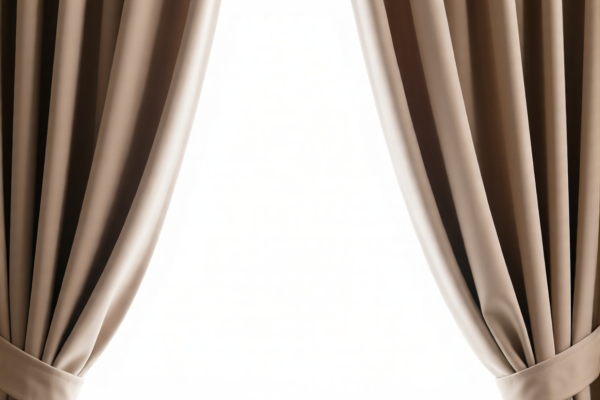
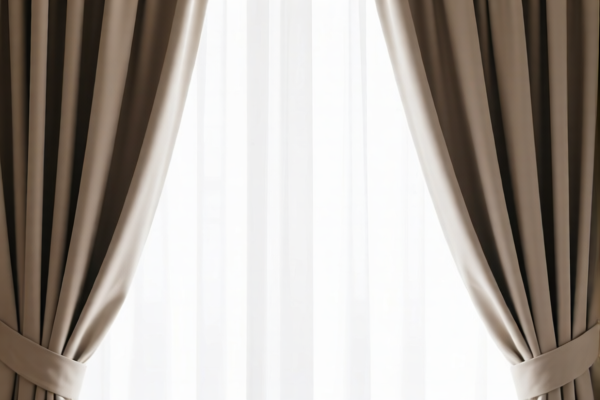
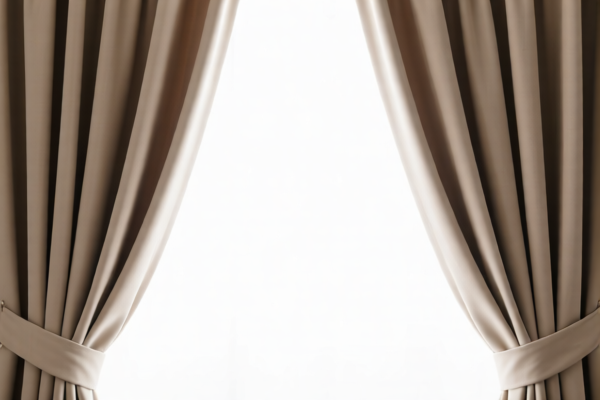

AI Analysis
🪄 Curtain Tiebacks (Curtain Ties & Holdbacks)
🌐 HS Code Reference & Customs Clearance Guide | 2026 Latest Tariff Analysis | Professional Entry Strategy
📌 I. Product Definition & Classification: Do You Really Know "Curtain Tiebacks"?
Curtain tiebacks are decorative accessories used to hold curtains open and away from windows. While they seem simple, their classification in international trade is highly dependent on their material composition and physical form (woven vs. twisted/stranded). Misclassification is the #1 cause of unexpected customs duties for these items.
In international trade, they are generally split into two main categories:
1. Narrow Woven Fabrics (Trim/Textile): If the tieback is made of continuous woven cotton or synthetic fibers, it is often classified under "Narrow Fabrics."
2. Strands, Cordage, or Rope: If the tieback is made of twisted, braided, or plaited strands (resembling shoelaces or ropes), it is classified under "Textile Strands/Cordage."
⚠️ Key Distinction Point:
- If it is a flat, woven strip of fabric (even if used as a tie) → Look at Chapter 58 (Narrow Woven Fabrics) or Chapter 63 (Other Made-Up Textile Articles) depending on structure.
- If it is twisted, braided, or rope-like (like a shoelace) → Look at Chapter 56 (Textile Strands/Cordage) or Chapter 63 if it's a finished article.
📦 II. HS Code Classification Details (2026 Latest Tariff Authority Comparison)
Based on the specific physical forms described in the data, here are the precise classifications:
| HS Code | Product Description | Physical Form | Material |
|---|---|---|---|
5806.31.00.00 |
Narrow woven fabrics of cotton, other than goods of heading 5807 | Narrow Fabric Strip | Cotton |
5806.10.10.00 |
Narrow woven fabrics of cotton, raised pile or chenille | Narrow Woven Fabric (Rise/Pile) | Cotton |
6307.90.50.10 |
Other made-up articles, including dress patterns | Shoelace-like / Belt-like | Cotton |
6307.90.40.10 |
Other made-up articles (Rope/Tape specific) | Rope-like / Tape | Cotton |
5607.90.90.00 |
Twisted, braided, or plaited strands/cords | Fine Rope or Cordage | Fiber/Textile |
🔍 Key Reminder:
- Chapter 58 applies to narrow woven fabrics. If your tieback is a flat piece of woven cotton, it likely falls here (5806...).
- Chapter 63 applies to made-up textile articles that don't fit neatly into previous chapters. The "shoelace-like" or "rope-like" finished tiebacks often fall here (6307...).
- Chapter 56 applies if the item is technically cordage/rope (5607...) but not yet a "made-up article" in the specific sense of Chapter 63, or if it is defined as a strand.
💰 III. 2026 Latest Tariff Rate Breakdown (Including Surtaxes & Policy Add-ons)
✅ Applicable Country: United States (US)
✅ Origin: China (CN)
✅ Effective Date: From November 10, 2025 onwards (including subsequent imports)
🎯 1. 5806.31.00.00 —— Narrow Woven Fabrics of Cotton (Curtain Tiebacks)
| Item | Content |
|---|---|
| Base Duty Rate | 8.8% |
| USITC Surtax (Section 301) | +25.0% |
| IEEPA Surcharge (China Specific) | +10.0% |
| Total Effective Tax Rate | 43.8% |
| Tax Calculation | CIF Value × 43.8% |
| De Minimis Exemption? | ❌ No (Not eligible for Section 321 de minimis relief due to high duty rate) |
| Legal Basis Path | Base: 8.8% + Section 301: 25% + IEEPA 122: 10% |
📌 Explanation:
- This classification treats the tieback as a narrow woven fabric.
- The 43.8% total rate is very high. It includes the base duty, the aggressive Section 301 tariff, and the additional 122 IEEPA surcharge.
- Risk: High probability of customs scrutiny if not declared precisely as "Narrow Woven Fabric."
🎯 2. 6307.90.50.10 —— Other Made-Up Textile Articles (Shoelace/Belt-like)
| Item | Content |
|---|---|
| Base Duty Rate | 0.0% |
| USITC Surtax (Section 301) | +7.5% |
| IEEPA Surcharge (China Specific) | +10.0% |
| Total Effective Tax Rate | 17.5% |
| Tax Calculation | CIF Value × 17.5% |
| De Minimis Exemption? | ❌ No (Due to IEEPA restrictions) |
| Legal Basis Path | Base: 0.0% + Section 301: 7.5% + IEEPA 122: 10% |
📌 Explanation:
- This classification treats the tieback as a finished made-up article (like a shoelace or belt).
- The 17.5% total rate is significantly lower than the woven fabric classification.
- Strategy: If the product can be justified as a "made-up article" (finished shape) rather than just "narrow fabric," this is the preferred classification to save ~26% in duties.
🎯 3. 6307.90.40.10 —— Other Made-Up Textile Articles (Rope/Tape)
| Item | Content |
|---|---|
| Base Duty Rate | 0.0% |
| USITC Surtax (Section 301) | +7.5% |
| IEEPA Surcharge (China Specific) | +10.0% |
| Total Effective Tax Rate | 17.5% |
| Tax Calculation | CIF Value × 17.5% |
| De Minimis Exemption? | ❌ No |
| Legal Basis Path | Base: 0.0% + Section 301: 7.5% + IEEPA 122: 10% |
📌 Explanation:
- Similar to6307.90.50.10, this applies to rope-like or tape-like made-up articles.
- Same 17.5% rate. Choose between50.10and40.10based on whether it looks more like a shoelace (50.10) or a specific rope/tape structure (40.10).
🎯 4. 5806.10.10.00 —— Narrow Woven Fabrics of Cotton (Raised Pile/Chenille)
| Item | Content |
|---|---|
| Base Duty Rate | 7.8% |
| USITC Surtax (Section 301) | +25.0% |
| IEEPA Surcharge (China Specific) | +10.0% |
| Total Effective Tax Rate | 42.8% |
| Tax Calculation | CIF Value × 42.8% |
| De Minimis Exemption? | ❌ No |
| Legal Basis Path | Base: 7.8% + Section 301: 25% + IEEPA 122: 10% |
📌 Explanation:
- Applies if the tieback is made of chenille or raised pile woven fabric.
- Slightly lower than standard narrow fabric (42.8%vs43.8%), but still high.
🎯 5. 5607.90.90.00 —— Twisted/Braided Strands/Cords (Fiber/Textile)
| Item | Content |
|---|---|
| Base Duty Rate | 6.3% |
| USITC Surtax (Section 301) | +25.0% |
| IEEPA Surcharge (China Specific) | +10.0% |
| Total Effective Tax Rate | 41.3% |
| Tax Calculation | CIF Value × 41.3% |
| De Minimis Exemption? | ❌ No |
| Legal Basis Path | Base: 6.3% + Section 301: 25% + IEEPA 122: 10% |
📌 Explanation:
- Applies if the tieback is classified as cordage/rope (twisted/braided) rather than a "made-up article."
- Note: Even though the base duty is lower (6.3%), the 25% Section 301 and 10% IEEPA surcharges apply, pushing the total to 41.3%.
🛠️ IV. Customs Clearance Practical Advice (Battle-Tested Pitfall Guide)
✅ 1. Documentation Checklist (Mandatory)
| Document | Required | Notes |
|---|---|---|
| ✅ Product Specification Sheet | ✔️ | Must clearly describe: Material (100% Cotton), Form (Woven vs. Twisted), Dimensions. |
| ✅ High-Resolution Photos | ✔️ | Show the cross-section (woven vs. twisted) to justify HS Code. |
| ✅ Commercial Invoice | ✔️ | Describe as "Cotton Curtain Tieback" + "Made-up Textile Article" OR "Narrow Woven Fabric." |
| ✅ Certificate of Origin (CO) | ✔️ | Essential for verifying Chinese origin to apply correct IEEPA rates. |
| ✅ Packaging List | ✔️ | Ensure weight and volume match the declaration. |
✅ 2. Declaration Strategy (Key Mantra)
🔥 "Form Dictates Code, Code Dictates Cost!"
| Scenario | Recommended HS Code | Why? |
|---|---|---|
| Flat, woven strip (like a ribbon) | 5806.31.00.00 or 5806.10.10.00 |
Classified as Narrow Woven Fabric. High duty (42-43%). |
| Twisted/Braided/Rope-like (like shoelace) | 6307.90.50.10 or 6307.90.40.10 |
Classified as Made-Up Article. Lower duty (17.5%). RECOMMENDED IF APPLICABLE. |
| Chenille/Raised Pile Woven | 5806.10.10.00 |
Specific sub-category for pile fabrics. Duty (42.8%). |
| Just Cord/Rope (Not Finished) | 5607.90.90.00 |
Classified as Strand/Cordage. Duty (41.3%). |
📌 Critical Tip:
- If your curtain tiebacks are finished products with loops or specific shapes, argue for Chapter 63 (6307.90...) to benefit from the 0% base duty.
- If they are simple strips of fabric that need tying, customs may view them as Narrow Fabric (Chapter 58), leading to ~43% duty.
- Do not declare them as "Accessories" without specifying the textile nature, as this leads to classification errors.
✅ 3. Special Cases & Handling
| Scenario | Handling Advice |
|---|---|
| Mixed Materials | If the tieback contains non-cotton fibers (e.g., polyester blend), the HS Code may change. Verify if it still meets "Cotton" criteria for these codes. |
| With Metal Rings/Clips | If the tieback includes significant metal parts (e.g., heavy clasps), it might be considered "made-up with non-textile parts," potentially altering classification. Consult a customs broker. |
| OEM Custom Designs | Provide custom design proofs to prove it's a "made-up article" (specific shape) rather than generic fabric. |
| Small Quantities (De Minimis) | ❌ Do not rely on De Minimis. The 10% IEEPA surcharge and Section 301 tariffs often negate de minimis exemptions for textile goods from China. Always declare properly. |
🌍 V. Global Market Customs Comparison (2026 Latest)
| Country/Region | Recommended HS Code | Duty Rate (China Origin) | Certification Requirements | Notes |
|---|---|---|---|---|
| 🇺🇸 USA | 6307.90.50.10 (if possible) |
17.5% (Best Case) | N/A | Avoid 5806 unless necessary (43.8%) |
| 🇪🇺 EU | 6307.90 |
~6-12% (No Section 301) | CE (if applicable) | No IEEPA/301 surcharges |
| 🇨🇦 Canada | 6307.90 |
~5-10% | N/A | Lower duties, stable policy |
| 🇬🇧 UK | 6307.90 |
~6-10% | N/A | Post-Brexit tariffs apply |
| 🇯🇵 Japan | 6307.90 |
~5-10% | PSE (if electronic, not applicable) | Standard textile duties |
📌 Conclusion:
- USA is the most expensive market for textile accessories due to Section 301 and IEEPA tariffs.
- Optimizing the HS Code from Chapter 58 (Narrow Fabric) to Chapter 63 (Made-Up Article) can save ~26% in duties.
- Diversification: Consider sourcing from Vietnam/Mexico if possible to avoid US surcharges.
📌 VI. Common Errors & Pitfalls (Lessons Learned)
❌ Error 1: Declaring "Curtain Tieback" as "Home Decor Accessory" (Generic)
👉 Consequence: Customs assigns a default high-duty code or requests clarification, causing delays.
❌ Error 2: Using 5806 for a twisted/rope-like tieback
👉 Consequence: Overpayment of duties. If it's rope-like, 6307 (17.5%) is cheaper than 5806 (43.8%).
❌ Error 3: Ignoring IEEPA 10% Surcharge
👉 Consequence: Unexpected bill at customs. Remember, 10% + 25% are stacked on top of base duty.
❌ Error 4: Assuming De Minimis applies
👉 Consequence: For Chinese textiles, de minimis is often not available due to trade remedies.
✅ Correct Approach:
"Cotton Curtain Tieback, Made-Up Textile Article, Shoelace-like, 100% Cotton, HS 6307.90.50.10"
🎯 VII. Conclusion: Smart Classification, Smart Savings!
🎯 Remember the Mantra:
🔹 "Woven = Chapter 58 (High Tax)"
🔹 "Made-Up/Rope = Chapter 63 (Lower Tax)"
🔹 "Always Check 122 IEEPA + 301!"
🔹 "Save 26% by Choosing the Right Form-Based Code!"
📌 Pro Tip:
If your product is finely crafted with specific shapes (loops, tassels, knots), emphasize its "Made-Up Article" nature in the invoice description to target 6307.90... and the 17.5% rate.
📣 Immediate Action:
📞 Consult your customs broker BEFORE shipping.
📸 Provide clear photos showing the texture and form (woven vs. twisted).
🚀 Optimize your HS Code to save tens of thousands in duties.
✨ Professional Clearance Starts with Precise Classification!
💼 Every Percentage Point Matters in the Age of Trade Wars!
Customer Reviews
About HS Code Classification
The Harmonized System (HS) is an internationally standardized nomenclature developed by the World Customs Organization (WCO) to classify traded products. Over 200 countries use the HS system as the basis for customs tariffs, trade statistics, and import/export regulations.
Each HS code follows a hierarchical structure:
- Chapter (2 digits) — Broad category of goods (e.g., Chapter 84: Machinery and Mechanical Appliances)
- Heading (4 digits) — More specific grouping within the chapter
- Subheading (6 digits) — Internationally standardized breakdown, used by all WCO member countries
- National subdivisions (8-10 digits) — Country-specific extensions for further classification, such as US HTSUS 10-digit codes
Correct HS code classification is essential for smooth customs clearance, accurate duty payment, and compliance with trade regulations. Misclassification can lead to customs delays, overpayment of duties, or penalties.
When importing from CN to US, the applicable tariff rates may include:
- Most-Favored-Nation (MFN) rate — The standard duty rate applied to WTO members
- General rate — Applied to countries without trade agreements
- Trade remedy duties — Additional tariffs such as Section 301 (anti-dumping), Section 232 (national security), or countervailing duties
The information provided on this page is for reference purposes only. For official classification, please consult with your local customs authority or a licensed customs broker.