Curtain Tieback Rope
CN → US| HS Code | Tariff Rate | Origin | Destination | Doc |
|---|---|---|---|---|
| 5806310000 | 43.8% | CN | US | Official Doc |
| 6307905010 | 17.5% | CN | US | Official Doc |
| 6307904010 | 17.5% | CN | US | Official Doc |
| 5806101000 | 42.8% | CN | US | Official Doc |
| 5607909000 | 41.3% | CN | US | Official Doc |
Product Images

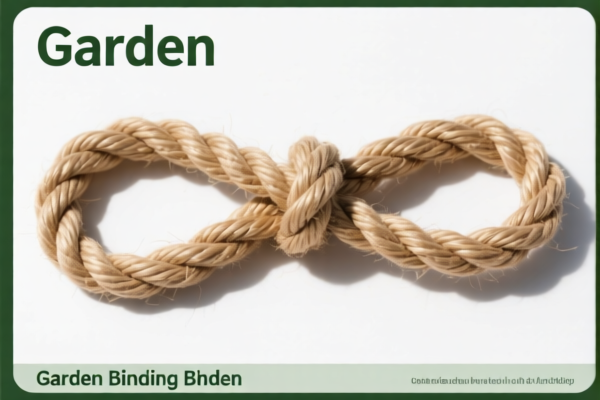

AI Analysis
🏠 Curtain Tieback Rope (Cotton)
🌐 HS Code Reference & Customs Clearance Guide | 2026 Latest Tariff Analysis | Professional Clearance Strategy 📌 I. Product Definition & Classification: What Exactly Is "Curtain Tieback Rope"?
Curtain tiebacks are essential soft furnishings used to hold curtains back from windows, adding aesthetic value and functionality. In international trade, the classification of these items depends heavily on their material composition (cotton vs. other fibers) and their physical form (narrow woven fabric, cords, or lace-like bands).
Key Distinction: - Narrow Woven Fabrics (Section 58): If the tieback is made of woven cotton material, regardless of whether it looks like a ribbon or a band, it often falls under Chapter 58. - Other Made-Up Articles (Section 63): If the item is considered a "made-up" article that doesn't fit specific textile categories (like narrow woven fabric or rope), it may fall under Chapter 63 (Other made-up textile articles). - Ropes/Cords (Section 56): If the tieback is specifically defined as a cord or string, it may fall under Chapter 56.
⚠️ Critical Classification Point:
- If the tieback is a narrow woven fabric (even if cut into a specific shape), it generally belongs to Heading 5806.
- If it is a made-up textile article not specifically mentioned elsewhere (e.g., complex shaped bands), it may be classified under Heading 6307.
- If it is a cord or string, it may be classified under Heading 5607 or 6307.
📦 II. HS Code Classification Details (2026 Latest Tariff Authoritative Comparison)
| HS Code | Product Description | Material Form | Applicable Scenario | Tax Rate |
|---|---|---|---|---|
5806.31.00.00 |
Narrow woven fabrics of cotton, including narrow woven fabrics made of grosgrain ribbon | Cotton, Narrow Woven Fabric | Standard cotton tieback ribbons, wide bands | 43.8% |
6307.90.50.10 |
Other made-up textile articles, including curtain tiebacks, not elsewhere specified | Cotton, Band-like | Tiebacks resembling shoelaces or flat bands, not narrow woven fabric | 17.5% |
6307.90.40.10 |
Other made-up textile articles, including curtain tiebacks, not elsewhere specified | Cotton, Cord/String | Tiebacks made of knotted or twisted cotton cords | 17.5% |
5806.10.10.00 |
Narrow woven fabrics of cotton, including narrow woven fabrics made of grosgrain ribbon | Cotton, Narrow Woven Fabric | Similar to 5806.31, but different sub-category for narrow woven | 42.8% |
5607.90.90.00 |
Twine, cordage, rope and cables, of other textile materials, whether or not impregnated or coated | Fibers/Fabric, Cord/Rope | Tiebacks made of twisted cotton fibers, resembling ropes or cables | 41.3% |
🔍 Key Reminder:
- Narrow Woven Fabrics (5806): If the tieback is manufactured as a continuous narrow strip of woven cotton, it is most likely classified under 5806.
- Made-Up Articles (6307): If the tieback is pre-shaped, finished, and doesn't qualify as a narrow woven fabric or rope, it falls under 6307.
- Rope/Cord (5607): If the tieback is essentially a twisted or braided cord, it may be classified under 5607.
💰 III. 2026 Latest Tariff Rate Breakdown (Including Supplementary Taxes & Policy Additions)
✅ Applicable Country: United States (US)
✅ Country of Origin: China (CN)
✅ Effective Date: November 10, 2025 onwards (including subsequent imports)
🎯 1. 5806.31.00.00 —— Narrow Woven Fabrics of Cotton
| Item | Content |
|---|---|
| Base Tariff Rate | 8.8% (ad valorem) |
| Section 301 Supplementary Tariff | +25.0% |
| IEEPA Supplementary Tariff | +10.0% (For China/HK products, from Nov 10, 2025) |
| Total Tariff Rate | 43.8% |
| Tax Calculation | CIF Value × 43.8% |
| De Minimis Exemption Eligibility | ❌ Not Eligible (deny_de_minimis) |
| Legal Basis Path | IEEPA:9903.01.25 → IEEPA:9903.01.24 → USITC:5806.31.00.00 → FOOTNOTE:9903.88.01 |
📌 Explanation:
- "Section 301 Supplementary Tariff 25%" comes from the "Additional Duties" under Section 301 of the Trade Act of 1974;
- "IEEPA 10%" is the additional tariff imposed on China/HK products under the International Emergency Economic Powers Act;
- Total 43.8%, which is a high tariff rate, must be anticipated in advance!
🎯 2. 5806.10.10.00 —— Narrow Woven Fabrics of Cotton
| Item | Content |
|---|---|
| Base Tariff Rate | 7.8% |
| Section 301 Supplementary Tariff | +25.0% |
| IEEPA Supplementary Tariff | +10.0% |
| Total Tariff Rate | 42.8% |
| Tax Calculation | CIF × 42.8% |
| De Minimis Exemption Eligibility | ❌ Not Eligible |
| Legal Basis Path | IEEPA:9903.01.25 → IEEPA:9903.01.24 → USITC:5806.10.10.00 → FOOTNOTE:9903.88.01 |
📌 Note:
- Same category as above, "Narrow Woven Fabric," same tariff rate principle;
- Even if it's "cotton tieback ribbon," as long as it's classified as narrow woven fabric, it applies this tariff.
🎯 3. 5607.90.90.00 —— Twine, Cordage, Rope, and Cables
| Item | Content |
|---|---|
| Base Tariff Rate | 6.3% |
| Section 301 Supplementary Tariff | +25.0% |
| IEEPA Supplementary Tariff | +10.0% |
| Total Tariff Rate | 41.3% |
| Tax Calculation | CIF × 41.3% |
| De Minimis Exemption Eligibility | ❌ Not Eligible |
| Legal Basis Path | IEEPA:9903.01.25 → IEEPA:9903.01.24 → USITC:5607.90.90.00 → FOOTNOTE:9903.88.01 |
📌 Note:
- Applies to tiebacks made of twisted or braided cotton fibers, resembling ropes or cords;
- Although the base rate is lower (6.3%), the total rate is still high (41.3%) due to supplementary tariffs.
🎯 4. 6307.90.50.10 & 6307.90.40.10 —— Other Made-Up Textile Articles
| Item | Content |
|---|---|
| Base Tariff Rate | 0.0% |
| Section 301 Supplementary Tariff | +7.5% |
| IEEPA Supplementary Tariff | +10.0% |
| Total Tariff Rate | 17.5% |
| Tax Calculation | CIF × 17.5% |
| De Minimis Exemption Eligibility | ❌ Not Eligible |
| Legal Basis Path | IEEPA:9903.01.25 → IEEPA:9903.01.24 → USITC:6307.90.50.10/40.10 → FOOTNOTE:9903.88.01 |
📌 Note:
- These two HS codes are for "made-up textile articles" that do not fall under narrow woven fabrics or ropes;
- The base tariff is 0%, and the supplementary tariff is only 7.5% (Section 301), resulting in a much lower total rate of 17.5%;
- This is the most cost-effective classification if the product qualifies as a "made-up article" rather than "narrow woven fabric" or "rope."
🛠️ IV. Customs Clearance Practical Advice (Combat Pitfall Avoidance Guide)
✅ 1. Preparation Checklist (All Required)
| Material | Must Provide | Description |
|---|---|---|
| ✅ Product Specification Sheet | ✔️ | Includes dimensions, material composition, shape, weight |
| ✅ Product Photos (Clear) | ✔️ | Shows the tieback's form, texture, and any labels |
| ✅ Commercial Invoice | ✔️ | Clearly states "Cotton Curtain Tieback" and describes its form (ribbon, cord, etc.) |
| ✅ Packing List | ✔️ | Specifies the relationship between the tieback and other items, avoiding split declarations |
| ✅ Origin Certificate (CO) | ✔️ | If not from China, can apply for preferential tariff rates |
✅ 2. Declaration Tips (Key Mnemonic)
🔥 "Form Determines Code, Description Matters, Rate Varies by Shape!"
| Scenario | Correct Declaration Method | Incorrect Practice |
|---|---|---|
| Flat Ribbon Tieback | 5806.31.00.00 or 5806.10.10.00 |
Misdeclare as "Made-Up Article" → 17.5% vs 43.8% |
| Cord/String Tieback | 6307.90.40.10 (if made-up) or 5607.90.90.00 (if rope) |
Misdeclare as "Narrow Woven Fabric" → 43.8% vs 17.5% |
| Complex Shaped Band | 6307.90.50.10 |
Misdeclare as "Narrow Woven Fabric" → 43.8% vs 17.5% |
✅ 3. Special Case Handling
| Scenario | Handling Advice |
|---|---|
| OEM Custom Tiebacks | Provide customer orders + design drawings to avoid being deemed "non-standard" |
| Tiebacks with Decorative Elements | If the decorative elements are integral to the product, still declare as one item; if separate, declare separately |
| Mixed Material Tiebacks | If the tieback contains non-cotton materials, the classification may change; consult a customs broker |
| Sample vs. Bulk | Sample shipments may have different clearance requirements; provide detailed descriptions |
🌍 V. Global Major Market Clearance Comparison (2026 Latest)
| Country/Region | Recommended HS Code | Tariff | Certification Requirements | Notes |
|---|---|---|---|---|
| 🇺🇸 USA | 6307.90.50.10 / 6307.90.40.10 |
17.5% | None specific | Most cost-effective if qualified |
| 🇨🇳 China | 5806.31.00.00 / 6307.90.50.10 |
5-10% | CCC (if applicable) | No additional supplementary tariffs |
| 🇪🇺 EU | 5806.31.00.00 / 6307.90.50.10 |
0-4% | CE (if applicable) | No additional supplementary tariffs |
| 🇦🇺 Australia | 5806.31.00.00 / 6307.90.50.10 |
5% | RCM (if applicable) | No additional supplementary tariffs |
| 🇯🇵 Japan | 5806.31.00.00 / 6307.90.50.10 |
0-5% | PSE (if applicable) | No additional supplementary tariffs |
📌 Conclusion:
- USA is the only market with high additional tariffs for Chinese-made cotton tiebacks;
- China-made cotton tiebacks face high clearance costs in the US, so it is recommended to evaluate in advance whether to adjust production locations or supply chains.
📌 VI. Common Errors & Pitfall Avoidance Guide (Blood-Stained Lessons)
❌ Error 1: Declaring "Narrow Woven Fabric" for a product that is actually a "Made-Up Article"
👉 Consequence: Tariff rate increases from 17.5% to 43.8% → Additional tax + penalties!
❌ Error 2: Declaring "Made-Up Article" for a product that is actually "Narrow Woven Fabric"
👉 Consequence: Tariff rate decreases from 43.8% to 17.5% → Under-declaration, potential audits!
❌ Error 3: Not providing clear product descriptions, only writing "Curtain Tieback"
👉 Consequence: Customs cannot determine the classification → Delayed release or return!
❌ Error 4: Using "Ribbon" or "Band" as the declaration name for a cord-style tieback
👉 Consequence: Misclassification → Additional tax + delays!
✅ Correct Practice:
"Cotton Curtain Tieback, Narrow Woven Fabric, Cotton 100%, Width 2cm, Color Black, Model XYZ"
OR
"Cotton Curtain Tieback, Made-Up Textile Article, Cotton 100%, Shape Band, Color Beige, Model XYZ"
🎯 VII. Conclusion: Professional Declaration, Save Time and Effort, Reduce Costs and Increase Efficiency!
🎯 Remember the Mnemonic:
🔹 "Form Determines Code, Description Matters, Rate Varies by Shape!"
🔹 "HS Code Determines Life or Death, Tariff Difference of 25%, Declaration One Step, Taxation Upward Thousands!"
📌 Tips:
If your cotton tiebacks are originating from Vietnam, Mexico, Thailand, Malaysia, you can apply for IEEPA exemptions, and the tariff rate is only 0%~5%;
It is recommended to apply for an Advance Ruling (HS Code Pre-determination) in advance to avoid clearance risks.
📣 Immediate Action:
📞 Contact a professional customs broker + Provide product photos + Apply for HS Code Pre-determination
🚀 Let your curtain tiebacks, smoothly clear customs, efficiently go global, profits double!
✨ Professional Clearance Starts with Accurate Classification!
💼 Every cent of your cost deserves to be precisely calculated!
Customer Reviews
About HS Code Classification
The Harmonized System (HS) is an internationally standardized nomenclature developed by the World Customs Organization (WCO) to classify traded products. Over 200 countries use the HS system as the basis for customs tariffs, trade statistics, and import/export regulations.
Each HS code follows a hierarchical structure:
- Chapter (2 digits) — Broad category of goods (e.g., Chapter 84: Machinery and Mechanical Appliances)
- Heading (4 digits) — More specific grouping within the chapter
- Subheading (6 digits) — Internationally standardized breakdown, used by all WCO member countries
- National subdivisions (8-10 digits) — Country-specific extensions for further classification, such as US HTSUS 10-digit codes
Correct HS code classification is essential for smooth customs clearance, accurate duty payment, and compliance with trade regulations. Misclassification can lead to customs delays, overpayment of duties, or penalties.
When importing from CN to US, the applicable tariff rates may include:
- Most-Favored-Nation (MFN) rate — The standard duty rate applied to WTO members
- General rate — Applied to countries without trade agreements
- Trade remedy duties — Additional tariffs such as Section 301 (anti-dumping), Section 232 (national security), or countervailing duties
The information provided on this page is for reference purposes only. For official classification, please consult with your local customs authority or a licensed customs broker.