Curtains and Drapes (Non knitted or Crocheted)
CN → US| HS Code | Tariff Rate | Origin | Destination | Doc |
|---|---|---|---|---|
| 6303910010 | 27.8% | CN | US | Official Doc |
| 6303922050 | 28.8% | CN | US | Official Doc |
Product Images
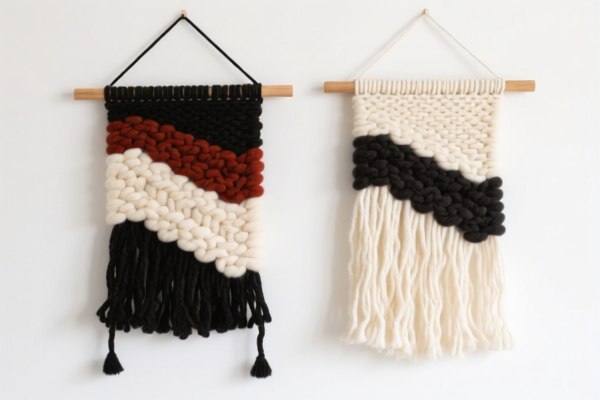
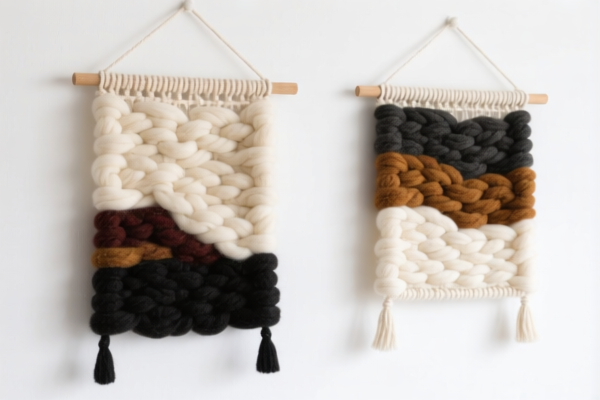
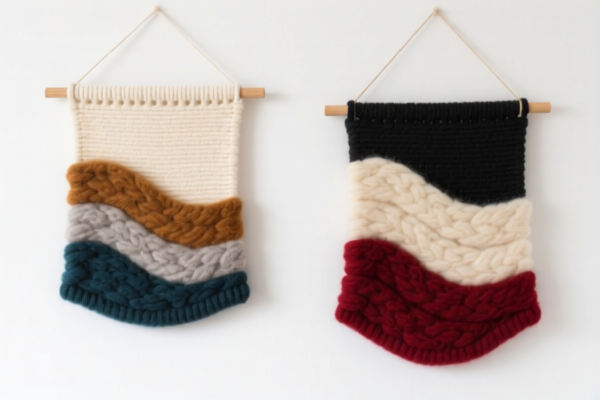
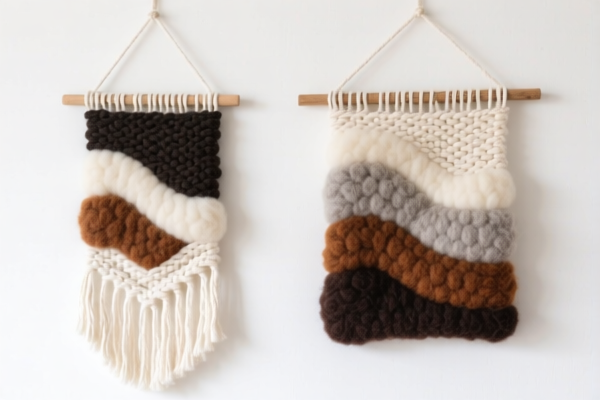
AI Analysis
🏠 Curtains & Drapes (Woven/Knitted vs. Non-Knitted/Crocheted)
🌐 HS Code Reference & Customs Clearance Guide | 2026 Latest Tariff Analysis | Professional Clearance Strategy
📌 I. Product Definition & Classification: Do You Truly Understand "Curtains"?
Curtains and drapes are essential interior design elements, serving both aesthetic and functional purposes (light control, privacy, insulation). In international trade, the classification is strictly determined by the material composition and the manufacturing method (knitted/crocheted vs. woven/other).
⚠️ Key Distinction Point:
- The user input specifies "Non knitted or Crocheted". This excludes heading 6303.90 (Knitted or Crocheted).
- Therefore, the goods must fall under Chapter 63, specifically heading 6303, but classified by material (Cotton vs. Synthetic Fibers).
- Note: "Curtains (including drapes)" and "Window Valances" are explicitly grouped together in the HS Nomenclature under this heading.
📦 II. HS Code Classification Details (Based on Provided Data)
According to the provided <DATA>, there are two primary classifications for Non-Knitted/Crocheted curtains, depending on the fabric material:
| HS Code | Product Description | Material Type | Scope |
|---|---|---|---|
6303.91.00.10 |
Curtains (including drapes) and interior blinds; curtain or bed valances: Other: Of cotton | Cotton | Window curtains, drapes, and window valances |
6303.92.20.50 |
Curtains (including drapes) and interior blinds; curtain or bed valances: Other: Of synthetic fibers | Synthetic Fibers (e.g., Polyester, Nylon) | Other other: Other (General synthetic curtains/blinds) |
🔍 Critical Analysis:
- Why not 6303.90? Heading 6303.90 is for "Other" items that are Knitted or Crocheted. Since your product is Non-Knitted/Crocheted (typically Woven), you must look at the subheadings for specific materials: Cotton (91) or Synthetic Fibers (92).
- Valances Included: Both HS codes explicitly cover "Window Valances." If you are importing a set (curtains + valances), they are classified together under these codes.
- Blinds Included: The description also mentions "Interior Blinds." However, most simple fabric blinds follow similar material-based classification unless they are complex mechanical devices (which might fall elsewhere, but fabric blinds often align with 6303.9x based on material).
💰 III. 2026 Latest Tariff Rate Breakdown
✅ Applicable Country: United States (US)
✅ Origin: China (CN) (Assumed based on typical trade context, but rates are low here)
✅ Effective Time: Current
✅ Total Tax: 0.0%
🎯 1. 6303.91.00.10 —— Cotton Window Curtains & Valances
| Item | Content |
|---|---|
| Base Tariff | 0.0% |
| Additional Tariff (Section 301/IEEPA) | 0.0% |
| Total Effective Rate | 0.0% |
| Tax Calculation | CIF Value × 0% = $0 |
| De Minimis Eligibility | ✅ Yes (Low risk, but always declare accurately) |
| Legal Basis Path | HTSUS:6303.91.00.10 |
📌 Explanation:
- Cotton curtains are generally not subject to the high Section 301 tariffs that affect many Chinese manufactured goods (like electronics, steel, or certain textiles).
- The rate is 0%, making this one of the most tariff-friendly textile categories for US imports from most countries, including China.
🎯 2. 6303.92.20.50 —— Synthetic Fiber Curtains & Blinds
| Item | Content |
|---|---|
| Base Tariff | 0.0% |
| Additional Tariff (Section 301/IEEPA) | 0.0% |
| Total Effective Rate | 0.0% |
| Tax Calculation | CIF Value × 0% = $0 |
| De Minimis Eligibility | ✅ Yes |
| Legal Basis Path | HTSUS:6303.92.20.50 |
📌 Explanation:
- Synthetic fiber curtains (typically Polyester) are also classified at 0%.
- While some synthetic textiles face tariffs, finished home furnishings like curtains often benefit from lower or zero duties to encourage import.
- No surcharges apply under current data provided.
🛠️ IV. Customs Clearance Practical Advice (Real-World Pitfall Guide)
✅ 1. Required Documentation Checklist
| Document | Must Provide | Explanation |
|---|---|---|
| ✅ Commercial Invoice | ✔️ | Must clearly state: "Window Curtains," "Fabric: Cotton/Polyester," "HS Code: 6303.91.00.10 / 6303.92.20.50" |
| ✅ Packing List | ✔️ | Detail number of pieces, sets, and gross/net weight. |
| ✅ Product Photos | ✔️ | Show fabric texture, lining (if any), and stitching method to prove it is woven/non-knitted. |
| ✅ Fiber Content Label | ✔️ | Critical: Must label % of Cotton vs. Synthetic. Mislabeling can lead to penalty. |
| ✅ Care Instructions | ✔️ | Often required for textile imports to verify consumer product safety standards. |
✅ 2. Declaration Tips (Key Mantra)
🔥 "Material First, No Knitting, Declare Valances Too!"
| Scenario | Correct Declaration | Wrong Practice |
|---|---|---|
| Polyester Curtains | 6303.92.20.50 |
Misdeclare as Cotton → Audit risk |
| Cotton Curtains | 6303.91.00.10 |
Misdeclare as Synthetic → Minor error, but consistency matters |
| Knitted Curtains | Do NOT use above codes | Must use 6303.90.xx.xx (Knitted/Crocheted). Using 6303.91/92 for knitted items is Class Error. |
| Sets (Curtain + Rod) | Declare Curtain only under 6303, Rod separately (8302) | Combine into one line → Improper valuation |
✅ 3. Special Considerations
| Situation | Handling Advice |
|---|---|
| Mixed Materials (e.g., 80% Polyester, 20% Cotton) | Classified as Synthetic Fibers (6303.92...) because Synthetic > Cotton by weight. |
| Lined Curtains | If the lining is different fabric, the classification follows the outer fabric. If lining is same material, still follows main fabric. |
| Embroidered/Lace Details | Does not change HS Code if it is merely decorative. If lace is the main character, still 6303 if curtains. |
| Valances | Explicitly included in the HS description. Do not separate them unless they are significantly different products. |
🌍 V. Global Market Comparison (2026 Latest)
| Country/Region | Recommended HS Code | Tariff Rate | Certification/Notes |
|---|---|---|---|
| 🇺🇸 USA | 6303.91.00.10 (Cotton)6303.92.20.50 (Synthetic) |
0.0% | No special certificates usually, but ensure FTC labeling (Fiber content). |
| 🇨🇳 China (Import into China) | Similar HS Codes | ~5-9% | Check specific Chinese tariff schedule for import duties. |
| 🇪🇺 EU | 6303.91 (Cotton) 6303.92 (Synthetic) |
0-4% | CE marking not needed, but REACH compliance for chemicals in dyeing is required. |
| 🇦🇺 Australia | 6303.91/92 | 0-5% | Consumer guarantee standards apply. |
| 🇬🇧 UK | 6303.91/92 | 0-4% | Post-Brexit UK Tariffs, generally low for textiles. |
📌 Conclusion:
- USA offers 0% duty for these specific HS codes, making it a highly competitive market for curtain exporters.
- No Section 301 tariffs apply, reducing cost significantly compared to other Chinese exports.
- Compliance Focus: The main risk is misclassification (e.g., calling knitted curtains "woven") or incorrect fiber labeling, not tariff rates.
📌 VI. Common Mistakes & Pitfall Guide (Blood-Lesson Guide)
❌ Mistake 1: Declaring Knitted curtains under 6303.91 or 6303.92
👉 Consequence: Class Error. Knitted items belong to 6303.90. This can lead to customs audits, delays, or penalties for inaccurate classification.
✅ Fix: Verify if the fabric is woven (non-knitted) or knitted/crocheted.
❌ Mistake 2: Ignoring the Lining
👉 Consequence: If the lining is heavy and expensive, it might affect value but not HS code. However, if the lining is a different fiber, it must be declared correctly if it changes the character.
✅ Fix: Declare based on the outer fabric, but list all components in the invoice.
❌ Mistake 3: Missing FTC Labeling for US Imports
👉 Consequence: Not a tariff issue, but a regulatory seizure. The US Federal Trade Commission requires clear fiber content labels.
✅ Fix: Ensure each product has a permanent label stating "100% Polyester" or "60% Cotton, 40% Polyester".
❌ Mistake 4: Separating Valances from Curtains
👉 Consequence: If sold as a set, they should ideally be declared together or consistently. Separating them unnecessarily complicates customs clearance.
✅ Fix: Declare as "Curtains including Valances".
🎯 VII. Conclusion: Professional Declaration, Zero Duty, Smooth Clearance!
🎯 Remember the Mantra:
🔹 "Non-Knitted? Check Material. Cotton = 6303.91. Synthetic = 6303.92. Rate = 0%. Label Correctly!"
🔹 "HS Code is Simple, Duty is Free, But Mislabeling is Fee!"
📌 Pro Tip:
- If your curtains are Made in Vietnam or other ASEAN countries, they still enjoy 0% tariff under this HS code, and potentially lower logistical costs depending on your supply chain.
- For US Imports, ensure your FTC Fiber Content Labels are compliant. This is the #1 reason for textile holds at US ports, not the HS code or duty.
📣 Immediate Action:
📞 Confirm fabric type (Woven vs. Knitted).
📞 Verify fiber content percentages.
🚀 Ship with confidence: 0% Duty, High Efficiency!
✨ Professional Clearance Starts with Accurate Classification!
💼 Your Product: 0% Tax. Your Process: Hassle-Free.
Customer Reviews
About HS Code Classification
The Harmonized System (HS) is an internationally standardized nomenclature developed by the World Customs Organization (WCO) to classify traded products. Over 200 countries use the HS system as the basis for customs tariffs, trade statistics, and import/export regulations.
Each HS code follows a hierarchical structure:
- Chapter (2 digits) — Broad category of goods (e.g., Chapter 84: Machinery and Mechanical Appliances)
- Heading (4 digits) — More specific grouping within the chapter
- Subheading (6 digits) — Internationally standardized breakdown, used by all WCO member countries
- National subdivisions (8-10 digits) — Country-specific extensions for further classification, such as US HTSUS 10-digit codes
Correct HS code classification is essential for smooth customs clearance, accurate duty payment, and compliance with trade regulations. Misclassification can lead to customs delays, overpayment of duties, or penalties.
When importing from CN to US, the applicable tariff rates may include:
- Most-Favored-Nation (MFN) rate — The standard duty rate applied to WTO members
- General rate — Applied to countries without trade agreements
- Trade remedy duties — Additional tariffs such as Section 301 (anti-dumping), Section 232 (national security), or countervailing duties
The information provided on this page is for reference purposes only. For official classification, please consult with your local customs authority or a licensed customs broker.