Cushion Cover
CN → US| HS Code | Tariff Rate | Origin | Destination | Doc |
|---|---|---|---|---|
| 6307909884 | 24.5% | CN | US | Official Doc |
| 6304994000 | 21.3% | CN | US | Official Doc |
| 6304910170 | 23.3% | CN | US | Official Doc |
| 6307908945 | 17.0% | CN | US | Official Doc |
| 9404902090 | 23.5% | CN | US | Official Doc |
Product Images
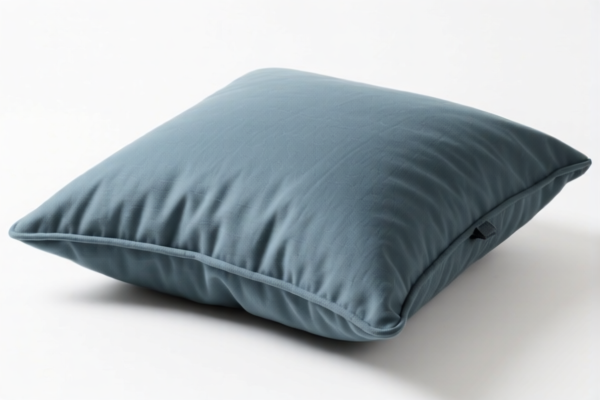


AI Analysis
🛋️ Cushion Cover (Textile & Home Furnishings)
🌐 HS Code Reference & Customs Clearance Guide | 2026 Latest Tariff Analysis | Professional Clearance Strategy
📌 I. Product Definition & Classification: Do You Really Understand "Cushion Covers"?
A "Cushion Cover" is a textile accessory used to encase pillows, cushions, or inserts, primarily for decoration or protection. In international trade, its classification heavily depends on its material composition, manufacturing method (knitted vs. woven), and end-use purpose.
Key Classification Ambiguity: - Textile Articles (Chapter 63): If made of cotton, wool, synthetic fibers, etc., and classified as "other made-up textile articles" or specific "pillowcases/cushion covers." - Furniture Accessories (Chapter 94): If viewed strictly as part of a bedding/furniture set, though less common for standalone covers.
⚠️ Critical Distinction Point:
- If the product is a simple textile cover without complex electronic or structural elements → It generally falls under Chapter 63 (Textiles).
- The specific HS Code varies significantly based on whether it is considered a "making up of textile fabrics" (e.g., 6307.90) or a specific "pillowcase/cushion cover" item (e.g., 6304.99/6304.91), and crucially, whether it contains wool/animal hair or is made of cotton/synthetic.
📦 II. HS Code Classification Details (2026 Latest Tariff Authority Comparison)
| HS Code | Product Description | Application Scenario | Material/Feature Inference |
|---|---|---|---|
6307.90.98.84 |
Other made-up textile articles, including dress patterns | General textile covers, decorative pillows, non-specific fabric articles | ✅ Made-up textile article (General fallback for unspecified textile goods) |
6304.99.40.00 |
Other furnishing articles, of wool or fine animal hair | Wool or animal hair cushion covers | ✅ Wool/Fine Animal Hair |
6304.91.01.70 |
Knitted or crocheted furnishing articles, other | Knitted/crocheted cushion covers | ✅ Knitted/Crocheted |
6307.90.89.45 |
Other made-up textile articles, of cotton or other fibers | Cotton-made cushion covers | ✅ Cotton/Other Fabric |
9404.90.20.90 |
Parts of articles of heading 9401 or 9403 | Cushions with filling (considered part of bedding/furniture) | ✅ Contains Filling (Bedding/Furniture accessory) |
🔍 Key Reminder:
- If the cushion cover is plain textile without specific material declaration, customs may default to6307.90.98.84(General Textile).
- If it is explicitly wool, it jumps to6304.99.40.00.
- If it is knitted, it falls under6304.91.01.70.
- If it is cotton, it may be classified under6307.90.89.45or similar cotton-specific textile codes.
- Warning: If the item includes filling (down, foam, fiber), it may be reclassified as a "Cushion" rather than a "Cover," shifting it to Chapter 94 (Bedding/Furniture) under9404.90.20.90.
💰 III. 2026 Latest Tariff Rate Breakdown (Including Surcharges, Policy Add-ons)
✅ Applicable Country: United States (US)
✅ Origin: China (CN)
✅ Effective Time: 2025–2026 (Current US Trade Policy)
🎯 1. 6307.90.98.84 —— Other Made-up Textile Articles (General Textile Fallback)
| Item | Content |
|---|---|
| Base Tariff | 7.0% |
| Section 301 Surtax | +7.5% |
| Section 122 Tariff | +10% |
| Total Tax Rate | 24.5% |
| Tax Calculation | CIF Value × 24.5% |
| De Minimis Exemption | ❌ Not Eligible (Subject to full duty + surtaxes) |
| Legal Basis Path | Base: 6307 → 301: 7.5% → 122: 10% |
📌 Explanation:
- This is a high-tariff general category for unspecified textile made-ups.
- The 10% Section 122 tariff is a significant recent add-on for certain Chinese textile imports.
- Total 24.5% makes this less cost-effective than cotton-specific or wool-specific codes if applicable.
🎯 2. 6304.99.40.00 —— Furnishing Articles of Wool or Fine Animal Hair
| Item | Content |
|---|---|
| Base Tariff | 3.8% |
| Section 301 Surtax | +7.5% |
| Section 122 Tariff | +10% |
| Total Tax Rate | 21.3% |
| Tax Calculation | CIF Value × 21.3% |
| De Minimis Exemption | ❌ Not Eligible |
| Legal Basis Path | Base: 6304 → 301: 7.5% → 122: 10% |
📌 Note:
- Wool products often enjoy lower base tariffs (3.8% vs 7.0%), resulting in a lower total rate (21.3%).
- If your cushion covers are wool, this is a cost-saving classification.
🎯 3. 6304.91.01.70 —— Knitted or Crocheted Furnishing Articles
| Item | Content |
|---|---|
| Base Tariff | 5.8% |
| Section 301 Surtax | +7.5% |
| Section 122 Tariff | +10% |
| Total Tax Rate | 23.3% |
| Tax Calculation | CIF Value × 23.3% |
| De Minimis Exemption | ❌ Not Eligible |
| Legal Basis Path | Base: 6304.91 → 301: 7.5% → 122: 10% |
📌 Note:
- Knitted articles have a mid-range base tariff (5.8%).
- Total rate is 23.3%, slightly lower than the general textile fallback.
🎯 4. 6307.90.89.45 —— Other Made-up Textile Articles (Cotton/Other)
| Item | Content |
|---|---|
| Base Tariff | 7.0% |
| Section 301 Surtax | 0.0% |
| Section 122 Tariff | +10% |
| Total Tax Rate | 17.0% |
| Tax Calculation | CIF Value × 17.0% |
| De Minimis Exemption | ❌ Not Eligible |
| Legal Basis Path | Base: 6307 → 301: 0% → 122: 10% |
📌 Critical Advantage:
- This is the LOWEST tax rate among the textile options!
- Section 301 Surtax is 0% for this specific subheading (likely due to specific cotton/other fabric exemptions or classification nuances).
- Total Rate: 17.0% (Base 7% + Section 122 10%).
- Recommendation: If the cover is cotton or a fabric type qualifying for this code, use this HS Code.
🎯 5. 9404.90.20.90 —— Parts of Bedding/Furniture (Cushions with Filling)
| Item | Content |
|---|---|
| Base Tariff | 6.0% |
| Section 301 Surtax | +7.5% |
| Section 122 Tariff | +10% |
| Total Tax Rate | 23.5% |
| Tax Calculation | CIF Value × 23.5% |
| De Minimis Exemption | ❌ Not Eligible |
| Legal Basis Path | Base: 9404 → 301: 7.5% → 122: 10% |
📌 Warning:
- If your product is a cushion with filling (not just a cover), it falls here.
- Tax Rate: 23.5%, which is higher than the cotton textile option (17.0%).
- Do not use this for empty covers; it may lead to classification disputes if declared incorrectly.
🛠️ IV. Customs Clearance Practical Advice (Battle-Tested Pitfall Guide)
✅ 1. Required Documentation Checklist (Non-Negotiable)
| Document | Mandatory | Explanation |
|---|---|---|
| ✅ Product Specification Sheet | ✔️ | Must specify material (Cotton, Wool, Polyester, etc.) and construction (Knitted/Woven). |
| ✅ Material Composition Label | ✔️ | Photo of the care label showing % fiber content (e.g., 100% Cotton). |
| ✅ Product Photos | ✔️ | Clear images showing the item is a cover only (no filling) to justify Chapter 63. |
| ✅ Commercial Invoice | ✔️ | Description must match HS Code rationale (e.g., "Cotton Cushion Cover"). |
| ✅ Packing List | ✔️ | Weight and dimensions; ensure no filling is included in weight if declared as empty cover. |
✅ 2. Declaration Tips (Key Mnemonics)
🔥 "Material First, No Filling, Cotton Code Wins!"
| Scenario | Correct Declaration | Wrong Practice |
|---|---|---|
| 100% Cotton Cover | 6307.90.89.45 (17.0% Tax) |
Declaring as "Wool" or "General Textile" → Higher Tax |
| Wool Cover | 6304.99.40.00 (21.3% Tax) |
Declaring as "General Textile" → Higher Tax |
| Knitted Cover | 6304.91.01.70 (23.3% Tax) |
Declaring as "Woven" → Potential Audit |
| Cushion WITH Filling | 9404.90.20.90 (23.5% Tax) |
Declaring as "Cover Only" → Smuggling/Undervaluation Risk |
| Mixed Materials | Use "General Textile" (6307.90.98.84) |
Misstating material % → Penalties |
✅ 3. Special Case Handling
| Scenario | Handling Advice |
|---|---|
| OEM Printed Cushion Covers | Ensure prints do not change classification; still Chapter 63. |
| Linen vs. Cotton | If "Linen" (flax), it may fall under "Other Textiles" → Use 6307.90.89.45 if applicable for lowest tax. |
| Sample Shipments | Even samples are subject to these tariffs; do not claim "No Value" falsely. |
| Returns/Defects | If returning defective goods, ensure original HS Code is retained for duty drawback claims. |
🌍 V. Global Market Comparison (2026 Latest)
| Country/Region | Recommended HS Code | Tariff (China Origin) | Certification | Remarks |
|---|---|---|---|---|
| 🇺🇸 USA | 6307.90.89.45 (if Cotton) |
17.0% (Lowest) | No special cert | High Section 122 + 301 impact |
| 🇪🇺 EU | 6307.90 | ~12% (MFN) | No specific add-ons | No Section 301/122 |
| 🇨🇦 Canada | 6307.90 | ~12% (MFN) | No specific add-ons | Lower than US |
| 🇬🇧 UK | 6307.90 | ~12% (MFN) | No specific add-ons | Post-Brexit rules |
| 🇦🇺 Australia | 6307.90 | ~5% (MFN) | No specific add-ons | Lower base tariff |
📌 Conclusion:
- The US market is uniquely punitive due to Section 301 and Section 122 tariffs.
- Maximize tax savings by accurately classifying Cotton covers under6307.90.89.45(17.0%) instead of the general fallback (24.5%).
- Wool and Knitted options are mid-range.
- Avoid Chapter 94 unless there is actual filling.
📌 VI. Common Errors & Pitfall Guide (Blood-Teaching Lessons)
❌ Error 1: Declaring a cotton cover as "General Textile" (6307.90.98.84)
👉 Consequence: Pay 24.5% instead of 17.0% → Extra 7.5% tax loss!
❌ Error 2: Declaring a filled cushion as a "Cover Only" (6307...)
👉 Consequence: Customs inspection reveals filling → Reclassification to 9404 (23.5%) + Penalties + Delays!
❌ Error 3: Not specifying material on the invoice
👉 Consequence: Customs assumes "General Textile" → Highest tax rate (24.5%).
❌ Error 4: Using "Pillowcase" terminology for Cushion Covers
👉 Consequence: May trigger different subheadings (e.g., 6302.xx) → Check specific country rules.
✅ Correct Practice:
"Cotton Cushion Cover, No Filling, Decorative, 100% Cotton, Model XYZ, For Home Use"
🎯 VII. Conclusion: Precision Classification, Savings Achieved!
🎯 Remember the Mnemonic:
🔹 "Cotton is King, 17% is the Winning Ring!"
🔹 "Wool is 21.3%, Knitted 23.3%, General 24.5% - Don't Pay More!"
🔹 "No Filling = Textile (Ch 63), Filling = Furniture (Ch 94)."
📌 Pro Tip:
If your supplier can provide a material breakdown (e.g., 80% Cotton, 20% Polyester), you can often still qualify for the Cotton-based HS Code (6307.90.89.45) if cotton is the predominant material.
Recommendation: Always request a Material Composition Certificate from the manufacturer to support the low-tax HS Code.
📣 Immediate Action:
📞 Verify Material % with Supplier → Select
6307.90.89.45if Cotton → Declare "Cotton Cushion Cover, No Filling"
🚀 Save 7.5% in Tariffs Today!
✨ Professional Clearance Starts with Accurate Classification!
💼 Every Percentage Point Counts in Cross-Border Trade!
Customer Reviews
About HS Code Classification
The Harmonized System (HS) is an internationally standardized nomenclature developed by the World Customs Organization (WCO) to classify traded products. Over 200 countries use the HS system as the basis for customs tariffs, trade statistics, and import/export regulations.
Each HS code follows a hierarchical structure:
- Chapter (2 digits) — Broad category of goods (e.g., Chapter 84: Machinery and Mechanical Appliances)
- Heading (4 digits) — More specific grouping within the chapter
- Subheading (6 digits) — Internationally standardized breakdown, used by all WCO member countries
- National subdivisions (8-10 digits) — Country-specific extensions for further classification, such as US HTSUS 10-digit codes
Correct HS code classification is essential for smooth customs clearance, accurate duty payment, and compliance with trade regulations. Misclassification can lead to customs delays, overpayment of duties, or penalties.
When importing from CN to US, the applicable tariff rates may include:
- Most-Favored-Nation (MFN) rate — The standard duty rate applied to WTO members
- General rate — Applied to countries without trade agreements
- Trade remedy duties — Additional tariffs such as Section 301 (anti-dumping), Section 232 (national security), or countervailing duties
The information provided on this page is for reference purposes only. For official classification, please consult with your local customs authority or a licensed customs broker.