Cushion Cover and Throw Blanket
CN → US| HS Code | Tariff Rate | Origin | Destination | Doc |
|---|---|---|---|---|
| 9404909670 | 17.3% | CN | US | Official Doc |
| 6304910170 | 23.3% | CN | US | Official Doc |
| 9404909623 | 17.3% | CN | US | Official Doc |
| 6304920000 | 23.8% | CN | US | Official Doc |
| 6304920000 | 23.8% | CN | US | Official Doc |
Product Images
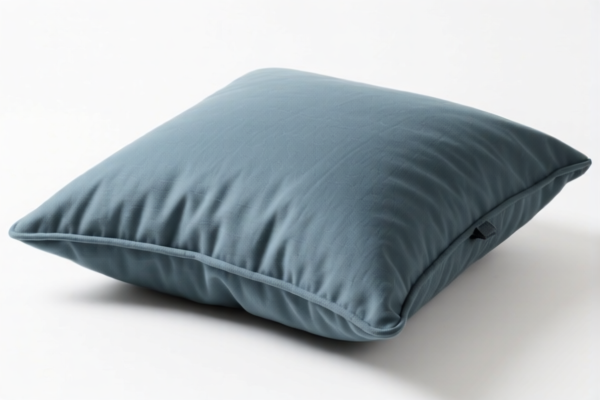


AI Analysis
🛋️ Cushion Covers & Throw Blankets (Home Textiles)
🌐 HS Code Reference & Customs Clearance Guide | 2026 Latest Tariff Analysis | Professional Entry Strategy
📌 I. Product Definition & Classification: Do You Really Understand “Cushion Covers & Throws”?
Cushion covers and throw blankets fall under the broad category of Bedding and Similar Furnishing Articles. In international trade, their classification hinges heavily on material composition (knitted vs. woven) and intended use (bedding vs. furniture accessory).
Key Distinctions: * Bedding Category (Chapter 94): If primarily used as part of a bed ensemble (e.g., decorative bed pillows), they often fall under Heading 94.04. * Furnishing Textile Category (Chapter 63): If used as general home furnishings (e.g., sofa cushions, decorative throws), they typically fall under Heading 63.04 ("Furnishing articles").
⚠️ Critical Differentiator:
- Knitted/Crocheted? → Look at 6304.91 or 6304.99.
- Woven (Non-knitted)? → Look at 6304.92 (if cotton) or 6304.99 (if other materials).
- Bedding Specific? → Look at 9404.90.
📦 II. HS Code Classification Matrix (2026 Latest Tariff Data)
Based on the provided data, here are the valid HS Codes and their logical justifications:
| HS Code | Summary Logic | Material/Use Inference | Tax Rate (Total) |
|---|---|---|---|
| 9404.90.96.70 | Bedding Category: Cushion covers/throws inferred as textile fibers for bedding. | Other textile materials (Non-cotton/non-silk specific). | 17.3% |
| 6304.91.01.70 | Furnishing/Bedding Hybrid: Matches form/usage; inferred as Knitted/Crocheted. | Knitted or Crocheted Furnishing Articles. | 23.3% |
| 9404.90.96.23 | Bedding Category: Fits "Other Textile Materials" for bedding articles. | Other textile materials. | 17.3% |
| 6304.92.00.00 | Furnishing/Woven: Inferred as Cotton and Non-Knitted/Crocheted. | Woven Cotton Furnishing Articles (Non-bedding specific). | 23.8% |
| 6304.92.00.00 | Furnishing/Woven: Fabric cushion covers; non-knitted cotton furniture items. | Woven Cotton Furniture Accessories. | 23.8% |
🔍 Key Insight:
- Chapter 94 (9404.90) generally attracts a lower base duty (7.3%) but is subject to additional Section 122 tariffs.
- Chapter 63 (6304.92/91) has higher base duties (5.8%–6.3%) but is classified as "Furnishing Articles."
- Section 122 Tariff (10%) applies to ALL listed codes above, significantly impacting the final cost.
💰 III. 2026 Latest Tariff Rate Breakdown (Detailed Tax Clauses)
✅ Applicable Market: USA (US)
✅ Origin: China (CN) (Implied by Section 122 reference)
✅ Key Add-on: Section 122 Tariff (10%) applies uniformly to these textile/home furnishing items.
🎯 1. 9404.90.96.70 & 9404.90.96.23 —— Bedding Articles (Other Textile Materials)
| Item | Detail |
|---|---|
| Base Duty | 7.3% (Ad Valorem) |
| Add-on Tariff (122) | +10.0% |
| Section 301/Other | 0.0% |
| Total Effective Rate | 17.3% |
| Tax Calculation | CIF Value × 17.3% |
| Legal Path | HTS:9404.90.96.70 → FOOTNOTE:SECTION_122 |
📌 Explanation:
- These codes classify items primarily as bedding supplements.
- The Section 122 Tariff (10%) is applied on top of the base duty.
- No Section 301 tariff is listed for these specific sub-headings in the data, making them the most cost-effective option among the choices.
🎯 2. 6304.91.01.70 —— Knitted/Crocheted Furnishing Articles
| Item | Detail |
|---|---|
| Base Duty | 5.8% (Ad Valorem) |
| Add-on Tariff (122) | +10.0% |
| Section 301/Other | +7.5% |
| Total Effective Rate | 23.3% |
| Tax Calculation | CIF Value × 23.3% |
| Legal Path | HTS:6304.91.01.70 → FOOTNOTE:SECTION_122 + FOOTNOTE:SECTION_301 |
📌 Explanation:
- This code applies if the item is knitted or crocheted (e.g., acrylic throw blankets, knitted pillow covers).
- Higher total tax (23.3%) due to the inclusion of a 7.5% additional duty (likely Section 301 or specific trade remedy) on top of the 10% Section 122 tariff.
🎯 3. 6304.92.00.00 —— Woven Cotton Furnishing Articles
| Item | Detail |
|---|---|
| Base Duty | 6.3% (Ad Valorem) |
| Add-on Tariff (122) | +10.0% |
| Section 301/Other | +7.5% |
| Total Effective Rate | 23.8% |
| Tax Calculation | CIF Value × 23.8% |
| Legal Path | HTS:6304.92.00.00 → FOOTNOTE:SECTION_122 + FOOTNOTE:SECTION_301 |
📌 Explanation:
- This code applies if the item is woven (non-knitted) and made of cotton.
- Highest tax rate (23.8%) among the options.
- Applies to both cushion covers and throw blankets if they are woven cotton furnishing articles.
🛠️ IV. Customs Clearance Practical Advice (Pitfall Avoidance)
✅ 1. Documentation Checklist (Essential)
| Document | Mandatory? | Description |
|---|---|---|
| ✅ Product Description | ✔️ | Must specify "Cushion Cover" or "Throw Blanket," material (e.g., 100% Cotton, Polyester), and construction (Knitted vs. Woven). |
| ✅ Material Composition | ✔️ | Critical for distinguishing between 6304.91 (Knitted) and 6304.92 (Woven/Cotton). |
| ✅ Photos | ✔️ | Show texture (knit vs. weave) and usage context (on bed vs. on sofa). |
| ✅ Commercial Invoice | ✔️ | Clearly state HS Code, Country of Origin, and Unit Price. |
| ✅ Packing List | ✔️ | Confirm quantity and packaging details. |
✅ 2. Declaration Strategy
🔥 "Material Defines Code, Usage Defines Chapter, Tariff Defines Cost!"
| Scenario | Recommended HS Code | Why? |
|---|---|---|
| Bedding Pillow Covers (Textile, Not Cotton/Silk Specific) | 9404.90.96.70 / 9404.90.96.23 |
Falls under Chapter 94 (Bedding); lower base duty (7.3%). |
| Knitted Throw Blanket | 6304.91.01.70 |
Material is knitted; falls under Chapter 63 (Furnishings). |
| Woven Cotton Cushion Cover | 6304.92.00.00 |
Material is woven cotton; falls under Chapter 63. |
⚠️ Warning:
- Do NOT mix knitting and weaving in one declaration line.
- If the item is partially cotton, partially polyester, determine the principal material per GRI 3(b).
- Section 122 Tariff (10%) is unavoidable for these goods; factor it into your pricing.
✅ 3. Special Considerations
| Issue | Solution |
|---|---|
| Ambiguous Use | If a cushion cover can be used for both bed and sofa, prioritize Chapter 94 if it’s clearly bedding-related to save tax. |
| Mixed Materials | If the item contains >50% cotton and is woven, 6304.92.00.00 is likely correct. If <50% cotton, check other textile headings. |
| Section 122 Impact | This 10% tariff is significant. Ensure your FOB/CIF price accounts for this extra cost. |
🌍 V. Global Market Comparison (2026 Overview)
| Country | Recommended HS Code | Approx. Total Tariff | Notes |
|---|---|---|---|
| 🇺🇸 USA | 9404.90.96.70 |
17.3% | Lowest tax among options; Section 122 applies. |
| 🇪🇺 EU | 6304.99 |
Varies (0-12%) | EU has different sub-headings; no Section 122 equivalent. |
| 🇨🇳 China | 6304.92 |
5-10% | Import duties are lower; focus on VAT. |
| 🇬🇧 UK | 6304.93 |
Varies | Post-Brexit rules apply; check UK Tariff. |
📌 Conclusion:
- USA Market: Prioritize9404.90.96.70or9404.90.96.23for lowest duty (17.3%).
- Avoid6304.92.00.00if possible due to the highest total rate (23.8%).
- Documentation must prove knitting vs. weaving to avoid misclassification penalties.
📌 VI. Common Mistakes & Pitfalls
❌ Mistake 1: Declaring all cushion covers as 6304.92.00.00 (Woven Cotton) regardless of material.
👉 Consequence: Overpayment of tax if the item is knitted or non-cotton.
❌ Mistake 2: Ignoring Section 122 (10%) in cost calculations.
👉 Consequence: Profit margin erosion; unexpected customs payments.
❌ Mistake 3: Failing to specify "Knitted" vs. "Woven" in the product description.
👉 Consequence: Customs may reclassify to the highest applicable rate or demand additional inspection.
✅ Correct Practice:
"Cushion Cover, Polyester, Woven, 18x18 inch, Decorative, Made in China"
→ Clearly leads to correct HS Code and accurate tax calculation.
🎯 VII. Final Recommendations
🎯 Key Takeaway:
🔹 "Check Material First, Then Construction, Then Use."
🔹 "10% Section 122 is Universal – Price It In!"
🔹 "Chapter 94 is Cheaper Than Chapter 63 for Bedding Items."
📌 Action Steps:
1. Identify Material: Is it Cotton? Polyester? Knitted? Woven?
2. Select HS Code: Use the matrix above.
3. Calculate Landed Cost: Include Base Duty + Section 122 (10%).
4. Prepare Docs: Ensure description matches the chosen HS Code logic.
✨ Professional Clearance Starts with Precise Classification!
💼 Maximize Profit by Minimizing Tariff Misclassification!
Customer Reviews
About HS Code Classification
The Harmonized System (HS) is an internationally standardized nomenclature developed by the World Customs Organization (WCO) to classify traded products. Over 200 countries use the HS system as the basis for customs tariffs, trade statistics, and import/export regulations.
Each HS code follows a hierarchical structure:
- Chapter (2 digits) — Broad category of goods (e.g., Chapter 84: Machinery and Mechanical Appliances)
- Heading (4 digits) — More specific grouping within the chapter
- Subheading (6 digits) — Internationally standardized breakdown, used by all WCO member countries
- National subdivisions (8-10 digits) — Country-specific extensions for further classification, such as US HTSUS 10-digit codes
Correct HS code classification is essential for smooth customs clearance, accurate duty payment, and compliance with trade regulations. Misclassification can lead to customs delays, overpayment of duties, or penalties.
When importing from CN to US, the applicable tariff rates may include:
- Most-Favored-Nation (MFN) rate — The standard duty rate applied to WTO members
- General rate — Applied to countries without trade agreements
- Trade remedy duties — Additional tariffs such as Section 301 (anti-dumping), Section 232 (national security), or countervailing duties
The information provided on this page is for reference purposes only. For official classification, please consult with your local customs authority or a licensed customs broker.