Cushion Ring
CN → US| HS Code | Tariff Rate | Origin | Destination | Doc |
|---|---|---|---|---|
| 7318220000 | 85.0% | CN | US | Official Doc |
| 8484900000 | 37.5% | CN | US | Official Doc |
| 7415338050 | 88.0% | CN | US | Official Doc |
| 8484100000 | 37.5% | CN | US | Official Doc |
| 7415210000 | 88.0% | CN | US | Official Doc |
Product Images

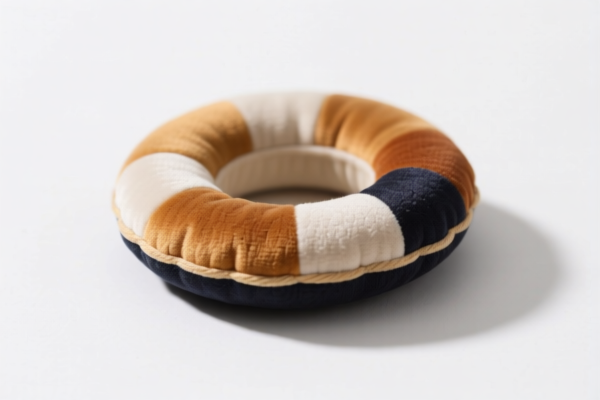


AI Analysis
🖤 Cushion Rings (Metal Washers/Seals) | Precision Import Guide
🌐 HS Code Reference & Customs Clearance Guide | 2024/2025 Latest Tariff Analysis | Professional Logistics Strategy
📌 1. Product Definition: What Exactly is a "Cushion Ring"?
In international trade, the term "Cushion Ring" is often a commercial name for Metal Washers, Gaskets, or Sealing Elements. However, because they serve different functions and are made of different materials, they fall into entirely different HS Code categories with vastly different tax implications.
Based on the provided data, these products are classified into two main scenarios: 1. Iron/Steel Fasteners: Used as spacing or locking elements (HS 7318). 2. Composite Gaskets/Seals: Used for sealing joints in pipes or machinery (HS 8484). 3. Copper Components: Used in electrical or plumbing applications (HS 7415).
⚠️ Critical Distinction:
- If the ring is a simple iron/steel washer → HS 7318.22.00.00
- If the ring is a composite gasket (metal + filler) → HS 8484.90.00.00 or 8484.10.00.00
- If the ring is copper or copper-headed → HS 7415.33.80.50 or 7415.21.00.00
📦 2. HS Code Classification Details (2024/2025 Latest Tariff Reference)
| HS Code | Product Description | Material/Structure | Key Identifier |
|---|---|---|---|
7318.22.00.00 |
Metal Washers (Iron/Steel) | Iron or Steel | Simple metallic ring, used with bolts/nuts |
8484.90.00.00 |
Parts of Gasket Sets | Metal Sheet Composite | Composite gasket, similar to joint seals |
7415.33.80.50 |
Copper Washers | Copper | Copper material, threaded accessory |
8484.10.00.00 |
Gaskets of Metal Sheet | Metal Thin Plate | Gasket formed from metal thin plates/laminates |
7415.21.00.00 |
Copper Washers | Copper or Copper-head | Copper or iron-steel head with copper |
🔍 Key Clarification:
- 7318 vs 8484: The key is whether it is a fastener accessory (7318) or a sealing component (8484).
- 7318 vs 7415: The key is the material (Iron/Steel vs. Copper).
- 8484.90 vs 8484.10: 8484.10 is for specific metal sheet gaskets, while 8484.90 is for other parts of gasket sets or similar joints.
💰 3. 2024/2025 Latest Tariff Rate Breakdown (Including Surcharges)
✅ Applicable Country: United States (US)
✅ Origin: China (CN)
✅ Effective Time: Current active tariffs (Section 301 & Section 232)
🎯 1. 7318.22.00.00 – Iron/Steel Metal Washers
| Item | Content |
|---|---|
| Base Duty Rate | 0.0% |
| Section 301 Surcharge | +25.0% |
| Section 232 Surcharge | +10% (Steel Products) |
| Section 232 Additional | +50% (Steel Products) |
| Total Tax Rate | 85.0% |
| Tax Calculation | CIF Value × 85.0% |
| De Minimis Exemption | ❌ Not Eligible (Section 232/301 goods are excluded) |
| Legal Basis Path | USITC:7318.22.00.00 → Section 301 → Section 232 (Steel) |
📌 Explanation:
- Base 0%: Standard MFN rate for iron washers.
- 25% (Section 301): Retaliatory tariff on Chinese goods.
- 10% + 50% (Section 232): National security tariffs on Steel imports. The text specifies "10% steel, aluminum, copper products surcharge: 50%". This implies a total 60% in Section 232 charges on top of the 25% Section 301, leading to the 85% total.
- ⚠️ Warning: Steel washers are among the highest-tariff hardware items.
🎯 2. 8484.90.00.00 – Parts of Gasket Sets (Composite)
| Item | Content |
|---|---|
| Base Duty Rate | 2.5% |
| Section 301 Surcharge | +25.0% |
| Total Tax Rate | 37.5% |
| Tax Calculation | CIF Value × 37.5% |
| De Minimis Exemption | ❌ Not Eligible |
| Legal Basis Path | USITC:8484.90.00.00 → Section 301 |
📌 Explanation:
- These are composite gaskets or similar joint seals.
- They do not attract Section 232 (Steel/Aluminum) tariffs because they are classified as machinery parts/gaskets (HS 84), not raw steel products.
- Only the 2.5% base + 25% Section 301 applies.
🎯 3. 8484.10.00.00 – Gaskets of Metal Sheet
| Item | Content |
|---|---|
| Base Duty Rate | 2.5% |
| Section 301 Surcharge | +25.0% |
| Total Tax Rate | 37.5% |
| Tax Calculation | CIF Value × 37.5% |
| De Minimis Exemption | ❌ Not Eligible |
| Legal Basis Path | USITC:8484.10.00.00 → Section 301 |
📌 Explanation:
- Similar to8484.90, this category is for specific metal sheet gaskets.
- 37.5% is significantly lower than the 85% for steel washers.
- Strategy: If your "cushion ring" functions as a seal, consider if it can be classified under HS 8484 to save 47.5% in taxes.
🎯 4. 7415.33.80.50 – Copper Washers (Threaded Accessories)
| Item | Content |
|---|---|
| Base Duty Rate | 3.0% |
| Section 301 Surcharge | +25.0% |
| Section 232 Surcharge | +10% (Steel, Aluminum, Copper) + 50% |
| Total Tax Rate | 88.0% |
| Tax Calculation | CIF Value × 88.0% |
| De Minimis Exemption | ❌ Not Eligible |
| Legal Basis Path | USITC:7415.33.80.50 → Section 301 → Section 232 (Copper) |
📌 Explanation:
- Copper is also subject to Section 232 national security tariffs.
- The text states "10% steel, aluminum, copper products surcharge: 50%". This implies the Section 232 charge is 60% (10% + 50%) for copper.
- Total: 3% + 25% + 60% = 88%.
🎯 5. 7415.21.00.00 – Copper Washers (Copper/Iron-Steel Head)
| Item | Content |
|---|---|
| Base Duty Rate | 3.0% |
| Section 301 Surcharge | +25.0% |
| Section 232 Surcharge | +10% (Steel, Aluminum, Copper) + 50% |
| Total Tax Rate | 88.0% |
| Tax Calculation | CIF Value × 88.0% |
| De Minimis Exemption | ❌ Not Eligible |
| Legal Basis Path | USITC:7415.21.00.00 → Section 301 → Section 232 (Copper) |
📌 Explanation:
- Identical tariff structure to7415.33.80.50.
- Even if it has an "iron-steel head," if it is classified under Copper HS codes (7415), it falls under the Copper Section 232 penalty.
🛠️ 4. Customs Clearance Practical Advice (Avoid Pitfalls)
✅ 1. Preparation Checklist
| Document | Required? | Notes |
|---|---|---|
| Product Specifications | ✅ | Must specify Material (Iron, Steel, Copper, Composite) and Function (Washer vs. Gasket). |
| Technical Drawing | ✅ | Show if it is a simple ring (7318/7415) or a composite seal with filler (8484). |
| Commercial Invoice | ✅ | Clearly state "Metal Washer" or "Gasket Set Part" – do not use vague terms like "Cushion Ring" without definition. |
| Material Certificate | ✅ | Crucial for Section 232 determination. Must prove if it is Steel, Aluminum, or Copper. |
| Photos (Clear) | ✅ | Show cross-section if it’s a composite gasket. |
✅ 2. Classification Strategy (Cost Saving Tips)
🔥 "Material Determines Tariff, Function Determines HS!"
| Scenario | Recommended HS Code | Total Tax | Why? |
|---|---|---|---|
| Simple Iron/Steel Ring | 7318.22.00.00 |
85.0% | It’s a fastener accessory made of steel. Subject to 232+301. |
| Simple Copper Ring | 7415.33.80.50 |
88.0% | It’s a copper product. Subject to 232+301. |
| Composite Gasket (Metal + Filler) | 8484.90.00.00 |
37.5% | ⭐ Best Option. Classified as machinery part, NOT subject to Section 232 steel/copper tariffs. Only 25% Section 301. |
| Metal Sheet Gasket | 8484.10.00.00 |
37.5% | ⭐ Best Option. Same as above. Low base rate + 25% surcharge. |
📌 Key Insight:
If your "Cushion Ring" is used for sealing and is made of composite materials (e.g., metal sheet with rubber/asbestos/graphite filler), always classify it under HS 8484. This saves you ~50% in taxes compared to classifying it as a raw steel/copper washer!
✅ 3. Special Cases & Warnings
| Situation | Handling Advice |
|---|---|
"Iron-Steel Head" Copper Ring (7415.21) |
❌ High Risk. Even if mostly steel, if classified as copper, you pay 88%. Try to reclassify as steel washer (7318) or composite gasket (8484) if possible. |
| Mixed Shipment | 📦 If shipping iron washers and copper washers together, declare them separately with distinct HS codes. Mixing can lead to higher tariffs applied to the whole shipment. |
| De Minimis (Section 321) | 🚫 Not Applicable. Section 301 and Section 232 tariffs exempt de minimis entries. You must pay taxes even for small shipments. |
🌍 5. Global Customs Comparison (2024/2025)
| Country | Recommended HS Code | Tariff (China Origin) | Notes |
|---|---|---|---|
| 🇺🇸 USA | 7318.22.00.00 |
85.0% | High due to Section 232/301 |
| 🇺🇸 USA | 8484.90.00.00 |
37.5% | Lower if classified as gasket |
| 🇪🇺 EU | 7318.22 |
~2-4% | No Section 301/232 equivalent |
| 🇨🇳 China | 7318.22 |
0-5% | Low import duty |
| 🇬🇧 UK | 7318.22 |
~2-4% | Post-Brexit tariffs, no US-style surcharges |
📌 Conclusion:
- The US market is the most challenging for these products due to Section 232 (Steel/Copper) and Section 301 tariffs.
- HS 8484 (Gaskets) is the "Golden Path" to reduce taxes from 85-88% to 37.5%.
📌 6. Common Errors & Pitfalls (Lessons Learned)
❌ Error 1: Calling everything "Cushion Ring" in the invoice.
👉 Result: Customs may classify as the highest-risk item (e.g., Steel Washer at 85%) by default.
👉 Fix: Use precise terms like "Composite Gasket" or "Steel Washer."
❌ Error 2: Classifying a composite gasket as a "Steel Washer."
👉 Result: Paying 85% tax instead of 37.5%.
👉 Fix: Provide technical drawings showing the composite structure.
❌ Error 3: Ignoring Section 232 for Copper.
👉 Result: Paying 88% for copper rings.
👉 Fix: Check if the product can be reclassified as a mechanical part (HS 84) if it has sealing functions.
✅ Correct Declaration Example:
"Composite Gasket for Pipe Joints, HS 8484.90.00.00, Made of Metal Sheet with Non-Asbestos Filler, Not for Fastening Only"
🎯 7. Conclusion: Optimize Your HS Code, Save Your Margin!
🎯 Remember This Formula:
🔹 "If it seals, it’s 8484 (37.5%). If it’s steel/copper, it’s 7318/7415 (85-88%)."
🔹 "Don't let 'Cushion Ring' fool you. Function dictates the code!"
🔹 "Section 232 is the killer. Avoid raw steel/copper classification if possible."
📌 Pro Tip:
If you are importing composite gaskets, ensure your supplier provides a material composition statement proving it is a gasket/set part, not just a plain metal ring. This is your shield against the 85%+ tariffs.
📣 Immediate Action:
📞 Consult a customs broker to review your product drawings.
📝 Request a Pre-Ruling from CBP if the classification is ambiguous.
🚀 Save up to 50% in duties by choosing the right HS Code!
✨ Professional Classification Starts Here!
💼 Every percent of tax saved is pure profit!
Customer Reviews
About HS Code Classification
The Harmonized System (HS) is an internationally standardized nomenclature developed by the World Customs Organization (WCO) to classify traded products. Over 200 countries use the HS system as the basis for customs tariffs, trade statistics, and import/export regulations.
Each HS code follows a hierarchical structure:
- Chapter (2 digits) — Broad category of goods (e.g., Chapter 84: Machinery and Mechanical Appliances)
- Heading (4 digits) — More specific grouping within the chapter
- Subheading (6 digits) — Internationally standardized breakdown, used by all WCO member countries
- National subdivisions (8-10 digits) — Country-specific extensions for further classification, such as US HTSUS 10-digit codes
Correct HS code classification is essential for smooth customs clearance, accurate duty payment, and compliance with trade regulations. Misclassification can lead to customs delays, overpayment of duties, or penalties.
When importing from CN to US, the applicable tariff rates may include:
- Most-Favored-Nation (MFN) rate — The standard duty rate applied to WTO members
- General rate — Applied to countries without trade agreements
- Trade remedy duties — Additional tariffs such as Section 301 (anti-dumping), Section 232 (national security), or countervailing duties
The information provided on this page is for reference purposes only. For official classification, please consult with your local customs authority or a licensed customs broker.