Custom Color Photo Paper Roll
CN → US| HS Code | Tariff Rate | Origin | Destination | Doc |
|---|---|---|---|---|
| 4811906010 | 35.0% | CN | US | Official Doc |
| 3703203030 | 38.7% | CN | US | Official Doc |
| 4823400000 | 35.0% | CN | US | Official Doc |
| 3703103030 | 38.7% | CN | US | Official Doc |
| 4823906000 | 35.0% | CN | US | Official Doc |
Product Images
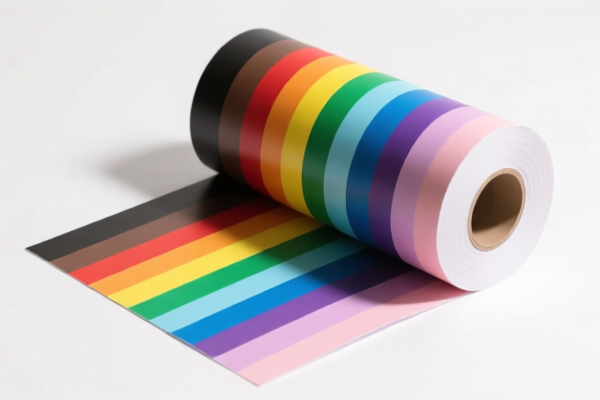


AI Analysis
📸 Custom Color Photo Paper Roll: HS Code Classification & Tariff Strategy (2026 Update)
🌐 HS Code Reference & Customs Clearance Guide | 2026 Latest Tariff Analysis | Professional Compliance Strategy
📌 I. Product Definition & Classification: Do You Really Understand "Color Photo Paper"?
Custom Color Photo Paper Rolls are specialized printing media used in photography, advertising, and professional printing. In international trade, they are often misclassified due to the ambiguity between photographic materials and plain paper products.
There are two main categories based on their chemical and functional properties:
- Halide Silver Photographic Paper (Chemically Sensitive): Contains light-sensitive silver halides. It is not ready to print but requires darkroom processing (developing/fixing).
- Key Indicator: Labeled as "Photographic Paper," "Light-Sensitive," "Unexposed."
- Printed/Coupled Paper (Non-Sensitive): Already printed with colors or coated for inkjet/laser printing. It is ready for immediate use after printing with a printer.
- Key Indicator: Labeled as "Inkjet Paper," "Glossy Photo Paper," "Ready-to-print."
⚠️ Critical Distinction Point:
- If the paper contains silver halides and requires chemical development → Classified under Chapter 37 (Photographic Goods). - If the paper is plain/coated paper without light-sensitive chemicals → Classified under Chapter 48 (Paper & Paperboard).
📦 II. HS Code Classification Details (2026 Latest Tariff Authority)
Based on the provided data, the product falls into one of two major chapters. The correct HS code depends on the technical nature of the paper.
| HS Code | Product Description | Applicable Scenario | Key Feature |
|---|---|---|---|
3703.20.30.30 |
Color Halide Silver Photographic Paper | Professional darkroom photography, film labs | 📸 Light-Sensitive (Silver Halide) |
3703.10.30.30 |
Color Halide Silver Photographic Paper | General color photography, light-sensitive paper | 📸 Light-Sensitive (Silver Halide) |
4811.90.60.10 |
Color Double-Sided Paper Rolls | Surface coloring, decoration, non-photographic use | 🎨 Plain/Coated Paper (No Silver) |
4823.40.00.00 |
Color Continuous Tone Paper Rolls | For automatic recorders/plotting machines | 🖨️ Plain/Coated Paper (For Recorders) |
4823.90.60.00 |
Color Continuous Tone Paper Rolls | General coated paper products, based on common sense | 📄 Coated Paper (General Purpose) |
🔍 Key Reminder:
- Chapter 37 (3703.xx): High tariff burden (38.7%) due to "122 Clause" + "Section 301" + Base Tariff. Used for light-sensitive media. - Chapter 48 (4811/4823): Lower base tariff (0%), but still high total tax (35%) due to "122 Clause" + "Section 301". Used for non-sensitive coated papers.
💰 III. 2026 Latest Tariff Rate Details (Including Additional Taxes & Policy Surcharges)
✅ Applicable Country: USA (US)
✅ Origin: China (CN)
✅ Effective Time: 2025/2026 (Current Enforcement)
🎯 1. Group A: Light-Sensitive Photographic Paper (HS 3703 Series)
Applicable to 3703.20.30.30 and 3703.10.30.30
| Item | Detail |
|---|---|
| Base Tariff | 3.7% (Ad Valorem) |
| Section 301 Surcharge | +25.0% (USITC Additional Tariff) |
| Clause 122 Surcharge | +10.0% (Specific Policy Surcharge) |
| Total Tariff Rate | 38.7% |
| Tax Calculation | CIF Value × 38.7% |
| De Minimis Exemption | ❌ NOT Eligible (High risk of audit) |
| Legal Basis Path | USITC:3703.20.30.30 → FOOTNOTE:301.88.01 + CLAUSE:122 |
📌 Explanation:
- 3.7%: Standard MFN base tariff for photographic paper. - 25.0%: Section 301 tariffs apply to almost all Chinese-origin industrial goods, including specialty papers. - 10.0%: Additional surcharge under specific trade clauses (e.g., Clause 122). - Total 38.7%: This is a very high effective rate. Misclassification is a common audit trigger.
🎯 2. Group B: Non-Sensitive Coated/Decorative Paper (HS 48 Series)
Applicable to 4811.90.60.10, 4823.40.00.00, 4823.90.60.00
| Item | Detail |
|---|---|
| Base Tariff | 0.0% (Ad Valorem) |
| Section 301 Surcharge | +25.0% (USITC Additional Tariff) |
| Clause 122 Surcharge | +10.0% (Specific Policy Surcharge) |
| Total Tariff Rate | 35.0% |
| Tax Calculation | CIF Value × 35.0% |
| De Minimis Exemption | ❌ NOT Eligible (High risk of audit) |
| Legal Basis Path | USITC:4811.90.60.10 / 4823.40.00.00 → FOOTNOTE:301.88.01 + CLAUSE:122 |
📌 Explanation:
- 0.0%: Base tariff for many coated or processed papers is zero. - 25.0% + 10.0%: The same additional tariffs apply, making the total 35%. - Note: Even though the base is 0%, the total cost is still high (35%). The difference between 38.7% and 35% is only 3.7%, which is negligible compared to the complexity of proof.
🛠️ IV. Customs Clearance Practical Advice (Risk Avoidance Guide)
✅ 1. Documentation Checklist (Essential)
| Document | Must Provide | Explanation |
|---|---|---|
| ✅ Product Specification Sheet | ✔️ | Must explicitly state: "Contains Silver Halides" OR "No Chemical Sensitivity." |
| ✅ Material Composition Statement | ✔️ | List all coatings. If no silver/nitrate mentioned, it's Chapter 48. |
| ✅ Product Photos | ✔️ | Show packaging. Look for warnings like "Keep in Dark" (indicates Ch 37). |
| ✅ Technical Data Sheet (TDS) | ✔️ | Shows sensitivity to light, required processing methods (developer/fixer). |
| ✅ Commercial Invoice | ✔️ | Clear description: e.g., "Color Halide Silver Photographic Paper" or "Glossy Inkjet Paper Roll." |
| ✅ Packing List | ✔️ | Weight and quantity details. |
✅ 2. Declaration Tips (Critical Keywords)
🔥 Golden Rule: "Describe the Chemistry, Not Just the Use!"
| Scenario | Correct Declaration | Wrong Declaration |
|---|---|---|
| Light-Sensitive Paper | "Color Halide Silver Photographic Paper, Unexposed, for Darkroom Use" | "Photo Paper" (Too vague) |
| Inkjet/Coated Paper | "Coated Paper Roll for Inkjet Printer, Non-Sensitive" | "Photographic Paper" (Misleading) |
| Recorder Paper | "Continuous Tone Paper for Automatic Recorders, Chapter 48" | "Specialty Photo Paper" |
| General Coated Paper | "Decorative Coated Paper Roll, Surface Treated" | "Photo Paper" |
⚠️ Warning:
- If you declare Chapter 48 for light-sensitive paper, customs may inspect and reclassify to Chapter 37 + penalties. - If you declare Chapter 37 for plain paper, you may overpay tariffs (38.7% vs 35%) unnecessarily, though less risky than under-declaring.
✅ 3. Special Cases & Handling
| Scenario | Handling Advice |
|---|---|
| Sample Rolls | Declare as "Samples" but still pay full tariff if value > $800 (unless de minimis applies, but high risk for paper). |
| Bulk Orders | Ensure HS code is pre-approved via Advance Ruling if possible. |
| Hybrid Products | If the paper is both light-sensitive AND coated for inkjet (rare), consult customs broker. Usually, "light-sensitive" dominates. |
| Packaging | If shipped in light-proof bags, strongly indicates Chapter 37. |
🌍 V. Global Market Comparison (2026)
| Country/Region | Recommended HS Code | Estimated Total Tax | Notes |
|---|---|---|---|
| 🇺🇸 USA | 3703.20.30.30 or 4811.90.60.10 |
35.0% - 38.7% | High additional tariffs (301 + Clause 122). |
| 🇨🇳 China | 3703.20.30.30 or 4811.90.60.10 |
~3% - 5% | Low base tariff, no US-style additional tariffs. |
| 🇪🇺 EU | 3703.20.30 or 4811.90.60 |
~0% - 5% | Generally low tariffs for paper/photographic goods. |
| 🇬🇧 UK | 3703.20.30 or 4811.90.60 |
~0% - 5% | Post-Brexit tariffs are competitive. |
📌 Conclusion:
- The USA is the most expensive market for Chinese photo paper due to Section 301 and Clause 122. - For non-US markets, the cost is significantly lower. Consider transshipment or origin diversification if targeting the US.
📌 VI. Common Mistakes & Pitfalls (Lessons Learned)
❌ Mistake 1: Declaring "Photo Paper" without specifying "Silver Halide" or "Inkjet."
👉 Consequence: Customs audit, reclassification, fines, and shipment delay.
❌ Mistake 2: Using Chapter 48 for light-sensitive paper to save 3.7%.
👉 Consequence: Customs detects light sensitivity → Reclassifies to Chapter 37 → Penalties + Back Taxes.
❌ Mistake 3: Ignoring "Clause 122" (10% surcharge).
👉 Consequence: Underpayment of 10% → Liens and Interest.
❌ Mistake 4: Assuming "Roll" format changes the HS code significantly.
👉 Consequence: Format is secondary to material/chemical composition.
✅ Correct Practice:
"Color Halide Silver Photographic Paper, Roll Format, 200mm x 100m, Unexposed, for Professional Darkroom Processing, Origin: China"
OR
"Glossy Inkjet Photo Paper Roll, Coated Paper, No Chemical Sensitivity, for Office Printers, Origin: China"
🎯 VII. Conclusion: Precise Classification Saves Money
🎯 Remember the Rule:
🔹 "Sensitive = Chapter 37 (38.7%) | Non-Sensitive = Chapter 48 (35.0%)"
🔹 "The 3.7% difference is small, but the compliance risk is huge."
🔹 "Always disclose chemical composition!"
📌 Pro Tip:
If your product is non-sensitive (e.g., standard inkjet paper), ensure the description explicitly says "Non-Sensitive" or "No Silver Halides" to avoid being classified as photographic goods.
📣 Immediate Action:
📞 Contact a Customs Broker to verify if your specific paper contains light-sensitive chemicals.
📝 Prepare Technical Data Sheets before shipment.
🚀 Declare Accurately to avoid 38.7% vs 35% errors and severe penalties.
✨ Professional Customs Clearance Starts with Accurate Classification!
💼 Your Cost Efficiency Depends on the First Line of Your Invoice!
Customer Reviews
About HS Code Classification
The Harmonized System (HS) is an internationally standardized nomenclature developed by the World Customs Organization (WCO) to classify traded products. Over 200 countries use the HS system as the basis for customs tariffs, trade statistics, and import/export regulations.
Each HS code follows a hierarchical structure:
- Chapter (2 digits) — Broad category of goods (e.g., Chapter 84: Machinery and Mechanical Appliances)
- Heading (4 digits) — More specific grouping within the chapter
- Subheading (6 digits) — Internationally standardized breakdown, used by all WCO member countries
- National subdivisions (8-10 digits) — Country-specific extensions for further classification, such as US HTSUS 10-digit codes
Correct HS code classification is essential for smooth customs clearance, accurate duty payment, and compliance with trade regulations. Misclassification can lead to customs delays, overpayment of duties, or penalties.
When importing from CN to US, the applicable tariff rates may include:
- Most-Favored-Nation (MFN) rate — The standard duty rate applied to WTO members
- General rate — Applied to countries without trade agreements
- Trade remedy duties — Additional tariffs such as Section 301 (anti-dumping), Section 232 (national security), or countervailing duties
The information provided on this page is for reference purposes only. For official classification, please consult with your local customs authority or a licensed customs broker.