Custom Leather Stropping Straps
CN → US| HS Code | Tariff Rate | Origin | Destination | Doc |
|---|---|---|---|---|
| 6805301000 | 35.0% | CN | US | Official Doc |
| 4205000500 | 37.9% | CN | US | Official Doc |
| 4205001000 | 35.0% | CN | US | Official Doc |
| 6805305000 | 35.0% | CN | US | Official Doc |
Product Images
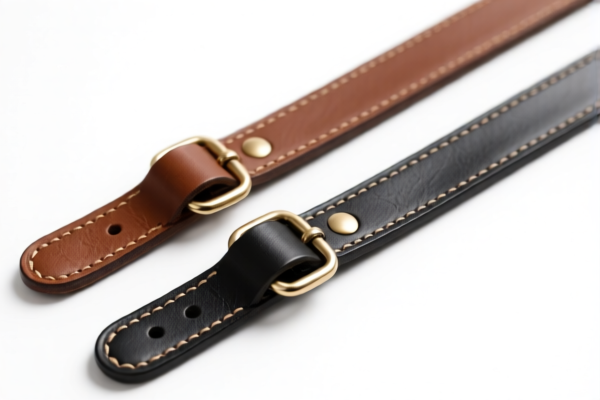
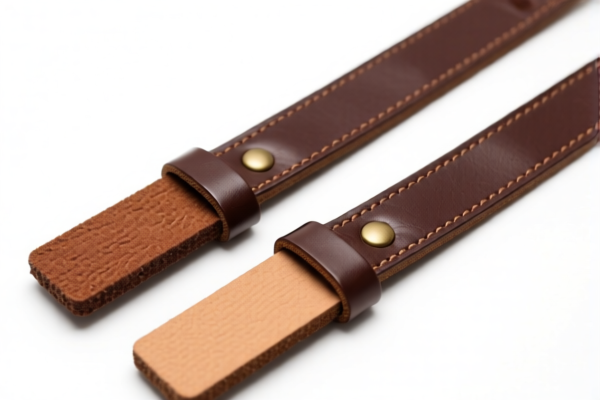
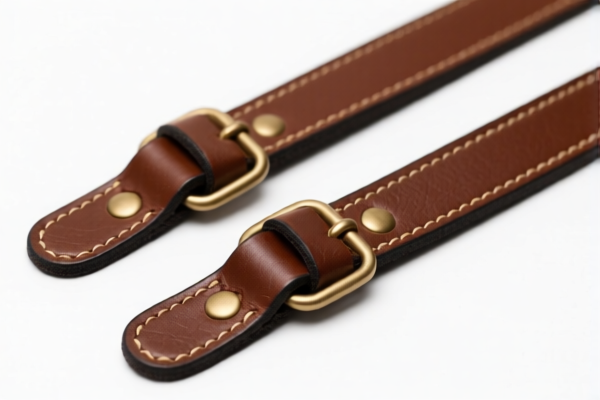
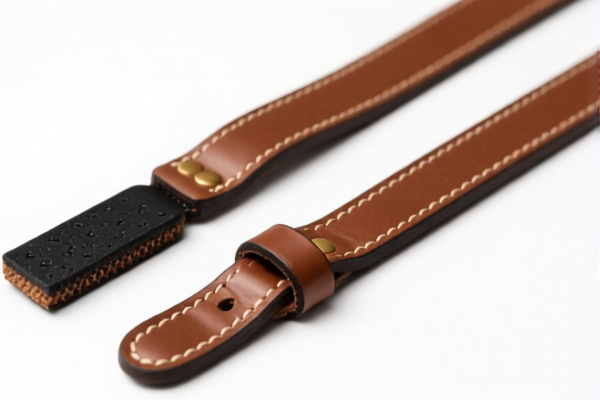
AI Analysis
🧵 Custom Leather Stropping Strapes
🌐 HS Code Reference & Customs Clearance Guide | 2026 Latest Tariff Analysis | Professional-Grade Entry Strategy
📌 I. Product Definition & Classification: Do You Truly Understand "Stropping Straps"?
A leather strop is not merely a piece of leather; it is a precision finishing tool used in knife sharpening, razor maintenance, and instrument care. In international trade, its classification hinges on material composition, manufacturing process, and end-use purpose.
Key Distinction Logic:
- If treated as an abrasive carrier (coated with compounds) → Falls under Chapter 68 (Mineral Products).
- If treated as a manufactured leather good (even if used for industrial/grinding purposes) → Falls under Chapter 42 (Articles of Leather).
⚠️ Critical Differentiator:
- Is it "coated abrasive" on a fabric/paper base? → HS 6805.
- Is it "cut leather" shaped for specific application (mechanical/abrasive auxiliary)? → HS 4205.
📦 II. HS Code Classification Details (2026 Latest Tariff Authority Comparison)
| HS Code | Product Description | Matching Logic (Based on Provided Data) | Total Tax Rate |
|---|---|---|---|
6805.30.10.00 |
Abrasive articles on a base of leather or other materials, in strips | Logic: Shape is "strip"; material inferred as non-textile/non-paper "other material." Fits "attached to other material" + "strip" feature. | 35.0% |
4205.00.05.00 |
Other articles of leather or reground leather | Logic: Material is "leather"; shape is "cut/manufactured." Use is mechanical/abrasive consumable, matching leather goods &传动带 (transmission belt) shape features. | 37.9% |
4205.00.10.00 |
Other articles of leather or reground leather | Logic: Name matches "leather"; "stropping strip" is a consumable product, fitting "Other" category under technical use inference. | 35.0% |
6805.30.50.00 |
Other abrasive articles on a base | Logic: "Stropping strip" is viewed as a carrier for grinding powder/particles. Base material logic aligns with "coated on other materials" (assuming non-textile base). | 35.0% |
🔍 Key Reminder:
- HS 4205 treats the item primarily as a Leather Good (Chapter 42).
- HS 6805 treats the item primarily as an Abrasive Article (Chapter 68).
- The difference in Additional Tariffs depends on the specific footnote and trade policy application.
💰 III. 2026 Latest Tariff Rate Breakdown (Including Surtaxes & Policy Add-ons)
✅ Applicable Country: United States (US)
✅ Origin: China (CN)
✅ Effective Date: Post-2025 (Current Trade Environment)
🎯 1. 6805.30.10.00 & 6805.30.50.00 & 4205.00.10.00 —— Abrasive/Leather Strips (35% Total)
| Item | Content |
|---|---|
| Base Duty Rate | 0.0% (ad valorem) |
| Section 301 / Additional Duty | +25.0% |
| IEEPA Duty (China) | +10% (122 Clause) |
| Total Effective Rate | 35.0% |
| Tax Calculation | CIF Value × 35% |
| De Minimis Eligibility | ❌ NO (Not eligible for Section 321 de minimis exemption due to anti-dumping/countervailing contexts or specific trade remedies on Chinese abrasives/leather goods). |
| Legal Basis Path | USITC:6805.30.10.00 → FOOTNOTE:Section 301 → IEEPA:9903.01.25 |
📌 Explanation:
- Base Duty (0%): These headings often have zero base duty for abrasives or certain leather goods.
- 301 Tariff (+25%): Applied under US Trade Act Section 301 against Chinese imports.
- IEEPA Tariff (+10%): Additional levy under the International Emergency Economic Powers Act targeting specific Chinese categories.
- Total 35%: This is the standard "hit rate" for most Chinese leather/abrasive strips entering the US.
🎯 2. 4205.00.05.00 —— Other Leather Articles (37.9% Total)
| Item | Content |
|---|---|
| Base Duty Rate | 2.9% |
| Section 301 / Additional Duty | +25.0% |
| IEEPA Duty (China) | +10% (122 Clause) |
| Total Effective Rate | 37.9% |
| Tax Calculation | CIF Value × 37.9% |
| De Minimis Eligibility | ❌ NO |
| Legal Basis Path | USITC:4205.00.05.00 → FOOTNOTE:Section 301 → IEEPA:9903.01.25 |
📌 Explanation:
- Higher Cost: This classification incurs a small base duty (2.9%) before surtaxes, making it $2.90 more expensive per $100 than the 35% bracket.
- Risk: Customs may prefer this if the "leather" nature is dominant over the "abrasive" function, pushing costs up slightly.
🛠️ IV. Customs Clearance Practical Advice (Battle-Tested Pitfall Avoidance)
✅ 1. Documentation Checklist (Essential for Smooth Clearance)
| Document | Mandatory? | Description |
|---|---|---|
| ✅ Product Specifications | ✔️ | Material composition (e.g., "Vegetable Tanned Leather," "Chrome Free"), dimensions, thickness. |
| ✅ Usage Statement | ✔️ | Explicitly state: "Used for manual knife sharpening/stropping, NOT for industrial belt sanding." |
| ✅ Material Certificate | ✔️ | Proof of leather origin if claiming preferential rates elsewhere; confirms non-textile base. |
| ✅ Commercial Invoice | ✔️ | Must list "Leather Stropping Strips" clearly. Avoid vague terms like "Leather Goods." |
| ✅ Photos (Clear) | ✔️ | Show the strip, edges, and any coating (if applicable). |
| ✅ Packing List | ✔️ | Detail weights and quantities. |
✅ 2. Classification Strategy (Key Mantra)
🔥 “Leather Base, Strip Shape, Abrasive Use, Choose Chapter 68 or 42!”
| Scenario | Recommended HS Code | Why? |
|---|---|---|
| Plain Leather Strips (No abrasive coating) | 4205.00.05.00 or 4205.00.10.00 |
Pure leather good, shaped for use. |
| Abrasive-Coated Leather | 6805.30.10.00 or 6805.30.50.00 |
Function is abrasion; base is leather/other. |
| Fabric/Canvas Strips with Leather Trim | 6805.30.10.00 |
If the "strip" is primarily the abrasive carrier. |
| Mistake | 4205.00.05.00 for Coated Items |
Customs may reclassify to 6805 if abrasive function is dominant, leading to disputes. |
✅ 3. Special Considerations
| Situation | Handling Advice |
|---|---|
| Custom Printed/Logo Strips | Still falls under 4205 or 6805. Ensure logo doesn't change the primary function. |
| OEM/Private Label | Provide order contract + design sheet to prove manufacturing origin. |
| Small Quantities (Gift Samples) | Still subject to duties if value > $800 (US De Minimis threshold). For < $800, no duty, but IEEPA/301 exemptions do NOT apply if specifically targeted. Check current CBP enforcement on de minimis for China. |
| Combined with Sharpening Stones | Declare separately! Stones are 6804 or 8205. Do not bundle into "Leather Set." |
🌍 V. Global Market Comparison (2026 Latest)
| Country/Region | Recommended HS Code | Est. Duty (China Origin) | Certifications | Notes |
|---|---|---|---|---|
| 🇺🇸 USA | 6805.30.10.00 / 4205.00.05.00 |
35.0% - 37.9% | None required for customs | High impact of 301/IEEPA taxes. |
| 🇨🇳 China | 4205.00.00.00 |
~5-10% | CCC (if applicable) | Low import barrier for domestic production. |
| 🇪🇺 EU | 4601.99.00 / 4205.00.00 |
~0% - 4.5% | CE (if marketed as tool) | Generally lower tariffs, but strict REACH for leather chemicals. |
| 🇬🇧 UK | 4205.00.00 |
~4.5% | UKCA | Post-Brexit rules apply. |
| 🇦🇺 Australia | 4205.00.00 |
~5% | RCMA | Moderate duty. |
📌 Conclusion:
- The USA is the most expensive market for these items due to the叠加 (stacking) of 25% (301) + 10% (IEEPA) on top of base duties.
- EU/UK offer better margin protection, but environmental compliance (REACH) for leather tanning is critical.
📌 VI. Common Errors & Pitfall Guide (Blood & Tears Lessons)
❌ Mistake 1: Declaring as "Fashion Leather Straps" (4205.99)
👉 Consequence: If used for sharpening, Customs may reclassify to 6805 or 4205.00 with higher scrutiny. If misclassified, you may face penalties for undervaluation of duties.
❌ Mistake 2: Ignoring the "IEEPA 10%" Surcharge
👉 Consequence: Many importers only calculate the 25% Section 301 tariff. Forgetting the 10% IEEPA levy leads to underpayment and subsequent CBP audits/refunds.
❌ Mistake 3: Using "Fabric" for Leather Goods
👉 Consequence: If the product is leather, declaring it as "fabric belt" (5911 or 6307) is a direct violation of HS rules. Expect seizure or heavy fines.
✅ Correct Practice:
"Custom Vegetable-Tanned Leather Stropping Strip, 2 inches wide, unfinished, for manual knife maintenance. No abrasive coating."
(This description supports4205.00.05.00or4205.00.10.00clearly.)
🎯 VII. Conclusion: Precision Classification Saves Money!
🎯 Remember the Mantra:
🔹 "Leather Good? Go 4205. Abrasive Carrier? Go 6805."
🔹 "Base 0%, Add 25%, Add 10% = 35% Hit. Don't Forget the 2.9% Base on 4205.05!"
🔹 "One Mistake in Chapter, Cost Rises by 2.9% or More!"
📌 Pro Tip:
If your leather is sourced from non-China origins (e.g., Italy, Argentina), you may avoid the China-specific IEEPA/301 tariffs, reducing the total rate to just the Base Duty (0% - 2.9%).
🚀 Strategy: Optimize supply chain! Source leather from countries with Free Trade Agreements (FTAs) with the US to bypass the 35%+ burden.
📣 Immediate Action:
📞 Consult a licensed customs broker.
📄 Provide clear product photos and material certs.
🧮 Calculate landed cost including 35% - 37.9% for US entry.
🛡️ Apply for a Binding Tariff Ruling (BTR) from CBP if volume is high to lock in classification.
✨ Professional clearance starts with precise classification!
💼 Every percentage point counts in your profit margin!
Customer Reviews
About HS Code Classification
The Harmonized System (HS) is an internationally standardized nomenclature developed by the World Customs Organization (WCO) to classify traded products. Over 200 countries use the HS system as the basis for customs tariffs, trade statistics, and import/export regulations.
Each HS code follows a hierarchical structure:
- Chapter (2 digits) — Broad category of goods (e.g., Chapter 84: Machinery and Mechanical Appliances)
- Heading (4 digits) — More specific grouping within the chapter
- Subheading (6 digits) — Internationally standardized breakdown, used by all WCO member countries
- National subdivisions (8-10 digits) — Country-specific extensions for further classification, such as US HTSUS 10-digit codes
Correct HS code classification is essential for smooth customs clearance, accurate duty payment, and compliance with trade regulations. Misclassification can lead to customs delays, overpayment of duties, or penalties.
When importing from CN to US, the applicable tariff rates may include:
- Most-Favored-Nation (MFN) rate — The standard duty rate applied to WTO members
- General rate — Applied to countries without trade agreements
- Trade remedy duties — Additional tariffs such as Section 301 (anti-dumping), Section 232 (national security), or countervailing duties
The information provided on this page is for reference purposes only. For official classification, please consult with your local customs authority or a licensed customs broker.