Custom PET Plastic Film
CN → US| HS Code | Tariff Rate | Origin | Destination | Doc |
|---|---|---|---|---|
| 3920992000 | 39.2% | CN | US | Official Doc |
| 3921190010 | 41.5% | CN | US | Official Doc |
| 3921905050 | 39.8% | CN | US | Official Doc |
| 3920620090 | 39.2% | CN | US | Official Doc |
Product Images
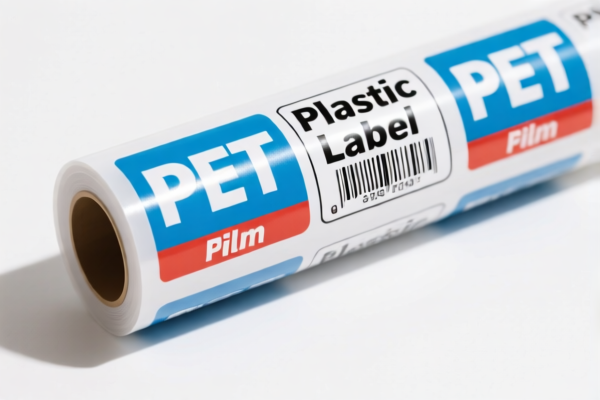
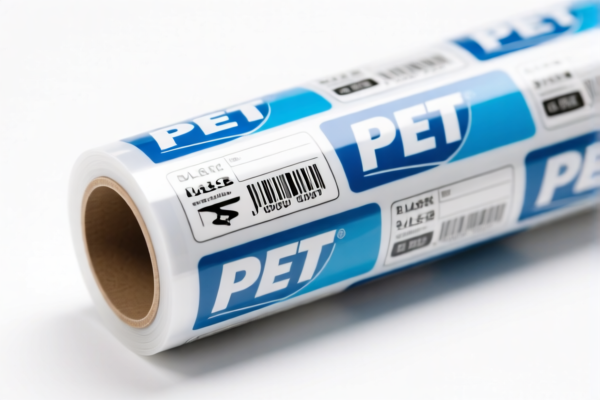
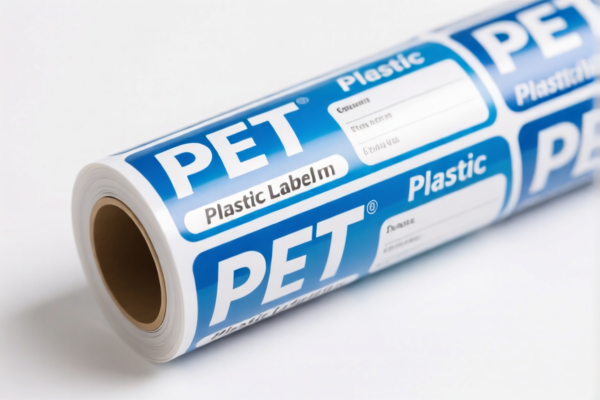
AI Analysis
🎞️ Custom PET Plastic Film (Polyester Film)
🌐 HS Code Reference & Customs Clearance Guide | 2026 Latest Tariff Analysis | Professional Clearance Strategy 📌 I. Product Definition & Classification: What is "Custom PET Plastic Film"?
PET (Polyethylene Terephthalate) plastic film is a high-performance flexible material widely used in electronics, packaging, automotive, and industrial applications. In international trade, especially when importing from China to the US, it faces significant tariff pressures due to Section 301 and Section 122 measures.
The classification depends heavily on the physical form and processing level: * Flexible Membranes/Sheets (Non-rigid): Thin, roll-form products suitable for die-cutting, lamination, or coating. Often classified under 3920. * Rigid Plates/Sheets/Foils: Thicker or processed forms that retain a specific "plate/sheet" character, even if flexible. Often classified under 3921.
⚠️ Key Distinction Point: - If the product is primarily described as a "flexible membrane", "roll film", or "non-reinforced plastic film", it may fall under 3920. - If the product is described as a "plate, sheet, foil", or has a rigid structure suitable for cutting into specific shapes without rolling, it may fall under 3921. - Material Note: All options below specify Polyester (PET) as the base material.
📦 II. HS Code Classification Details (2026 Latest Tariff Mapping)
| HS Code | Product Description | Applicable Scenario | Structural Characteristic |
|---|---|---|---|
3920.99.20.00 |
PET Plastic Film, Polyester Material, Flexible Membrane Type | Non-cellular, non-reinforced flexible films; generic PET films for packaging or insulation | ✅ Flexible Membrane |
3921.19.00.10 |
PET Plastic Film, Polyester Material, "Plate/Sheet/Foil" Character | Films that meet the legal definition of "plates, sheets, film, foil" under Heading 3921 | ✅ Plate/Sheet/Foil |
3921.90.50.50 |
PET Plastic Film, Other Plastic Plate/Sheet/Film/Foil | General "other" plastic plates/sheets/films; broader category for PET films not elsewhere specified | ✅ Plate/Sheet/Film/Foil |
3920.62.00.90 |
PET Plastic Film, Polyethylene Terephthalate, Non-Metalized | Specific PET film classification; excludes metalized films; focuses on the polymer type | ✅ Flexible Membrane (Non-metalized) |
🔍 Critical Reminder: - The choice between 3920 (Films) and 3921 (Plates/Sheets) is often determined by the customs broker's interpretation of "form" and the product specifications (thickness, stiffness, packaging). - Metalization: If the PET film is metallized (e.g., for capacitors or reflective purposes), it must be explicitly declared. The code
3920.62.00.90explicitly excludes metalized types. - Tax Impact: Misclassification can lead to severe penalties. All four codes carry high additional tariffs.
💰 III. 2026 Latest Tariff Rate Breakdown (Including Surcharges & Policy Add-ons)
✅ Applicable Country: United States (US) ✅ Origin: China (CN) ✅ Effective Date: Current rates apply (Section 301 + Section 122)
🎯 1. 3920.99.20.00 — PET Plastic Film (Flexible Membrane)
| Item | Content |
|---|---|
| Base Tariff | 4.2% (Ad Valorem) |
| Section 301 Surtax | +25.0% |
| Section 122 Tariff | +10.0% |
| Total Effective Rate | 39.2% |
| Tax Calculation | CIF Value × 39.2% |
| De Minimis Exemption? | ❌ No (Denied for Section 301/122 goods) |
| Legal Path | USITC:3920.99.20.00 → Section 301 Footnote → Section 122 Order |
📌 Explanation: - This code is typically used for generic, non-reinforced PET films. - The 39.2% total rate includes the base rate (4.2%) plus the heavy punitive tariffs (25% + 10%). - Warning: This is a high-cost classification. Cost optimization strategies are essential.
🎯 2. 3921.19.00.10 — PET Plastic Film (Plate/Sheet/Foil Character)
| Item | Content |
|---|---|
| Base Tariff | 6.5% (Ad Valorem) |
| Section 301 Surtax | +25.0% |
| Section 122 Tariff | +10.0% |
| Total Effective Rate | 41.5% |
| Tax Calculation | CIF Value × 41.5% |
| De Minimis Exemption? | ❌ No |
| Legal Path | USITC:3921.19.00.10 → Section 301 Footnote → Section 122 Order |
📌 Explanation: - This code applies when the film is deemed to have "plate, sheet, or foil" characteristics, often implying a stiffer or thicker form. - The base rate is higher (6.5%), leading to a higher total tax (41.5%) compared to
3920.99.20.00. - Risk: Higher base rate makes this the most expensive option if the product can be reclassified under 3920.
🎯 3. 3921.90.50.50 — PET Plastic Film (Other Plastic Plate/Sheet/Film/Foil)
| Item | Content |
|---|---|
| Base Tariff | 4.8% (Ad Valorem) |
| Section 301 Surtax | +25.0% |
| Section 122 Tariff | +10.0% |
| Total Effective Rate | 39.8% |
| Tax Calculation | CIF Value × 39.8% |
| De Minimis Exemption? | ❌ No |
| Legal Path | USITC:3921.90.50.50 → Section 301 Footnote → Section 122 Order |
📌 Explanation: - A "catch-all" category for plastic plates/sheets/films not elsewhere specified. - The total rate (39.8%) is slightly lower than
3921.19.00.10but higher than3920.99.20.00. - Use Case: Useful if the PET film does not fit the "metalized" or "specific polyester" subcategories but still has a sheet-like form.
🎯 4. 3920.62.00.90 — PET Plastic Film (Non-Metalized)
| Item | Content |
|---|---|
| Base Tariff | 4.2% (Ad Valorem) |
| Section 301 Surtax | +25.0% |
| Section 122 Tariff | +10.0% |
| Total Effective Rate | 39.2% |
| Tax Calculation | CIF Value × 39.2% |
| De Minimis Exemption? | ❌ No |
| Legal Path | USITC:3920.62.00.90 → Section 301 Footnote → Section 122 Order |
📌 Explanation: - Specific to Polyethylene Terephthalate (PET) films that are not metalized. - The total rate (39.2%) is the lowest among all options (tied with
3920.99.20.00). - Key Advantage: If your PET film is non-metalized, this is a precise and cost-effective classification.
🛠️ IV. Customs Clearance Practical Advice (Avoiding Pitfalls)
✅ 1. Documentation Checklist (Mandatory)
| Document | Required | Notes |
|---|---|---|
| ✅ Product Specification Sheet | ✔️ | Must state: Material (100% PET), Form (Film/Sheet), Thickness, Width, Roll Diameter |
| ✅ Technical Data Sheet (TDS) | ✔️ | Confirms it is non-metalized if using 3920.62.00.90 |
| ✅ Commercial Invoice | ✔️ | Clearly describe as "Custom PET Plastic Film, Polyester" |
| ✅ Packing List | ✔️ | Detail roll/core sizes, number of rolls, total weight |
| ✅ Certificate of Origin | ✔️ | Required for origin determination; does not mitigate Section 301/122 taxes |
| ✅ Section 301 Exclusion List (if applicable) | ⚠️ | Check if your specific PET film type was excluded in previous rounds (rare) |
✅ 2. Declaration Strategy (Key Tips)
🔥 "Accuracy is Profit: Define Form, Specify Material, Exclude Metal!"
| Scenario | Correct Declaration | Incorrect Declaration | Risk |
|---|---|---|---|
| Non-Metalized PET Roll | 3920.62.00.90 (39.2%) |
3921.19.00.10 (41.5%) |
Overpay 2.3% |
| Generic Flexible PET | 3920.99.20.00 (39.2%) |
3920.99.20.00 mislabeled as "Sheet" |
Potential Re-classification Audit |
| Metalized PET | ❌ Not covered in this list | Use 3920.62.00.90 |
Severe Penalty (Wrong HS) |
| Stiff PET Sheet | 3921.90.50.50 (39.8%) |
3920.99.20.00 |
Underpayment Risk |
📌 Critical Tip: - Always explicitly state "Non-Metalized" on the invoice if using
3920.62.00.90. - If the film is metalized, you cannot use3920.62.00.90. You must look for other codes (not listed here) which may have different tax implications.
✅ 3. Special Scenarios & Solutions
| Scenario | Recommendation |
|---|---|
| Thin Foil (<0.2mm) | Ensure it is declared as "Film" (3920) rather than "Foil" (7607 for Al, etc.) if made of PET. |
| Coated/Printed PET | If coatings are minor (e.g., adhesive, corona treatment), it may still fall under 3920. If substantial, re-evaluate. |
| Custom Shapes (Pre-cut) | If sold as pre-cut squares/rectangles, CBP may argue it is a "Plate/Sheet" (3921). Stick to rolls to support 3920 classification. |
| High-Value Electronics Grade | Provide detailed specs to justify the specific subheading and avoid general "Other Plastic" codes with higher scrutiny. |
🌍 V. Global Market Comparison (2026 Perspective)
| Country/Region | Recommended HS Code | Estimated Duty | Key Certification | Notes |
|---|---|---|---|---|
| 🇺🇸 USA | 3920.62.00.90 / 3920.99.20.00 |
39.2% | N/A | High Tariff: Section 301 + 122 applies |
| 🇨🇳 China (Export) | 3920.62.00.90 |
0% (VAT Refund) | N/A | Exporter-friendly, no duty |
| 🇪🇺 EU | 3920.62.00.90 |
~6.5% | REACH, RoHS | No Section 301/122 equivalent |
| 🇬🇧 UK | 3920.62.00.90 |
~6.5% | UKCA | Post-Brexit rules apply |
| 🇦🇺 Australia | 3920.62.00.90 |
~5% | N/A | Low duty, no punitive tariffs |
📌 Conclusion: - USA is the most expensive market for PET plastic film due to aggressive trade policies. - EU/UK/AU offer significantly lower duty rates (~5-7%). - Strategy: Consider transshipment (e.g., through Vietnam or Mexico) only if substantial transformation occurs and rules of origin are met. Simple relabeling is fraudulent and risky.
📌 VI. Common Mistakes & Pitfalls (Blood Lessons)
❌ Mistake 1: Ignoring the "Non-Metalized" requirement for 3920.62.00.90
👉 Consequence: Customs flags the shipment as "Metalized Film," leading to wrong HS code assessment, back taxes, and penalties.
❌ Mistake 2: Classifying Pre-cut Sheets as "Film" (3920)
👉 Consequence: CBP reclassifies as "Plastic Plate/Sheet" (3921), resulting in higher duty (39.8-41.5%) and potential delays.
❌ Mistake 3: Assuming De Minimis ($800) applies 👉 Consequence: Seizure! Section 301 and 122 goods are excluded from de minimis treatment. Even small samples are subject to full duty and compliance checks.
❌ Mistake 4: Vague Description: "Plastic Film" 👉 Consequence: High risk of audit and re-classification. Always specify: "Polyester (PET) Film, Non-Metalized, Roll Form."
✅ Best Practice:
"Custom PET Plastic Film, 100% Polyethylene Terephthalate, Non-Metalized, Roll Form, Thickness 0.1mm, for Industrial Lamination. HS: 3920.62.00.90"
🎯 VII. Conclusion: Smart Classification, Maximize Profit
🎯 Remember the Golden Rules:
🔹 "Non-Metalized? Use 3920.62.00.90 (39.2%)". 🔹 "Roll Form = Film (3920). Pre-cut = Sheet (3921)." 🔹 "Section 301 + 122 = No De Minimis. Plan Ahead!"
📌 Pro Tip:
- If your volume is high, consider applying for a Section 301 Exclusion (if available for your specific PET type).
- Always use Professional Customs Brokers to review the Technical Data Sheet before filing.
- For USA imports, budget for ~39-42% duty. Factor this into your pricing model immediately.
📣 Immediate Action:
📞 Contact your customs broker with the full product specs. 📄 Request a Pre-Ruling from CBP if the classification is ambiguous. 🚀 Optimize your supply chain to mitigate these high tariffs.
✨ Precision in Classification Saves Thousands! 💼 Every percent of duty saved is pure profit!
Customer Reviews
About HS Code Classification
The Harmonized System (HS) is an internationally standardized nomenclature developed by the World Customs Organization (WCO) to classify traded products. Over 200 countries use the HS system as the basis for customs tariffs, trade statistics, and import/export regulations.
Each HS code follows a hierarchical structure:
- Chapter (2 digits) — Broad category of goods (e.g., Chapter 84: Machinery and Mechanical Appliances)
- Heading (4 digits) — More specific grouping within the chapter
- Subheading (6 digits) — Internationally standardized breakdown, used by all WCO member countries
- National subdivisions (8-10 digits) — Country-specific extensions for further classification, such as US HTSUS 10-digit codes
Correct HS code classification is essential for smooth customs clearance, accurate duty payment, and compliance with trade regulations. Misclassification can lead to customs delays, overpayment of duties, or penalties.
When importing from CN to US, the applicable tariff rates may include:
- Most-Favored-Nation (MFN) rate — The standard duty rate applied to WTO members
- General rate — Applied to countries without trade agreements
- Trade remedy duties — Additional tariffs such as Section 301 (anti-dumping), Section 232 (national security), or countervailing duties
The information provided on this page is for reference purposes only. For official classification, please consult with your local customs authority or a licensed customs broker.