Customizable Plastic Packaging Box
CN → US| HS Code | Tariff Rate | Origin | Destination | Doc |
|---|---|---|---|---|
| 3923102000 | 35.0% | CN | US | Official Doc |
| 3923109000 | 38.0% | CN | US | Official Doc |
| 3926100000 | 15.3% | CN | US | Official Doc |
| 3926909989 | 22.8% | CN | US | Official Doc |
| 3923102000 | 35.0% | CN | US | Official Doc |
Product Images
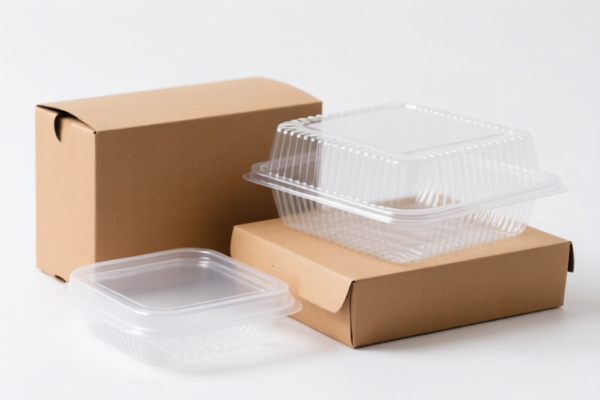
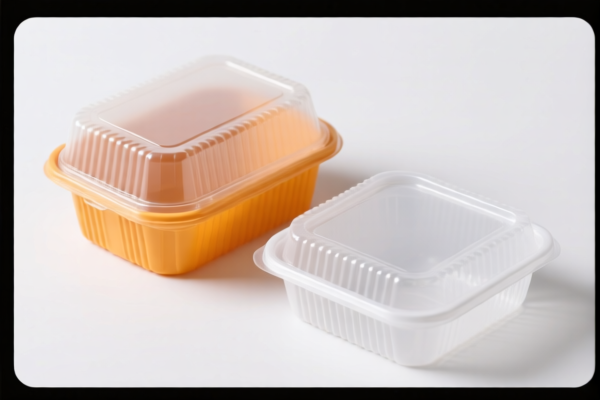
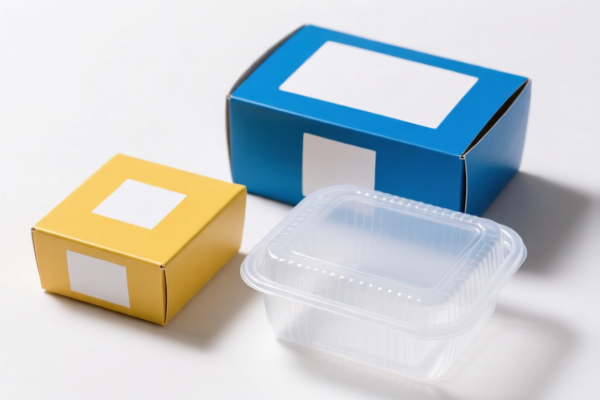
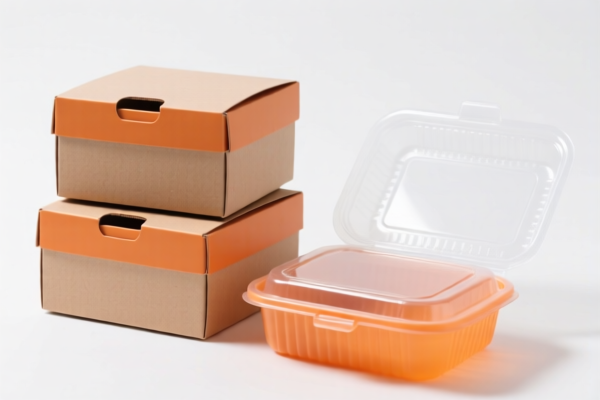
AI Analysis
📦 Customizable Plastic Packaging Box
🌐 HS Code Reference & Customs Clearance Guide | 2026 Latest Tariff Analysis | Professional Clearance Strategy
📌 Part 1: Product Definition & Classification: Do You Truly Understand "Plastic Packaging"?
"Customizable Plastic Packaging Box" is a broad term in international trade. Unlike standard electronics, these items fall into different HS codes based on their structural complexity, functional purpose, and specific material composition. In the US tariff schedule, plastic packaging is generally split between:
- Primary Packaging Articles (Heading 39.23): Boxes, cases, crates, drums, and similar containers, specifically designed for the transport or sale of goods. This is the most common classification for "packaging boxes."
- Plastics Articles, Other (Heading 39.26): Miscellaneous plastic products that do not fit into specific manufacturing categories. If the "box" is considered a general plastic container rather than a specialized packaging article, it may fall here.
⚠️ Key Distinction Point:
- If the item is explicitly a box, crate, or case for packaging goods → It likely falls under 39.23 or 39.26 (specifically 3926.10).
- If it is a generic plastic container without specific "packaging" design features → It may fall under 3926.90 (Other articles).
- Critical Note: The "Customizable" aspect does not change the HS Code, but it may affect the declaration of origin and value.
📊 Part 2: HS Code Classification Details (2026 Latest Tariff Authority Match)
Based on the provided data, here are the four possible HS Codes for "Customizable Plastic Packaging Box," along with their specific tax implications.
| HS Code | Product Description | Tax Rate (Total) | Tax Breakdown |
|---|---|---|---|
3923.10.20.00 |
Plastic material, box-shaped, used for packaging. | 35.0% | Base: 0.0% Section 301: 25.0% Section 122: 10% |
3923.10.90.00 |
Plastic material, box-shaped, belongs to packaging supplies. | 38.0% | Base: 3.0% Section 301: 25.0% Section 122: 10% |
3926.10.00.00 |
Plastic material, classified as packaging plastics under plastic articles. | 15.3% | Base: 5.3% Section 301: 0.0% Section 122: 10% |
3926.90.99.89 |
Plastic material, box-shaped, classified as other plastic articles. | 22.8% | Base: 5.3% Section 301: 7.5% Section 122: 10% |
🔍 重点提醒 (Key Warning):
- 3923.10.20.00 and 3923.10.90.00 are the most accurate for dedicated packaging boxes.
- 3926.10.00.00 offers the lowest tax rate (15.3%) because it exempts the 25% Section 301 tariff, but it requires the item to be classified as "packaging plastics" rather than a specific "box."
- 3926.90.99.89 is the "catch-all" for other plastic items, resulting in a higher rate (22.8%) due to partial Section 301 application.
💰 Part 3: 2026 Latest Tariff Rate Details (Including Surtaxes & Policy Additions)
✅ Applicable Country: United States (US)
✅ Origin: China (CN)
✅ Effective Date: 2025/2026 (Current Policy)
🎯 1. 3923.10.20.00 —— Plastic Boxes, Cases, Crates (For Packaging)
| Item | Content |
|---|---|
| Base Tariff | 0% |
| Section 301 Surcharge | +25% |
| Section 122 Surcharge | +10% |
| Total Tax Rate | 35.0% |
| Tax Calculation | CIF Value × 35% |
| De Minimis Exemption? | ❌ No (High risk of audit) |
| Legal Basis Path | USITC:3923.10.20.00 → SECTION301:8801 → SECTION122:8802 |
📌 Explanation:
- This code applies to specifically designed packaging containers made of plastic.
- The 0% base rate is offset by the aggressive 25% Section 301 and 10% Section 122 tariffs.
- Total Impact: A $1,000 shipment incurs $350 in duties.
🎯 2. 3923.10.90.00 —— Other Plastic Packaging Articles
| Item | Content |
|---|---|
| Base Tariff | 3.0% |
| Section 301 Surcharge | +25% |
| Section 122 Surcharge | +10% |
| Total Tax Rate | 38.0% |
| Tax Calculation | CIF Value × 38% |
| De Minimis Exemption? | ❌ No |
| Legal Basis Path | USITC:3923.10.90.00 → SECTION301:8801 → SECTION122:8802 |
📌 Note:
- This code is for plastic packaging items that do not fit the specific description of3923.10.20.00(e.g., specific shapes or non-standard cases).
- Highest Tax Burden: Due to the 3% base tariff, the total is 38%.
- Recommendation: Avoid this code if3923.10.20.00or3926.10.00.00applies, as it costs $30 more per $1,000 than the first option.
🎯 3. 3926.10.00.00 —— Plastic Articles, Specifically Packaging Plastics
| Item | Content |
|---|---|
| Base Tariff | 5.3% |
| Section 301 Surcharge | 0% (Exempted/Not Applicable) |
| Section 122 Surcharge | +10% |
| Total Tax Rate | 15.3% |
| Tax Calculation | CIF Value × 15.3% |
| De Minimis Exemption? | ❌ No |
| Legal Basis Path | USITC:3926.10.00.00 → SECTION122:8802 |
📌 Strategic Advantage:
- This is the most cost-effective option at 15.3%.
- It avoids the heavy 25% Section 301 tariff.
- Condition: The item must be clearly declared as "Packaging Plastics" (e.g., plastic sheets, films, or generic containers used for packaging) rather than a finished "box."
- Caution: Customs may challenge this if the item is clearly a rigid box. Provide strong evidence of its "packaging material" nature.
🎯 4. 3926.90.99.89 —— Other Plastic Articles, Not Elsewhere Specified
| Item | Content |
|---|---|
| Base Tariff | 5.3% |
| Section 301 Surcharge | +7.5% |
| Section 122 Surcharge | +10% |
| Total Tax Rate | 22.8% |
| Tax Calculation | CIF Value × 22.8% |
| De Minimis Exemption? | ❌ No |
| Legal Basis Path | USITC:3926.90.99.89 → SECTION301:Partial → SECTION122:8802 |
📌 Note:
- This code is for general plastic items that are not specifically defined as "packaging" or "packaging plastics."
- The 7.5% Section 301 is lower than the 25%, but the total rate (22.8%) is still higher than3926.10.00.00.
- Use this only if the item does not fit into the specific "packaging" categories.
🛠️ Part 4: Customs Clearance Practical Advice (Pitfall Avoidance Guide)
✅ 1. Preparation Checklist (Non-Negotiable)
| Document | Required? | Notes |
|---|---|---|
| ✅ Product Specification Sheet | ✔️ | Detail material (PP, PET, PVC, etc.), dimensions, thickness, and weight. |
| ✅ Product Photos | ✔️ | Show the box in use, with/without lid, and any customization features. |
| ✅ Commercial Invoice | ✔️ | Clearly state: "Customizable Plastic Packaging Box, Material: [XX], Used for: Packaging." |
| ✅ Packing List | ✔️ | Include gross/net weight, quantity, and dimensions. |
| ✅ Declaration of Origin | ✔️ | Confirm CN origin to apply correct Section 122/301 rates. |
| ✅ Sample (If Requested) | ✔️ | Customs may request a sample to verify classification. |
✅ 2. Classification Strategy (Critical Tips)
🔥 "Material Defines Code, Function Defines Rate"
| Scenario | Recommended HS Code | Why? |
|---|---|---|
| Rigid Plastic Box, Specific for Shipping | 3923.10.20.00 |
Most accurate for "boxes" used for packaging. |
| Generic Plastic Container, Bulk Packaging Material | 3926.10.00.00 |
Lowest tax (15.3%), but needs strong justification as "packaging plastic." |
| Complex Custom Box with Non-Standard Features | 3923.10.90.00 |
If it doesn't fit standard box definitions. |
| Plastic Box Not Primarily for Packaging | 3926.90.99.89 |
E.g., Storage box for household use, not commercial packaging. |
📌 Key Tip:
- If you can justify the item as "Packaging Plastic" (e.g., plastic trays, forms, or generic containers), use3926.10.00.00to save ~20% in tariffs.
- If it is a finished box,3923.10.20.00is the safest and most defensible.
✅ 3. Special Circumstances Handling
| Scenario | Handling Advice |
|---|---|
| Custom Logo/Printing | Declare as "Customized Plastic Box." Printing does not change HS Code, but affects value declaration. |
| Combined Packaging (Box + Inserts) | Declare the entire assembly as one unit under the primary packaging HS Code. Do not split. |
| Small Samples (De Minimis) | ❌ Not Eligible: Due to Section 122 (10%) and Section 301 (25%), even small shipments are taxable. No $800 de minimis exemption. |
| Material Substitution (e.g., Biodegradable) | If made of PLA or other bioplastics, consult with customs. Some biodegradable plastics may have different classifications. |
🌍 Part 5: Global Market Comparison (2026 Latest)
| Country/Region | Recommended HS Code | Tariff (China Origin) | Notes |
|---|---|---|---|
| 🇺🇸 USA | 3923.10.20.00 |
35.0% | High tariffs due to Section 301 + 122. |
| 🇨🇳 China | 3923.10.20.00 |
5.0% | Low import tariff, no Section 301. |
| 🇪🇺 EU | 3923.10.20.00 |
4.5% | Standard MFN rate, no Section 122. |
| 🇬🇧 UK | 3923.10.20.00 |
4.5% | Post-Brexit standard rate. |
| 🇯🇵 Japan | 3923.10.20.00 |
3.5% | Very low tariff, no Section 301. |
📌 Conclusion:
- The US market is the most expensive for Chinese-made plastic packaging due to 35% total tariffs.
- European and Asian markets are significantly cheaper. Consider supply chain diversification if targeting the US.
📌 Part 6: Common Mistakes & Pitfalls (Blood & Tears Lessons)
❌ Mistake 1: Classifying a finished plastic box as "Plastic Sheets" or "Raw Material"
👉 Consequence: Customs will reclassify to 3923 or 3926, leading to underpayment of duties + penalties.
❌ Mistake 2: Using 3926.10.00.00 for rigid, finished boxes without justification
👉 Consequence: High audit risk. Customs may demand proof that the item is "packaging plastic" rather than a "box."
❌ Mistake 3: Ignoring Section 122 (10%) in cost calculation
👉 Consequence: Profit margins are wiped out. Always factor in the full 35% (or applicable rate) for US imports.
❌ Mistake 4: Assuming de minimis ($800) applies to small shipments
👉 Consequence: False. Section 301 and 122 tariffs apply to all shipments from China, regardless of value.
✅ Correct Practice:
"Plastic Packaging Box, PP Material, Customizable, Used for Retail Packaging, HS Code: 3923.10.20.00"
🎯 Part 7: Conclusion: Professional Classification, Cost Saving!
🎯 Remember the Mantra:
🔹 "Finished Box? → 3923 (35%)"
🔹 "Packaging Plastic? → 3926.10 (15.3%)"
🔹 "Other Plastic? → 3926.90 (22.8%)"
🔹 "No De Minimis! Every dollar is taxed!"
📌 Pro Tip:
If your plastic packaging box is customized with specific shapes or functions, consider negotiating duty drawback programs or exploring FTA (Free Trade Agreement) benefits if sourcing from non-China origins (e.g., Vietnam, Thailand).
📣 Immediate Action:
📞 Contact your customs broker to verify if
3926.10.00.00is applicable for your specific product design.
📊 Calculate landed cost with the full 35% (or 15.3%) tariff included.
🚀 Optimize your supply chain to minimize US tariff impact!
✨ Professional clearance starts with accurate classification!
💼 Your profit margin depends on the decimal point!
Customer Reviews
About HS Code Classification
The Harmonized System (HS) is an internationally standardized nomenclature developed by the World Customs Organization (WCO) to classify traded products. Over 200 countries use the HS system as the basis for customs tariffs, trade statistics, and import/export regulations.
Each HS code follows a hierarchical structure:
- Chapter (2 digits) — Broad category of goods (e.g., Chapter 84: Machinery and Mechanical Appliances)
- Heading (4 digits) — More specific grouping within the chapter
- Subheading (6 digits) — Internationally standardized breakdown, used by all WCO member countries
- National subdivisions (8-10 digits) — Country-specific extensions for further classification, such as US HTSUS 10-digit codes
Correct HS code classification is essential for smooth customs clearance, accurate duty payment, and compliance with trade regulations. Misclassification can lead to customs delays, overpayment of duties, or penalties.
When importing from CN to US, the applicable tariff rates may include:
- Most-Favored-Nation (MFN) rate — The standard duty rate applied to WTO members
- General rate — Applied to countries without trade agreements
- Trade remedy duties — Additional tariffs such as Section 301 (anti-dumping), Section 232 (national security), or countervailing duties
The information provided on this page is for reference purposes only. For official classification, please consult with your local customs authority or a licensed customs broker.