Customized Brand Promotional Notebook
CN → US| HS Code | Tariff Rate | Origin | Destination | Doc |
|---|---|---|---|---|
| 4820102010 | 35.0% | CN | US | Official Doc |
| 4820102060 | 35.0% | CN | US | Official Doc |
| 4820200000 | 35.0% | CN | US | Official Doc |
| 4817300000 | 35.0% | CN | US | Official Doc |
Product Images
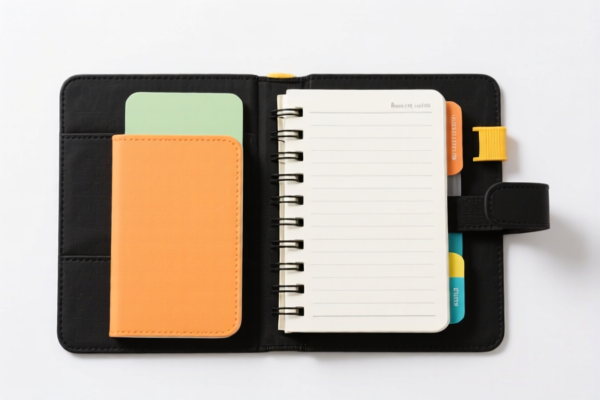
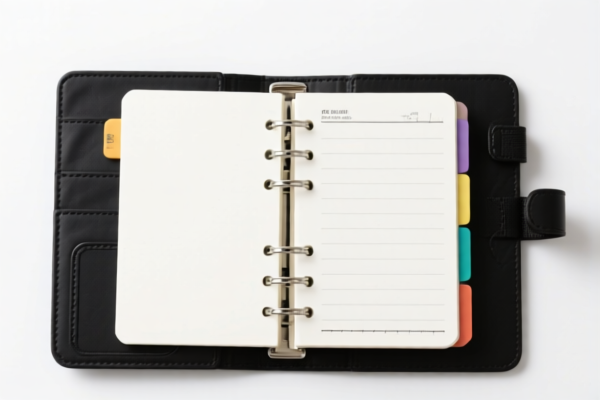
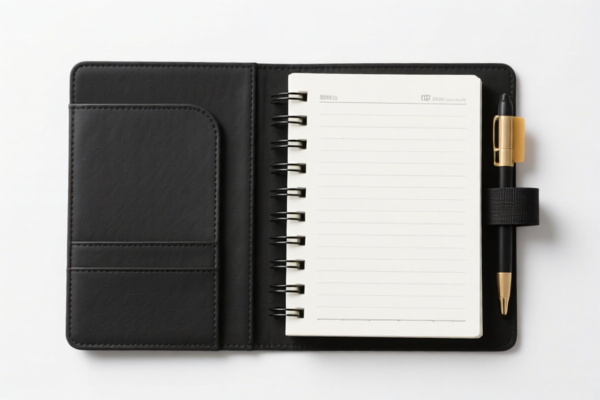
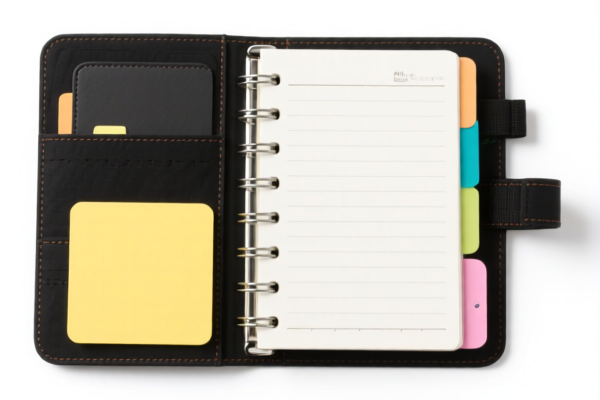
AI Analysis
📓 Customized Brand Promotional Notebook
🌐 HS Code Reference & Customs Clearance Guide | 2026 Latest Tariff Analysis | Professional Clearance Strategy
📌 I. Product Definition & Classification: Do You Really Understand "Notebooks"?
A "Customized Brand Promotional Notebook" is a stationery item primarily used for writing, drawing, or recording information. It typically consists of paper pages bound together with a cover (often cardstock or paperboard). In international trade, these are classified based on their material (Paper/Cardboard) and form (Bound writing pads).
⚠️ Key Classification Logic:
- If the product is made of paper or paperboard and is in the form of a bound notebook, it falls under Chapter 48 (Paper and paperboard; articles of paper pulp, of paper or paperboard). - Material Confirmation: Unless specified as digital/electronic, "promotional notebooks" are assumed to be analog/paper-based. - No Conflict: The description "customized brand promotional" does not change the fundamental physical nature of the product.
📦 II. HS Code Classification Details (2026 Latest Tariff Authority对照)
Based on the input data, there are four highly relevant HS Codes for this product. All reflect the same tax burden but offer slight variations in subheading specificity.
| HS Code | Product Description | Application Scenario | Material/Type Conflict? |
|---|---|---|---|
4820.10.20.10 |
Notebooks / Writing Pads | Fits the "Notebook" category in the classification explanation. No material conflict. | ❌ None |
4820.10.20.60 |
Notebooks (Paper Stationery) | Matches the form/usage of notebooks. Based on common sense, the material is paper. | ❌ None |
4820.20.00.00 |
Notebooks (Paper/Cardboard) | Form is notebook; material is inferred to be paper, matching the category requirement. | ❌ None |
4817.30.00.00 |
Custom Brand Promotional Items | Specifically covers "custom brand promotional" items. Material is typically paper. | ❌ None |
🔍 Important Note:
- All four codes recognize the product as a paper-based notebook. -4820.10.x0.xxseries is the most standard for general notebooks. -4817.30.00.00is also valid if the "customized/promotional" aspect is emphasized, but the tax rate is identical.
💰 III. 2026 Latest Tariff Rate Breakdown (Including Surcharges & Policy Add-ons)
✅ Applicable Country: United States (US)
✅ Country of Origin: China (CN)
✅ Effective Date: From November 10, 2025 (including subsequent imports)
🎯 1. All Relevant HS Codes (4820.10.20.10, 4820.10.20.60, 4820.20.00.00, 4817.30.00.00)
| Item | Content |
|---|---|
| Base Tariff | 0.0% (ad valorem) |
| Section 301 Additional Tariff | +25.0% |
| Section 122 Tariff | +10.0% (Specific provision for China-origin goods) |
| Total Effective Tax Rate | 35.0% |
| Tax Calculation | CIF Value × 35% |
| De Minimis Exemption Eligibility | ❌ NOT APPLICABLE (deny_de_minimis) |
| Legal Basis Path | Section 301 → Section 122 → Specific HS Subheadings |
📌 Explanation:
- "Base Tariff 0%": Paper notebooks generally have a low or zero base MFN tariff. - "Section 301 Additional Tariff 25%": This is the standard Trump-era/Biden-era maintained tariff on many Chinese goods, including stationery. - "Section 122 Tariff 10%": This is a specific additional surcharge applied to certain imports, often related to national security or trade remedies, adding to the total cost. - Total 35%: This is a significant cost that must be factored into your pricing strategy. - No De Minimis: Small shipments (under $800) are NOT exempt from these additional tariffs for Chinese-origin goods. The full 35% applies.
🛠️ IV. Customs Clearance Practical Advice (Battle-Tested Pitfall Guide)
✅ 1. Required Documentation Checklist (Non-negotiable)
| Document | Must Provide | Notes |
|---|---|---|
| ✅ Product Specification Sheet | ✔️ | Include dimensions, page count, binding type, cover material. |
| ✅ Commercial Invoice | ✔️ | Must clearly state: "Customized Brand Promotional Notebooks, Paper, Bound" |
| ✅ Packing List | ✔️ | Detail the quantity, weight, and packaging structure. |
| ✅ Proof of Origin (CO) | ✔️ | Crucial to prove China origin for accurate tariff application. |
| ✅ Product Photos | ✔️ | Clear images showing the cover, binding, and interior pages. |
| ✅ Brand Authorization Letter | ✔️ | If "Customized Brand" implies a specific IP, provide proof to avoid IP seizures. |
✅ 2. Declaration Tips (Key Mantras)
🔥 "Paper Material, Bound Form, Clear Description, Avoid Misclassification!"
| Scenario | Correct Declaration | Wrong Practice |
|---|---|---|
| Paper Notebook | 4820.10.20.10 or 4820.20.00.00 |
Misclassifying as "Electronics" or "Plastic Items" |
| Digital/E-book | 8471.30.00.00 |
Declaring physical notebooks as digital → Seizure/Fraud |
| Leather/Metal Notebook | 4202.92.00.00 or 7323.94.00.00 |
Declaring as paper → Incorrect Material |
| Promotional Item | Include brand name in description | Vague "Stationery" → Customs Query |
📌 Critical Warning:
- Do NOT use terms like "Smart Notebook," "E-ink," or "Digital" unless it is truly electronic. - Clearly state "Paper" in the description to align with HS Code4820.
✅ 3. Special Case Handling
| Scenario | Handling Advice |
|---|---|
| OEM/ODM Custom Printing | Provide the design file or brand license to prove it's a legitimate promotional item. |
| Mixed Shipments | If the shipment contains both notebooks and other items (e.g., pens, cards), declare them separately with correct HS codes. |
| High Value Promotional Samples | Even if low value, the 35% tariff applies. Do not assume it's tax-free. |
🌍 V. Global Market Customs Comparison (2026 Latest)
| Country/Region | Recommended HS Code | Tariff (China Origin) | Certification Required | Notes |
|---|---|---|---|---|
| 🇺🇸 United States | 4820.10.20.10 / 4820.20.00.00 |
35% (Total) | None (Generally) | Highest cost market due to Section 301 + Section 122. |
| 🇨🇳 China | 4820.10.20.10 |
13% | None | Domestic market standard. |
| 🇪🇺 European Union | 4820.10.20.10 |
0%~2% | CE (if electronic), otherwise none | Low tax opportunity in EU. |
| 🇬🇧 United Kingdom | 4820.10.20.10 |
0%~2% | None | Post-Brexit, competitive rates. |
| 🇦🇺 Australia | 4820.10.20.10 |
5% | None | Moderate cost. |
📌 Conclusion:
- US is the most expensive market for Chinese-made notebooks due to the 35% combined tariff. - EU/UK are much more favorable with near-zero or low tariffs. - Consider supply chain diversification (e.g., sourcing from Vietnam or Thailand) to mitigate US tariffs, though check rules of origin carefully.
📌 VI. Common Mistakes & Pitfall Guide (Lessons Learned)
❌ Mistake 1: Assuming promotional items are tax-free.
👉 Consequence: 35% tariff still applies + Penalties for non-compliance.
❌ Mistake 2: Declaring "Notebook" without specifying material.
👉 Consequence: Customs may question if it's plastic or electronic → Delays & Inspections.
❌ Mistake 3: Using "Stationery" as a generic term.
👉 Consequence: Ambiguity leads to incorrect HS Code assignment → Potential under/over-payment.
✅ Correct Practice:
"Promotional Notebooks, Paper, Bound, Custom Printed Cover, 100 Sheets, Model XYZ, Made in China"
🎯 VII. Conclusion: Professional Declaration, Cost Control, Efficient Clearance!
🎯 Remember the Mantra:
🔹 "Paper Notebook, 35% Tax in US, De Minimis Denied, Clear Description Saves Time!"
🔹 "HS Code Determines Cost, 35% is High, Declaration Must Be Precise!"
📌 Pro Tip:
- If you are shipping to the US, calculate the 35% tariff into your landed cost. It is not avoidable for Chinese-origin paper notebooks.
- For low-value samples, be aware that the Section 122 and Section 301 tariffs apply even under $800 (de minimis exemption is denied for these surcharges on China-origin goods).
- Consider pre-classification rulings if shipping large volumes to mitigate risk.
📣 Immediate Action:
📞 Contact a Professional Customs Broker + Provide Product Photos + Confirm Origin
🚀 Let Your Promotional Notebooks Clear Customs Smoothly, Maximize Margins, and Reach Your Audience!
✨ Professional Clearance Starts with Accurate Classification!
💼 Every Cent of Your Cost Deserves Precise Calculation!
Customer Reviews
About HS Code Classification
The Harmonized System (HS) is an internationally standardized nomenclature developed by the World Customs Organization (WCO) to classify traded products. Over 200 countries use the HS system as the basis for customs tariffs, trade statistics, and import/export regulations.
Each HS code follows a hierarchical structure:
- Chapter (2 digits) — Broad category of goods (e.g., Chapter 84: Machinery and Mechanical Appliances)
- Heading (4 digits) — More specific grouping within the chapter
- Subheading (6 digits) — Internationally standardized breakdown, used by all WCO member countries
- National subdivisions (8-10 digits) — Country-specific extensions for further classification, such as US HTSUS 10-digit codes
Correct HS code classification is essential for smooth customs clearance, accurate duty payment, and compliance with trade regulations. Misclassification can lead to customs delays, overpayment of duties, or penalties.
When importing from CN to US, the applicable tariff rates may include:
- Most-Favored-Nation (MFN) rate — The standard duty rate applied to WTO members
- General rate — Applied to countries without trade agreements
- Trade remedy duties — Additional tariffs such as Section 301 (anti-dumping), Section 232 (national security), or countervailing duties
The information provided on this page is for reference purposes only. For official classification, please consult with your local customs authority or a licensed customs broker.