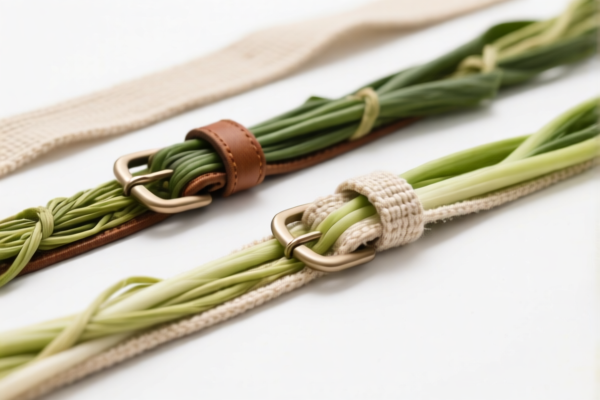
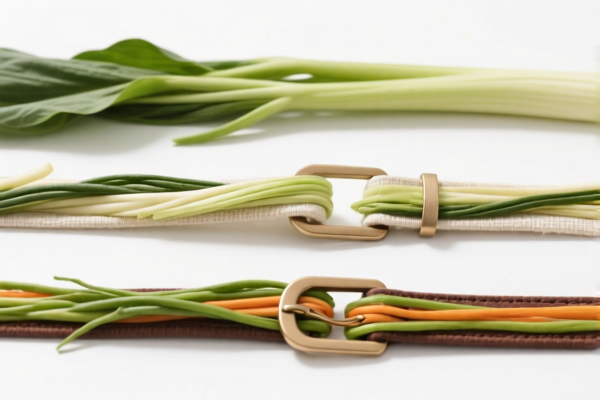
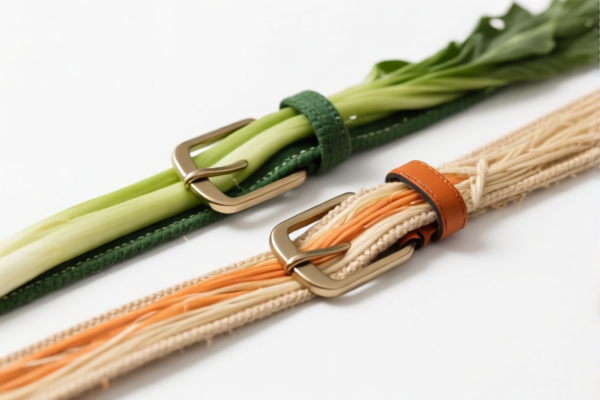
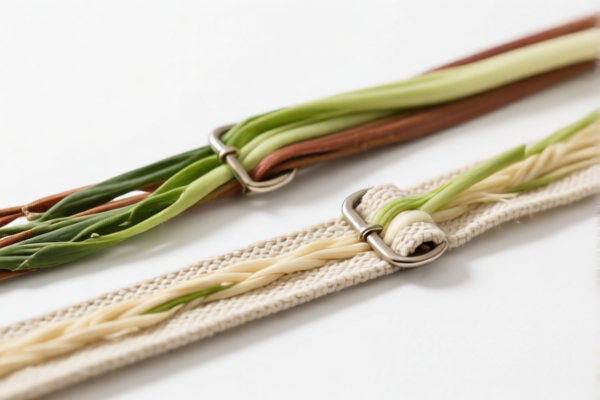
Customized textile belt containing plant fibers
CN → US| HS Code | Tariff Rate | Origin | Destination | Doc |
|---|---|---|---|---|
| 5311004010 | 35.0% | CN | US | Official Doc |
| 5311004020 | 35.0% | CN | US | Official Doc |
| 5806392000 | 39.9% | CN | US | Official Doc |
| 5806393080 | 35.0% | CN | US | Official Doc |
| 6307909891 | 24.5% | CN | US | Official Doc |
Product Images
AI Analysis
🌿 Plant Fiber Textile Belts & Narrow Fabrics (Customized Textiles)
🌐 HS Code Reference & Customs Clearance Guide | 2026 Latest Tariff Analysis | Professional Clearance Strategy
📌 I. Product Definition & Classification: Are You Clear on "Plant Fiber Textiles"?
Customized textile belts containing plant fibers fall under a specific niche in international trade. These products are distinct from synthetic belts (nylon/polyester) and leather. They are categorized based on their material composition (plant-based) and physical form (woven fabric/bands).
In international customs classification, these items are primarily split into two groups: * General Woven Plant Fiber Belts: Broad fabrics made from natural plant fibers. * Narrow Woven Fabrics (Narrow Width): Specifically narrow strips, often used for trimming, suspension, or specialized industrial belts, made from non-cotton plant fibers or other textile materials.
⚠️ Key Distinction:
- If the product is a standard woven belt made entirely of plant fibers → It falls under Chapter 53 (Vegetable textile fibers).
- If the product is a narrow strip (<5cm width typically) made of plant fibers but not cotton → It falls under Chapter 58 (Special woven fabrics).
- If the product is a finished accessory (e.g., a bag strap with hardware, or a decorative belt end) → It may fall under Chapter 63 (Other made-up textile articles).
📦 II. HS Code Classification Details (2026 Latest Tariff Authority Comparison)
Based on the provided data, here are the precise HS Codes for "Customized textile belts containing plant fibers." Note that the duty rates vary significantly based on the specific sub-category and width.
| HS Code | Product Description | Applicable Scenario | Total Tax Rate | Key Tax Components |
|---|---|---|---|---|
5311.00.40.10 |
Woven fabrics of vegetable textile fibers, classified according to their texture | General plant fiber textile belts/bands (broad woven) | 35.0% | Base: 0%, Section 301: 25%, Section 122: 10% |
5311.00.40.20 |
Other plant textile fibers, in the form of derivatives of woven fabrics | Specialty plant fiber belts derived from woven structures | 35.0% | Base: 0%, Section 301: 25%, Section 122: 10% |
5806.39.20.00 |
Narrow woven fabrics of vegetable textile fibers, other than cotton | Narrow plant fiber belts (non-cotton, e.g., hemp, jute, flax) | 39.9% | Base: 4.9%, Section 301: 25%, Section 122: 10% |
5806.39.30.80 |
Other narrow woven fabrics of textile materials, excluding silk or metallized | Narrow belts made of mixed plant fibers (non-silk, non-metallic) | 35.0% | Base: 0%, Section 301: 25%, Section 122: 10% |
6307.90.98.91 |
Other made-up textile articles, of vegetable fibers | Finished textile products/accessories (e.g., belts with hardware, finished bags) | 24.5% | Base: 7.0%, Section 301: 7.5%, Section 122: 10% |
🔍 Critical Note:
- Chapter 53 (5311): Applies to the fabric itself (the woven belt material).
- Chapter 58 (5806): Applies to narrow fabrics specifically. If your "belt" is a narrow strip (<5cm), use this chapter.
- Chapter 63 (6307): Applies to finished articles. If the belt is a finished product (e.g., a bag strap with metal buckles attached), this code may apply, but the base duty is higher.
💰 III. 2026 Latest Tariff Rate Breakdown (Including Additional Taxes & Policy Surcharges)
✅ Applicable Country: United States (US)
✅ Origin: China (CN)
✅ Effective Date: Post-2025 policies (Section 301 + Section 122)
🎯 1. 5311.00.40.10 / 5311.00.40.20 —— Woven Plant Fiber Belts (General)
| Item | Content |
|---|---|
| Base Duty Rate | 0.0% (Free) |
| Section 301 Surcharge | +25.0% (USITC Footnote 9903.88.01) |
| Section 122 Surcharge | +10.0% (Targeting specific Chinese textile imports) |
| Total Effective Rate | 35.0% |
| Tax Calculation | CIF Value × 35% |
| De Minimis Exemption | ❌ Not Eligible (Deny de_minimis) |
| Legal Basis Path | USITC:5311.00.40.10 → SECTION301:9903.88.01 → SECTION122 |
📌 Explanation:
- Although the base duty is 0%, the 35% total duty makes this a high-cost item.
- Section 301 (25%) is the standard trade war tariff on Chinese textiles.
- Section 122 (10%) is a specific additional levy targeting plant-based textile imports from China.
🎯 2. 5806.39.20.00 —— Narrow Woven Fabrics (Non-Cotton Plant Fiber)
| Item | Content |
|---|---|
| Base Duty Rate | 4.9% |
| Section 301 Surcharge | +25.0% |
| Section 122 Surcharge | +10.0% |
| Total Effective Rate | 39.9% |
| Tax Calculation | CIF Value × 39.9% |
| De Minimis Exemption | ❌ Not Eligible |
| Legal Basis Path | USITC:5806.39.20.00 → SECTION301:9903.88.01 → SECTION122 |
📌 Warning:
- This is the highest tax rate among the plant fiber categories.
- Only applicable if the fabric is narrow AND made of non-cotton plant fibers (e.g., hemp, sisal).
- If your belt is made of cotton, it falls under different codes (not listed here), but likely similar high rates.
🎯 3. 5806.39.30.80 —— Other Narrow Woven Fabrics (Mixed/Non-Silk)
| Item | Content |
|---|---|
| Base Duty Rate | 0.0% |
| Section 301 Surcharge | +25.0% |
| Section 122 Surcharge | +10.0% |
| Total Effective Rate | 35.0% |
| Tax Calculation | CIF Value × 35.0% |
| De Minimis Exemption | ❌ Not Eligible |
📌 Note:
- If the belt is narrow but made of mixed plant fibers or other non-silk materials, this code applies.
- Same tax burden as general woven plant fiber belts.
🎯 4. 6307.90.98.91 —— Other Made-Up Textile Articles (Finished Products)
| Item | Content |
|---|---|
| Base Duty Rate | 7.0% |
| Section 301 Surcharge | +7.5% (Note: Reduced from 25% for some finished goods) |
| Section 122 Surcharge | +10.0% |
| Total Effective Rate | 24.5% |
| Tax Calculation | CIF Value × 24.5% |
| De Minimis Exemption | ❌ Not Eligible |
📌 Strategic Opportunity:
- This is the lowest tax rate (24.5%) among the options.
- However, it only applies if the product is a finished made-up article (e.g., a belt with attached hardware, a completed bag strap, or a decorative trim).
- If you import raw woven fabric, do not use this code to avoid misclassification penalties.
🛠️ IV. Customs Clearance Practical Advice (Battle-Tested Pitfall Avoidance)
✅ 1. Documentation Checklist (Non-Negotiable)
| Document | Required | Description |
|---|---|---|
| ✅ Product Specification Sheet | ✔️ | Must specify: Fiber type (e.g., hemp, jute, flax), width, weight per square meter. |
| ✅ Composition Label | ✔️ | Exact percentage of plant fibers vs. any synthetic blends. |
| ✅ Product Photos | ✔️ | Show the weave structure, edges, and any hardware (if finished). |
| ✅ Commercial Invoice | ✔️ | Clearly state: "Woven Vegetable Fiber Belt, Plant Fiber Content 100%." |
| ✅ Packing List | ✔️ | Weight and dimensions. |
| ✅ Origin Certificate | ✔️ | Essential for verifying Chinese origin and applying correct surcharges. |
✅ 2. Declaration Tips (Key Mnemonics)
🔥 "Raw Fabric is Chapter 53/58, Finished is Chapter 63. Width Matters!"
| Scenario | Correct HS Code | Common Mistake |
|---|---|---|
| Raw woven plant fiber belt (no hardware) | 5311.00.40.10 |
Misclassifying as 6307 (finished) → Risk of penalty |
| Narrow non-cotton plant fiber strip | 5806.39.20.00 |
Misclassifying as 5311 → Incorrect base duty |
| Narrow mixed textile strip (no silk/metal) | 5806.39.30.80 |
Using 5311 → Overpayment or underpayment |
| Finished belt (with metal buckles, leather ends) | 6307.90.98.91 |
Misclassifying as fabric → 24.5% vs 35%+ |
| Cotton plant fiber belt | (Not in provided data) | Assuming same as non-cotton → High risk |
📌 Critical:
- If the belt contains hardware (buckles, rivets), it may be considered a "made-up article" (6307). This could lower your tax rate to 24.5%.
- If it is just the woven fabric, you are stuck with 35% or 39.9%.
✅ 3. Special Circumstances Handling
| Situation | Handling Advice |
|---|---|
| OEM Customized Belts | Provide design drawings. If the design is unique, it doesn't change HS code, but helps prove "made-up" status if hardware is included. |
| Mixed Fibers | If plant fibers are <50%, it may not be a "plant fiber" product. Check composition carefully. |
| Samples for Testing | Still subject to full duties if value exceeds de minimis ($800). Do not rely on sample exemption. |
| Finished vs. Unfinished | If you add any functional component (buckle, loop), try to argue for 6307 to save ~10-15% in taxes. |
🌍 V. Global Market Clearance Comparison (2026 Latest)
| Country/Region | Recommended HS Code | Duty Rate (China Origin) | Certification | Notes |
|---|---|---|---|---|
| 🇺🇸 United States | 5311.00.40.10 / 5806.39.20.00 |
35.0% - 39.9% | No specific certification | High tariffs due to Section 301 + 122 |
| 🇨🇳 China | 5311.00.40.10 |
0% - 7% (Import Duty) | N/A | No Section 301/122 |
| 🇪🇺 European Union | 5311.00.40.10 |
0% - 4% (If GSP/FTA) | CE (if industrial use) | No Section 301/122 |
| 🇦🇺 Australia | 5311.00.40.10 |
5% - 10% | N/A | No Section 301/122 |
📌 Conclusion:
- USA is the only market imposing Section 122 and high Section 301 duties on these products.
- Total duty in the US (35-40%) is extremely high compared to other regions.
- Strategy: Consider finished goods classification (6307) to reduce duty to 24.5% if structurally possible.
📌 VI. Common Mistakes & Pitfall Avoidance (Blood-Tested Lessons)
❌ Mistake 1: Classifying a finished belt with buckles as 5311 (fabric)
👉 Consequence: You pay 35% instead of 24.5%. You overpay by 10.5% on every shipment.
❌ Mistake 2: Misidentifying narrow vs. wide belts
👉 Consequence: Using 5311 for a narrow fabric (5806) may lead to penalties or corrected duty assessments (4.9% base vs 0% base).
❌ Mistake 3: Ignoring Section 122 in tariff calculation
👉 Consequence: Your cost projection is off by 10% on every unit. This can wipe out your profit margin.
❌ Mistake 4: Assuming all plant fibers are the same
👉 Consequence: Cotton vs. Non-Cotton distinction changes the HS code in Chapter 58. Misclassification leads to customs holds.
✅ Correct Approach:
"Woven Hemp Fiber Belt, 2cm width, Finished with Metal Buckle, Model XYZ, 100% Vegetable Fiber"
🎯 VII. Conclusion: Precise Classification Saves Money!
🎯 Remember the Mantra:
🔹 "Raw fabric is 35%, Finished is 24.5%. Narrow is 39.9% if non-cotton!"
🔹 "Add hardware, save taxes. Don't ignore Section 122!"
📌 Pro Tip:
If your finished belt has metal components or leather attachments, strongly consider declaring under 6307.90.98.91 to achieve the 24.5% total duty rate. This is a 10-15% saving compared to raw fabric classification.
📣 Immediate Action:
📞 Consult with a licensed customs broker
📸 Submit product photos with hardware clearly visible
🚀 Optimize your supply chain to maximize the 24.5% finished goods rate!
✨ Professional Clearance Starts with Accurate Classification!
💼 Every Percentage Point of Duty is Profit or Loss!
Customer Reviews
About HS Code Classification
The Harmonized System (HS) is an internationally standardized nomenclature developed by the World Customs Organization (WCO) to classify traded products. Over 200 countries use the HS system as the basis for customs tariffs, trade statistics, and import/export regulations.
Each HS code follows a hierarchical structure:
- Chapter (2 digits) — Broad category of goods (e.g., Chapter 84: Machinery and Mechanical Appliances)
- Heading (4 digits) — More specific grouping within the chapter
- Subheading (6 digits) — Internationally standardized breakdown, used by all WCO member countries
- National subdivisions (8-10 digits) — Country-specific extensions for further classification, such as US HTSUS 10-digit codes
Correct HS code classification is essential for smooth customs clearance, accurate duty payment, and compliance with trade regulations. Misclassification can lead to customs delays, overpayment of duties, or penalties.
When importing from CN to US, the applicable tariff rates may include:
- Most-Favored-Nation (MFN) rate — The standard duty rate applied to WTO members
- General rate — Applied to countries without trade agreements
- Trade remedy duties — Additional tariffs such as Section 301 (anti-dumping), Section 232 (national security), or countervailing duties
The information provided on this page is for reference purposes only. For official classification, please consult with your local customs authority or a licensed customs broker.