Cut Cardboard and Paper by Size or Shape
CN → US| HS Code | Tariff Rate | Origin | Destination | Doc |
|---|---|---|---|---|
| 4823908680 | 35.0% | CN | US | Official Doc |
| 4823908000 | 35.0% | CN | US | Official Doc |
| 8441100000 | 35.0% | CN | US | Official Doc |
| 8205595510 | 40.3% | CN | US | Official Doc |
| 4823908000 | 35.0% | CN | US | Official Doc |
Product Images

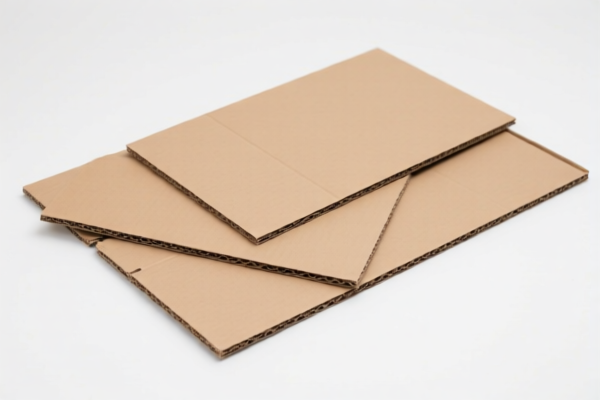
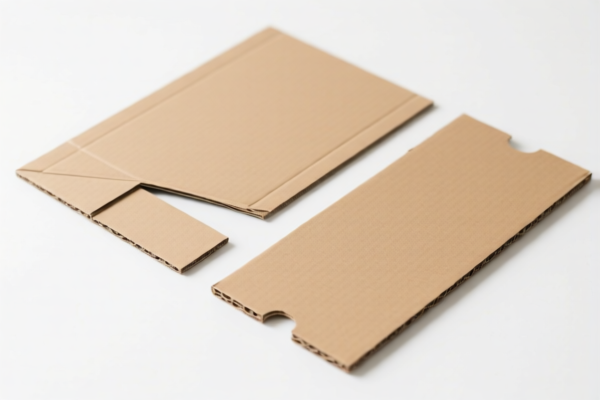
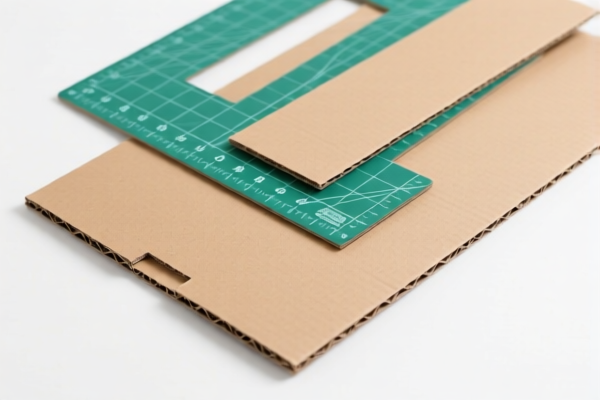
AI Analysis
✂️ Cut Cardboard and Paper by Size or Shape
🌐 HS Code Reference & Customs Clearance Guide | 2026 Latest Tariff Analysis | Professional Customs Strategy
📌 1. Product Definition and Classification: Do You Really Understand "Cut Paper/Cardboard"?
"Cut Cardboard and Paper by Size or Shape" refers to paper or paperboard products that have been mechanically cut into specific dimensions or shapes for industrial or commercial use. In international trade, classification depends heavily on whether the item is considered a raw material/component or a finished tool/machine.
Key Distinction:
- Paper/Cardboard Products: If the item is primarily made of paper/cardboard and serves as packaging, liner, or industrial substrate →归入 Chapter 48 (Paper and Paperboard).
- Cutting Machinery/Tools: If the item is a machine (like a guillotine) or a handheld metal tool used to perform the cutting →归入 Chapter 84 (Machinery) or Chapter 82 (Tools).
⚠️ Critical Decision Point:
- If it is paper/cardboard itself (even if cut to size) → 4823.90.xx.xx
- If it is the machine/tool doing the cutting → 8441.10.00.00 or 8205.59.55.10
📦 2. HS Code Classification Details (2026 Latest Tariff Authority对照)
Based on your provided data, here are the four potential classifications. Note that 4823.90.80.00 appears twice with slight descriptive variations; they represent the same core category.
| HS Code | Product Description | Scenario | Classification Logic |
|---|---|---|---|
4823.90.86.80 |
Cut paper/cardboard, specific size/shape | Packaging components, die-cut liners, industrial paper substrates | Paper/Cardboard product, cut to size/shape |
4823.90.80.00 |
Cut paper/cardboard for paper-based industries | General industrial paper products, cut to size/shape | Paper/Cardboard product, cut to size/shape (General) |
8441.10.00.00 |
Cutting machines for paper/cardboard | Industrial guillotine cutters, paper processing machines | Machinery, not the paper itself |
8205.59.55.10 |
Hand tools for cutting paper/cardboard (Metal) | Manual scissors, shears, or specialized hand-cutting blades | Hand Tool (Metal), used to cut, not the paper |
🔍 Focus Reminder:
- Most "Cut Cardboard and Paper" shipments refer to the paper products themselves (4823series).
- If you are importing the equipment that cuts the cardboard, it falls under8441or8205.
- Do not mix the product with its tool in the same line item unless explicitly packing them as a kit (which may still be subject to primary use rules).
💰 3. 2026 Latest Tariff Rate Breakdown (Including Surcharges & Policy Add-ons)
✅ Applicable Country: United States (US)
✅ Origin: China (CN)
✅ Effective Date: 2025 Nov 10 onwards (including subsequent imports)
🎯 1. 4823.90.86.80 & 4823.90.80.00 —— Cut Paper/Cardboard Products
| Item | Content |
|---|---|
| Base Tariff | 0% (ad valorem) |
| USITC Surtax (Section 301) | +25% |
| IEEPA Surcharge | +10% (针对中国/香港产品,自2025年11月10日起) |
| Total Tariff Rate | 35.0% |
| Tax Calculation | CIF Value × 35% |
| De Minimis Eligibility | ❌ No (deny_de_minimis) |
| Legal Basis Path | IEEPA:9903.01.25 → IEEPA:9903.01.24 → USITC:4823.90.80.00 / 4823.90.86.80 |
📌 Explanation:
- The "25% USITC surtax" comes from the Section 301 duties under the US Trade Act.
- The "10% IEEPA surcharge" is an additional duty on Chinese/HK products under the International Emergency Economic Powers Act.
- Combined 35%, this is a high tariff. You must budget accordingly!
🎯 2. 8441.10.00.00 —— Cutting Machines for Paper/Cardboard
| Item | Content |
|---|---|
| Base Tariff | 0% |
| USITC Surtax | +25% |
| IEEPA Surcharge | +10% |
| Total Tariff Rate | 35.0% |
| Tax Calculation | CIF × 35% |
| De Minimis Eligibility | ❌ No |
| Legal Basis Path | IEEPA:9903.01.25 → IEEPA:9903.01.24 → USITC:8441.10.00.00 |
📌 Note:
- Machinery imported from China faces the same high surcharges as paper products.
- Ensure the machine is correctly described as "Industrial Cutting Machine" to avoid misclassification.
🎯 3. 8205.59.55.10 —— Metal Hand Tools for Cutting Paper/Cardboard
| Item | Content |
|---|---|
| Base Tariff | 5.3% |
| USITC Surtax | +25% |
| IEEPA Surcharge | +10% |
| Total Tariff Rate | 40.3% |
| Tax Calculation | CIF × 40.3% |
| De Minimis Eligibility | ❌ No |
| Legal Basis Path | IEEPA:9903.01.25 → IEEPA:9903.01.24 → USITC:8205.59.55.10 |
📌 Important:
- This category has a higher base tariff (5.3%) compared to paper (0%) or machinery (0%).
- Total 40.3% is the highest among the listed HS codes.
- Applies only to metal hand tools (e.g., heavy-duty shears, scissors). Plastic-handled tools may differ, but metal blades usually trigger this code.
🛠️ 4. Customs Clearance Practical Advice (Real-World Pitfall Avoidance)
✅ 1. Required Documentation Checklist (All are mandatory)
| Document | Must Provide | Description |
|---|---|---|
| ✅ Product Specification Sheet | ✔️ | Dimensions, shape, weight, paper grade (e.g., corrugated, kraft), cutting accuracy |
| ✅ Product Photos (with Label) | ✔️ | Clear view of cut edges, branding, model number |
| ✅ Commercial Invoice | ✔️ | Must clearly state "Cut Paper/Cardboard, Size X, Shape Y" or "Paper Cutting Machine" |
| ✅ Packing List | ✔️ | Detail net/gross weight, number of pieces, palletization |
| ✅ Certificate of Origin (CO) | ✔️ | If non-China origin, may qualify for exemptions (rare for US) |
| ✅ Third-Party Test Report | ✔️ | If applicable (e.g., FDA food-contact paper, flammability standards) |
✅ 2. Declaration Tips (Key Mantras)
🔥 "Define Material, Define Form, Name Precisely, Tax Lower!"
| Scenario | Correct Declaration | Wrong Practice |
|---|---|---|
| Cut Cardboard for Packaging | 4823.90.80.00 / 4823.90.86.80 "Corrugated cardboard, cut to 12x12 inches" |
Describing as "Box" or "Container" → Different HS Code, Potential Penalty |
| Industrial Paper Rolls (Cut) | 4823.90.80.00 |
Describing as "Raw Paper" → May ignore cut shape requirement |
| Manual Paper Shears | 8205.59.55.10 "Metal hand tool, for cutting paper" |
Describing as "Scissors for general use" → Risk of misclassification |
| Automatic Cutting Machine | 8441.10.00.00 "Guillotine cutter for paperboard" |
Describing as "Part of packaging machine" → Delays |
✅ 3. Special Situation Handling
| Situation | Handling Advice |
|---|---|
| OEM Custom Shapes | Provide client PO + design drawing. Avoid generic "Cut Paper" if shapes are unique. |
| Paper + Machine Shipped Together | Declare Separately! Paper goes to 4823, Machine to 8441. Do not combine into one line. |
| Small Hand Tools | Even single units of 8205.59.55.10 are subject to 40.3%. No de minimis exemption. |
| Paper for Food Contact | Ensure FDA compliance docs are included to prevent customs hold. |
🌍 5. Global Market Clearance Comparison (2026 Latest)
| Country/Region | Recommended HS Code | Tariff | Certification | Note |
|---|---|---|---|---|
| 🇺🇸 USA | 4823.90.80.00 / 4823.90.86.80 |
35% (China Origin) | None Specific | High surcharge due to Section 301 + IEEPA |
| 🇨🇳 China | 4823.90.80.00 |
5-8% | CCC (if applicable) | No additional surcharges |
| 🇪🇺 EU | 4823.90.80.00 |
6.5% | CE (if applicable) | No additional surcharges |
| 🇦🇺 Australia | 4823.90.80.00 |
5% | N/A | Standard MFN rate |
| 🇯🇵 Japan | 4823.90.80.00 |
3-5% | PSE (if applicable) | No additional surcharges |
📌 Conclusion:
- USA is the most expensive market for cut paper/cardboard and related tools from China.
- EU, Japan, and Australia offer significantly lower total duties.
- Consider supply chain diversification if targeting the US market heavily.
📌 6. Common Errors & Pitfalls (Blood-Teaching Lessons)
❌ Error 1: Declaring "Cut Cardboard" as "Unprocessed Paper Rolls"
👉 Consequence: Misclassification → Penalty + Back Taxes!
Reason: Cut products may have different duty rates or regulatory requirements.
❌ Error 2: Mixing "Paper" and "Cutting Tool" in one HS Code
👉 Consequence: Customs may reject the declaration or audit the entire shipment.
Reason: Paper (4823) and Tools (8205) have different valuation and regulatory paths.
❌ Error 3: Ignoring the "122 Clause Tariff" (IEEPA 10%)
👉 Consequence: Underpayment of duties → Seizure or Fine.
Reason: This 10% is added on top of the 25% Section 301 duty for many Chinese goods.
❌ Error 4: Describing 8205.59.55.10 as "General Scissors"
👉 Consequence: If deemed general-use, rate might differ, but if misidentified, it leads to delays.
Reason: Specificity is key for tool classification.
✅ Correct Practice:
"Corrugated Cardboard, Cut to 10x10 inches, for Packaging Use, Model XYZ, Origin China"
OR
"Metal Hand Shears, specifically designed for cutting paper/cardboard, Model ABC, Origin China"
🎯 7. Conclusion: Precise Declaration, Save Time, Reduce Costs!
🎯 Remember the Mantra:
🔹 "Paper is 4823, Machine is 8441, Tool is 8205."
🔹 "35% on Paper/Machine, 40.3% on Metal Tools."
🔹 "Declare Separately, Avoid Penalties!"
📌 Pro Tip:
If your products are originating from Vietnam, Mexico, Thailand, or Malaysia, you may be eligible for IEEPA Exemptions, reducing the total tariff to 0%~5%.
Recommend applying for an Advance Ruling from US Customs and Border Protection (CBP) before shipment to avoid risks.
📣 Act Now:
📞 Contact a Professional Customs Broker + Provide Product Photos + Apply for HS Code Advance Ruling
🚀 Let your Cut Cardboard and Paper clear customs smoothly, efficiently, and profitably!
✨ Professional Clearance Starts with Precise Classification!
💼 Every cent of your cost deserves precise calculation!
Customer Reviews
About HS Code Classification
The Harmonized System (HS) is an internationally standardized nomenclature developed by the World Customs Organization (WCO) to classify traded products. Over 200 countries use the HS system as the basis for customs tariffs, trade statistics, and import/export regulations.
Each HS code follows a hierarchical structure:
- Chapter (2 digits) — Broad category of goods (e.g., Chapter 84: Machinery and Mechanical Appliances)
- Heading (4 digits) — More specific grouping within the chapter
- Subheading (6 digits) — Internationally standardized breakdown, used by all WCO member countries
- National subdivisions (8-10 digits) — Country-specific extensions for further classification, such as US HTSUS 10-digit codes
Correct HS code classification is essential for smooth customs clearance, accurate duty payment, and compliance with trade regulations. Misclassification can lead to customs delays, overpayment of duties, or penalties.
When importing from CN to US, the applicable tariff rates may include:
- Most-Favored-Nation (MFN) rate — The standard duty rate applied to WTO members
- General rate — Applied to countries without trade agreements
- Trade remedy duties — Additional tariffs such as Section 301 (anti-dumping), Section 232 (national security), or countervailing duties
The information provided on this page is for reference purposes only. For official classification, please consult with your local customs authority or a licensed customs broker.