Cut Paper and Cardboard
CN → US| HS Code | Tariff Rate | Origin | Destination | Doc |
|---|---|---|---|---|
| 8441100000 | 35.0% | CN | US | Official Doc |
| 8205595510 | 40.3% | CN | US | Official Doc |
| 8205517500 | 38.7% | CN | US | Official Doc |
| 8214100000 | 0.0% | CN | US | Official Doc |
| 8214909000 | 0.0% | CN | US | Official Doc |
Product Images
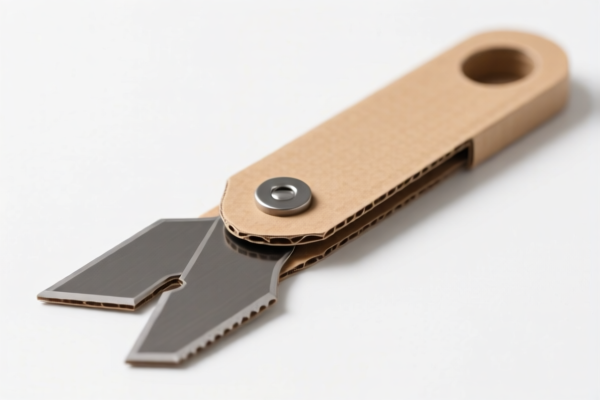
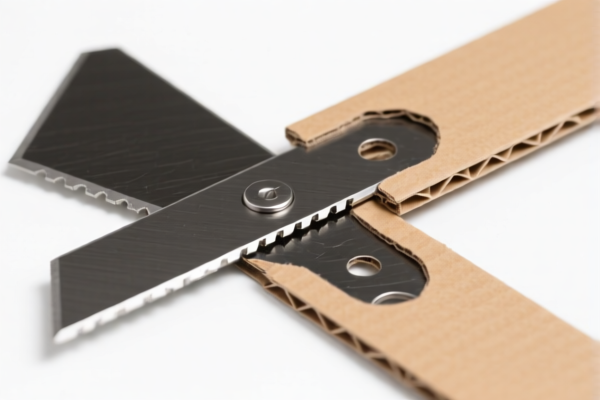
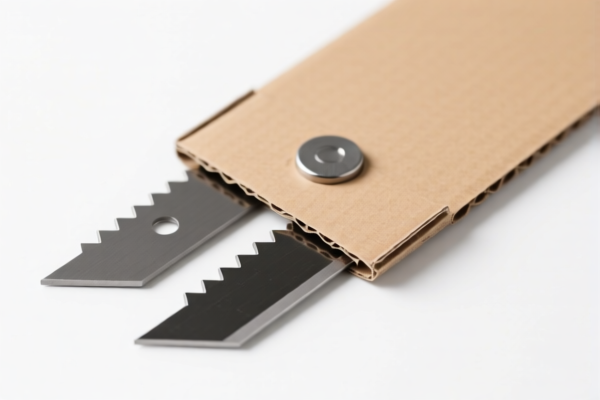
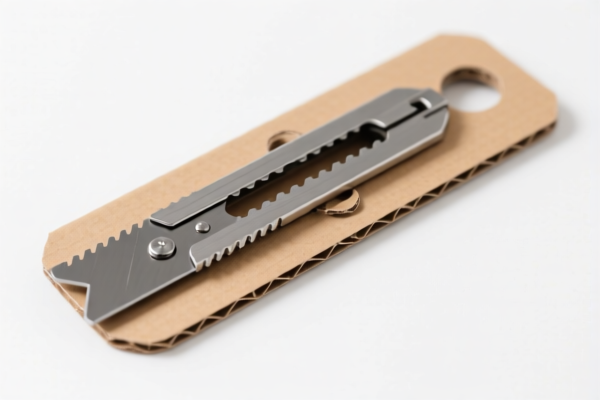
AI Analysis
✂️ Cut Paper and Cardboard (Paper/Board Cutting Machinery & Tools)
🌐 HS Code Reference & Customs Clearance Guide | 2026 Latest Tariff Analysis | Professional Entry Strategy
📌 I. Product Definition & Classification: What Exactly Are You Importing?
“Cut paper and cardboard” is a broad category that spans from heavy-duty industrial machinery to handheld office tools. In international trade, the function (cutting paper/cardboard) and form (machine vs. hand tool) dictate the HS Code. Misclassification here can lead to drastic differences in tariff rates (from 0.3¢/unit to 40.3% ad valorem) and regulatory scrutiny.
Key Distinctions: * Industrial Machines: Automated or mechanical devices specifically designed for cutting paper/cardboard stock → Chapter 84. * Hand Tools: Manual or manual-assist tools (knives, guillotines) with blades → Chapter 82. * Material Matters: Are they made of steel? Is it a complete unit or just a blade?
⚠️ Critical Distinction Point:
- If it is a machine with motor/mechanical parts for cutting paper → 8441.10.00.00
- If it is a manual hand tool with a blade (e.g., craft knife, box cutter) → 8214.90.90.00 or 8214.10.00.00
- If it is a steel cutting tool not primarily for paper (but can cut it) → 8205.59.55.10
📦 II. HS Code Classification Details (2026 Latest Tariff Authority)
| HS Code | Product Description | Application Scenario | Tax Rate (China Origin to US) |
|---|---|---|---|
8441.10.00.00 |
Machines for cutting paper or paperboard (e.g., guillotine cutters, slitting machines) | Industrial paper cutting, printing presses, packaging plants | 35.0% |
8205.59.55.10 |
Steel hand tools with working parts of steel, for cutting paper/cardboard | Heavy-duty manual shears, specialized steel cutters | 40.3% |
8205.51.75.00 |
Hand tools for cutting paper/cardboard (Household category) | Home office use, basic craft cutting | 38.7% |
8214.10.00.00 |
Paper knives and paper cutters (specifically designed) | Standard office paper knives, letter openers | 0.3¢ each + 14.2% effective |
8214.90.90.00 |
Other knives (including pruning knives), including pocketknife blades | General metal knives used for cutting, multi-tools | 1.4¢ each + 13.2% effective |
🔍 Key Insight:
- Machines (8441) face a flat 35% rate.
- Specialized Hand Tools (8214) are taxed per unit (cents) plus a small percentage, which can be significantly cheaper for high-volume, low-value items.
- General Steel Tools (8205) face the highest ad valorem rates (~40%) if classified broadly as "other hand tools."
💰 III. 2026 Latest Tariff Rate Breakdown (Including Additional Duties)
✅ Applicable Country: United States (US)
✅ Origin: China (CN)
✅ Effective Date: Post-2025 adjustments (Section 301 & IEEPA)
🎯 1. 8441.10.00.00 —— Machines for Cutting Paper/Cardboard
| Item | Content |
|---|---|
| Base Duty Rate | 0.0% (Ad Valorem) |
| Section 301 Add-on | +25.0% |
| Section 122 (IEEPA) Add-on | +10.0% |
| Total Effective Rate | 35.0% |
| Calculation Basis | CIF Value × 35% |
| De Minimis Exemption | ❌ Not Eligible |
📌 Explanation:
- This category is treated as industrial machinery. The base rate is low, but the 35% total (25% Sec 301 + 10% IEEPA) makes it expensive.
- Legal Path:USITC:8441.10.00.00→FOOTNOTE:301→IEEPA:9903.01.10
🎯 2. 8205.59.55.10 —— Other Steel Hand Tools
| Item | Content |
|---|---|
| Base Duty Rate | 5.3% |
| Section 301 Add-on | +25.0% |
| Section 122 (IEEPA) Add-on | +10.0% |
| Total Effective Rate | 40.3% |
| Calculation Basis | CIF Value × 40.3% |
| De Minimis Exemption | ❌ Not Eligible |
📌 Warning:
- If your "paper cutter" is classified as a general steel hand tool rather than a specific paper-cutting device, you pay the highest rate. Always provide proof that the tool is primarily designed for paper/cardboard to argue for a lower HS code.
🎯 3. 8214.10.00.00 —— Paper Knives and Cutters
| Item | Content |
|---|---|
| Base Duty | 0.3¢ each + 4.2% |
| Section 301 Add-on | 0.0% |
| Section 122 (IEEPA) Add-on | +10.0% |
| Total Effective Cost | 0.3¢/unit + ~14.2% total |
| Calculation Basis | (0.003 USD × Qty) + (CIF × 14.2%) |
| De Minimis Exemption | ❌ Not Eligible |
📌 Advantage:
- For high-volume, low-cost items (e.g., plastic-handled paper knives), the per-unit duty can be very competitive compared to the 35-40% ad valorem rates.
🎯 4. 8214.90.90.00 —— Other Knives
| Item | Content |
|---|---|
| Base Duty | 1.4¢ each + 3.2% |
| Section 301 Add-on | 0.0% |
| Section 122 (IEEPA) Add-on | +10.0% |
| Total Effective Cost | 1.4¢/unit + ~13.2% total |
| Calculation Basis | (0.014 USD × Qty) + (CIF × 13.2%) |
📌 Usage:
- Use this for general-purpose metal knives that are not exclusively for paper but are imported alongside or used in paper-handling contexts. Note: 1.4¢ per unit is higher than 0.3¢, so8214.10.00.00is preferred if the item is strictly a paper knife.
🛠️ IV. Customs Clearance Practical Advice (Pitfall Avoidance)
✅ 1. Documentation Checklist (Essential)
| Document | Required? | Purpose |
|---|---|---|
| Product Specifications | ✔️ | Must state: "Machine for cutting paper/cardboard" vs. "Manual cutter." |
| Photos of Product | ✔️ | Clear view of blades, control panels, and branding. |
| Bill of Materials (BOM) | ✔️ | For machines (8441) to prove machinery classification. |
| Material Declaration | ✔️ | For hand tools (82xx), specify steel content vs. plastic handles. |
| Commercial Invoice | ✔️ | Describe item as "Paper Cutting Machine" or "Paper Knife," NOT just "Cutting Tool." |
| Country of Origin | ✔️ | Crucial for applying Section 301 & IEEPA tariffs. |
✅ 2. Classification Strategy (Key Mantra)
🔥 "Machines go to Ch.84, Tools to Ch.82, Specificity Saves Money!"
| Scenario | Recommended HS Code | Risk of Misclassification |
|---|---|---|
| Electric/Manual Guillotine for Factory | 8441.10.00.00 |
❌ Do not classify as hand tool → Saves 5.3% base |
| Small Desktop Paper Trimmer (Plastic/Steel) | 8214.10.00.00 |
⚠️ If classified as 8205, pay 40.3% instead of ~14.2% |
| Craft Knife / Box Cutter | 8214.90.90.00 |
✅ Standard classification for general blades |
| Heavy Steel Shears for Cardboard | 8205.59.55.10 |
⚠️ Only if not primarily for paper; otherwise argue for 8214 |
✅ 3. Special Handling Cases
| Case | Recommendation |
|---|---|
| OEM Custom Machines | Provide design drawings showing it is exclusively for paper/cardboard to justify 8441. |
| Hand Tools with Plastic Handles | Ensure the working part (blade) is steel to fall under Chapter 82, but emphasize the function to avoid "general tool" classification. |
| Combined Shipment (Machine + Blades) | Declare the machine separately. Blades should be declared as 8214 or accessories. Do not mix to avoid "complete set" classification issues. |
| Low-Value Hand Tools | If shipping small quantities of paper knives, 8214.10.00.00 (0.3¢) is far cheaper than 8214.90.90.00 (1.4¢). Ensure accurate description. |
🌍 V. Global Market Comparison (2026 Update)
| Country/Region | Recommended HS Code | Est. Duty Rate (China) | Certification Notes |
|---|---|---|---|
| 🇺🇸 USA | 8441.10.00.00 (Machine) |
35.0% | Sec 301 + IEEPA apply |
| 🇺🇸 USA | 8214.10.00.00 (Paper Knife) |
~14.2% + 0.3¢/unit | Sec 301 does NOT apply to Ch.82 hand tools |
| 🇨🇳 China | 8441.10.00.00 |
0% (Import Duty) | No additional tariffs |
| 🇪🇺 EU | 8441.10.00 |
0% - 2.7% | No Section 301/IEEPA |
| 🇨🇦 Canada | 8441.10.00.00 |
0% (MFN) | Check CUSMA eligibility |
📌 Conclusion:
- The US market is the most expensive due to Section 301 (25%) and IEEPA (10%) tariffs.
- Hand tools (Ch. 82) often escape the 25% Section 301 duty, resulting in a lower total effective rate (~14-15%) compared to machinery (35%).
- Strategy: If possible, classify items as hand tools rather than machines, or ensure the machine classification is justified to avoid penalties.
📌 VI. Common Errors & Pitfalls (Lessons Learned)
❌ Error 1: Calling a "Paper Cutting Machine" a "Hand Tool"
👉 Consequence: Customs may reject the classification, leading to re-evaluation at 35% + penalties or detention.
❌ Error 2: Using 8205.59.55.10 for a simple paper knife
👉 Consequence: You pay 40.3% instead of ~14.2%. Savings of 26%!
❌ Error 3: Ignoring the "122 Clause" (IEEPA)
👉 Consequence: Underestimating total cost by 10%. Always include the 10% IEEPA in your landed cost calculations.
❌ Error 4: Mixing machinery and tools in one SKU description
👉 Consequence: Customs ambiguity → delays → storage fees.
✅ Correct Approach:
"Automatic Paper Cutting Machine, Electric, for Cardboard, Model XYZ" → 8441.10.00.00
"Manual Paper Knife, Plastic Handle, Steel Blade, for Office Use" → 8214.10.00.00
🎯 VII. Conclusion: Precision in Classification, Savings in Duty
🎯 Key Takeaway:
🔹 "Machines = 35% (Ch.84). Simple Knives = ~14% (Ch.82). Choose wisely!"
🔹 "Sec 301 hits machines hard. Hand tools may be lighter."
🔹 "Always declare function: 'Cutting Paper' is key."
📌 Pro Tip:
If you are importing hand tools, consider if they qualify for HTS 8214 (specific paper tools) rather than general steel tools. The difference between 40.3% and 14.2% is massive.
For machines, budget for the full 35%. Consider duty drawback programs if re-exporting.
📣 Action Required:
📞 Verify product photos with a customs broker.
📝 Ensure invoices clearly state "For Cutting Paper/Cardboard."
🚀 Apply for Binding Rulings if shipping large volumes to lock in HS Code classification.
✨ Customs clearance starts with precise classification!
💼 Every percentage point saved is profit earned!
Customer Reviews
About HS Code Classification
The Harmonized System (HS) is an internationally standardized nomenclature developed by the World Customs Organization (WCO) to classify traded products. Over 200 countries use the HS system as the basis for customs tariffs, trade statistics, and import/export regulations.
Each HS code follows a hierarchical structure:
- Chapter (2 digits) — Broad category of goods (e.g., Chapter 84: Machinery and Mechanical Appliances)
- Heading (4 digits) — More specific grouping within the chapter
- Subheading (6 digits) — Internationally standardized breakdown, used by all WCO member countries
- National subdivisions (8-10 digits) — Country-specific extensions for further classification, such as US HTSUS 10-digit codes
Correct HS code classification is essential for smooth customs clearance, accurate duty payment, and compliance with trade regulations. Misclassification can lead to customs delays, overpayment of duties, or penalties.
When importing from CN to US, the applicable tariff rates may include:
- Most-Favored-Nation (MFN) rate — The standard duty rate applied to WTO members
- General rate — Applied to countries without trade agreements
- Trade remedy duties — Additional tariffs such as Section 301 (anti-dumping), Section 232 (national security), or countervailing duties
The information provided on this page is for reference purposes only. For official classification, please consult with your local customs authority or a licensed customs broker.