Cut paper and cardboard by size or shape
CN → US| HS Code | Tariff Rate | Origin | Destination | Doc |
|---|---|---|---|---|
| 4823610020 | 35.0% | CN | US | Official Doc |
| 4823690040 | 35.0% | CN | US | Official Doc |
Product Images
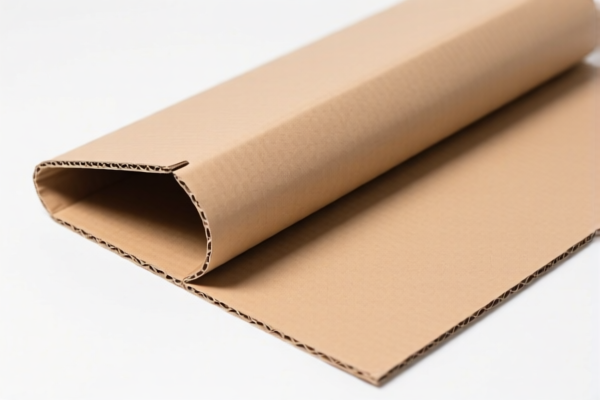
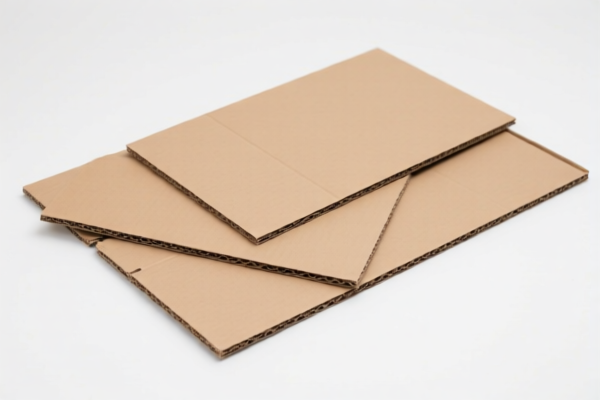
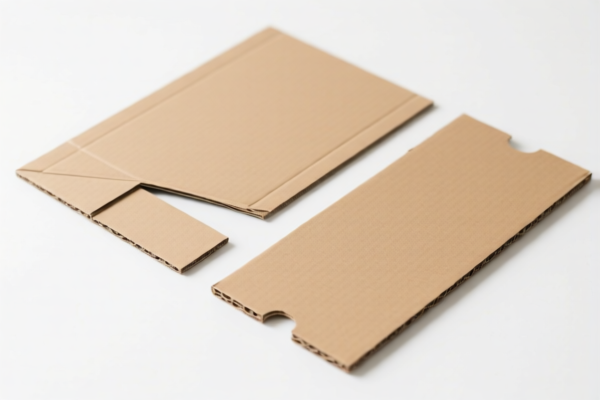
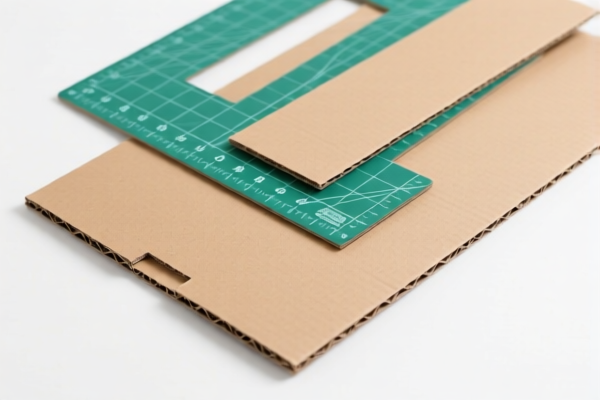
AI Analysis
📄 Cut Paper & Cardboard Products (Trays, Cups, Containers)
🌐 HS Code Reference & Customs Clearance Guide | 2026 Latest Tariff Analysis | Professional Entry Strategy
📌 I. Product Definition and Classification: What Exactly Are "Cut Paper and Cardboard" Products?
Paper and paperboard products that have been cut to size or shape fall under Chapter 48 of the Harmonized System. However, not all paper products are taxed equally. The critical distinction lies in the specific end-use and physical form of the product.
In international trade, these products are primarily categorized into two distinct groups based on their function: 1. Disposable Tableware/Containers (Bamboo-Based): Items like cups, trays, and nested food containers specifically made from bamboo fibers. 2. General Paper/Paperboard Articles (Non-Bamboo/Other): Trays, dishes, plates, and containers made from standard wood pulp, recycled paper, or other non-bamboo paperboard materials.
⚠️ Key Distinction Point:
- If the product is a cup, tray, or nested food container explicitly made from bamboo → Classified under 4823.61.00.20
- If the product is a tray, dish, plate, or cup made from other paper/paperboard (non-bamboo or generic "other") → Classified under 4823.69.00.40
📦 II. HS Code Classification Details (2026 Latest Tariff Authority Cross-Reference)
| HS Code | Product Description | Applicable Scenario | Material Type |
|---|---|---|---|
4823.61.00.20 |
Trays, dishes, plates, cups, etc., Of bamboo: Cups and round nested food containers | Bamboo tableware, eco-friendly bamboo cups, bamboo nested containers | ✅ Bamboo |
4823.69.00.40 |
Trays, dishes, plates, cups, etc., Other: Other | Standard paper cups, cardboard pizza boxes, paper plates, non-bamboo food containers | ❌ Non-Bamboo (Wood pulp, recycled, etc.) |
🔍 Critical Reminder:
- Bamboo vs. Paper: Bamboo is technically a grass, but in HS classification, bamboo-based paper/paperboard articles often have a separate sub-heading. If your product is 100% bamboo fiber, use 4823.61.00.20.
- "Other" Category: If the product is made from wood pulp, recycled paper, or mixed fibers (and is not bamboo), it falls under 4823.69.00.40.
- Shape Matters: The product must be cut to size or shape (e.g., molded cups, die-cut plates). Loose paper sheets are not included here.
💰 III. 2026 Latest Tariff Rate Details (Including Surtaxes, Policy Surcharges)
✅ Applicable Country: United States (US)
✅ Country of Origin: China (CN)
✅ Effective Time: 2025–2026 (Current Trade Relations)
🎯 1. 4823.61.00.20 —— Bamboo Cups and Round Nested Food Containers
| Item | Content |
|---|---|
| Base Tariff Rate | 0.0% (ad valorem) |
| Section 301 Surcharge | 0.0% |
| Total Tax Rate | 0.0% |
| Tax Calculation | CIF Value × 0% = $0 |
| De Minimis Eligibility | ✅ Yes (Generally eligible for $800 de minimis, but verify current CBP rules) |
| Legal Basis Path | HTSUS:4823.61.00.20 |
📌 Explanation:
- This category benefits from zero tariffs for both the base rate and the Section 301 surcharge.
- Strategic Advantage: Bamboo-based paper products are currently exempt from the heavy tariffs applied to many other paperboard goods. This makes them a highly competitive choice for export to the US.
- Note: Ensure the product is indeed classified as "Bamboo" and not mislabeled as generic paper, as customs may reclassify it if evidence suggests otherwise.
🎯 2. 4823.69.00.40 —— Other Paper/Paperboard Trays, Dishes, Cups (Non-Bamboo)
| Item | Content |
|---|---|
| Base Tariff Rate | 0.0% (ad valorem) |
| Section 301 Surcharge | +25.0% |
| Total Tax Rate | 25.0% |
| Tax Calculation | CIF Value × 25% |
| De Minimis Eligibility | ❌ No (Section 301 goods are generally excluded from de minimis treatment) |
| Legal Basis Path | HTSUS:4823.69.00.40 → Section 301 Footnote |
📌 Explanation:
- Base Rate is 0%: Without the surcharge, the tariff is 0%.
- 25% Surcharge Applies: This product falls under the Section 301 list of Chinese-origin goods subject to additional tariffs.
- High Cost Impact: The 25% total tax significantly increases the landed cost.
- De Minimis Blocked: Unlike many other categories, this HS code is not eligible for the $800 de minimis exemption (Section 321), meaning even small packages will be taxed at 25%.
🛠️ IV. Customs Clearance Practical Advice (Real-World Pitfall Avoidance Guide)
✅ 1. Required Documentation Checklist (None Can Be Missed)
| Document | Required? | Explanation |
|---|---|---|
| ✅ Product Specification Sheet | ✔️ | Must clearly state material composition (e.g., "100% Bamboo Fiber" vs. "Wood Pulp Paperboard") |
| ✅ Material Composition Certificate | ✔️ | Critical for distinguishing between 4823.61.00.20 (0%) and 4823.69.00.40 (25%) |
| ✅ Product Photos (Clear Labeling) | ✔️ | Show texture, structure, and any bamboo markings |
| ✅ Commercial Invoice | ✔️ | Must specify "Bamboo" or "Paperboard" explicitly; avoid vague terms like "Eco-friendly container" |
| ✅ Packing List | ✔️ | Detail contents to ensure consistency with invoice |
| ✅ Customs Broker Declaration | ✔️ | Ensure the broker knows the correct HS Code to avoid misclassification |
✅ 2. Declaration Tips (Key Mantra)
🔥 “Bamboo is Zero, Paper is Twenty-Five! Material Proof is the Key!”
| Scenario | Correct Declaration | Wrong Practice |
|---|---|---|
| Bamboo Cups | 4823.61.00.20 + "100% Bamboo" |
Declaring as "Paper Cups" → 25% tax |
| Cardboard Pizza Box | 4823.69.00.40 |
Declaring as "Bamboo" without proof → Seizure/Fine |
| Recycled Paper Plate | 4823.69.00.40 |
Ignoring Section 301 surcharge → Underpayment |
| Mixed Material (Bamboo + Plastic Coating) | Consult Broker | Auto-classifying as Bamboo → May be reclassified as "Other" |
✅ 3. Special Case Handling
| Situation | Handling Advice |
|---|---|
| Bamboo with PLA Coating | Still generally qualifies as bamboo paper product if coating is minimal and biodegradable. Provide proof. |
| Bamboo Pulp vs. Bamboo Fiber | Ensure the raw material is identified as bamboo fiber/pulp, not just "plant fiber." |
| Small Quantity (Under $800) | If classified under 4823.69.00.40, de minimis does NOT apply. You must pay 25% even for small packages. |
| Re-export from 3rd Country | If shipped from Vietnam/Malaysia but made in China, US Customs will still apply 25% unless a Certificate of Origin proves substantial transformation. |
🌍 V. Global Market Customs Comparison (2026 Latest)
| Country/Region | Recommended HS Code | Tariff Rate | Certification Requirements | Notes |
|---|---|---|---|---|
| 🇺🇸 USA | 4823.61.00.20 (Bamboo) |
0.0% | FDA (Food Contact) | Bamboo is tariff-free |
| 🇺🇸 USA | 4823.69.00.40 (Other) |
25.0% | FDA (Food Contact) | High tax, no de minimis |
| 🇨🇳 China | 4823.61.00.20 |
0% – 5% | CCC (if applicable) | Low export tax |
| 🇪🇺 EU | 4823.61.00 / 4823.69 |
0% – 6.5% | FSC, FDA, REACH | Eco-labels preferred |
| 🇯🇵 Japan | 4823.61 / 4823.69 |
0% – 3% | JIS, Food Sanitation | Strict food safety checks |
📌 Conclusion:
- USA: Bamboo paper products are highly advantageous due to 0% tariffs. Non-bamboo paperboard products face 25% penalties.
- EU/JP: Generally lower tariffs, but strict food safety and eco-certification requirements apply.
📌 VI. Common Mistakes & Pitfall Guide (Lessons Learned)
❌ Mistake 1: Declaring "Bamboo Cups" as "Paper Cups" to save costs
👉 Consequence: If customs detects bamboo, they may still assess 0%, but if they classify it as "Other" due to lack of proof, you might face misclassification penalties. Conversely, declaring "Paper" when it's bamboo wastes the 0% benefit.
Fix: Always provide material composition certificates.
❌ Mistake 2: Assuming small shipments of 4823.69.00.40 are duty-free under de minimis
👉 Consequence: 25% tax applied even on $50 packages.
Fix: Factor in the 25% cost for all non-bamboo paper products entering the US.
❌ Mistake 3: Using vague terms like "Eco-friendly Container" on the Invoice
👉 Consequence: Customs requests clarification → Delays → Demurrage fees.
Fix: Use precise descriptions: "Bamboo Fiber Paper Cup, Cut to Shape, Food Grade."
🎯 VII. Conclusion: Smart Classification Saves Money!
🎯 Remember the Mantra:
🔹 "Bamboo = 0%, Paper = 25%. Proven Material = Smooth Customs."
🔹 "Don't guess the HS Code, prove the fiber type."
📌 Pro Tip:
If you are exporting non-bamboo paper products to the US, consider:
1. Pricing in the 25% tariff for B2B shipments.
2. Avoiding de minimis for small B2C packages to prevent customs holds.
3. Exploring bamboo alternatives if possible, to leverage the 0% tariff advantage.
📣 Immediate Action:
📞 Contact your customs broker with material specs
📄 Prepare FDA-compliant documentation for food-contact items
🚀 Optimize your HS Code to save 25% on every shipment!
✨ Precision Classification, Maximized Profits!
💼 Every dollar saved in tariffs is a dollar earned in profit!
Customer Reviews
About HS Code Classification
The Harmonized System (HS) is an internationally standardized nomenclature developed by the World Customs Organization (WCO) to classify traded products. Over 200 countries use the HS system as the basis for customs tariffs, trade statistics, and import/export regulations.
Each HS code follows a hierarchical structure:
- Chapter (2 digits) — Broad category of goods (e.g., Chapter 84: Machinery and Mechanical Appliances)
- Heading (4 digits) — More specific grouping within the chapter
- Subheading (6 digits) — Internationally standardized breakdown, used by all WCO member countries
- National subdivisions (8-10 digits) — Country-specific extensions for further classification, such as US HTSUS 10-digit codes
Correct HS code classification is essential for smooth customs clearance, accurate duty payment, and compliance with trade regulations. Misclassification can lead to customs delays, overpayment of duties, or penalties.
When importing from CN to US, the applicable tariff rates may include:
- Most-Favored-Nation (MFN) rate — The standard duty rate applied to WTO members
- General rate — Applied to countries without trade agreements
- Trade remedy duties — Additional tariffs such as Section 301 (anti-dumping), Section 232 (national security), or countervailing duties
The information provided on this page is for reference purposes only. For official classification, please consult with your local customs authority or a licensed customs broker.