Cutting, Stamping, and Slitting Knife Machine
CN → US| HS Code | Tariff Rate | Origin | Destination | Doc |
|---|---|---|---|---|
| 8479820080 | 35.0% | CN | US | Official Doc |
| 8479899599 | 87.5% | CN | US | Official Doc |
| 8466948585 | 39.7% | CN | US | Official Doc |
Product Images
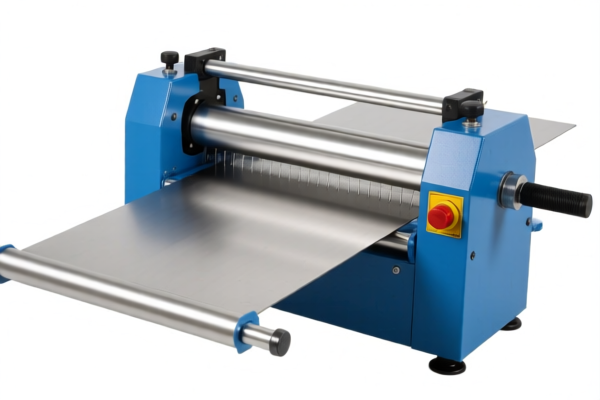
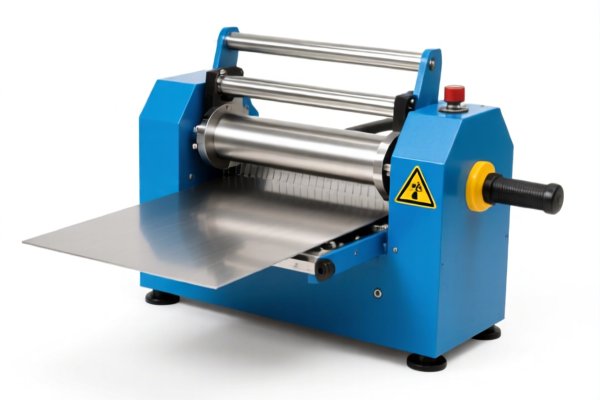
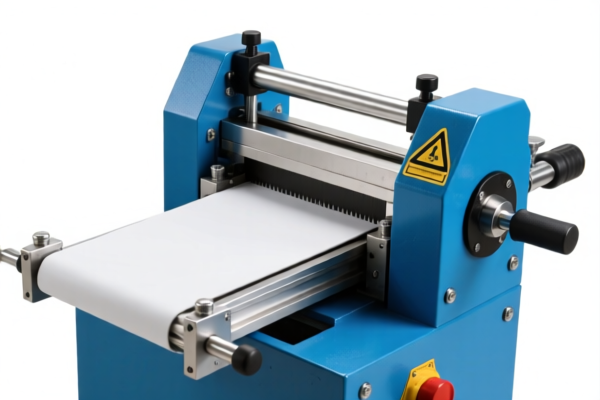
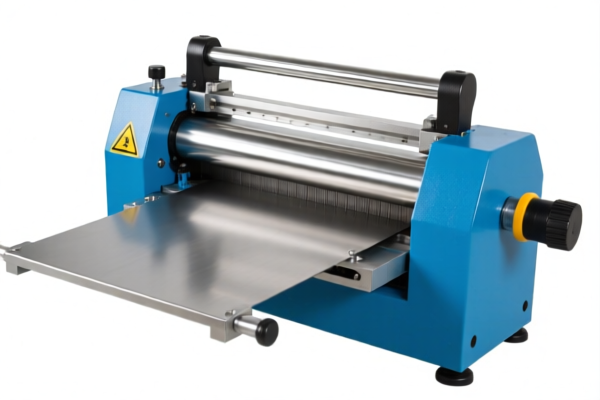
AI Analysis
🔪 Cutting, Stamping, and Slitting Knife Machine (Industrial Processing Equipment)
🌐 HS Code Reference & Customs Clearance Guide | 2026 Latest Tariff Analysis | Professional-Level Strategy 📌 I. Product Definition & Classification: Do You Understand "Processing Machinery"?
This product belongs to the category of industrial mechanical processing equipment. Its core functions—"Cutting" (切割), "Stamping/Press-Cutting" (压切), and "Slitting" (分切)—involve mechanical deformation or separation of materials using blades or dies.
In international trade, such items are generally classified under Chapter 84 (Nuclear reactors, boilers, machinery and mechanical appliances) because they perform specific mechanical functions, rather than being simple hand tools or raw materials.
⚠️ Key Classification Logic: - If the item is a complete machine with independent functionality for processing materials → Goes to 8479 (Machines and mechanical appliances having individual functions, not specified elsewhere). - If the item is considered a part/attachment specifically for machine tools (like lathes or milling machines) → Goes to 8466. - Crucial Note: The classification depends heavily on whether it is deemed a standalone machine or a specific accessory. The data provided highlights three potential codes based on different interpretive angles (General Machinery vs. Machine Tool Parts).
📦 II. HS Code Classification Details (Based on Provided Data)
| HS Code | Product Description & Summary | Key Characteristics |
|---|---|---|
8479.82.00.80 |
Other Machinery: Crushing/Grinding Functions Summary: "Press-cutting" is categorized under mechanical functions like "crushing, grinding." Fits "Other machines" with no material conflict. |
✅ Lowest Tax Option • Base: 0% • Total: 35% • Logic: Viewed as generic mechanical processing. |
8479.89.95.99 |
Other Machinery: Other Specific Functions Summary: "Cutting/Stamping/Slitting Knife Machine" fits "Machines with independent functions." Last-resort category for machinery. |
⚠️ Highest Tax Option • Base: 2.5% • Steel/Alu/Cu Surtax: +50% • Total: 87.5% • Logic: Viewed as a specific industrial machine, triggering Section 232 (Steel/Aluminum) or high general duties. |
8466.94.85.85 |
Machine Tool Accessories Summary: Parts/accessories for machine tools used for cutting/slitting. No specific material indicated, defaults to "Other." |
🔶 Middle Ground • Base: 4.7% • Total: 39.7% • Logic: Viewed as an accessory to a larger machine tool system. |
🔍 Critical Distinction: - 8479.82.00.80 assumes the machine performs general mechanical processing (like crushing/grinding logic applied to cutting). - 8479.89.95.99 assumes it is a specialized machine not listed elsewhere, often attracting higher "Other" duties and potential steel/aluminum surcharges if applicable. - 8466.94.85.85 assumes it is a part of a machine tool (e.g., a press or shear), not a standalone general-purpose machine.
💰 III. 2026 Latest Tariff Rate Breakdown (Including Surtaxes)
✅ Applicable Country: United States (US)
✅ Origin: China (CN)
✅ Effective Date: Post-2025 (Including Section 301 & 232 implications)
🎯 1. 8479.82.00.80 — The "Low-Risk" Classification
| Item | Content |
|---|---|
| Base Duty | 0% (Ad Valorem) |
| Section 301 Surtax | +25% |
| IEEPA Surtax (122 Clause) | +10% |
| Total Effective Rate | 35.0% |
| Calculation Basis | CIF Value × 35% |
| De Minimis Exemption | ❌ Not Eligible (Deny De Minimis) |
| Legal Path | Base 0% + Section 301: 25% + IEEPA: 10% |
📌 Explanation: - This is the most favorable rate among the three options. - It assumes the machine is classified under a subheading where the base duty is zero, likely interpreting the "press-cutting" as a generic mechanical operation similar to grinding. - Warning: This classification is aggressive. Customs may challenge if the machine is clearly not for "crushing/grinding" but for precision slitting.
🎯 2. 8479.89.95.99 — The "High-Risk" Classification
| Item | Content |
|---|---|
| Base Duty | 2.5% |
| Section 301 Surtax | +25% |
| IEEPA Surtax (122 Clause) | +10% |
| Section 232 Surtax (Steel/Alu/Cu) | +50% (If applicable material) |
| Total Effective Rate | 87.5% |
| Calculation Basis | CIF Value × 87.5% |
| De Minimis Exemption | ❌ Not Eligible |
| Legal Path | Base 2.5% + Section 301: 25% + IEEPA: 10% + Sec 232: 50% |
📌 Warning: - This is the most expensive option. - The 50% surtax applies if the machine contains significant steel, aluminum, or copper components subject to Section 232. - Even without steel/aluminum, the 37.5% base + surtax is still higher than Option 1.
🎯 3. 8466.94.85.85 — The "Accessory" Classification
| Item | Content |
|---|---|
| Base Duty | 4.7% |
| Section 301 Surtax | +25% |
| IEEPA Surtax (122 Clause) | +10% |
| Total Effective Rate | 39.7% |
| Calculation Basis | CIF Value × 39.7% |
| De Minimis Exemption | ❌ Not Eligible |
| Legal Path | Base 4.7% + Section 301: 25% + IEEPA: 10% |
📌 Explanation: - This rate is close to Option 1 but slightly higher due to the 4.7% base duty. - Valid only if the item can be proven to be a part/attachment for a machine tool (e.g., a shear blade assembly) rather than a standalone machine. - Risk: If Customs determines it is a standalone machine, this classification will be rejected, leading to back taxes and penalties.
🛠️ IV. Customs Clearance Practical Advice (Battle-Tested Pitfall Guide)
✅ 1. Documentation Checklist (Non-Negotiable)
| Document | Required? | Purpose |
|---|---|---|
| ✅ Product Specification Sheet | ✔️ | Must detail: Function (Cutting/Stamping), Capacity, Power, Dimensions. |
| ✅ Technical Diagrams | ✔️ | Crucial to prove whether it is a standalone machine (8479) or a machine tool part (8466). |
| ✅ Product Photos | ✔️ | Show the unit with/without attachments. Label all parts clearly. |
| ✅ Commercial Invoice | ✔️ | Description must match HS Code logic. Avoid vague terms like "Knife." Use "Industrial Slitting Machine." |
| ✅ Packing List | ✔️ | Ensure no loose blades are shipped separately unless declared as parts. |
| ✅ Material Declaration | ✔️ | Critical for 8479.89.95.99. If steel/aluminum content > threshold, 50% surtax applies. |
✅ 2. Declaration Strategy (The Golden Rules)
🔥 “Define Function First, Then Component, Then Avoid Steel Surcharge!”
| Scenario | Recommended HS Code | Risk Level | Reasoning |
|---|---|---|---|
| Standalone Cutting/Slitting Machine | 8479.82.00.80 |
🟡 Medium | Requires argument that "press-cutting" fits "mechanical processing" broadly. Lowest tax (35%). |
| Standalone Machine (Specialized) | 8479.89.95.99 |
🔴 High | Highest tax (87.5%) if steel/aluminum is present. Avoid unless necessary. |
| Blades/Parts for Existing Machine | 8466.94.85.85 |
🟢 Low | If sold as replacement parts, this is logical. Tax 39.7%. |
| Mixed Shipment (Machine + Parts) | Separate Lines | 🟡 Medium | Declare machine under 8479 and parts under 8466. Do not bundle. |
✅ 3. Special Case Handling
| Situation | Action |
|---|---|
| Machine contains Steel Blades | For 8479.89.95.99, expect 50% surtax. For 8479.82.00.80, argue it is a "mechanical appliance" where the blade is incidental. |
| Machine is Part of a Production Line | If integrated into a larger system, provide integration diagrams. May support 8466 classification. |
| Used vs. New | Used machines may face additional scrutiny. Provide service records to prove functionality. |
| Customs Audit | Be prepared to demonstrate the machine’s independent function. If it cannot operate without a specific parent machine, 8466 is stronger. |
🌍 V. Global Market Clearance Comparison (2026 Overview)
| Country/Region | Recommended HS Code | Est. Duty (China Origin) | Certification | Notes |
|---|---|---|---|---|
| 🇺🇸 USA | 8479.82.00.80 |
35% | None usually | Best Option. Avoid 87.5% rate. |
| 🇺🇸 USA | 8479.89.95.99 |
87.5% | None | High risk due to Steel/Alu surtax. |
| 🇺🇸 USA | 8466.94.85.85 |
39.7% | None | Viable if classified as parts. |
| 🇨🇳 China | 8479.89.95.99 | 2.5% | CCC | Low duty, but export-focused. |
| 🇪🇺 EU | 8479.89.95.99 | ~4-6% | CE | No Section 301/232 equivalent. |
📌 Conclusion: - The US market is the primary concern due to Section 301 and 232 tariffs. - Option 1 (
8479.82.00.80) is the strategic choice for minimizing costs, provided you can justify the "mechanical processing" aspect. - Option 2 (8479.89.95.99) should be avoided unless no other classification fits, due to the catastrophic 87.5% rate.
📌 VI. Common Errors & Pitfalls (Lessons Learned)
❌ Error 1: Declaring as "Knife" or "Blade" (e.g., under Chapter 82) 👉 Consequence: Misclassification. Machinery components are generally not Chapter 82 tools if part of a machine. Penalties + Back Taxes.
❌ Error 2: Ignoring Steel/Aluminum Content in 8479.89.95.99
👉 Consequence: Unexpected 50% surtax on the entire value if metal content is not exempted.
❌ Error 3: Bundling Machine and Spare Blades in One Line Item 👉 Consequence: Customs may apply the highest duty rate to the entire shipment or demand separate declarations, causing delays.
✅ Correct Approach:
"Industrial Slitting Machine, Model XYZ, Independent Function, 5HP, AC 220V. Not for domestic use. For industrial material processing." Ensure the description emphasizes "Machine" and "Function," not just "Cutting Tool."
🎯 VII. Conclusion: Precision Classification Saves Money
🎯 Remember the Formula:
🔹 Standalone Machine + Mechanical Function =
8479.82.00.80(35%) 🔹 Standalone Machine + Specialized =8479.89.95.99(87.5% - AVOID) 🔹 Parts for Machine Tools =8466.94.85.85(39.7%)
📌 Pro Tip:
If your machine is new, provide detailed specs. If used, provide service history. Always consider a Pre-Ruling (Advance Ruling) from CBP if the value is high, to lock in the 8479.82.00.80 classification legally.
📣 Immediate Action:
📞 Contact Customs Broker: Provide photos and specs. Ask specifically about the "mechanical processing" argument for
8479.82.00.80. 🚀 Optimize Supply Chain: If the machine contains steel, consider if any components can be sourced from non-subject countries to mitigate Section 232 risks, though this is complex.
✨ Professional Clearance Starts with Accurate Classification! 💼 Your Profit Margin Depends on This 35% vs. 87.5% Difference!
Customer Reviews
About HS Code Classification
The Harmonized System (HS) is an internationally standardized nomenclature developed by the World Customs Organization (WCO) to classify traded products. Over 200 countries use the HS system as the basis for customs tariffs, trade statistics, and import/export regulations.
Each HS code follows a hierarchical structure:
- Chapter (2 digits) — Broad category of goods (e.g., Chapter 84: Machinery and Mechanical Appliances)
- Heading (4 digits) — More specific grouping within the chapter
- Subheading (6 digits) — Internationally standardized breakdown, used by all WCO member countries
- National subdivisions (8-10 digits) — Country-specific extensions for further classification, such as US HTSUS 10-digit codes
Correct HS code classification is essential for smooth customs clearance, accurate duty payment, and compliance with trade regulations. Misclassification can lead to customs delays, overpayment of duties, or penalties.
When importing from CN to US, the applicable tariff rates may include:
- Most-Favored-Nation (MFN) rate — The standard duty rate applied to WTO members
- General rate — Applied to countries without trade agreements
- Trade remedy duties — Additional tariffs such as Section 301 (anti-dumping), Section 232 (national security), or countervailing duties
The information provided on this page is for reference purposes only. For official classification, please consult with your local customs authority or a licensed customs broker.