Cutting Knife
CN → US| HS Code | Tariff Rate | Origin | Destination | Doc |
|---|---|---|---|---|
| 8214909000 | 0.0% | CN | US | Official Doc |
| 8203300000 | 35.0% | CN | US | Official Doc |
| 8213003000 | 0.0% | CN | US | Official Doc |
| 8213006000 | 0.0% | CN | US | Official Doc |
| 8203206060 | 0.0% | CN | US | Official Doc |
Product Images
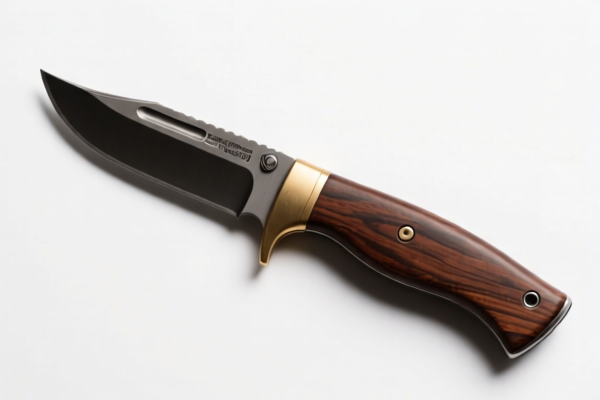
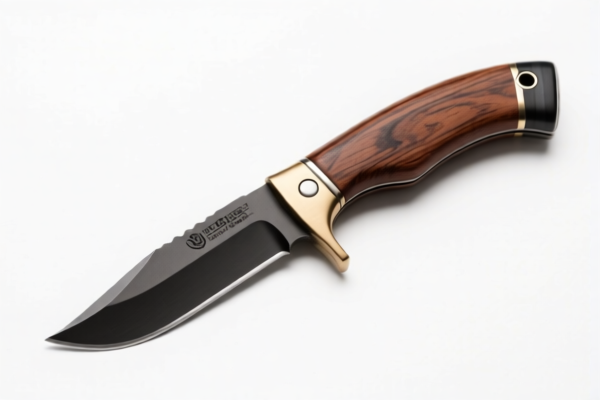
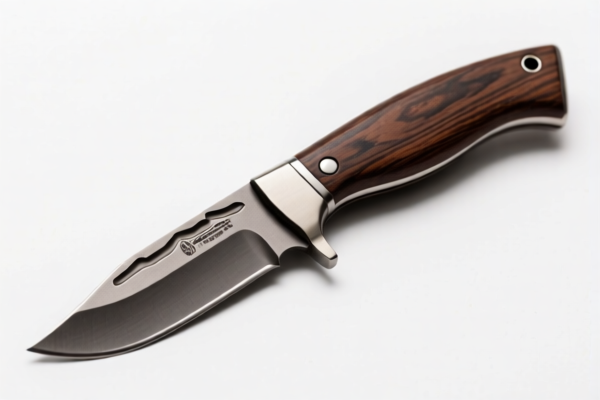
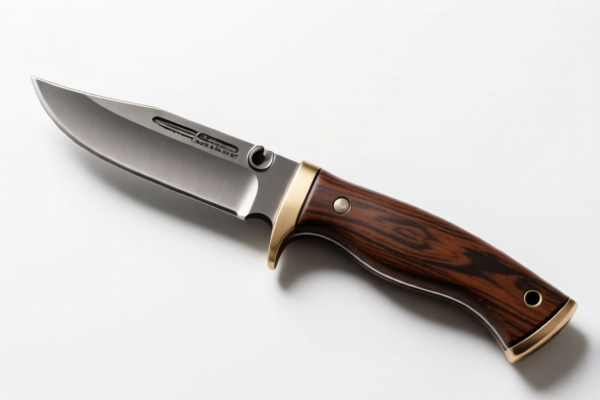
AI Analysis
🔪 Cutting Knife (裁纸刀)
🌐 HS Code Reference & Customs Clearance Guide | 2026 Latest Tariff Analysis | Professional Clearance Strategy
📌 1. Product Definition & Classification: Understanding the "Cutting Knife"
In international trade, the term "Cutting Knife" is ambiguous. It generally refers to tools designed for trimming, slicing, or separating materials. However, customs classification depends strictly on the mechanism, material, and intended use.
Based on the provided data, there are four distinct classification scenarios depending on the specific design of the cutting tool. Misclassification can lead to significant duty discrepancies (from 1.4¢/unit to 35% ad valorem).
⚠️ Key Distinction Point:
- Paper/Office Knives: Typically classified under 8214 (if manual scissors-like) or 8214.90 (if other blades).
- Metal Shears/Scissors: Classified under 8203 (Hand tools) or 8213 (Scissors).
- Heavy-Duty/Metal Cutting Tools: Classified under 8203.20 (Metal-cutting shears).
📦 2. HS Code Classification Details (2026 Latest Tariff Authority)
| HS Code | Product Description | Scenario / Summary | Tax Rate Structure |
|---|---|---|---|
8214.90.90.00 |
Other Knives and Blades | Paper Cutters/Blades: Fits the category of "Other knives and articles of cutlery." | 1.4¢/unit + 3.2% + 10% |
8213.00.30.00 |
Scissors (Type A) | Standard Scissors: Purpose matches scissors/tailor's shears. | 1.7¢/unit + 4.3% + 10% |
8213.00.60.00 |
Scissors (Type B) | Premium Scissors: Perfect match for scissors/tailor's shears. | 8¢/unit + 8% + 10% |
8203.20.60.60 |
Metal-Cutting Hand Tools | Heavy Metal Shears: Manual tools for cutting metal. | 12¢/doz. + 5.5% + 35% |
8203.30.00.00 |
Other Hand Tools | General Metal Scissors: Classified as metal scissors/similar tools. | 0% + 25% + 10% = 35% |
🔍 Critical Note:
- "Cutting Knife" is most accurately classified under8214.90.90.00if it is a standard office/paper cutter blade or non-scissor knife.
- If the product is actually a scissor, it falls under 8213.
- If it is a heavy-duty metal shear, it falls under 8203.20.
- Do not assume all cutting tools are the same; the duty structure varies wildly.
💰 3. 2026 Tariff Rate Breakdown (Including Surtaxes & Policy Add-ons)
✅ Applicable Country: United States (US)
✅ Origin: China (CN)
✅ Effective Date: Post-November 10, 2025 (Includes subsequent imports)
🎯 Case 1: 8214.90.90.00 — Most Likely for "Cutting Knives" (Paper/Office)
| Item | Detail |
|---|---|
| Base Tariff | 1.4¢ per unit + 3.2% (ad valorem) |
| Section 301 Surtax | 0% (No additional 301 tax for this specific subheading based on data) |
| Section 122 Tariff | +10% (Under IEEPA for Chinese origin) |
| Total Effective Rate | Mixed: 1.4¢ + 3.2% + 10% |
| Calculation Method | (CIF Value × 13.2%) + (Unit Count × $0.014) |
| De Minimis Eligibility | ❌ No (Not eligible for de minimis exemption) |
| Legal Basis Path | Section 122: 10% → USITC: 8214.90.90.00 → Base: 1.4¢ + 3.2% |
📌 Explanation:
- This is the most favorable classification for general "cutting knives" (like paper trimmers or craft knives).
- The 10% Section 122 tariff applies to all Chinese-origin goods in this category.
- The specific per-unit fee (1.4¢) ensures that even low-value items incur a base cost.
🎯 Case 2: 8213.00.30.00 & 8213.00.60.00 — If Classified as Scissors
| Item | Detail |
|---|---|
| Base Tariff | 1.7¢ + 4.3% OR 8¢ + 8% |
| Section 301 Surtax | 0% |
| Section 122 Tariff | +10% |
| Total Effective Rate | Mixed: ~14.3% or ~18% + unit fee |
| De Minimis Eligibility | ❌ No |
📌 Explanation:
- If your "Cutting Knife" is actually a pair of scissors (even if marketed as a knife), it may be reclassified here.
- Higher unit fees (8¢ vs 1.4¢) and higher ad valorem rates (8% vs 3.2%) make this less attractive for low-cost items.
🎯 Case 3: 8203.30.00.00 — Metal Scissors/Tools
| Item | Detail |
|---|---|
| Base Tariff | 0% |
| Section 301 Surtax | +25% |
| Section 122 Tariff | +10% |
| Total Effective Rate | 35% (Ad Valorem) |
| De Minimis Eligibility | ❌ No |
📌 Explanation:
- High Risk: If the tool is deemed a "metal hand tool" rather than a "knife," the duty jumps to 35% flat.
- No per-unit fee, but the percentage is punitive.
🎯 Case 4: 8203.20.60.60 — Metal-Cutting Shears
| Item | Detail |
|---|---|
| Base Tariff | 12¢/dozen + 5.5% |
| Section 301 Surtax | +25% |
| Section 122 Tariff | +10% |
| Total Effective Rate | Mixed: 12¢/dz + 5.5% + 25% + 10% = 40.5% + 12¢/dz |
| De Minimis Eligibility | ❌ No |
📌 Explanation:
- Only applies to heavy-duty metal cutting tools.
- Highest total cost due to cumulative surtaxes (25% + 10%).
🛠️ 4. Customs Clearance Practical Advice
✅ 1. Documentation Checklist (Must-Provide)
| Document | Required? | Description |
|---|---|---|
| ✅ Product Specifications | ✔️ | Must clearly state: "Manual Cutting Knife," "Paper Cutter," or "Scissors." |
| ✅ Material Composition | ✔️ | Specify blade material (e.g., High Carbon Steel, Stainless Steel). |
| ✅ Usage Description | ✔️ | "For cutting paper/cardboard" vs. "For cutting metal wires." |
| ✅ Commercial Invoice | ✔️ | Must match HS Code description exactly. |
| ✅ Photos | ✔️ | Clear images of the handle, blade mechanism, and overall tool. |
✅ 2. Declaration Tips (Key Rules)
🔥 "Describe by Function, Not by Name!"
| Scenario | Correct Declaration | Incorrect Declaration |
|---|---|---|
| Paper Cutter | "Manual Paper Cutting Knife" |
"Knife" (Vague) |
| Craft Knife | "Replacement Blades for Cutting Tools" |
"Blades" |
| Scissors | "Tailor's Scissors" |
"Cutting Tool" |
| Metal Shears | "Heavy Duty Metal Cutting Shears" |
"Cutting Knife" |
✅ 3. Special Handling
| Situation | Recommendation |
|---|---|
| OEM Private Label | Ensure the supplier's declaration matches the physical product. Misalignment leads to seizures. |
| Bundled Sales | If sold with a stand or case, declare the principal function (cutting). |
| Blade-Only Sales | If shipping only blades (no handle), ensure they are classified as 8214.90 (blades) and not "tools." |
🌍 5. Global Market Comparison (2026)
| Country/Region | Recommended HS Code | Tariff (China Origin) | Certification | Notes |
|---|---|---|---|---|
| 🇺🇸 USA | 8214.90.90.00 |
1.4¢ + 3.2% + 10% | N/A | Best rate for standard knives. |
| 🇨🇳 China | 8214.90.00.00 |
20% (Import) | N/A | Export from China may have different rates. |
| 🇪🇺 EU | 8214.20.00.00 |
4.5% | CE (if applicable) | No Section 122 equivalent. |
| 🇬🇧 UK | 8214.20.00.00 |
4.5% | UKCA | Post-Brexit rules apply. |
📌 Conclusion:
- USA has unique Section 122 (10%) and Section 301 (25%) surtaxes.
- EU/UK do not have these punitive tariffs, making them cheaper for final consumption.
📌 6. Common Errors & Pitfalls
❌ Error 1: Classifying Scissors as Cutting Knives
👉 Result: Duty drops from 35% to ~13%, but customs may audit and impose penalties for misdeclaration.
✅ Fix: Clearly distinguish between "Scissors" (8213/8203) and "Knives" (8214).
❌ Error 2: Ignoring the 10% Section 122 Tariff
👉 Result: Underpayment of duties by 10%.
✅ Fix: Always include 122:10% in cost calculations for Chinese-origin goods entering the US.
❌ Error 3: Declaring Metal Shears as Paper Cutters
👉 Result: Risk of classification downgrade to 8203.20 (35-40.5% duty).
✅ Fix: Provide photos showing the tool is used for non-metallic materials.
🎯 7. Conclusion: Precise Classification Saves Money!
🎯 Key Takeaway:
🔹 "Cutting Knife" is not a single HS Code.
🔹 Paper/Craft Knives →8214.90.90.00(Best Rate: ~13.2% + unit fee)
🔹 Scissors →8213.00.xxxx(Medium Rate: ~14-18% + unit fee)
🔹 Metal Shears →8203.20.60.60(Worst Rate: ~40.5% + unit fee)
📌 Pro Tip:
If your product is a standard paper cutter, stick to 8214.90.90.00. It offers the most predictable and moderate cost structure for US imports from China.
📣 Action Required:
📞 Contact a Customs Broker to confirm the physical mechanism of your "Cutting Knife."
🚀 Prepare detailed photos to prove it is NOT a metal-cutting shear.
💼 Calculate duties using:(CIF * 13.2%) + (Units * $0.014)for accurate budgeting.
✨ Precision in Classification, Profit in Clearance!
💼 Don't let a 3-cent difference in duty erase your margin.
Customer Reviews
About HS Code Classification
The Harmonized System (HS) is an internationally standardized nomenclature developed by the World Customs Organization (WCO) to classify traded products. Over 200 countries use the HS system as the basis for customs tariffs, trade statistics, and import/export regulations.
Each HS code follows a hierarchical structure:
- Chapter (2 digits) — Broad category of goods (e.g., Chapter 84: Machinery and Mechanical Appliances)
- Heading (4 digits) — More specific grouping within the chapter
- Subheading (6 digits) — Internationally standardized breakdown, used by all WCO member countries
- National subdivisions (8-10 digits) — Country-specific extensions for further classification, such as US HTSUS 10-digit codes
Correct HS code classification is essential for smooth customs clearance, accurate duty payment, and compliance with trade regulations. Misclassification can lead to customs delays, overpayment of duties, or penalties.
When importing from CN to US, the applicable tariff rates may include:
- Most-Favored-Nation (MFN) rate — The standard duty rate applied to WTO members
- General rate — Applied to countries without trade agreements
- Trade remedy duties — Additional tariffs such as Section 301 (anti-dumping), Section 232 (national security), or countervailing duties
The information provided on this page is for reference purposes only. For official classification, please consult with your local customs authority or a licensed customs broker.