Cutting Mat
CN → US| HS Code | Tariff Rate | Origin | Destination | Doc |
|---|---|---|---|---|
| 5903102090 | 35.0% | CN | US | Official Doc |
| 4016996050 | 37.5% | CN | US | Official Doc |
| 4016990500 | 20.9% | CN | US | Official Doc |
| 5903102010 | 35.0% | CN | US | Official Doc |
| 3921190090 | 41.5% | CN | US | Official Doc |
Product Images
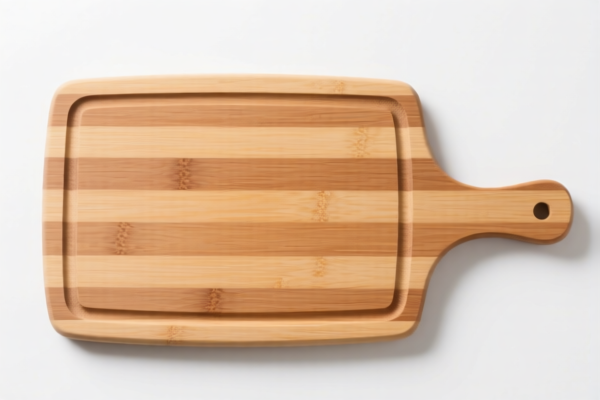


AI Analysis
✂️ Cutting Mats (Industrial & Domestic)
🌐 HS Code Reference & Customs Clearance Guide | 2026 Latest Tariff Breakdown | Professional Strategy for Global Trade
📌 I. Product Definition & Classification: Do You Know Your "Cutting Mat"?
A Cutting Mat is a durable, self-healing surface used for precision cutting in manufacturing, craft, graphic design, and industrial processing. In international trade, they are classified based on material composition, coating type, and end-use application:
🔹 Classification Criteria
- Rubber-based mats (non-specific or household use) → Chapter 40
- Plastic/PVC-coated fabric or industrial mats → Chapter 39 or 59
- Key distinction: Whether the mat is home-use, industrial-use, or coated textile-based.
⚠️ Critical Differentiator:
- If made of solid rubber or elastomer → Classify under 4016.99.60.50 / 4016.99.05.00
- If made of PVC-coated fabric or plastic with impregnation → Classify under 5903.10.20.10 / 5903.10.20.90
- If made of rigid plastic boards/films used for industrial cutting → Classify under 3921.19.00.90
📦 II. HS Code Classification Details (2026 Updated Tariff Schedule)
| HS Code | Product Description | Application Scenario | Material Type |
|---|---|---|---|
4016.99.60.50 |
Rubber or similar elastomeric cutting mats, not specified for particular use | General industrial use, workshops | ✅ Rubber/Elastomer |
4016.99.05.00 |
Rubber or rubber-like household cutting mats | Home craft, DIY, kitchen | ✅ Rubber/Elastomer |
5903.10.20.10 |
Multi-purpose PVC-coated fabric cutting consumables | Textile printing, apparel cutting | ✅ PVC-coated fabric |
5903.10.20.90 |
Other plastic-impregnated or coated cutting materials | Industrial coating, lamination | ✅ Plastic impregnated |
3921.19.00.90 |
Plastic cutting boards/films for industrial use | Factory-level precision cutting | ✅ Rigid plastic/foil |
🔍 Important Reminder:
- All rubber-based cutting mats must be classified under Chapter 40 (Rubber), not Chapter 39 or 59.
- PVC-coated or plastic-impregnated mats fall under Chapter 59 or 39, depending on construction.
- Industrial plastic cutting mats (rigid, non-fabric) → 3921.19.00.90
💰 III. 2026 Latest Tariff Rate Breakdown (Including Additional Duties & Policy Surcharges)
✅ Applicable Country: United States (US)
✅ Country of Origin: China (CN)
✅ Effective Date: November 10, 2025 (and ongoing)
🎯 1. 4016.99.60.50 —— Rubber Cutting Mat (Non-Specific Use)
| Item | Details |
|---|---|
| Base Tariff | 2.5% |
| Section 301 (USITC) Surcharge | +25% |
| 122 Clause Surcharge | +10% |
| Total Tariff | 37.5% |
| Tax Calculation | CIF × 37.5% |
| De Minimis Exemption | ❌ Not Eligible |
| Legal Pathway | Section 301:4016.99.60.50 → 122 Clause:4016.99.60.50 |
📌 Explanation:
- 25% Section 301 is the standard "additional tariff" under US Trade Act Section 301.
- 10% 122 Clause applies specifically to China-origin goods under Executive Order 13871.
- Combined 37.5% is high—must be factored into cost models.
🎯 2. 4016.99.05.00 —— Household Rubber Cutting Mat
| Item | Details |
|---|---|
| Base Tariff | 3.4% |
| Section 301 Surcharge | +7.5% |
| 122 Clause Surcharge | +10% |
| Total Tariff | 20.9% |
| Tax Calculation | CIF × 20.9% |
| De Minimis Exemption | ❌ Not Eligible |
| Legal Pathway | Section 301:4016.99.05.00 → 122 Clause:4016.99.05.00 |
📌 Note:
- Slightly lower total rate due to lower base tariff.
- Still high enough to impact margin significantly.
🎯 3. 5903.10.20.10 & 5903.10.20.90 —— PVC-Coated Fabric Cutting Mats
| Item | Details |
|---|---|
| Base Tariff | 0% |
| Section 301 Surcharge | +25% |
| 122 Clause Surcharge | +10% |
| Total Tariff | 35.0% |
| Tax Calculation | CIF × 35.0% |
| De Minimis Exemption | ❌ Not Eligible |
| Legal Pathway | Section 301:5903.10.20.10/90 → 122 Clause:5903.10.20.10/90 |
📌 Critical Note:
- Despite 0% base tariff, the 35% total is very high due to combined surcharges.
- All PVC-coated cutting consumables fall under this rate.
🎯 4. 3921.19.00.90 —— Plastic Industrial Cutting Boards/Films
| Item | Details |
|---|---|
| Base Tariff | 6.5% |
| Section 301 Surcharge | +25% |
| 122 Clause Surcharge | +10% |
| Total Tariff | 41.5% |
| Tax Calculation | CIF × 41.5% |
| De Minimis Exemption | ❌ Not Eligible |
| Legal Pathway | Section 301:3921.19.00.90 → 122 Clause:3921.19.00.90 |
📌 Note:
- This category has the highest total tariff (41.5%) among all cutting mats.
- Applies to rigid plastic cutting boards used in factories or labs.
🛠️ IV. Customs Clearance Practical Advice (Avoiding Pitfalls)
✅ 1. Required Documentation (Mandatory)
| Document | Required? | Notes |
|---|---|---|
| ✅ Product Specification Sheet | ✔️ | Must list material (rubber, PVC, plastic), dimensions, hardness, coating |
| ✅ Material Composition Report | ✔️ | For classification verification |
| ✅ Product Photos (with labels) | ✔️ | Show usage context, markings, and packaging |
| ✅ Commercial Invoice | ✔️ | Clearly state "Cutting Mat" with HS Code |
| ✅ Packing List | ✔️ | Avoid splitting into parts |
| ✅ Certificate of Origin (CO) | ✔️ | If applicable for preferential rates |
| ✅ Safety/Data Sheets | ✔️ | If chemicals or coatings are involved |
✅ 2. Declaration Tips (Golden Rules)
🔥 "Know your material, don't split parts, declare precisely, save taxes!"
| Scenario | Correct Declaration | Wrong Approach |
|---|---|---|
| Rubber household cutting mat | 4016.99.05.00 |
Misclassified as 3921.19.00.90 → 41.5% |
| PVC-coated fabric mat | 5903.10.20.10 |
Misclassified as 4016.99.60.50 → 37.5% |
| Rigid plastic industrial cutting board | 3921.19.00.90 |
Misclassified as 4016.99.60.50 → 37.5% |
| Mixed packaging (mat + accessories) | Declare as one | Split → Each item taxed separately |
✅ 3. Special Cases Handling
| Situation | Recommendation |
|---|---|
| OEM Custom Cutting Mats | Provide client design图纸 and order docs to avoid "non-standard" classification |
| Cutting Mat + Ruler + Knife Set | Declare as one product (mat + tools) under the dominant HS Code |
| Industrial Cutting Mat for Medical Use | May qualify for special用途 exemption; provide proof |
| Military or Aerospace Use | Apply for "Special Use" declaration; possible tariff reduction |
🌍 V. Global Market Comparison (2026 Updated)
| Country/Region | Recommended HS Code | Tariff | Certification | Notes |
|---|---|---|---|---|
| 🇺🇸 USA | 3921.19.00.90 |
41.5% (China origin) | N/A | High tariff for all cutting mats |
| 🇨🇳 China | 4016.99.60.50 |
2.5% | CCC | No additional tariffs |
| 🇪🇺 EU | 4016.99.60.50 |
3% | CE + REACH | No Section 301 |
| 🇦🇺 Australia | 4016.99.60.50 |
5% | RCM | No Section 301 |
| 🇯🇵 Japan | 4016.99.60.50 |
0% | PSE | No Section 301 |
📌 Conclusion:
- USA imposes the highest tariffs on cutting mats from China;
- Consider supply chain relocation to Vietnam, Mexico, or Thailand to avoid Section 301 & 122 Clause duties.
📌 VI. Common Mistakes & Pitfalls (Hard Lessons)
❌ Mistake 1: Classifying rubber cutting mats as plastic mats
👉 Result: 37.5% vs 41.5% → Overpayment + possible audit
❌ Mistake 2: Declaring PVC-coated fabric mats as household rubber mats
👉 Result: 35.0% vs 20.9% → Cost increase
❌ Mistake 3: Not providing material composition
👉 Result: Customs delays or reclassification with penalties
❌ Mistake 4: Using generic name "Cutting Mat" without material details
👉 Result: Misclassification → Additional tax + penalties
✅ Correct Practice:
"Self-Healing Rubber Cutting Mat, 24"x36", 2mm, Non-Specific Use, Model XYZ, Rubber (Chapter 40)"
🎯 VII. Conclusion: Precision Classification, Faster Clearance, Lower Costs!
🎯 Remember the Mantra:
🔹 "Material First, HS Code Second, Tax Third, Declare Clearly!"
🔹 "One misclassification = 25% tax hike, 10% more, 37.5% total!"
📌 Pro Tip:
If your cutting mats are originating from Vietnam, Mexico, Thailand, or Malaysia, you may qualify for Section 301 exemptions, with tariffs as low as 0%~5%.
Recommendation: Apply for Advance Ruling to avoid customs risks.
📣 Take Action Now:
📞 Contact a customs broker + Provide product images + Apply for HS Code Pre-Ruling
🚀 Ensure your Cutting Mats clear customs smoothly, maximize profit margins!
✨ Professional Classification Starts with Precision!
💼 Every cent counts — calculate wisely!
Customer Reviews
About HS Code Classification
The Harmonized System (HS) is an internationally standardized nomenclature developed by the World Customs Organization (WCO) to classify traded products. Over 200 countries use the HS system as the basis for customs tariffs, trade statistics, and import/export regulations.
Each HS code follows a hierarchical structure:
- Chapter (2 digits) — Broad category of goods (e.g., Chapter 84: Machinery and Mechanical Appliances)
- Heading (4 digits) — More specific grouping within the chapter
- Subheading (6 digits) — Internationally standardized breakdown, used by all WCO member countries
- National subdivisions (8-10 digits) — Country-specific extensions for further classification, such as US HTSUS 10-digit codes
Correct HS code classification is essential for smooth customs clearance, accurate duty payment, and compliance with trade regulations. Misclassification can lead to customs delays, overpayment of duties, or penalties.
When importing from CN to US, the applicable tariff rates may include:
- Most-Favored-Nation (MFN) rate — The standard duty rate applied to WTO members
- General rate — Applied to countries without trade agreements
- Trade remedy duties — Additional tariffs such as Section 301 (anti-dumping), Section 232 (national security), or countervailing duties
The information provided on this page is for reference purposes only. For official classification, please consult with your local customs authority or a licensed customs broker.