Cutting Tools
CN → US| HS Code | Tariff Rate | Origin | Destination | Doc |
|---|---|---|---|---|
| 8201500000 | 0.0% | CN | US | Official Doc |
| 8201600000 | 0.0% | CN | US | Official Doc |
| 8202990000 | 35.0% | CN | US | Official Doc |
| 8205306000 | 40.0% | CN | US | Official Doc |
| 8201500000 | 0.0% | CN | US | Official Doc |
Product Images
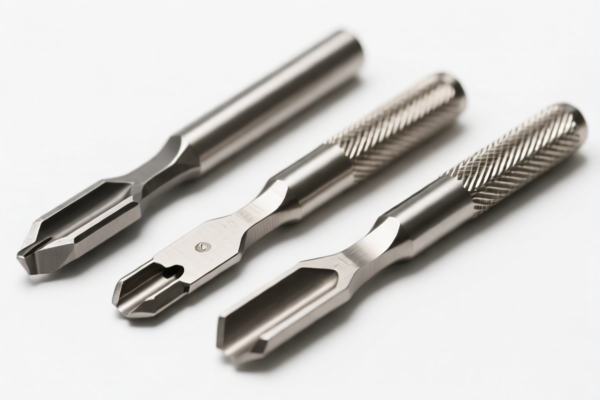
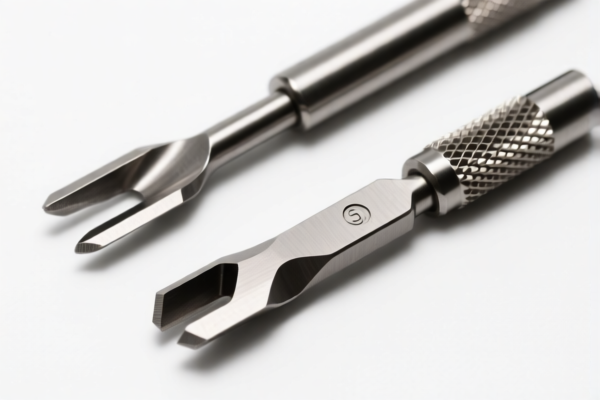
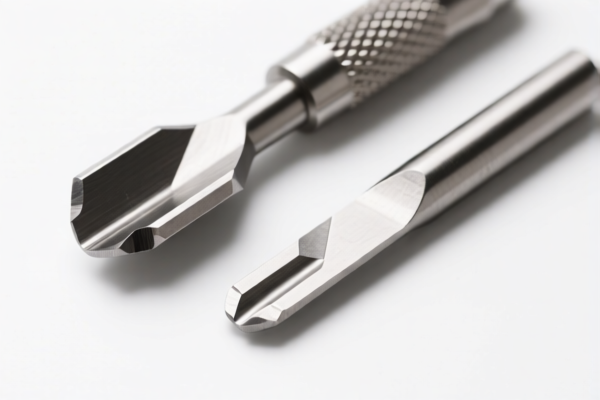
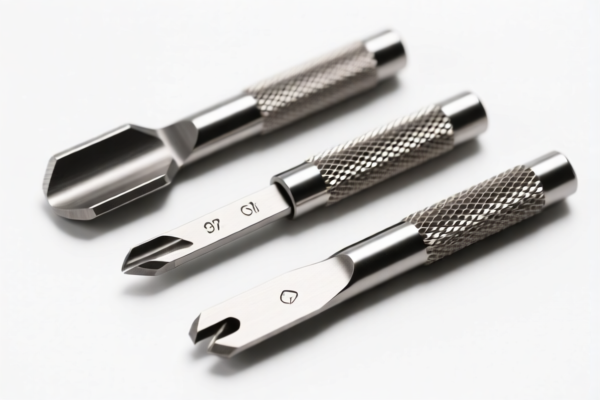
AI Analysis
🔪 Cutting Tools (修剪工具/切削器具)
🌐 HS Code Reference & Customs Clearance Guide | 2026 Latest Tariff Analysis | Professional Compliance Strategy
📌 1. Product Definition & Classification: What Exactly Are "Cutting Tools"?
In international trade, "Cutting Tools" is a broad category that splits sharply based on application (Gardening vs. Industrial/Food), material, and mechanism. Misclassification here is dangerous because US Customs (CBP) imposes heavy Section 301 and IEEPA tariffs on specific subsets of these goods.
We distinguish between two main families based on your data: 1. Gardening & Hand Pruners (Handheld, manual, for plants/wood): Typically 8201 or 8210. 2. Industrial/Food Slicers (Mechanical, for processing food or heavy material): Typically 8202 or 8438.
⚠️ Critical Distinction Point:
- If it is a manual hand tool for pruning trees/branches → Look to 8201.
- If it is a mechanical device for slicing food or wood → Look to 8202 or 8438.
- Do not group a mechanical food slicer with a pair of garden shears!
📦 2. HS Code Classification Matrix (2026 Latest Tariff Mapping)
| HS Code | Product Description | Application Scenario | Key Feature | Total Tax Rate* |
|---|---|---|---|---|
8201.50.00.00 |
Pruning Tools (Secateurs, Loppers) | Gardening, Tree Maintenance | Manual hand tool for branches | 38.7% (1¢ + 2.8% + 35%) |
8201.60.00.00 |
Pruning Tools (Shears, No Material Conflict) | Gardening, Bush Trimming | Manual shears, generic form | 38.7% (1¢ + 2.8% + 35%) |
8202.99.00.00 |
Wood Cutting Tools (Metal/Ferrous) | Woodworking, Carpentry | Metal blade, for trimming wood | 35.0% (0.0% + 35%) |
8210.00.00.00 |
Hand Slicers (Food Prep) | Kitchen, Food Service | Manual mechanical food slicer | 38.7% (3.7% + 35%) |
8438.60.00.00 |
Mechanical Food Slicers | Industrial/Commercial Kitchen | Mechanical, for fruit/nuts/veg | 35.0% (0.0% + 35%) |
🔍 Key Insight:
- Garden Pruners (8201) attract a small per-unit fee (1¢) + base duty + high additional tariffs.
- Mechanical/Industrial Slicers (8438/8202) often have 0% base duty but face the full 35% additional tariff package.
- Hand Food Slicers (8210) have a higher base duty (3.7%) but are still subject to the same heavy additional tariffs.
💰 3. 2026 Tariff Rate Breakdown (Including Add-on Taxes & Policy Surcharges)
✅ Applicable Country: United States (US)
✅ Origin: China (CN) (Implied by "122 Provision" and high tariff structure in data)
✅ Effective Time: Current (2025-2026 Regulatory Environment)
🎯 1. 8201.50.00.00 & 8201.60.00.00 —— Gardening Pruning Tools (Shears/Loppers)
These are classified as "Tools of a kind used by hand, not fitted with blades of steel..." or similar headings under Chapter 82.
| Item | Content |
|---|---|
| Base Duty | 1¢ each + 2.8% (Ad Valorem) |
| Section 301 Add-on | +25.0% |
| 122 Provision (IEEPA) | +10.0% |
| Total Effective Rate | ~38.7% (Calculated as: 1¢/unit + (CIF Value × 2.8%) + (CIF Value × 25%) + (CIF Value × 10%)) |
| Tax Calculation | Per unit fee applies; percentage fees stack on CIF value. |
| De Minimis Exemption | ❌ Not Applicable for bulk imports; strict scrutiny on "Tools". |
📌 Explanation:
- The 1¢ each is a statutory per-unit duty for certain hand tools.
- The 35% combined surcharge (25% Sec 301 + 10% 122 Provision) is the dominant cost driver.
- Even though the base rate is low (2.8%), the add-ons make it expensive.
🎯 2. 8202.99.00.00 —— Metal/Wood Trimming Tools
This falls under "Saws and parts thereof" or specific cutting tools for wood, often made of ferrous metal.
| Item | Content |
|---|---|
| Base Duty | 0.0% |
| Section 301 Add-on | +25.0% |
| 122 Provision (IEEPA) | +10.0% |
| Total Effective Rate | 35.0% |
| Tax Calculation | CIF Value × 35% |
| De Minimis Exemption | ❌ Not Applicable. |
📌 Explanation:
- No base duty, but the full 35% tariff block applies.
- Often used for heavy-duty wood trimming blades or specialized carpentry tools.
🎯 3. 8210.00.00.00 —— Manual Hand Slicers (Food Preparation)
Includes manual vegetable slicers, apple corers, or hand-held mechanical cutters.
| Item | Content |
|---|---|
| Base Duty | 3.7% |
| Section 301 Add-on | +25.0% |
| 122 Provision (IEEPA) | +10.0% |
| Total Effective Rate | 38.7% |
| Tax Calculation | CIF Value × 38.7% (plus any per-unit if applicable, though data implies %) |
| De Minimis Exemption | ❌ Not Applicable. |
📌 Explanation:
- Higher base duty (3.7%) than garden tools.
- Same heavy surcharges. Common for kitchen gadgets like manual potato mashers/slicers.
🎯 4. 8438.60.00.00 —— Mechanical Food Slicers (Fruit/Nuts/Veg)
Includes motorized or heavy-duty mechanical slicers for commercial or home use.
| Item | Content |
|---|---|
| Base Duty | 0.0% |
| Section 301 Add-on | +25.0% |
| 122 Provision (IEEPA) | +10.0% |
| Total Effective Rate | 35.0% |
| Tax Calculation | CIF Value × 35% |
| De Minimis Exemption | ❌ Not Applicable. |
📌 Explanation:
- Classified under "Machinery for preparing food."
- Lower base duty, but still subject to the full 35% punitive tariff structure.
🛠️ 4. Customs Clearance Practical Advice (Pitfall Avoidance Guide)
✅ 1. Essential Documentation Checklist
| Document | Must Provide | Notes |
|---|---|---|
| ✅ Product Specifications | ✔️ | Clearly state: Manual vs. Mechanical, Material (Steel/Ferrous), Use (Garden/Food/Wood). |
| ✅ Material Composition | ✔️ | "Made of Ferrous Metal" vs. "Stainless Steel" affects 8202 vs other headings. |
| ✅ Usage Declaration | ✔️ | "For Pruning Trees" vs. "For Slicing Apples." Crucial for HS Code choice. |
| ✅ Photos | ✔️ | Show the tool in use. Is it a simple shears (8201) or a complex slicer (8438)? |
| ✅ Commercial Invoice | ✔️ | Must match HS Code exactly. |
| ✅ Origin Certificate | ✔️ | Required to verify USI/IEEPA applicability. |
✅ 2. Declaration Strategy (Key Rules)
🔥 "Manual Garden = 8201, Mechanical Food = 8438, Metal Wood = 8202!"
| Scenario | Correct HS Code | Wrong Classification | Consequence |
|---|---|---|---|
| Garden Shears | 8201.50.00.00 |
8438.60.00.00 (Machine) |
Overpayment of duty? Or Misclassification penalty. |
| Manual Apple Slicer | 8210.00.00.00 |
8201.50.00.00 (Garden) |
CBP may reject; different duty structure. |
| Electric Food Slicer | 8438.60.00.00 |
8210.00.00.00 (Hand Tool) |
Major classification error; high risk of audit. |
| Wood Trimming Blade | 8202.99.00.00 |
8201.50.00.00 |
Wrong chapter (82 vs 84/82 subhead). |
📌 Warning:
- Do not use "Cutting Tool" as a generic description. Be specific.
- If it is motorized, it likely falls under Chapter 84 (Machinery), not Chapter 82 (Tools of a kind used by hand).
- Section 301 and IEEPA apply to all these codes if originating from China. No exemption for "small tools."
✅ 3. Special Circumstances
| Situation | Advice |
|---|---|
| Mixed Containers | Ensure each item is declared under its correct HS Code. Mixing 8201 (Garden) and 8438 (Machine) in one line item will cause clearance delays. |
| OEM Kitchen Gadgets | If it’s a manual slicer (8210), ensure it’s clearly "hand-operated." If it has a motor, it MUST be 8438. |
| Woodworking Blades | If it’s a replacement blade for a machine, it might still be 8202. Clarify if it’s "part of machinery" or "hand tool." |
🌍 5. Global Market Comparison (2026)
| Market | Recommended HS Code | Est. Total Duty (China Origin) | Notes |
|---|---|---|---|
| 🇺🇸 USA | See Matrix Above | 35% - 38.7% | High Section 301 + IEEPA tariffs. |
| 🇨🇳 China | Varies | ~5-10% | Low MFN rates. No punitive tariffs. |
| 🇪🇺 EU | See Local Tariff | ~0-4.5% | Lower base duties, no 301/IEEPA. |
| 🇬🇧 UK | See Local Tariff | ~0-4.5% | Similar to EU post-Brexit. |
📌 Conclusion:
- The US market is the most expensive for these goods due to layered tariffs.
- Profit margin protection is critical. Factor in ~35-39% tax.
- Consider sourcing from non-China countries (e.g., Vietnam, India) if possible to avoid IEEPA/301, but check local rules of origin.
📌 6. Common Errors & Pitfalls (Blood Lessons)
❌ Error 1: Declaring a Motorized Food Slicer as a Hand Tool (8210)
👉 Consequence: CBP reclassifies to 8438 or higher, leading to penalties for misdeclaration.
❌ Error 2: Using Generic "Cutting Tools" Description
👉 Consequence: CBP assigns their own HS Code, often to a higher duty category or holds cargo for inspection.
❌ Error 3: Ignoring the 1¢ per unit fee in 8201
👉 Consequence: Underpayment of duties if volume is high. (1¢ might seem small, but on 100k units, it’s $100k!).
❌ Error 4: Assuming De Minimis (800.30a) applies
👉 Consequence: These goods are excluded from de minimis exemptions under current US law for Chinese origin goods. Do not ship via小包 (小包) to evade.
✅ Correct Practice:
"Manual Garden Pruning Shears, Steel Blade, Ergonomic Handle, Model XYZ"
vs.
"Electric Food Slicer, 500W, Stainless Steel Blade, for Slicing Vegetables/Fruits, Model ABC"
🎯 7. Conclusion: Precision Classification, Cost Control!
🎯 Remember the Mantra:
🔹 "Hand Garden = 8201 (38.7%), Mechanical Food = 8438 (35%), Manual Food = 8210 (38.7%), Metal Wood = 8202 (35%)."
🔹 "No De Minimis. No Exemptions. Pay the 35%+."
🔹 "Describe Precisely. Avoid Audits. Protect Margins."
📌 Pro Tip:
If you are importing large volumes, consider HS Code Pre-Ruling with US Customs (CBP). This provides legal certainty on the classification and tariff rate before shipment.
📣 Take Action Now:
📞 Contact your Freight Forwarder + Provide Detailed Product Specs + Apply for CBP Pre-Ruling
🚀 Ensure Your Cutting Tools Clear Customs Smoothly, Avoid Seizures, and Maximize Profit!
✨ Professional Customs Clearance Starts with Accurate Classification!
💼 Every Percent of Duty Saved is Pure Profit!
Customer Reviews
About HS Code Classification
The Harmonized System (HS) is an internationally standardized nomenclature developed by the World Customs Organization (WCO) to classify traded products. Over 200 countries use the HS system as the basis for customs tariffs, trade statistics, and import/export regulations.
Each HS code follows a hierarchical structure:
- Chapter (2 digits) — Broad category of goods (e.g., Chapter 84: Machinery and Mechanical Appliances)
- Heading (4 digits) — More specific grouping within the chapter
- Subheading (6 digits) — Internationally standardized breakdown, used by all WCO member countries
- National subdivisions (8-10 digits) — Country-specific extensions for further classification, such as US HTSUS 10-digit codes
Correct HS code classification is essential for smooth customs clearance, accurate duty payment, and compliance with trade regulations. Misclassification can lead to customs delays, overpayment of duties, or penalties.
When importing from CN to US, the applicable tariff rates may include:
- Most-Favored-Nation (MFN) rate — The standard duty rate applied to WTO members
- General rate — Applied to countries without trade agreements
- Trade remedy duties — Additional tariffs such as Section 301 (anti-dumping), Section 232 (national security), or countervailing duties
The information provided on this page is for reference purposes only. For official classification, please consult with your local customs authority or a licensed customs broker.