Cycling Bag
CN → US| HS Code | Tariff Rate | Origin | Destination | Doc |
|---|---|---|---|---|
| 9506996040 | 21.5% | CN | US | Official Doc |
| 4202923900 | 52.6% | CN | US | Official Doc |
| 4202923120 | 52.6% | CN | US | Official Doc |
Product Images
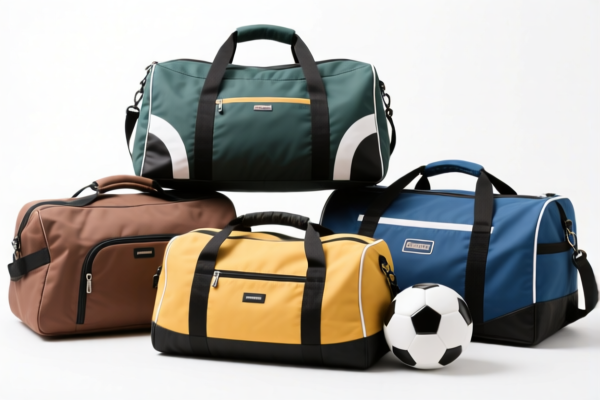
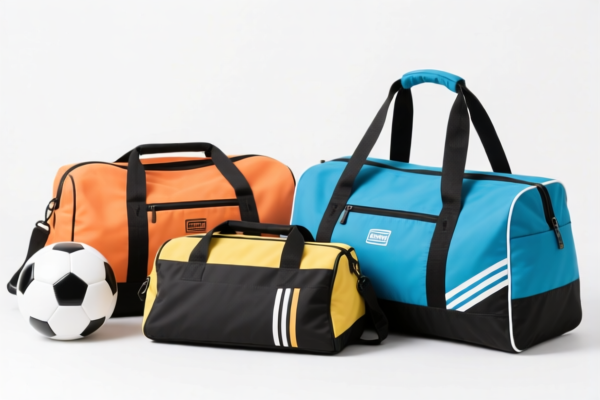
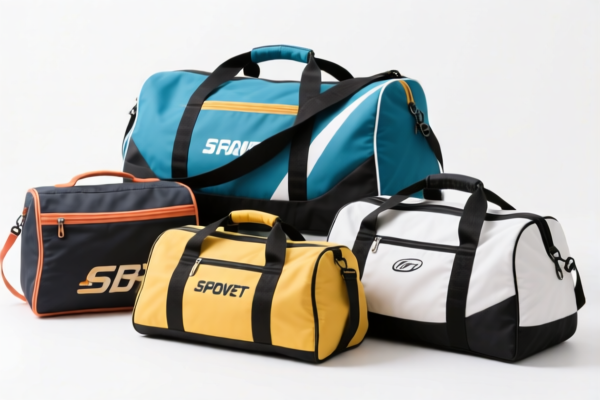

AI Analysis
🚴♂️ Cycling Bag (Cycling Saddle Bags, Handlebar Bags, Panniers)
🌐 HS Code Reference & Clearance Guide | 2026 Latest Tariff Analysis | Professional Custom Strategies
📌 I. Product Definition & Classification: Do You Really Understand "Cycling Bags"?
Cycling bags are essential accessories for cyclists, ranging from saddle bags for quick repairs to panniers for long-distance touring. In international trade, these items are primarily classified based on their material composition and specific use cases.
Key Distinction:
- Outdoor/Sports Gear Category: Bags specifically designed for mountaineering or rugged outdoor sports may fall under different headings if they meet specific structural criteria.
- General Textile Bags: Most cycling bags, made of nylon, polyester, or other textile materials, are classified under Chapter 42 (Articles of Leather; Saddle Harness and Trimming) or Chapter 63 (Other Made-Up Textile Articles), depending on the US Customs interpretation.
⚠️ Critical Clarification:
- If the bag is explicitly marketed and structured for outdoor sports equipment (e.g., specialized mountaineering packs that might overlap with hiking), it might be considered under 9506.
- However, the vast majority of standard cycling bags (nylon/polyester) are classified as Luggage/Handbags under 4202, subject to significantly higher tariffs due to "Section 301" and "Section 122" duties.
📦 II. HS Code Classification Details (2026 Latest Tariff Authority)
Based on the provided data, here are the two possible classifications for Cycling Bags, depending on their specific design and marketing:
| HS Code | Product Summary | Material/Feature | Total Tax Rate |
|---|---|---|---|
9506.99.60.40 |
Outdoor Sports Equipment Bags e.g., specialized mountaineering packs |
Fits the category of "Outdoor Games or Sports Implements" | 21.5% |
4202.92.39.00 |
General Sports/Luggage Bags e.g., standard saddle bags, handlebar bags |
Outer surface: Textile material (Nylon/Polyester) | 52.6% |
4202.92.31.20 |
Travel/Sport Backpacks e.g., synthetic fiber (Polyester/Nylon) backpacks |
Specifically for travel or sports use | 52.6% |
🔍 Key Insight:
- Option 1 (9506.99.60.40): Lower tariff (21.5%), but strict criteria. The bag must be clearly defined as part of "Outdoor Games or Sports Implements" (like a technical mountaineering pack).
- Option 2 (4202.92.39.00/4202.92.31.20): Higher tariff (52.6%). This is the default classification for most textile bags, including typical cycling saddle bags, handlebar bags, and panniers made of nylon/polyester.
💰 III. 2026 Latest Tariff Rate Breakdown (Detailed Tax Clauses)
✅ Applicable Country: United States (US)
✅ Origin: China (CN)
✅ Effective Date: From November 10, 2025 (including subsequent imports)
🎯 1. 9506.99.60.40 —— Outdoor Sports Equipment Bags (Lower Risk Option)
| Item | Content |
|---|---|
| Base Tariff | 4.0% |
| Section 301 Add-on | 7.5% |
| Section 122 Add-on | 10.0% |
| Total Tax Rate | 21.5% |
| Tax Calculation | CIF Value × 21.5% |
| De Minimis Eligibility | ❌ No (Subject to full duties) |
| Legal Basis | 9506.99.60.40 → Base + Sec 301 + Sec 122 |
📌 Explanation:
- Base 4.0%: Standard MFN rate for "Other equipment for general physical exercise."
- Sec 301 (7.5%): Additional tariff for Chinese goods under Section 301 of the Trade Act.
- Sec 122 (10%): Additional tariff under Section 122 (import duty relief adjustment).
- Total 21.5%: This is a moderate tariff, making it a preferred classification IF the product can be proven to be "Outdoor Sports Equipment" rather than general luggage.
🎯 2. 4202.92.39.00 & 4202.92.31.20 —— General Sports/Luggage Bags (Higher Risk Option)
| Item | Content |
|---|---|
| Base Tariff | 17.6% |
| Section 301 Add-on | 25.0% |
| Section 122 Add-on | 10.0% |
| Total Tax Rate | 52.6% |
| Tax Calculation | CIF Value × 52.6% |
| De Minimis Eligibility | ❌ No (Subject to full duties) |
| Legal Basis | 4202.92.xxxx → Base + Sec 301 + Sec 122 |
📌 Explanation:
- Base 17.6%: Standard rate for "Bags with outer surface of textile materials" (Handbags, luggage, etc.).
- Sec 301 (25.0%): High additional tariff for Chinese goods under Section 301.
- Sec 122 (10.0%): Additional tariff under Section 122.
- Total 52.6%: This is a very high tariff. Most standard cycling bags (nylon/polyester saddle bags, handlebar bags) fall into this category unless they can be proven to be specialized "outdoor sports implements."
🛠️ IV. Clearance Practical Advice (Pitfall Avoidance Guide)
✅ 1. Preparation Checklist (Must-Have Documents)
| Document | Required | Description |
|---|---|---|
| ✅ Product Specifications | ✔️ | Detailed description: Size, compartments, strap types, intended use (e.g., "Saddle bag for road cycling repair kit"). |
| ✅ Material Composition | ✔️ | Confirm outer surface material (Nylon, Polyester, Canvas). This determines if it falls under Ch. 42 or Ch. 63. |
| ✅ Product Photos | ✔️ | Clear images of the bag in use (e.g., mounted on a bicycle saddle). This helps prove "Sporting Use." |
| ✅ Commercial Invoice | ✔️ | Clearly state "Cycling Bag for Sports Use" or "Outdoor Sports Equipment Bag." Avoid vague terms like "Storage Bag." |
| ✅ Packing List | ✔️ | List all components (bag, straps, clips) to avoid split shipment issues. |
| ✅ Origin Certificate | ✔️ | Required for tariff calculation. |
✅ 2. Declaration Tips (Key Strategy)
🔥 "Prove the Sport, Not the Storage!"
| Scenario | Recommended HS Code | Risk Level |
|---|---|---|
| Standard Nylon Saddle Bag | 4202.92.39.00 |
⚠️ High (52.6%) |
| Handlebar Bag (Textile) | 4202.92.39.00 |
⚠️ High (52.6%) |
| Technical Mountaineering/Hiking Pack | 9506.99.60.40 |
✅ Lower (21.5%) |
| Synthetic Fiber Backpack (Travel/Sport) | 4202.92.31.20 |
⚠️ High (52.6%) |
📌 Strategy:
- If your cycling bag is a standard textile bag (nylon/polyester), it will likely be classified under 4202 with a 52.6% tariff.
- To qualify for 9506.99.60.40 (21.5%), you must demonstrate that the bag is specifically designed as part of outdoor sports equipment (e.g., integrated with technical gear, marketed for mountaineering/serious outdoor sports, not just general utility).
- Warning: Misdeclaring a standard bag as "Outdoor Sports Equipment" to save on tariffs can lead to audits, penalties, and back taxes.
✅ 3. Special Cases
| Case | Handling Advice |
|---|---|
| OEM Cycling Bags | Provide client order + design specs. If marketed as "Professional Cycling Gear," it may support the 4202 classification but not 9506. |
| Bags with Leather Trims | If leather content > 50%, classification may change to 4203 (Leather Bags), which has different rates. |
| Small Saddle Bags (De Minimis) | ❌ Not Eligible. Even small bags are subject to the 52.6% or 21.5% duty; they do not qualify for de minimis exemption (under $800) for Chinese-origin goods. |
| Non-Chinese Origin | If produced in Vietnam/Thailand, different tariffs may apply. Check for CEPA/ACFTA benefits. |
🌍 V. Global Market Clearance Comparison (2026 Latest)
| Country/Region | Recommended HS Code | Tariff (China Origin) | Notes |
|---|---|---|---|
| 🇺🇸 USA | 4202.92.39.00 |
52.6% | High duty due to Sec 301 + Sec 122 |
| 🇺🇸 USA | 9506.99.60.40 |
21.5% | Only if proven as "Outdoor Sports Equipment" |
| 🇨🇳 China | 4202.92.39.00 |
17.6% | No Sec 301/122 for domestic import |
| 🇪🇺 EU | 4202.92 |
4% - 12% | Varies by material; No Sec 301/122 |
| 🇬🇧 UK | 4202.92 |
4% - 12% | Post-Brexit tariff regime |
| 🇦🇺 Australia | 4202.92 |
5% | No Sec 301/122 |
📌 Conclusion:
- USA is the most challenging market for Chinese-made cycling bags due to 52.6% tariffs.
- Cost Optimization: Consider supply chain diversification (e.g., producing in Vietnam) to avoid Section 301 duties, or ensure precise classification to potentially qualify for the lower 21.5% rate if the product fits the "Outdoor Sports Equipment" definition.
📌 VI. Common Mistakes & Pitfall Guide (Lessons Learned)
❌ Mistake 1: Declaring a standard nylon saddle bag as "Outdoor Sports Equipment" (9506) to save taxes.
👉 Consequence: Customs may reclassify it as 4202, applying 52.6% retroactively + penalties.
❌ Mistake 2: Ignoring Section 122 (10%) in tariff calculations.
👉 Consequence: Underpaying duties by 10%, leading to audits and back taxes.
❌ Mistake 3: Assuming small bags qualify for de minimis ($800).
👉 Consequence: All Chinese-origin bags are subject to full duties regardless of size.
❌ Mistake 4: Using vague descriptions like "Canvas Bag" on the invoice.
👉 Consequence: Customs may impose the highest possible duty due to lack of clarity.
✅ Correct Approach:
"Cycling Saddle Bag, Nylon, Waterproof, for Road Bicycle, Model XYZ, Made in China"
🎯 VII. Conclusion: Professional Declaration for Cost Efficiency
🎯 Remember the Rule:
🔹 "Textile Sports Bag = 52.6% (Default)"
🔹 "Specialized Outdoor Sports Equipment = 21.5% (Conditional)"
🔹 "No De Minimis for China Origin"
📌 Tips:
- If your cycling bag is not a highly technical mountaineering pack, expect 52.6% duty.
- Proactively communicate with your customs broker to determine if your specific product design can qualify for the 9506.99.60.40 classification.
- For large volumes, consider pre-ruling applications with US Customs to secure the correct HS code and tariff rate.
📣 Immediate Action:
📞 Contact Your Customs Broker
📄 Provide Product Photos & Specs
🚀 Optimize Your Supply Chain to Manage High Tariffs
✨ Professional Clearance Starts with Accurate Classification!
💼 Every Dollar Saved in Duties is Pure Profit!
Customer Reviews
About HS Code Classification
The Harmonized System (HS) is an internationally standardized nomenclature developed by the World Customs Organization (WCO) to classify traded products. Over 200 countries use the HS system as the basis for customs tariffs, trade statistics, and import/export regulations.
Each HS code follows a hierarchical structure:
- Chapter (2 digits) — Broad category of goods (e.g., Chapter 84: Machinery and Mechanical Appliances)
- Heading (4 digits) — More specific grouping within the chapter
- Subheading (6 digits) — Internationally standardized breakdown, used by all WCO member countries
- National subdivisions (8-10 digits) — Country-specific extensions for further classification, such as US HTSUS 10-digit codes
Correct HS code classification is essential for smooth customs clearance, accurate duty payment, and compliance with trade regulations. Misclassification can lead to customs delays, overpayment of duties, or penalties.
When importing from CN to US, the applicable tariff rates may include:
- Most-Favored-Nation (MFN) rate — The standard duty rate applied to WTO members
- General rate — Applied to countries without trade agreements
- Trade remedy duties — Additional tariffs such as Section 301 (anti-dumping), Section 232 (national security), or countervailing duties
The information provided on this page is for reference purposes only. For official classification, please consult with your local customs authority or a licensed customs broker.