Cylinder Head Gasket
CN → US| HS Code | Tariff Rate | Origin | Destination | Doc |
|---|---|---|---|---|
| 8409919990 | 37.5% | CN | US | Official Doc |
| 7326190080 | 87.9% | CN | US | Official Doc |
| 7326908688 | 87.9% | CN | US | Official Doc |
| 8484100000 | 37.5% | CN | US | Official Doc |
| 8484900000 | 37.5% | CN | US | Official Doc |
Product Images
AI Analysis
Here is the Wiki-style guide for Cylinder Head Gaskets, tailored to the specific HS Codes and Tax details provided in your data, formatted for clarity, visual impact, and actionable customs strategy.
🔧 Cylinder Head Gasket (Engine Seals & Gaskets)
🌐 HS Code Reference & Customs Clearance Guide | 2026 Tax Analysis | Strategic Decoding
📌 I. Product Definition: What is a "Cylinder Head Gasket"?
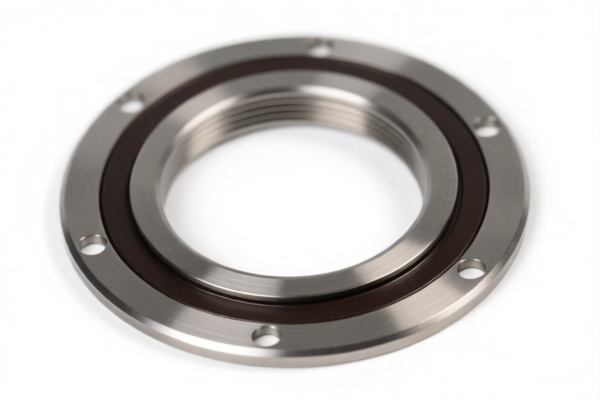
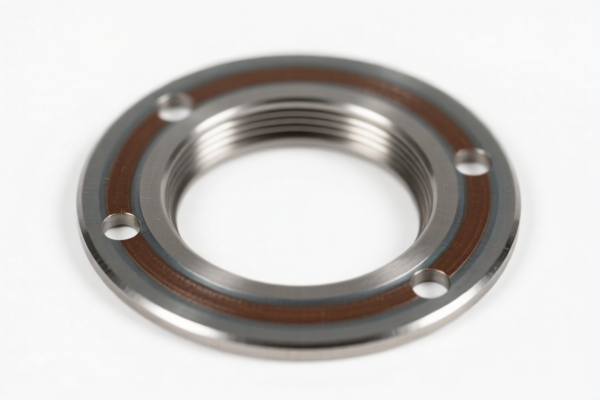
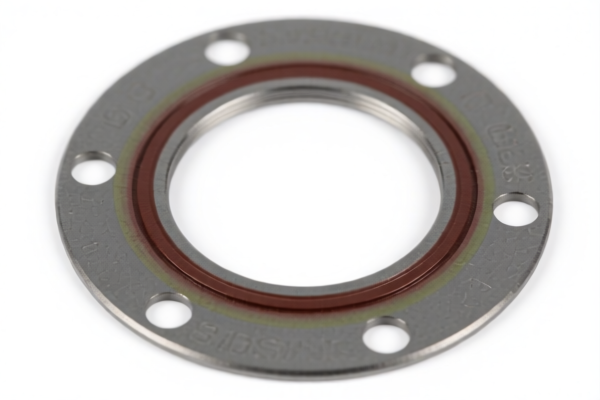
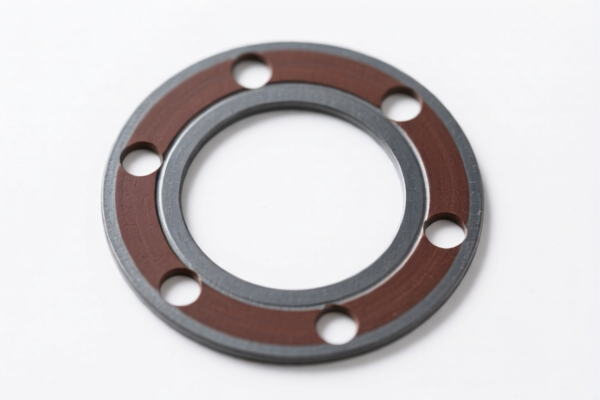
A Cylinder Head Gasket is a critical sealing component used in spark-ignition internal combustion engines. Its primary function is to seal the cylinder head to the engine block, preventing the leakage of combustion gases, coolant, and oil between the cylinders.
Key Characteristics: * Material: Typically composed of metal (steel/aluminum), composite materials, or asbestos-free non-metallic layers. * Structure: Often multi-layer steel (MLS) or reinforced rubber/cork composites with copper/brass cores. * Application: Essential for automotive, marine, and industrial engines. * HS Classification Logic: * If it is a generic metal gasket (Steel/Iron) → Often falls under Chapter 73. * If it is a specific part for spark-ignition engines → Falls under Chapter 84. * If it is a specialized sealing joint (flange type) → May fall under 8484.
⚠️ Critical Distinction:
- General Steel Gaskets (unclassified specific machinery) → 7326.19 / 7326.90 (Highest Tax: 87.9%)
- Specific Engine Parts (Spark Ignition) → 8409.91.99.90 (Medium Tax: 37.5%)
- Sealing Joints/Packing (General) → 8484.10 / 8484.90 (Medium Tax: 37.5%)
📦 II. HS Code Classification & Tax Breakdown (Data Source Analysis)
Based on the provided data, Cylinder Head Gaskets face two distinct tax paths depending on their material composition and specific classification logic.
📊 Path A: General Steel/Iron Gaskets (High Risk)
Applicable HS Codes: 7326.19.00.80 & 7326.90.86.88
Description: Non-specifically processed steel articles or other articles of iron/steel.
* Summary: "Steel or Metal Articles" (inferred for generic steel gaskets).
* Total Tax: 87.9% 🚨
* Tax Breakdown:
* Base Duty: 2.9%
* Additional Duty (Section 301): 25.0%
* Section 122 Duty: 10%
* Steel/Al/Cu Specific Surcharge: 50% (Crucial Trigger!)
* Calculation Logic: 2.9 + 25 + 10 + 50 = 87.9%
🔍 Why this path?
If the gasket is classified strictly as "Steel Articles" rather than "Engine Parts," the 50% surcharge on steel products kicks in, skyrocketing the total tax.
📊 Path B: Specific Engine Parts & Sealing Joints (Standard)
Applicable HS Codes: 8409.91.99.90, 8484.10.00.00, 8484.90.00.00
1. Specific Engine Parts (The Optimal Path)
- HS Code:
8409.91.99.90 - Description: Other parts for spark-ignition internal combustion engines.
- Material: Usually non-metal or composite (often used if classified as the specific part of the engine).
- Total Tax: 37.5%
- Tax Breakdown:
- Base Duty: 2.5%
- Additional Duty: 25.0%
- Section 122 Duty: 10%
- No 50% Steel Surcharge (Assuming classified as part, not raw steel).
2. Sealing Joints & Gaskets (General)
- HS Codes:
8484.10.00.00&8484.90.00.00 - Description:
8484.10: Gaskets & similar joints of metal sheeting (e.g., multi-layer steel gaskets).8484.90: Other gaskets of metal or composite materials.
- Total Tax: 37.5%
- Tax Breakdown:
- Base Duty: 2.5%
- Additional Duty: 25.0%
- Section 122 Duty: 10%
📌 Key Comparison:
| Classification | HS Code Range | Total Tax | Risk Level | | :--- | :--- | :--- | :--- | | Specific Engine Part |8409.91.99.90| 37.5% | ✅ Low | | Sealing Joint |8484.10/90| 37.5% | ✅ Low | | Generic Steel Article |7326.19/90| 87.9% | 🚨 EXTREME |
💰 III. 2026 Tax Structure Deep Dive (Legal & Policy)
✅ Applicable Jurisdiction: USA (Import from China)
✅ Effective Date: 2025/2026 Regime
✅ Key Surcharge Mechanism: Section 122 (Steel/Aluminum)
🎯 Why the 87.9% vs. 37.5% Gap?
The difference lies in the 50% Surcharge applied to steel products under Section 122.
-
The "Steel Trap" (
7326Series):- Base: 2.9%
- 301 Tariff: 25.0%
- Section 122 (Steel Specific): 50.0% 🚨
- Total: 87.9%
- Why? Customs may view the gasket as a "finished steel product" rather than an "engine component."
-
The "Engine Part" Advantage (
8409/8484):- Base: 2.5%
- 301 Tariff: 25.0%
- Section 122 (Flat Rate): 10.0% (General Section 122 rate, not the 50% steel surcharge)
- Total: 37.5%
- Why? Classified as a specific part (8409) or a specialized joint (8484), avoiding the heavy 50% steel surcharge.
📌 Legal Path:
HTSUS:8409.91.99.90→USITC Note→301 Section 3702→IEEPA/Section 122
Note: Avoiding the7326classification is critical to saving 50.4% in taxes.
🛠️ IV. Customs Clearance Strategy & Action Plan
✅ 1. Documentation Checklist (Non-Negotiable)
To ensure the gasket is classified under the 37.5% bracket (8409 or 8484) and not the 87.9% bracket (7326):
| Document | Requirement | Purpose |
|---|---|---|
| Technical Data Sheet | ✅ Must specify: "Part for Spark-Ignition Engine" | Proves it is an engine part (8409) not just steel. |
| Material Composition | ✅ List layers: e.g., "Steel core, asbestos-free filler" | Avoids "Generic Steel" classification. |
| Part Drawing | ✅ Show fitment (Cylinder Head to Block) | Visual proof of specific application. |
| OE Number Reference | ✅ Include OEM Part Number (e.g., Ford 12345) | Links to specific engine model. |
| Commercial Invoice | ✅ Description: "Cylinder Head Gasket for [Brand] Engine" | Avoid generic terms like "Steel Gasket". |
| Packing List | ✅ Indicate packaging for engine parts | Consistency with HS Code. |
✅ 2. Declaration Tactics (The "Golden Rule")
🔥 Rule: "Don't say 'Steel', say 'Engine Part'!"
| Scenario | Correct Declaration (Safe) | Wrong Declaration (Dangerous) |
|---|---|---|
| Generic Steel Gasket | "Cylinder Head Gasket, Part #123, for Spark-Ignition Engine" (8409) | "Steel Gasket, Unprocessed" (7326) |
| Metal Seal | "Multi-Layer Steel Gasket for Engine Sealing" (8484) | "Iron/Steel Article of Industrial Use" (7326) |
| Composite Material | "Asbestos-free Composite Engine Gasket" (8409) | "Rubber and Steel Product" (7326) |
⚠️ Warning: If Customs examines the product and sees it is pure steel without explicit engine-specific context, they may reclassify to 7326.19.00.80, triggering the 50% surcharge.
✅ 3. Special Handling Scenarios
- OEM vs. Aftermarket:
- OEM: Provide the manufacturer's manual showing it fits specific engines (Strongest defense for 8409).
- Aftermarket: Ensure the catalog clearly lists compatible engines. If listed as "Universal," risk increases.
- Material Mix:
- If the gasket is 100% metal, it is easier to argue for
8409. - If it is Composite, ensure the description highlights the "Engine Application" to avoid
7326.
- If the gasket is 100% metal, it is easier to argue for
- Kit Packaging:
- If shipped in a "Full Gasket Set" for an engine, declare the whole set under the engine part code (
8409) to avoid splitting into high-tax steel items.
- If shipped in a "Full Gasket Set" for an engine, declare the whole set under the engine part code (
🌍 V. Market Comparison & Cost Optimization
| Market | HS Code Strategy | Estimated Tax | Verdict |
|---|---|---|---|
| 🇺🇸 USA | Must use 8409.91.99.90 | 37.5% | Critical: Avoid 7326 (87.9%). |
| 🇨🇳 China | Standard Import | ~5-10% | No Section 301/122 surcharges. |
| 🇪🇺 EU | 8409 or 7326 | ~4-6% | Generally lower rates, no US-style surcharges. |
| 🇦🇺 Australia | 8409 | ~5% | Lower risk, but verify material rules. |
📌 Conclusion:
The USA market is the primary battleground. The difference between 37.5% and 87.9% is a $50,000 difference on a $100,000 shipment. Precision in classification is not optional; it is profitable.
📌 VI. Common Pitfalls & "Don't Do This" List
❌ Pitfall 1: Vague Description * Action: "Steel Gaskets" * Result: Customs assumes generic steel product → 7326.19 → 87.9% Tax. * Fix: Use specific engine part numbers and descriptions.
❌ Pitfall 2: Ignoring Material Layers * Action: Declaring only "Steel". * Result: Triggers 50% Steel Surcharge. * Fix: Highlight "Composite", "Asbestos-free", or "Engine Specific" in the material section.
❌ Pitfall 3: Over-Splitting * Action: Separating gasket from bolts/washers in a kit. * Result: Bolts/Washers might be taxed separately at high rates. * Fix: Declare the Gasket Kit as a single unit under the engine part code.
🎯 VII. Final Strategic Recommendation
🚀 Action Plan for 2026: 1. Verify Material: Confirm if the gasket is purely steel or composite. 2. Re-classify: Always aim for
8409.91.99.90(Spark Ignition Engine Part) or8484.10/90(Sealing Joint). 3. Avoid7326: This is the "Tax Trap" zone with 87.9%. 4. Prepare Proof: Have the OEM part number and engine compatibility list ready for Customs officers.
💡 Pro Tip:
If your gasket is for a Diesel Engine (Compression Ignition), the HS Code changes to 8409.99 (usually higher base rate but may avoid specific spark-ignition surcharges). Ensure you match the engine type (Spark vs. Diesel) correctly!
✨ Professional Customs Clearance Starts with Precision!
💼 Don't let a missing description cost you 50% in taxes!
📞 Contact your broker today to review your Gasket Classification.
Disclaimer: Tax rates are subject to change based on US Trade Policy, Section 301, and Section 122 updates. Always consult a licensed customs broker for final classification.
Customer Reviews
About HS Code Classification
The Harmonized System (HS) is an internationally standardized nomenclature developed by the World Customs Organization (WCO) to classify traded products. Over 200 countries use the HS system as the basis for customs tariffs, trade statistics, and import/export regulations.
Each HS code follows a hierarchical structure:
- Chapter (2 digits) — Broad category of goods (e.g., Chapter 84: Machinery and Mechanical Appliances)
- Heading (4 digits) — More specific grouping within the chapter
- Subheading (6 digits) — Internationally standardized breakdown, used by all WCO member countries
- National subdivisions (8-10 digits) — Country-specific extensions for further classification, such as US HTSUS 10-digit codes
Correct HS code classification is essential for smooth customs clearance, accurate duty payment, and compliance with trade regulations. Misclassification can lead to customs delays, overpayment of duties, or penalties.
When importing from CN to US, the applicable tariff rates may include:
- Most-Favored-Nation (MFN) rate — The standard duty rate applied to WTO members
- General rate — Applied to countries without trade agreements
- Trade remedy duties — Additional tariffs such as Section 301 (anti-dumping), Section 232 (national security), or countervailing duties
The information provided on this page is for reference purposes only. For official classification, please consult with your local customs authority or a licensed customs broker.