Cylinder Piston Kit
CN → US| HS Code | Tariff Rate | Origin | Destination | Doc |
|---|---|---|---|---|
| 8409919990 | 37.5% | CN | US | Official Doc |
| 8479899565 | 37.5% | CN | US | Official Doc |
| 8409915085 | 37.5% | CN | US | Official Doc |
| 8479909596 | 85.0% | CN | US | Official Doc |
| 7326908688 | 87.9% | CN | US | Official Doc |
Product Images
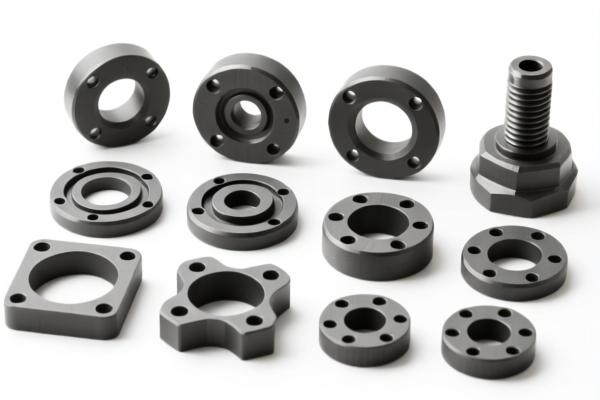
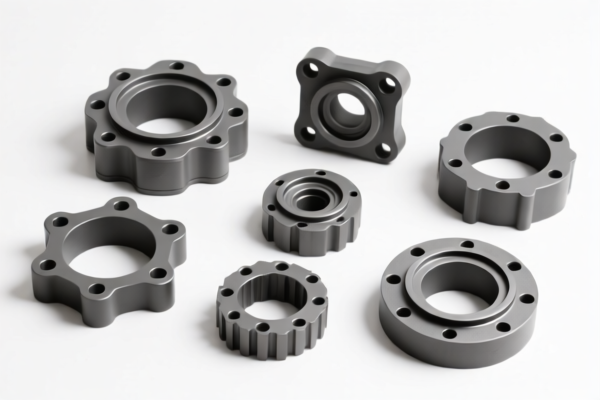
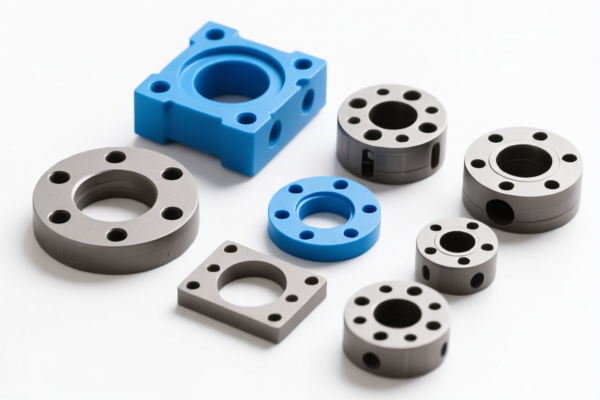
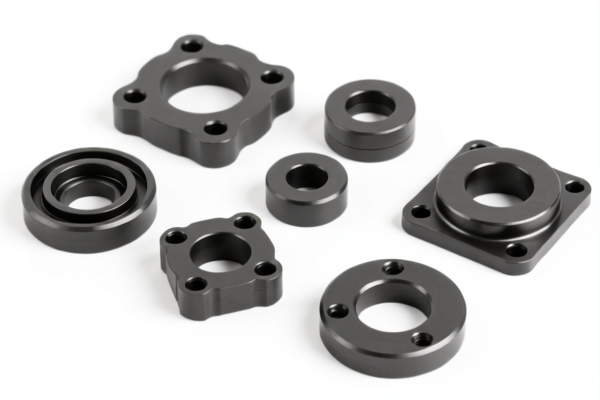
AI Analysis
🚗 Cylinder Piston Kit (Spark Ignition / Internal Combustion Engine Parts)
🌐 HS Code Reference & Clearance Guide | 2026 Latest Tariff Analysis | Professional Customs Strategy
📌 I. Product Definition & Classification: Do You Really Know What a "Cylinder Piston Kit" Is?
A Cylinder Piston Kit is a critical assembly within internal combustion engines (ICE), particularly in spark-ignition engines (gasoline engines). It typically consists of pistons, piston rings, wrist pins, and sometimes retainers. In international trade, its classification depends heavily on: 1. The Engine Type: Is it for a spark-ignition engine (gasoline) or compression-ignition (diesel)? 2. Functionality: Is it a specialized engine part or a generic mechanical component? 3. Material: Metal (Steel/Aluminum/Cast Iron) is standard.
⚠️ Key Distinction Point:
- If explicitly for Spark-Ignition Internal Combustion Engines → Look at 8409 series.
- If considered a General Mechanical Part with independent function or not specifically linked to the engine type in description → Look at 8479 or 7326.
- Material Matters: Steel/Aluminum parts often face higher "122" tariff add-ons in specific jurisdictions (e.g., US Section 301/122 nuances).
📦 II. HS Code Classification Matrix (2026 Latest Tariff Authority Comparison)
| HS Code | Product Description | Application Scenario | Material Inference | Tax Rate (Total) |
|---|---|---|---|---|
8409.91.99.90 |
Parts suitable for use solely or principally with spark-ignition internal combustion engines | Piston kits for gasoline engines (auto, motorcycle, small equipment) | Metal (Steel/Aluminum) | 37.5% |
8479.89.95.65 |
Machines and mechanical appliances with individual functions, not elsewhere specified | Generic mechanical parts, non-engine-specific piston assemblies | Steel or Alloy | 37.5% |
8409.91.50.85 |
Other parts for spark-ignition engines (sub-category "Other") | Engine components categorized as "parts" for gasoline engines | Metal | 37.5% |
8479.90.95.96 |
Parts of machines/appliances with individual functions, not specified elsewhere | "Kit" attribute components, generic mechanical parts | No material conflict noted | 85.0% |
7326.90.86.88 |
Other articles of iron or steel | Stainless steel cylinder piston kits, unlisted specific parts | Steel/Stainless Steel | 87.9% |
🔍 Critical Analysis:
-8409Series (37.5%): Best for standard automotive/motorcycle gasoline engine piston kits.
-8479Series (85.0%): High risk classification if deemed a "generic mechanical part" rather than an engine-specific part. Often leads to higher duties due to lack of specific engine linkage.
-7326Series (87.9%): Highest duty. Applies if classified strictly as "other steel articles" rather than machine parts, often due to material specification (e.g., stainless) or lack of specific engine function proof.
💰 III. 2026 Latest Tariff Rate Breakdown (Including Additional Duties & Policy Surcharges)
✅ Applicable Country: United States (US)
✅ Origin: China (CN)
✅ Effective Date: From 2025-11-10 onwards (for subsequent imports)
🎯 1. 8409.91.99.90, 8479.89.95.65, 8409.91.50.85 — Standard Engine Parts & Mechanical Appliances
| Item | Content |
|---|---|
| Base Duty Rate | 2.5% (ad valorem) |
| Additional Duty (Section 301) | +25.0% |
| Section 122 Duty | +10.0% (Specific provisions for certain steel/aluminum or mechanical items) |
| Total Duty Rate | 37.5% |
| Tax Calculation | CIF Value × 37.5% |
| De Minimis Exemption | ❌ Not Eligible (Deny de minimis) |
| Legal Basis Path | USITC:8409.91.99.90 → Footnote: 9903.88.01 (Section 301) → IEEPA:9903.01.25 (Section 122) |
📌 Explanation:
- The 2.5% is the standard Most Favored Nation (MFN) duty for engine parts.
- The 25% is the standard Section 301 tariff for Chinese goods.
- The 10% is a specific additional tariff (Section 122) applying to certain mechanical parts or steel products.
- Total: 37.5%. This is a high tariff category. Cost calculation must include all three components.
🎯 2. 8479.90.95.96 — Generic Machine Parts (Higher Risk)
| Item | Content |
|---|---|
| Base Duty Rate | 0.0% (ad valorem) |
| Additional Duty (Section 301) | +25.0% |
| Section 122 Duty (Steel/Al/Cu) | +50.0% (If steel, aluminum, or copper products) |
| Total Duty Rate | 85.0% |
| Tax Calculation | CIF Value × 85.0% |
| De Minimis Exemption | ❌ Not Eligible |
| Legal Basis Path | USITC:8479.90.95.96 → Footnote: 9903.88.01 → IEEPA:9903.01.24 (Section 122 Steel/Al) |
📌 Warning:
- If the HS Code is classified under 8479.90 (Generic parts) and involves Steel/Aluminum, the Section 122 tariff jumps to 50%, not 10%.
- Combined with 25% Section 301 and 0% base, the total hits 85%. This is catastrophic for margins. Avoid this classification if possible.
🎯 3. 7326.90.86.88 — Other Steel Articles (Highest Risk)
| Item | Content |
|---|---|
| Base Duty Rate | 2.9% (ad valorem) |
| Additional Duty (Section 301) | +25.0% |
| Section 122 Duty (Steel) | +50.0% |
| Total Duty Rate | 87.9% |
| Tax Calculation | CIF Value × 87.9% |
| De Minimis Exemption | ❌ Not Eligible |
| Legal Basis Path | USITC:7326.90.86.88 → Footnote: 9903.88.01 → IEEPA:9903.01.24 (Section 122 Steel) |
📌 Why So High?
- Classified as "Other articles of iron or steel" (Chapter 73).
- Subject to 50% Section 122 because it is a steel product.
- This classification is usually a result of incorrect declaration (e.g., declaring as "steel parts" instead of "engine parts") or using stainless steel without proper engine-part justification.
- Result: 87.9% Duty. Must be avoided.
🛠️ IV. Clearance Practical Advice (Battle-Tested Pitfall Avoidance)
✅ 1. Preparation Checklist (Non-Negotiable)
| Document | Required | Explanation |
|---|---|---|
| ✅ Product Specification Sheet | ✔️ | Must clearly state "Piston Kit for Spark-Ignition Engine." |
| ✅ Engine Compatibility List | ✔️ | Proof that parts fit specific gasoline engines (Brand/Model). |
| ✅ Material Composition Report | ✔️ | Specify alloy type (e.g., Al-Si, Cast Iron). Avoid "Stainless Steel" if possible unless necessary. |
| ✅ Product Photos | ✔️ | Show piston rings, wrist pins, and the kit packaging. |
| ✅ Commercial Invoice | ✔️ | Description: "Piston Kit, Part No. XXX, for Gasoline Engine." |
| ✅ Bill of Lading | ✔️ | Ensure no "Steel Scrap" or generic "Metal Parts" description. |
✅ 2. Declaration Tips (Key Mnemonic)
🔥 "Engine-Specific, Not Generic. Spark-Ignition, Not Diesel. Avoid Steel-Only Codes!"
| Scenario | Correct Declaration | Wrong Declaration |
|---|---|---|
| Standard Auto Piston Kit | 8409.91.99.90 |
7326.90.86.88 |
| Motorcycle Engine Parts | 8409.91.50.85 |
8479.90.95.96 |
| Stainless Steel Kit | 7326.90.86.88 (Inevitable) |
8409.91... (Risk of misclassification) |
| Generic Mechanical Assembly | 8479.89.95.65 |
8409.91... |
📌 Crucial Advice:
- Avoid8479.90and7326if the product is unequivocally for an internal combustion engine.
- Use8409whenever possible. It has the lowest duty (37.5% vs 85-87.9%).
- Material Warning: Stainless steel parts often force classification into Chapter 73 (7326) or trigger higher Section 122 rates. If using stainless, ensure the primary function is engine-related to argue for8409.
✅ 3. Special Case Handling
| Case | Handling Strategy |
|---|---|
| Mixed Materials (Al+Steel) | Declare as "Engine Parts" (8409) to avoid Section 122 Steel surcharge of 50%. |
| OEM Parts | Provide OEM label and engineering drawings to prove engine-specific nature. |
| Aftermarket Kits | Must clearly state "Compatible with [Engine Model]" on invoice. |
| Stainless Steel Pistons | High risk of 7326 classification. Prepare for 87.9% duty or seek pre-ruling. |
🌍 V. Global Market Clearance Comparison (2026 Latest)
| Country/Region | Recommended HS Code | Total Duty | Certification | Notes |
|---|---|---|---|---|
| 🇺🇸 USA | 8409.91.99.90 |
37.5% | None Specific | Avoid 8479 (85%) and 7326 (87.9%). |
| 🇨🇳 China | 8409.91.99.90 |
~2.5% | CCC (if applicable) | No Section 301/122. Low duty. |
| 🇪🇺 EU | 8409.91.90 |
~0-4% | CE (if equipment) | No Section 122 equivalent. |
| 🇲🇽 Mexico | 8409.91.99.00 |
~5% | NOM | USMCA benefits possible. |
| 🇻🇳 Vietnam | 8409.91.90 |
~0-5% | TTTK | Supply chain shift beneficiary. |
📌 Conclusion:
- USA is the only major market with punitive additional tariffs (301/122).
- Cost Management is Critical: Choosing the wrong HS Code (8479or7326) can double or triple your duty cost.
- Prove Engine Use: Always link the part to a "Spark-Ignition Internal Combustion Engine."
📌 VI. Common Errors & Pitfalls (Blood & Tears Lessons)
❌ Error 1: Declaring "Steel Piston Kit" → 7326.90.86.88
👉 Consequence: Duty jumps to 87.9%.
👉 Fix: Declare as "Parts for Spark-Ignition Engine" → 8409.91.99.90 → 37.5%.
❌ Error 2: Declaring "Generic Mechanical Part" → 8479.90.95.96
👉 Consequence: Duty hits 85.0% due to Section 122 Steel/Aluminum surcharge.
👉 Fix: Provide engine compatibility list. Use 8409 series.
❌ Error 3: Ignoring "Section 122" in HS Code selection
👉 Consequence: Unexpected 10% or 50% add-on.
👉 Fix: Always calculate Base + 301 + 122.
❌ Error 4: Using "Stainless Steel" for high-stress engine parts without justification
👉 Consequence: Often forced into 7326 (Chapter 73) due to material rules.
👉 Fix: If material must be stainless, argue "Functional Necessity" for engine use to stay in 8409.
✅ Correct Declaration Example:
"Piston Kit, Aluminum Alloy, for 200cc Spark-Ignition Motorcycle Engine, Part No. PK-123, Compatible with Honda CB125"
🎯 VII. Conclusion: Precision Classification Saves Millions!
🎯 Remember the Mantra:
🔹 "Engine Parts First, Not Steel Articles."
🔹 "Spark-Ignition = 8409. Generic = 8479. Steel Articles = 7326."
🔹 "37.5% is Good. 85% is Bad. 87.9% is Disaster."
📌 Pro Tip:
If your product is originally from Vietnam, Mexico, or Thailand, you may be eligible for Section 301/122 exemptions or lower rates under free trade agreements.
Always apply for an Advance Ruling with US Customs and Border Protection (CBP) before shipment if the classification is ambiguous.
📣 Immediate Action Required:
📞 Consult a licensed customs broker.
📄 Prepare engine compatibility documents.
🚀 Optimize your HS Code to8409.91.99.90and save over 48% in duties!
✨ Professional Clearance Starts with Accurate Classification!
💼 Every Percent of Duty Counts in Your Bottom Line!
Customer Reviews
About HS Code Classification
The Harmonized System (HS) is an internationally standardized nomenclature developed by the World Customs Organization (WCO) to classify traded products. Over 200 countries use the HS system as the basis for customs tariffs, trade statistics, and import/export regulations.
Each HS code follows a hierarchical structure:
- Chapter (2 digits) — Broad category of goods (e.g., Chapter 84: Machinery and Mechanical Appliances)
- Heading (4 digits) — More specific grouping within the chapter
- Subheading (6 digits) — Internationally standardized breakdown, used by all WCO member countries
- National subdivisions (8-10 digits) — Country-specific extensions for further classification, such as US HTSUS 10-digit codes
Correct HS code classification is essential for smooth customs clearance, accurate duty payment, and compliance with trade regulations. Misclassification can lead to customs delays, overpayment of duties, or penalties.
When importing from CN to US, the applicable tariff rates may include:
- Most-Favored-Nation (MFN) rate — The standard duty rate applied to WTO members
- General rate — Applied to countries without trade agreements
- Trade remedy duties — Additional tariffs such as Section 301 (anti-dumping), Section 232 (national security), or countervailing duties
The information provided on this page is for reference purposes only. For official classification, please consult with your local customs authority or a licensed customs broker.