Cylindrical Activated Carbon Filter
CN → US| HS Code | Tariff Rate | Origin | Destination | Doc |
|---|---|---|---|---|
| 8421290005 | 35.0% | CN | US | Official Doc |
| 8421390140 | 35.0% | CN | US | Official Doc |
| 4402900100 | 35.0% | CN | US | Official Doc |
| 4402200000 | 35.0% | CN | US | Official Doc |
Product Images
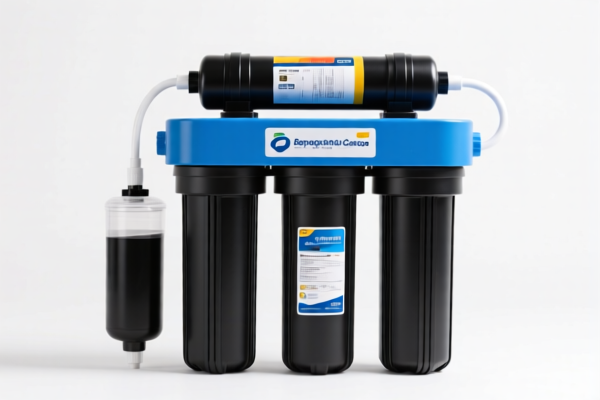
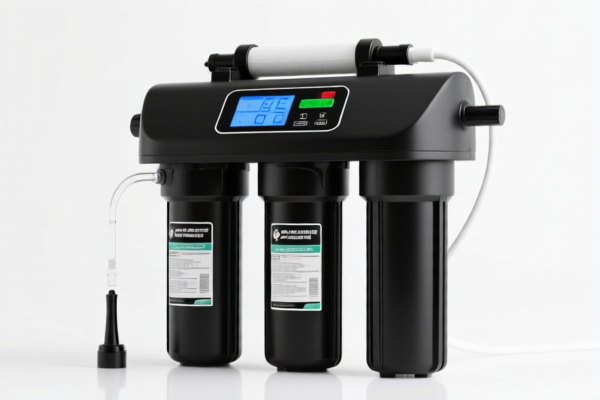


AI Analysis
🌬️ Cylindrical Activated Carbon Filter (Industrial Air/Water Purification)
🌐 HS Code Reference & Customs Clearance Guide | 2026 Latest Tariff Analysis | Professional Entry Strategy 📌 I. Product Definition & Classification: Do You Really Understand "Activated Carbon"?
Cylindrical Activated Carbon Filters are critical components in environmental protection, industrial hygiene, and fluid processing systems. They are primarily used for adsorption of odors, volatile organic compounds (VOCs), or specific chemical impurities from gases or liquids.
In international trade, these products are often mistaken for simple "parts" or generic "carbon" materials. However, under the Harmonized System (HS), they are classified based on their function as filtering or purifying machinery/apparatus, not merely as raw materials.
⚠️ Critical Distinction: - If the product is simply raw activated carbon granules/powder without housing or structural filtration integrity → It may fall under Chapter 38 (Prepared Binders/Adsorbents) or Chapter 44 (Wood Charcoal) if unprocessed. - If the product is a complete unit or cartridge designed for filtration (cylindrical housing + carbon media) → It falls under Chapter 84 (Machinery/Equipment).
Based on the provided , the relevant items are classified under Chapter 84 as "Filtering or Purifying Machinery."
📦 II. HS Code Classification Details (2026 Latest Tariff Alignment)
| HS Code | Product Description | Applicable Scenario | Function |
|---|---|---|---|
| 8421.29.00.05 | Filtering or purifying machinery for liquids: Other (Refrigerant recovery/recycling units) | ⚠️ Note: The description in is highly specific to Refrigerant Recovery. | Liquid Purification |
| 8421.39.01.40 | Filtering or purifying machinery for gases: Other (Gas separation equipment) | ✅ Best Fit for Gas/Air Cylindrical Filters. | Gas Purification/Separation |
| 4402.90.01.00 | Wood charcoal (including shell/nut charcoal), whether or not agglomerated: Other | ❌ Incorrect for finished filters. Only for raw/agglomerated carbon blocks without filtration apparatus function. | Raw Material/Charcoal |
| 4402.20.00.00 | Wood charcoal (including shell/nut charcoal): Of shell or nut | ❌ Incorrect. Only for raw biomass charcoal. | Raw Material |
🔍 Key Insight: - The term "Activated Carbon Filter" implies a functional apparatus. Even if it is a simple cylinder, if it is designed to filter air/gas, it generally falls under 8421.39. - 8421.39.01.40 covers "Gas separation equipment" or other gas purifying machinery. This is the most logical fit for air purification cylindrical filters. - 4402 codes are for raw charcoal. If you ship loose carbon granules, use 4402. If you ship a cartridge/filter housing filled with carbon, use 8421. - 8421.29.00.05 is narrowly defined in as "Refrigerant recovery...". If your filter is NOT for refrigerant recycling, avoid this code. It is likely only for specialized HVAC refrigerant recovery systems.
💰 III. 2026 Latest Tariff Rate Breakdown (Detailed Tax Clauses)
✅ Applicable Country: United States (US) ✅ Origin: China (CN) ✅ Effective Date: 2025/2026 (Based on provided data)
🎯 1. 8421.39.01.40 —— Gas Filtering/Purifying Machinery (Most Likely for Air Filters)
| Item | Detail |
|---|---|
| Product | Cylindrical Activated Carbon Filter (for Gas/Air Purification) |
| Base Tariff | 0.0% |
| Additional Tariff (Section 301) | +25.0% |
| Total Tax Rate | 25.0% |
| Tax Calculation | CIF Value × 25.0% |
| Legal Basis | USITC Harmonized Tariff Schedule (HTSUS) for 8421.39.01.40 |
📌 Explanation: - Although the base tariff is 0%, the 25% additional tariff applies due to Section 301 trade measures against Chinese goods. - This is a standard high-tariff bracket for industrial machinery components. - No de minimis exemption: Imports must declare full value and pay tax.
🎯 2. 8421.29.00.05 —— Liquid Filtering Machinery (Refrigerant Specific)
| Item | Detail |
|---|---|
| Product | Refrigerant Recovery/Recycling Units (Cylindrical Liquid Filter) |
| Base Tariff | 0.0% |
| Additional Tariff (Section 301) | +25.0% |
| Total Tax Rate | 25.0% |
| Tax Calculation | CIF Value × 25.0% |
📌 Warning: - Only use this if the product is explicitly a Refrigerant Recovery Unit. - If your product is a general air/water filter, misclassifying it here may lead to customs scrutiny or rejection if the documentation doesn't match "Refrigerant Recovery."
🎯 3. 4402.90.01.00 & 4402.20.00.00 —— Wood Charcoal (Raw Material)
| Item | Detail |
|---|---|
| Product | Agglomerated Wood Charcoal / Shell Charcoal (No filtration function) |
| Base Tariff | 0.0% |
| Additional Tariff (Section 301) | +25.0% |
| Total Tax Rate | 25.0% |
📌 Caution: - If you ship finished filters but classify them as raw charcoal to avoid machinery regulations, Customs may reclassify them under 8421, leading to penalties and delayed clearance. - Ensure your product description clearly states "Filter Cartridge" or "Purification Apparatus" if using 8421.
🛠️ IV. Customs Clearance Practical Advice (Avoid Pitfalls)
✅ 1. Required Documentation Checklist
| Document | Required? | Explanation |
|---|---|---|
| ✅ Commercial Invoice | ✔️ | Must specify: "Cylindrical Activated Carbon Filter for Air Purification" |
| ✅ Packing List | ✔️ | Detail dimensions, weight, and quantity |
| ✅ Product Technical Data Sheet | ✔️ | Explain adsorption efficiency, housing material, and filtration purpose |
| ✅ HS Code Pre-Ruling (Optional but Recommended) | ✔️ | Confirm if 8421.39.01.40 is correct for your specific model |
| ✅ Certificate of Origin | ✔️ | Required for origin verification |
✅ 2. Declaration Strategy
🔥 Key Mantra:
"Function Defines Code: Gas Filter → 8421, Raw Carbon → 4402, Refrigerant Unit → 8421.29"
| Scenario | Correct HS Code | Risk of Misclassification |
|---|---|---|
| Air Purifier Cartridge | 8421.39.01.40 |
Low (if described correctly) |
| Water Filter Cartridge | 8421.21 or 8421.29 (Check specific subheadings) |
Medium (if not specified as refrigerant) |
| Loose Activated Carbon Granules | 3802.10 (Prepared Adsorbents) or 4402 |
High (if shipped as filter but declared as granules) |
| Refrigerant Recovery Canister | 8421.29.00.05 |
High (if not actually for refrigerant) |
✅ 3. Special Handling Tips
| Situation | Recommendation |
|---|---|
| Customs Inquiry | Provide photos showing the cylindrical housing and carbon media inside. Emphasize "Purification Function". |
| Origin Labeling | Ensure "Made in China" is clearly marked. Avoid misleading origin claims. |
| Duty Mitigation | No duty exemption available for these codes. Plan for 25% cost increase. |
| Material Safety | If the carbon contains chemical binders or oil, ensure MSDS is provided to avoid hazardous material flags. |
🌍 V. Global Market Comparison (2026)
| Country/Region | Recommended HS Code | Tariff (China Origin) | Notes |
|---|---|---|---|
| 🇺🇸 USA | 8421.39.01.40 |
25.0% | High tariff due to Section 301 |
| 🇪🇺 EU | 8421.39.90 |
~0-4% | Lower tariffs, but strict CE/RoHS compliance |
| 🇨🇳 China | 8421.39.90 |
~0-5% | Import into China may have different rates |
| 🇯🇵 Japan | 8421.39.90 |
~0-3% | No major additional tariffs |
📌 Conclusion: - The US market is the most costly due to the 25% additional tariff. - Ensure accurate classification to avoid double taxation or penalties.
📌 VI. Common Mistakes & Pitfalls
❌ Mistake 1: Declaring Finished Filters as "Activated Carbon Powder"
👉 Consequence: Customs may reject as misdeclaration. If caught, you face penalties and back taxes.
❌ Mistake 2: Using 8421.29.00.05 for General Air Filters
👉 Consequence: "Refrigerant Recovery" is a very specific function. General air filters do not qualify. Risk of audit.
❌ Mistake 3: Ignoring Section 301 Tariffs
👉 Consequence: Budgeting for 0% tax when it’s actually 25% leads to unexpected costs and cash flow issues.
✅ Correct Approach:
"Cylindrical Activated Carbon Filter for Air Purification, Model XYZ, 100% Virgin Coconut Shell Carbon, Housing: Stainless Steel, HS Code: 8421.39.01.40"
🎯 VII. Conclusion: Professional Declaration Saves Money!
🎯 Remember:
🔹 "Function First: Gas Filter = 8421, Raw Carbon = 4402"
🔹 "25% Tax is Inevitable for China Origin to US"
🔹 "Accurate Description Prevents Delays"
📌 Pro Tip:
If your product is specifically for refrigerant recovery, use
8421.29.00.05.
If it is for general air/gas purification, use8421.39.01.40.
Never classify a functional filter as raw material to avoid scrutiny.
📣 Action Required:
📞 Consult with a Licensed Customs Broker
📄 Provide Detailed Product Specifications
🚀 Plan for 25% Duty Cost
✨ Professional Customs Clearance Starts with Precise Classification!
💼 Your Cost Efficiency Depends on Accurate HS Codes!
Customer Reviews
About HS Code Classification
The Harmonized System (HS) is an internationally standardized nomenclature developed by the World Customs Organization (WCO) to classify traded products. Over 200 countries use the HS system as the basis for customs tariffs, trade statistics, and import/export regulations.
Each HS code follows a hierarchical structure:
- Chapter (2 digits) — Broad category of goods (e.g., Chapter 84: Machinery and Mechanical Appliances)
- Heading (4 digits) — More specific grouping within the chapter
- Subheading (6 digits) — Internationally standardized breakdown, used by all WCO member countries
- National subdivisions (8-10 digits) — Country-specific extensions for further classification, such as US HTSUS 10-digit codes
Correct HS code classification is essential for smooth customs clearance, accurate duty payment, and compliance with trade regulations. Misclassification can lead to customs delays, overpayment of duties, or penalties.
When importing from CN to US, the applicable tariff rates may include:
- Most-Favored-Nation (MFN) rate — The standard duty rate applied to WTO members
- General rate — Applied to countries without trade agreements
- Trade remedy duties — Additional tariffs such as Section 301 (anti-dumping), Section 232 (national security), or countervailing duties
The information provided on this page is for reference purposes only. For official classification, please consult with your local customs authority or a licensed customs broker.