Cymbal
CN → US| HS Code | Tariff Rate | Origin | Destination | Doc |
|---|---|---|---|---|
| 9209994080 | 17.5% | CN | US | Official Doc |
| 9209998000 | 22.8% | CN | US | Official Doc |
| 9206004000 | 17.5% | CN | US | Official Doc |
| 9206008000 | 22.8% | CN | US | Official Doc |
| 8306100000 | 15.8% | CN | US | Official Doc |
| 8306290000 | 10.0% | CN | US | Official Doc |
Product Images
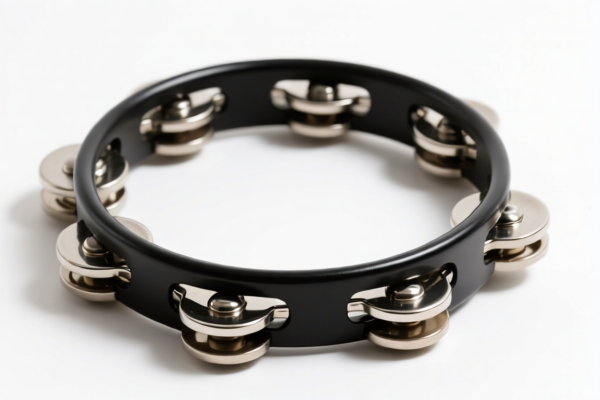
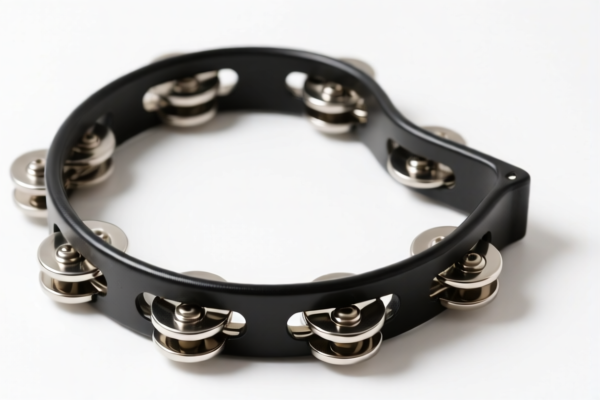
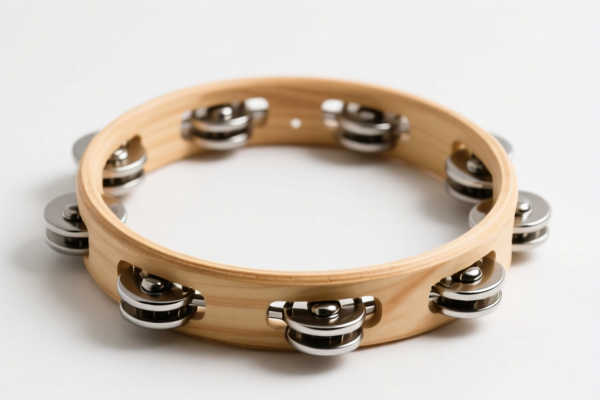

AI Analysis
🥁 Cymbals (Percussion Musical Instruments)
🌐 HS Code Reference & Customs Clearance Guide | 2026 Latest Tariff Analysis | Professional Clearance Strategy
📌 I. Product Definition and Classification: Do You Really Know "Cymbals"?
Cymbals are iconic percussion instruments, essential in orchestras, drum kits, jazz bands, and cultural ceremonies. In international trade, they are classified under Chapter 92 (Musical Instruments). The classification depends heavily on the material composition and whether they are considered "standard" cymbals or "other" percussion accessories.
⚠️ Key Distinction Point:
- If the item is a standard cymbal (metal disc used for sound effects), it falls under specific subheadings.
- If the item is a part/accessory for a cymbal (e.g., a felt washer, a specific mounting bracket not included with the cymbal), it may fall under Parts/Accessories.
- Note: Based on the provided<DATA>, we focus on the instrument itself and its direct parts.
📦 II. HS Code Classification Details (2026 Latest Tariff Authority Comparison)
Based on the provided data, here are the applicable HS Codes for Cymbals and related items:
| HS Code | Product Description | Applicable Scenario | Key Characteristics |
|---|---|---|---|
9206.00.40.00 |
Cymbals (Specifically listed) | Standard orchestral, drum kit, or ride cymbals | Directly named in description. Base metal, non-electric. |
9206.00.80.00 |
Other (Percussion instruments) | Non-standard cymbals, novelty percussion, or cymbal-like items not strictly defined as "Cymbals" | Items that do not fit the precise definition of 9206.00.40.00. |
9209.99.40.80 |
Parts/Accessories (For woodwind/brass) | Parts for other instruments (not cymbals) | Not applicable to cymbals directly, but listed in data for contrast. |
9209.99.80.00 |
Parts/Accessories (Other) | General parts/accessories for musical instruments | Includes parts for cymbals if not included in the main instrument classification? See Note below. |
8306.10.00.00 |
Bells, Gongs, etc. (Base Metal) | Gongs, temple bells, decorative metal discs | If the item is structurally a "Gong" or "Bell" rather than a "Cymbal," it may be classified here. |
8306.29.00.00 |
Ornaments (Base Metal) | Decorative cymbal-shaped ornaments | Non-musical, decorative items. |
🔍 Important Note on
9209.99.80.00vs9206.xx:
- If you are importing the cymbal itself (the sound-producing instrument), it should primarily be under 9206.40.00 or 9206.80.00.
- If you are importing replacement parts (e.g., felts, wingnuts, straps) separately, they might fall under 9209.99.80.00.
- Gongs are often confused with cymbals. If it is a large, suspended metal disc with a raised center, it may be8306.10.00.00.
💰 III. 2026 Latest Tariff Rate Details (Including Additional Duties)
✅ Applicable Country: United States (US)
✅ Origin: China (CN) (Assumed based on tariff structures in data)
✅ Effective Time: Current as per provided data
🎯 1. 9206.00.40.00 —— Cymbals
| Item | Content |
|---|---|
| Base Tariff | 0.0% (ad valorem) |
| Additional Tariff (Section 301/Trade War) | +7.5% |
| Total Tariff Rate | 7.5% |
| Tax Calculation | CIF Value × 7.5% |
| De Minimis Eligibility | ❌ No (Value exceeds $800 threshold for standard clearance; musical instruments are not de minimis exempt if high value) |
📌 Explanation:
- Standard cymbals enjoy a 0% base tariff under the Harmonized Tariff Schedule (HTS).
- However, due to ongoing trade tensions, an additional 7.5% tariff is applied to Chinese-origin musical instruments.
- Total Cost: Only 7.5% of the CIF value. This is a relatively low tariff rate compared to electronics or textiles.
🎯 2. 9206.00.80.00 —— Other Percussion Instruments
| Item | Content |
|---|---|
| Base Tariff | 5.3% (ad valorem) |
| Additional Tariff (Section 301/Trade War) | +7.5% |
| Total Tariff Rate | 12.8% |
| Tax Calculation | CIF Value × 12.8% |
| De Minimis Eligibility | ❌ No |
📌 Explanation:
- If your item is classified as "Other" percussion (e.g., a novel cymbal-shaped ornament used as an instrument, or an unconventional percussion device), the base rate is 5.3%.
- Plus the 7.5% additional tariff.
- Total Cost: 12.8% of the CIF value.
🎯 3. 8306.10.00.00 —— Bells, Gongs, and the Like (Base Metal)
| Item | Content |
|---|---|
| Base Tariff | 5.8% (ad valorem) |
| Additional Tariff | 0.0% |
| Total Tariff Rate | 5.8% |
| Tax Calculation | CIF Value × 5.8% |
| De Minimis Eligibility | ❌ No |
📌 Explanation:
- If your item is legally defined as a Gong or Bell rather than a Cymbal, it falls under Chapter 83.
- Total Cost: 5.8% of the CIF value.
- Advantage: No additional 7.5% trade war tariff applies to this specific subheading for Chinese goods in this dataset. This could be a lower-cost alternative if the item qualifies as a "Gong".
🛠️ IV. Customs Clearance Practical Advice (Real-world Pitfall Avoidance)
✅ 1. Documentation Checklist (Must-Haves)
| Document | Required | Notes |
|---|---|---|
| ✅ Product Description | ✔️ | Must clearly state "Cymbal" or "Gong". Avoid vague terms like "Metal Disc". |
| ✅ Material Composition | ✔️ | Specify alloy (e.g., B8 Bronze, Brass). This helps classify between 9206 (Instrument) and 8306 (Ornament/Bell). |
| ✅ HS Code Justification | ✔️ | Explain why it’s a musical instrument (e.g., "Used in drum kit for percussion sound"). |
| ✅ Commercial Invoice | ✔️ | Must match the declared HS Code. |
| ✅ Packing List | ✔️ | Show quantity and weight. |
| ✅ Proof of Musical Use | ✔️ | Photos of the item in a musical context can prevent reclassification as "Ornament". |
✅ 2. Declaration Tips (Key Mantras)
🔥 "Instrument vs. Ornament: Context is King!"
| Situation | Correct Declaration | Wrong Practice |
|---|---|---|
| Standard Cymbal (Brass/Bronze) | 9206.00.40.00 - "Cymbal, Percussion Instrument" |
Declaring as "Metal Disc" → Risk of 8306 or 7318 |
| Large Suspended Metal Disc (Gong) | 8306.10.00.00 - "Gong, Base Metal" |
Declaring as "Cymbal" → May trigger 7.5% add-on if misclassified |
| Decorative Cymbal Wall Art | 8306.29.00.00 - "Ornament, Base Metal" |
Declaring as "Instrument" → Fraud/Risk |
| Cymbal Stand/Felt (Accessory) | 9209.99.80.00 - "Parts of Musical Instruments" |
Including with cymbal without separate line item if sold separately |
✅ 3. Special Cases
| Scenario | Handling Advice |
|---|---|
| OEM Cymbals | Provide OEM agreement if claiming brand origin benefits. |
| Sample Imports | If value < $800, may enter de minimis, but ensure proper documentation to avoid hold-ups. |
| Gong vs. Cymbal | If the item has a raised center boss and is struck with a mallet, it is likely a Gong (8306.10.00.00). This may save 1.7% (7.5% - 5.8%) compared to Cymbals if no add-on tax applies. |
| Electronic Cymbals | If it has sensors/output, it may fall under Chapter 92 but different subheadings or Chapter 85. Not covered in this basic dataset. |
🌍 V. Global Market Comparison (2026 Latest)
| Country/Region | Recommended HS Code | Tariff (China Origin) | Certification | Notes |
|---|---|---|---|---|
| 🇺🇸 USA | 9206.00.40.00 |
7.5% (Total) | None | Low base rate, but add-on tax applies. |
| 🇨🇳 China | 9206.00.40.00 |
~5-10% | CCC (if applicable) | Import duty for foreign instruments. |
| 🇪🇺 EU | 9206.00.40.00 |
0% | CE (if electronic) | Often 0% for musical instruments. |
| 🇬🇧 UK | 9206.00.40.00 |
0-10% | UKCA | Post-Brexit rules may vary. |
| 🇯🇵 Japan | 9206.00.40.00 |
0% | PSE (if electronic) | Favorable for non-electric instruments. |
📌 Conclusion:
- The USA is the only major market in this dataset imposing an additional 7.5% on Cymbals from China.
- Gongs (8306.10.00.00) may offer a lower total tariff (5.8%) in the US if the product can be legitimately classified as a Gong/Bell rather than a Cymbal.
📌 VI. Common Mistakes & Pitfall Guide (Blood & Tears Lessons)
❌ Mistake 1: Declaring a Gong as a Cymbal
👉 Consequence: Incorrect HS Code (9206 vs 8306). While 9206 has 7.5%, 8306 has 5.8%. If misdeclared, customs may reclassify and assess 5.8% + 0% = 5.8%, leading to overpayment or underpayment disputes if the system flags it.
👉 Fix: Accurately describe physical structure (bossed center = Gong, flat/curved = Cymbal).
❌ Mistake 2: Declaring Decorative Cymbals as Musical Instruments
👉 Consequence: Duty evasion. Decorative items fall under 8306.29.00.00 (0% tax in this dataset). If declared as 9206.00.40.00 (7.5%), you overpay. If declared as 8306 (5.8%) but it's actually an instrument, you underpay.
👉 Fix: Provide photos showing musical use vs. wall decoration.
❌ Mistake 3: Ignoring Accessories
👉 Consequence: Shipping cymbal stands/felts separately without correct HS Code (9209.99.80.00 - 12.8%) can lead to higher duties than bundling them.
👉 Fix: Bundle accessories with the instrument if possible, or declare correctly.
✅ Correct Practice:
"Cymbal, 14-inch, Bronze, Percussion Instrument, Model XYZ, Non-Electric"
🎯 VII. Conclusion: Professional Declaration, Save Money, Avoid Risks!
🎯 Remember the Mantra:
🔹 "Cymbal is 7.5%, Gong is 5.8%, Ornament is 0%!"
🔹 "Check the Boss: Center Boss = Gong? Check the Surface: Flat/Curved = Cymbal?"
📌 Pro Tip:
If you are importing large suspended metal discs used for cultural or ceremonial purposes, consider classifying as Gongs (8306.10.00.00) to save 1.7% in duties (5.8% vs 7.5%). However, ensure the item does not meet the strict definition of a musical cymbal to avoid compliance issues.
📣 Immediate Action:
📞 Contact your customs broker + Provide product photos + Verify HS Code pre-classification
🚀 Let your cymbals clear smoothly, legally, and cost-effectively!
✨ Professional Clearance Starts with Accurate Classification!
💼 Every Percent Saved is Profit Gained!
Customer Reviews
About HS Code Classification
The Harmonized System (HS) is an internationally standardized nomenclature developed by the World Customs Organization (WCO) to classify traded products. Over 200 countries use the HS system as the basis for customs tariffs, trade statistics, and import/export regulations.
Each HS code follows a hierarchical structure:
- Chapter (2 digits) — Broad category of goods (e.g., Chapter 84: Machinery and Mechanical Appliances)
- Heading (4 digits) — More specific grouping within the chapter
- Subheading (6 digits) — Internationally standardized breakdown, used by all WCO member countries
- National subdivisions (8-10 digits) — Country-specific extensions for further classification, such as US HTSUS 10-digit codes
Correct HS code classification is essential for smooth customs clearance, accurate duty payment, and compliance with trade regulations. Misclassification can lead to customs delays, overpayment of duties, or penalties.
When importing from CN to US, the applicable tariff rates may include:
- Most-Favored-Nation (MFN) rate — The standard duty rate applied to WTO members
- General rate — Applied to countries without trade agreements
- Trade remedy duties — Additional tariffs such as Section 301 (anti-dumping), Section 232 (national security), or countervailing duties
The information provided on this page is for reference purposes only. For official classification, please consult with your local customs authority or a licensed customs broker.