DC Power Module
CN → US| HS Code | Tariff Rate | Origin | Destination | Doc |
|---|---|---|---|---|
| 8542390090 | 60.0% | CN | US | Official Doc |
| 8543709860 | 37.6% | CN | US | Official Doc |
| 8543906800 | 35.0% | CN | US | Official Doc |
| 8504409540 | 35.0% | CN | US | Official Doc |
| 8504409580 | 35.0% | CN | US | Official Doc |
| 8542900000 | 60.0% | CN | US | Official Doc |
Product Images
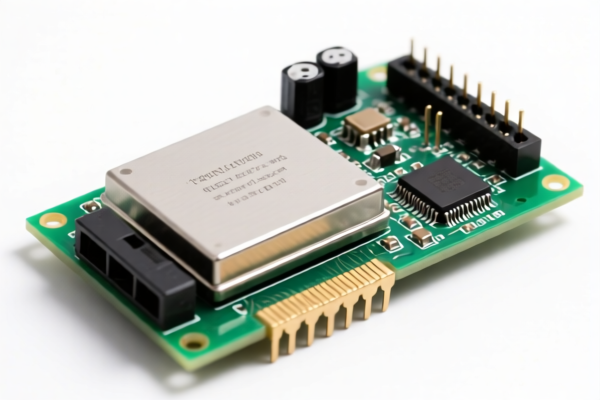
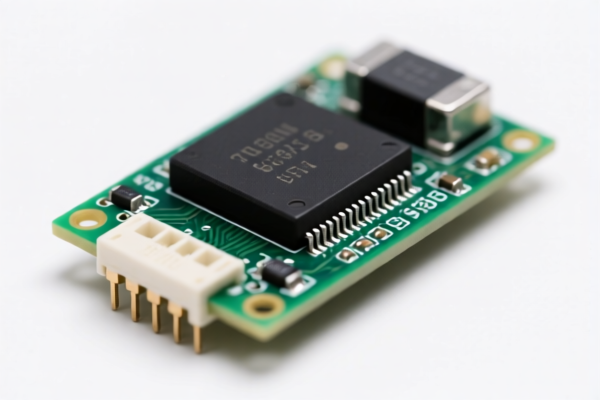
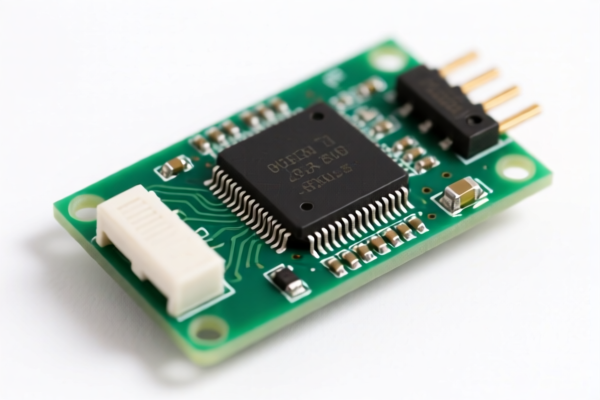

AI Analysis
🔌 DC Power Module (Direct Current Power Supply)
🌐 HS Code Reference & Customs Clearance Guide | 2026 Latest Tariff Analysis | Professional Clearance Strategy
📌 I. Product Definition & Classification: Do You Really Understand "Power Modules"?
A DC Power Module is a critical electronic component responsible for converting electrical energy from one circuit to another, typically stepping down AC mains voltage to stable DC output or regulating DC-DC levels. In international trade, classification depends heavily on functionality, integration level, and specific application.
According to the provided data, this product falls into two main categories: 1. Integrated Circuits (ICs): If it is treated as a specialized component within a larger semiconductor assembly. 2. Electrical Machinery/Converters: If it is viewed as a standalone static converter or independent electrical apparatus.
⚠️ Key Distinction:
- If the module is primarily a semiconductor chip/assembly without significant external casing or standalone functionality → Category 8542 (Integrated Circuits).
- If the module is a standalone static converter with distinct input/output ports and casing → Category 8504 (Static Converters) or 8543 (Other Electrical Machinery).
📦 II. HS Code Classification Details (Based on Provided Data)
The following HS Codes are derived from the provided analysis, covering different interpretations of the "Power Module" based on its physical form and functional priority.
| HS Code | Product Description | Application Logic | Tax Rate (Total) |
|---|---|---|---|
| 8542.39.00.90 | Other electronic integrated circuits; Other (Fallback Category) | IC Component View: The power module is inferred as an electronic IC assembly. It does not fit specific exclusions (like RF transceivers), so it falls into the "Other" bucket. | 60.0% |
| 8543.70.98.60 | Machines and apparatus having individual functions; Other (Fallback) | Independent Apparatus View: Treated as an electrical device with independent function. Classified under "Other" due to lack of specific material definition, following the "no obvious conflict" principle. | 37.6% |
| 8543.90.68.00 | Parts of machines/apparatus; Printed Circuit Assemblies (PCA) | PCBA View: Inferred as a printed circuit assembly (component part) with independent function. Fits the "Other" fallback attribute for parts. | 35.0% |
| 8504.40.95.40 | Static converters; Other (Fallback) | Converter View: Directly identified as a "static converter" (rectifier/regulator). Since power is unspecified, it falls into the "Other" category under Static Converters. | 35.0% |
| 8504.40.95.80 | Static converters; Other (Fallback) | Converter View: Similar to above, viewed as a static converter (e.g., rectifier). No material or form conflicts, fitting the "Other" logic. | 35.0% |
| 8542.90.00.00 | Parts and accessories of electronic integrated circuits | Part View: Classified strictly as a part of an integrated circuit. Fits the "parts" usage definition with no material conflict. | 60.0% |
🔍 Priority Note:
- Lowest Tax Risk: HS Codes 8504.40.95.40, 8504.40.95.80, and 8543.90.68.00 (35.0% Total).
- Highest Tax Risk: HS Codes 8542.39.00.90 and 8542.90.00.00 (60.0% Total).
- Middle Ground: HS Code 8543.70.98.60 (37.6% Total).
💰 III. 2026 Latest Tariff Rate Breakdown (Including Surtaxes)
✅ Applicable Country: United States (US)
✅ Origin: China (CN)
✅ Effective Time: Current tariff structures apply (including 301 & IEEPA measures).
The provided data specifies the tax composition for each HS Code. Here is the detailed breakdown:
🎯 1. High Tariff Category: 60.0% Total
Applicable HS Codes: 8542.39.00.90, 8542.90.00.00
| Item | Content |
|---|---|
| Base Tariff | 0.0% |
| Section 301 Surtax | +50.0% |
| Section 122 Surtax | +10.0% |
| Total Effective Rate | 60.0% |
| Calculation | CIF Value × 60% |
| De Minimis Exemption | ❌ Not Eligible (High value risk) |
📌 Analysis:
- These codes are classified under Chapter 8542 (Electronic Integrated Circuits).
- The 50% Section 301 tariff is extremely high, likely triggered because the product is deemed a strategic electronic component or part of the semiconductor supply chain.
- Risk: Very High. Classification as an "IC" or "Part of IC" attracts the harshest penalties.
🎯 2. Medium-Tariff Category: 37.6% Total
Applicable HS Code: 8543.70.98.60
| Item | Content |
|---|---|
| Base Tariff | 2.6% |
| Section 301 Surtax | +25.0% |
| Section 122 Surtax | +10.0% |
| Total Effective Rate | 37.6% |
| Calculation | CIF Value × 37.6% |
| De Minimis Exemption | ❌ Not Eligible |
📌 Analysis:
- Classified under Chapter 8543 (Machines having individual functions).
- The base duty is slightly higher (2.6%), but the 301 surtax is reduced to 25% (standard for many electrical machinery not in the high-tier IC list).
- Strategy: This is a safer classification if the module can be proven to be a "standalone machine/apparatus" rather than a simple IC component.
🎯 3. Low-Tariff Category: 35.0% Total
Applicable HS Codes: 8543.90.68.00, 8504.40.95.40, 8504.40.95.80
| Item | Content |
|---|---|
| Base Tariff | 0.0% |
| Section 301 Surtax | +25.0% |
| Section 122 Surtax | +10.0% |
| Total Effective Rate | 35.0% |
| Calculation | CIF Value × 35.0% |
| De Minimis Exemption | ❌ Not Eligible |
📌 Analysis:
- 8504 Series: Classified as Static Converters. Base duty is 0%, with 25% 301 tax. This is the most common and favorable classification for standard power supplies.
- 8543 Series (Part): Classified as a part/PCBA. Base duty is 0%, with 25% 301 tax.
- Strategy: Strongly recommended to aim for8504.40.95.40or8504.40.95.80if the product is a standalone converter unit, or8543.90.68.00if it is a PCB assembly. This saves 25% compared to the IC classification.
🛠️ IV. Customs Clearance Practical Advice (Real-World Pitfall Guide)
✅ 1. Document Checklist (Essential for Smooth Clearance)
| Document | Required? | Purpose |
|---|---|---|
| ✅ Product Datasheet | ✔️ | Must specify: Input/Output Voltage, Current, Power (Watts), Efficiency, Dimensions. |
| ✅ Circuit Diagram | ✔️ | Crucial for distinguishing between a Static Converter (8504) vs. an IC Component (8542). Shows independent functionality. |
| ✅ Photographs | ✔️ | Clear images of the module, including labeling (Model, Voltage, Safety Marks). |
| ✅ Commercial Invoice | ✔️ | Description must match the HS Code logic (e.g., "DC-DC Static Converter" vs. "IC Chip"). |
| ✅ Origin Certificate | ✔️ | To verify Chinese origin (triggers 301/122 taxes). |
| ✅ UL/FCC/CE Reports | ✔️ | Proves safety and electromagnetic compliance, supporting "Finished Product" status. |
✅ 2. Classification Strategy (Key Tactics)
🔥 Golden Rule: "Avoid the 'IC' Trap. Prove it's a Converter, Not a Chip!"
| Scenario | Recommended HS Code | Why? |
|---|---|---|
| Standalone Unit (with casing, input/output terminals, plug) | 8504.40.95.40 or 8504.40.95.80 | Clearly a "Static Converter." Lowest tax (35%). |
| PCB Assembly (Board only, no complex casing, used inside other devices) | 8543.90.68.00 | Classified as a part of machinery/apparatus. Low tax (35%). |
| Highly Integrated Semiconductor (Tiny chip, part of a larger IC package) | 8542.39.00.90 or 8542.90.00.00 | Only use if it is literally a semiconductor component. High tax (60%). Avoid if possible. |
| Indeterminate Function (Unclear if standalone or part) | 8543.70.98.60 | Fallback "Machinery" category. Medium tax (37.6%). |
⚠️ Critical Warning:
- Do NOT describe the product simply as "Power Supply" or "Module" in the invoice if you want to avoid scrutiny. Use specific terms like "DC-DC Static Converter Module" for 8504 codes.
- If the product is a PCB with components, explicitly state "Printed Circuit Assembly" to justify 8543.90.68.00.
- If it is a complete unit with housing, do NOT classify it as an IC part (8542). This will lead to audits and back-taxes.
✅ 3. Special Considerations
| Situation | Advice |
|---|---|
| Mixed Shipment (ICs + Power Modules) | Separate Declarations! Do not lump them together. Classifying a 35% item as a 60% item wastes money. Classifying a 60% item as 35% is fraud/risk. |
| Low Power (< 150VA) | Still falls under 8504.40. Check if specific sub-codes for low power exist in your local tariff book, but based on data, 8504.40.95.xx applies. |
| OEM Custom Modules | Provide Engineering Specifications proving the unique function. If it has a "standalone function," argue for 8543.70.98.60 or 8504.40.95.xx. |
🌍 V. Global Market Comparison (2026 Context)
| Market | Likely HS Code | Est. Tariff (China Origin) | Notes |
|---|---|---|---|
| 🇺🇸 USA | 8504.40.95.40 / 8543.90.68.00 | 35.0% | High due to Section 301 + 122. Avoid 8542 (60%). |
| 🇪🇺 EU | 8504.40 / 8543.70 | ~0% - 3.5% | Generally lower. Check for specific "power supply" directives. |
| 🇨🇳 China | 8504.40 / 8542.90 | 0% - 6% | Imports into China have different rates. |
| 🇬🇧 UK | 8504.40 / 8543.70 | ~0% - 3.5% | Post-Brexit rules apply. |
📌 Conclusion for US Importers:
- The 25% Section 301 tariff is the dominant cost driver.
- The 10% Section 122 tariff is an additional layer.
- Total 35% is manageable; Total 60% is prohibitive for low-margin goods.
- Action: Ensure your engineering team can provide documentation proving the product is a Static Converter (8504) or Machinery Part (8543), NOT a standalone Integrated Circuit (8542).
📌 VI. Common Mistakes & Pitfalls (Blood & Tears Lessons)
❌ Mistake 1: Calling a complex Power Module an "Integrated Circuit" to save time.
👉 Result: Customs assigns 8542 codes → 60% Tax.
✅ Fix: Emphasize "Static Converter" or "Electrical Apparatus" in documentation.
❌ Mistake 2: Missing the "Section 122" impact.
👉 Result: Budgeting for only 25% 301 tax, but realizing 10% additional tax applies.
✅ Fix: Always calculate Base + 301 + 122. In the data, 122 is fixed at 10%.
❌ Mistake 3: Using generic descriptions like "Electronic Part."
👉 Result: Customs examiner uses discretion, often defaulting to the highest-risk or most generic code (e.g., 8542).
✅ Fix: Use precise language: "DC-DC Step-Down Converter, Model XYZ, 12V Output."
🎯 VII. Conclusion: Precise Classification Saves 25%
🎯 Key Takeaway:
🔹 "It’s a Converter, Not a Chip!"
🔹 "Target 8504.40 or 8543.90 for 35% Rate."
🔹 "Avoid 8542 unless it’s truly a semiconductor IC (60% Rate)."
📌 Pro Tip:
If your power module is small, enclosed, and has no external controls, it is still a Static Converter (8504). Do not let the size fool you into classifying it as an IC part.
Request an Advance Ruling from Customs if the product is new to your company, to lock in the 35% rate.
📣 Immediate Action:
📞 Consult your supply chain team to verify the circuit topology.
📄 Prepare Datasheets highlighting "Conversion Function" over "Component Integration."
🚀 Clear Goods Efficiently, Protect Margins, Avoid 60% Tax Traps!
✨ Professional Customs Clearance Starts with Accurate Classification!
💼 Every percentage point matters in the era of trade tensions!
Customer Reviews
About HS Code Classification
The Harmonized System (HS) is an internationally standardized nomenclature developed by the World Customs Organization (WCO) to classify traded products. Over 200 countries use the HS system as the basis for customs tariffs, trade statistics, and import/export regulations.
Each HS code follows a hierarchical structure:
- Chapter (2 digits) — Broad category of goods (e.g., Chapter 84: Machinery and Mechanical Appliances)
- Heading (4 digits) — More specific grouping within the chapter
- Subheading (6 digits) — Internationally standardized breakdown, used by all WCO member countries
- National subdivisions (8-10 digits) — Country-specific extensions for further classification, such as US HTSUS 10-digit codes
Correct HS code classification is essential for smooth customs clearance, accurate duty payment, and compliance with trade regulations. Misclassification can lead to customs delays, overpayment of duties, or penalties.
When importing from CN to US, the applicable tariff rates may include:
- Most-Favored-Nation (MFN) rate — The standard duty rate applied to WTO members
- General rate — Applied to countries without trade agreements
- Trade remedy duties — Additional tariffs such as Section 301 (anti-dumping), Section 232 (national security), or countervailing duties
The information provided on this page is for reference purposes only. For official classification, please consult with your local customs authority or a licensed customs broker.